




- Context
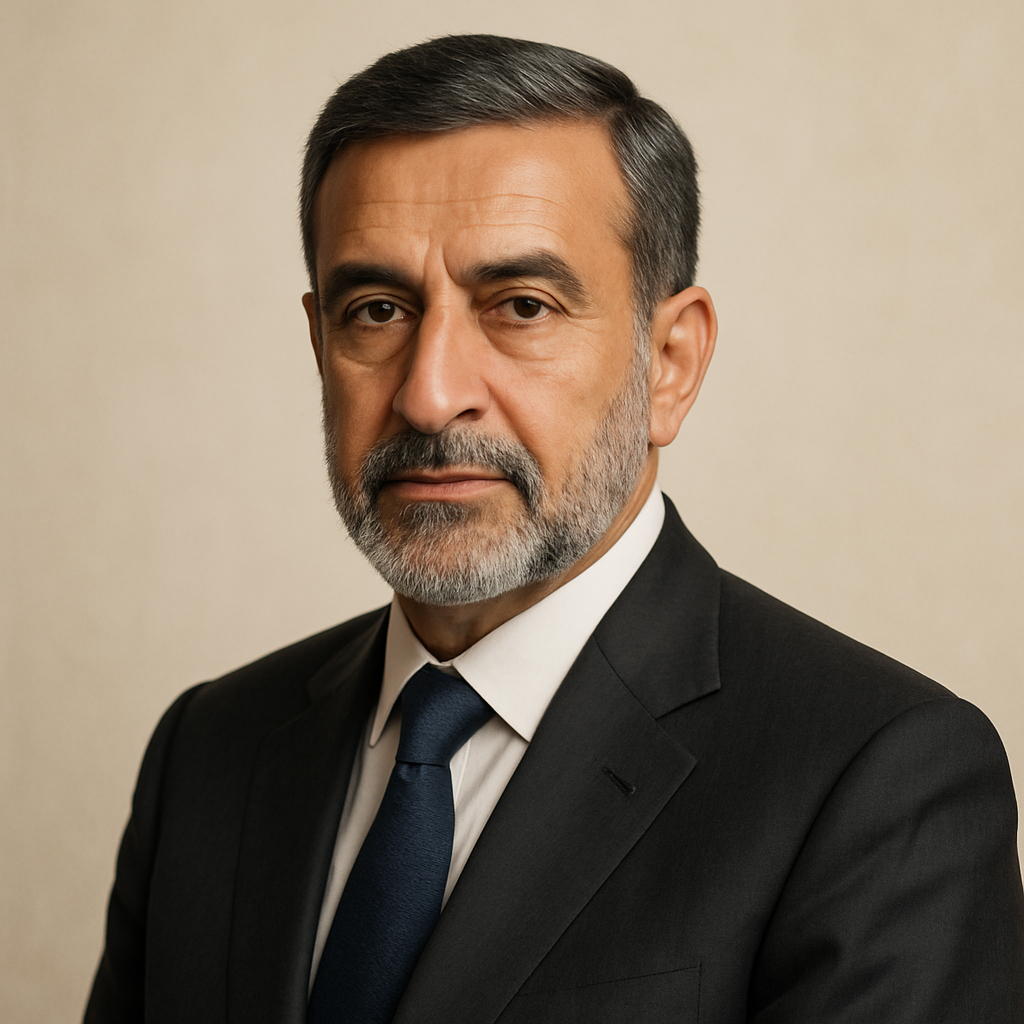
- King Abdullah II addressed President Bush at the White House Rose Garden on May 6, 2004, outlining Jordan's position on the Middle East peace process and regional issues.
- Main themes
- Israeli-Palestinian peace process, two-state solution, road map framework, Gaza and West Bank withdrawal, regional stability, counter-terrorism cooperation, Iraq sovereignty and reconstruction, political and economic reform in Jordan, Arab Initiative, UN Security Council resolutions, US-Jordan relations
- Duration
- ~5 min
- Words
- 577
- Sentences
- 23
- Readability
- 38
- Grade
- 13.9
- Syntax
- 3.24
- Vocabulary
- 2.11
The broad sphere of national life a sentence belongs to. Every sentence has an Arena, so it is the denominator the other indices are read against.
Other23 sentences in 11 paragraphs
Mr. President,
Thank you for this opportunity to meet with you today and discuss vital issues of mutual interest to both our countries.
I remain very concerned about the critical phase our region is passing through. It is very important for the moderate voices seeking peace in our region to prevail, so that we can break out of the cycle of violence which has held us back for too long, and put the region on a new path to stability and prosperity.
I would like to outline the Jordanian position on the peace process, particularly in view of recent developments. We feel that any unilateral Israeli withdrawal from Gaza and the West Bank should be part of the road map, and should lead to the achievement of your vision of a two-state solution.
Let me stress that a viable, sovereign, and independent Palestinian state on the basis of the 1967 borders is also in Jordan's national interest. Failing to achieve such an outcome will invoke other options all of which will endanger my country's interests and that of the Region. This is one of the reasons why Jordan insists on a two-state solution, and why it supports the road map as the mechanism to get there. Jordan remains committed to a final and comprehensive permanent status agreement based on the foundations of the Madrid conference, the principle of land for peace, UN Security Council Resolutions 242, 338 and 1397, agreements reached by the parties, and the Arab Initiative, endorsed by the Beirut Arab League Summit.
Jordan also believes all final status issues, including borders, refugees, Jerusalem and settlements should be a matter for the parties to decide. I am encouraged by what I heard from you today that these issues are not to be prejudiced, and should be mutually agreed by the parties.
In the context of the road map, I want to assure you, Mr. President, that Jordan is ready to do its part in assisting the Palestinian Authority to rebuild its capability and assume full control of the security situation.
Jordan stands shoulder to shoulder with the United States and the international community in our common fight against terrorism. We cannot allow the terrorists political agenda to succeed, and we assure you that Jordan will continue to do its utmost to help win this cause.
Jordan is committed to support Iraqis in their quest to regain their sovereignty, rebuild their institutions, and establish a society based on freedom and democracy. The stability, unity and territorial integrity of Iraq is an objective we both share, and we are determined to achieve it.
Jordan is also committed to a process of political and economic reform in the region. We have adopted a far-reaching plan that addresses the key areas of good governance, political freedoms, women's rights, judicial reform, educational reform, and the liberalization of the economy. We also are strongly committed to a key role by civil society. Our aim is to move towards a system that respects diversity and guarantees pluralism at all times, so that democracy is not used by any who might opt to subject to it once and then deny it to others.
Mr. President, the leadership of the United States is crucial in all our efforts to reach a just and lasting peace in the Middle East. I want to thank you again for this opportunity and I am determined to work with you to achieve this goal in a timely manner.