





- Context
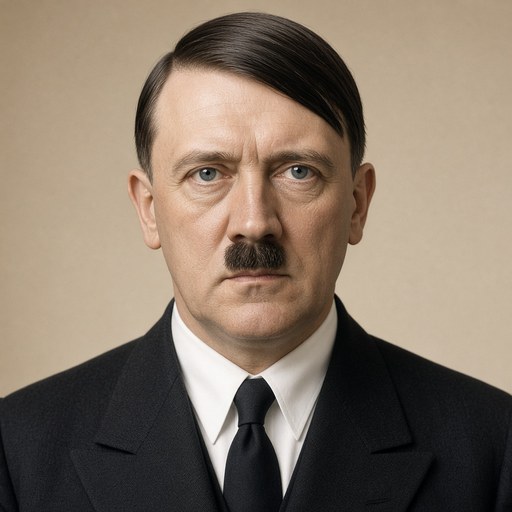
- Hitler addressed the German people by radio on October 14, 1933, justifying Germany's departure from the Disarmament Conference and League of Nations and announcing a request to dissolve the Reichstag for new elections with a plebiscite.
- Main themes
- Treaty of Versailles and war guilt, German equality of rights in disarmament, withdrawal from the League of Nations and Disarmament Conference, dissolution of the Reichstag and plebiscite, National Socialist Movement and the Communist threat, unemployment reduction, foreign criticism and atrocity reports, reconciliation with France and the Saar, Daladier's conciliatory speech, Reichstag fire trial in Leipzig
- Duration
- ~35 min
- Words
- 4,187
- Sentences
- 123
- Readability
- 36
- Grade
- 16.6
- Syntax
- 3.30
- Vocabulary
- 2.32
The broad sphere of national life a sentence belongs to. Every sentence has an Arena, so it is the denominator the other indices are read against.
Other123 sentences in 32 paragraphs
In November 1918, when the German Volk lowered its arms in trusting faith in the assurances laid down in President Wilson’s Fourteen Points, an illfated struggle came to a close for which individual statesmen, but certainly not the peoples of the world might be held responsible. The German Volk fought so valiantly only because it was of the sacred conviction that it had been unjustly attacked and was thus justly engaged in battle. The other nations had no conception of the magnitude of the sacrifices which the Volk-left almost entirely on its own-was forced to make. If in these months the world had stretched out its hand in fairness to its prostrate opponent, humanity would have been spared much suffering and countless disappointments.
The German Volk experienced the deepest disappointment. Never before had a vanquished nation made such a sincere effort to help heal the wounds of its opponents as the German Volk had in the long years it fulfilled the dictates burdened upon it. And the fact that all of these sacrificies were unable to bring about a real pacification of the peoples was due only to the nature of a treaty which, by attempting to perpetuate the concepts of victor and vanquished, had to perpetuate hatred and enmity as well.
The peoples had a right to expect that a lesson would be learned from this, the greatest war in world history, the lesson of how little-particularly for the European nations-the size of the sacrifices corresponded to the size of what could possibly be gained. Therefore, when the German Volk was required in this Treaty to destroy its arms in order to make general world disarmament possible, a great number believed that this was no more than a symbol for the spreading of a redeeming realization.
The German Volk destroyed its weapons! Relying upon the contractual fidelity of its former enemies at war, it fulfilled the treaties with a truly fanatical loyalty. On water, on land, and in the air, immeasurable quantities of war materials were dismantled, destroyed or scrapped. At the request of the dictating powers, a small professional army with wholly inadequate military equipment took the place of what had once been an army of millions. However, at that time the political leadership of the nation was in the hands of men whose spiritual roots lay exclusively in the world of the victorious nations. The German Volk had a right to expect that, for this reason alone, the rest of the world would keep its promise just as the German Volk had worked, in the sweat of its labor, with thousandfold hardships and unspeakable privations, to fulfill its own contractual obligation. No war can become the permanent condition of mankind. No peace can be the perpetuation of war. At some point, victors and vanquished must find their way back to the community of mutual understanding and trust. For a decade and a half, the German Volk hoped and waited for the end of the War to also become at last the end of hatred and enmity. The purpose of the Peace Treaty of Versailles, however, did not appear to be that of granting mankind final peace, but rather to preserve in it undying hatred.
The consequences were unavoidable. When justice ultimately gives way to violence, a permanent insecurity will disrupt and check the flow of all normal functions in the lives of peoples. When the Treaty was signed, it was completely forgotten that the reconstruction of the world cannot be guaranteed by the slave labor of a violated nation, but only by the trusting cooperation of all, and that the foremost prerequisite for this cooperation lies in overcoming the war psychosis; that furthermore the problematic question of the blame for the War cannot be cleared up historically if the victor has the vanquished sign a confession of guilt as a preface to a peace treaty; rather, that the contents of such a dictate most clearly prove who, in the end, are the guilty parties! The German Volk is deeply convinced that it is in no way to blame for the War. It may well be that the other parties involved in this tragic misfortune also harbor the same conviction. If so, it is all the more necessary to everywhere endeavor to ensure that this general conviction of guiltlessness is not allowed to become a permanent enmity for all time, and that the memories of this catastrophe of the peoples are not artificially conserved for this purpose; to endeavor that an unnatural perpetuation of the concepts of “victor” and “vanquished” does not result in eternally unequal rights which fill one side with understandable arrogance and the other, however, with bitter wrath.
It is no coincidence that, following such a long period of artificially extended illness, humanity is certain to show certain effects.
A shocking collapse of economic life was followed by a no less threatening collapse of politics in general.
But what sense would the World War have had at all if its consequences are manifested solely in an endless series of economic catastrophes not only for the vanquished, but also for the victors? The welfare of the peoples has not improved, and their political image and their human satisfaction have certainly not become any more profound or deep! Armies of unemployed have developed into a new class in society. And just as the economic structure of the nations has been shaken, so, too, are their social structures gradually beginning to weaken. Germany suffered most from these effects of the Peace Treaty and the widespread insecurity it caused. The number of unemployed increased to a third of those normally engaged in the working life of the nation. That means, however, that in Germany, counting family members, approximately twenty million people of a total of sixty-five million were heading toward a hopeless future without any means of existence. It was only a matter of time until this army of the economically disinherited would of necessity have become an army of fanatics politically and socially alienated from the rest of the world. One of the oldest lands of culture in today’s civilization stood, with over six million Communists, at the brink of disaster, and only a blase lack of comprehension would be capable of ignoring this fact. Had Red rebellion raced through Germany like a firebrand, the civilized countries in Western Europe may well have come to the realization that it is not immaterial whether the outposts of a spiritual, revolutionary, and expansionist Asian world empire stood watch at the Rhine or on the North Sea or whether peaceful German peasants and workers, in sincere solidarity with the other peoples of our European culture, wish to earn their bread by honest work.
In snatching Germany from the brink of this catastrophe, the National Socialist Movement saved not only the German Volk but also made a historic contribution to the rest of Europe.
And this National Socialist Revolution is pursuing only one aim: restoring order in our own Volk, providing work and bread for our starving masses, proclaiming the concepts of honor, loyalty and decency as elements of a moral code of ethics which can bring no harm upon other peoples, but rather is of benefit to all. Had the National Socialist Movement not been the representative of a body of ideal concepts, it would not have been able to save our Volk from the final catastrophe. It has remained true to this body of concepts not only throughout the period of its struggle for power, but also in the period it has been in power! We have attacked and combatted every type of depravity, infamy, deception, and corruption which has accumulated in our Volk since the ill-fated Treaty of Versailles. This Movement is committed to the task of restoring loyalty, faith and decency to their rightful position, without respect of person. For eight months we have been waging a heroic battle against the Communist threat to our Volk, the decomposition of our culture, the subversion of our art, and the poisoning of our public morality. We have put an end to denial of God and abuse of religion. We owe Providence humble gratitude for not allowing us to lose our battle against the misery of unemployment and for the salvation of the German peasant. In the course of a program, for the implementation of which we calculated four years, of a total of six million unemployed, more than two and a quarter million have once again been made part of the useful process of production within scarcely eight months. The best witness for this tremendous accomplishment is the German Volk itself. It will prove to the world how strongly it stands behind a regime which knows no aim other than, with acts of peaceful labor and civilized culture, to make a contribution toward rebuilding a world which today is spiritually unhappy.
This world, however, which we are not harming and from which we desire only that it let us labor in peace, has been persecuting us for months with a flood of lies and slander. Although the Revolution which took place in Germany did not, unlike the French or Russian Revolutions, butcher hecatombs of humans and murder hostages, and did not, unlike the uprising of the Paris Commune or the Soviet Revolutions in Bavaria and Hungary, destroy cultural monuments and works of art-on the contrary, it did not smash a single storefront window, did not loot a single shop, and did not damage a single building-unscrupulous agitators are spreading a flood of tales of atrocity which can only be compared with the lies fabricated by these same elements at the beginning of the War! Tens of thousands of Americans, English, and French were in Germany during these months and were able to conclude from what they saw with their own eyes that there is no country in the world with more law and order than present-day Germany, that in no other country of the world can person and property be more highly respected than in Germany, but that, perhaps, too, in no other country of the world is there a fiercer battle being waged against those who, as criminal elements, believe they are at liberty to give free rein to their lowest instincts to the detriment of their fellow men. These parties and their Communist accomplices are the ones who are endeavoring today as emigrants to try to turn honest and decent peoples against one another. The German Volk has no reason to envy the rest of this world for this gain. We are convinced that a few years will suffice to make the honor-loving members of the other peoples thoroughly conscious of the inner value of these unworthy elements who, effectively hiding behind the flag of political refugees, fled the territories where each had practiced his own degree of economic unscrupulousless.
But what would this world say about Germany if, for the benefit of a character who had attempted to set the British Parliament on fire, we had an investigative farce staged here, the sole purpose of which could only be to place British justice and its judges on a level lower than that of such a scoundrel? As a German and a National Socialist, I would have no interest in Germany in supporting the cause of a foreigner who attempts to undermine the State or its laws in England or even puts a torch to the architectural symbol of the English Constitution. And even if this character were-may God preserve us from the shame-a German, we would not cover him, but deeply regret that we had had to meet with such misfortune, and would harbor but one wish: that British justice would unmercifully deliver humanity from such a pest.290 However, we possess enough honor to be indignant over a spectacle which, initiated by obscure elements, is to serve the purpose of shaming and degrading the highest German court. And we are very saddened at the thought that these methods are used to stir up animosity and alienate peoples of whom we know that, inwardly, they tower above these elements. Peoples whom we should hold in high regard and with whom we would like to live in honest friendship.
These corrupting and inferior characters have succeeded in bringing about a psychosis in the world, the inner pathological and hysterical duality of which can be demonstrated quite vividly. For these very elements which, on the one hand, complain of the ‘oppression’ and ‘tyrannization’ of the ‘poor’ German Volk by the National Socialist rulers, declare on the other with a brazen lack of concern that the protestations of love of peace in Germany are of no significance because they are uttered merely by a few National Socialist Ministers or the Reich Chancellor, while an uncontrolled war-fever is rampant among the Volk. That is the way they do things: the German Volk is presented to the world as either regrettably unhappy and oppressed or as brutal and aggressive, whatever the occasion requires.
I perceive it as a sign of a nobler sense of justice that, in his most recent speech, the French Premier Daladier found words of conciliatory understanding for which countless millions of Germans are inwardly grateful to him. National Socialist Germany has no other wish but to steer the competition of the European peoples back to those areas in which they bestowed upon the entire human race in the most noble and mutual rivalry those tremendous assets of civilization, culture, and art which enrich and beautify the appearance of the world today.
Similarly, we have been moved to hope by the promise that the French Government under its present head does not intend to offend or humiliate the German Volk. We are overcome by the mention of an all too sad truth, namely that both of these great peoples have so often in history sacrificed the blood of their best youths and men on the battlefield. I am speaking on behalf of the entire German Volk when I affirm that we are all filled by the honest desire to eradicate an enmity which means sacrifices that are in no proportion to any possible gains.
The German Volk is convinced that its military honor has remained pure and unblemished in thousands of battles and skirmishes, just as we view the French soldier only as our old and yet glorious opponent. We and the entire German Volk would all be happy at the thought of sparing our children and our children’s children what we had to witness and endure ourselves as honorable men in long and bitter years of pain and suffering. The history of the last 150 years should, in the course of all its vicissitudes, have taught both peoples one thing: namely that essential changes are no longer possible, regardless of the blood sacrificed to bring them about. As a National Socialist, I, and with me, all my followers, refuse on the basis of our national principles to conquer the people of a foreign nation-who would not love us in any case-at the price of the blood and lives of those who are dear and precious to us. It would be a tremendous event for the entire human race were the two peoples willing to ban force from their common life once and for all.
The German Volk is willing to do this. In that we openly lay claim to the rights accorded us by the treaties themselves, I also want to declare just as openly that, in Germany’s view, there are no further territorial conflicts between the two countries. Once the Saar has returned to the Reich, only a lunatic could conceive of the possibility of a war between the two States, a war for which, seen from our perspective, there would no longer be any morally or reasonably justifiable grounds. For no one would have a right to expect that millions of young lives be destroyed for the sake of making a problematic correction-both in terms of extent and value-of the present borders! The French Premier asks why German youth are marching and falling into line; the answer is, not in order to demonstrate against France, but in order to show and document that very political formation of will which was necessary to overcome Communism and will be necessary to keep Communism at bay. In Germany there is only one bearer of arms, and that is the Army. And conversely, there is only one enemy for the National Socialist Organization, and that is Communism.
The world will have to come to terms with the fact that, to protect itself from this threat, the German Volk chooses the forms for its internal organization which alone guarantee success. While the rest of the world entrenches itself in indestructible fortresses, puts together huge aircraft squadrons, constructs giant tanks, and molds enormous guns, it cannot talk about a threat because German National Socialists, totally unarmed, are parading in columns of four and by doing so are constituting an outward manifestation of the German Volksgemeinschaft and its effective protection! If the French Premier Daladier raises the further question of why Germany is demanding weapons which will be eliminated sooner or later in any case, he is in error.
The German Volk and the German Government have not demanded any weapons at all; they have demanded equality of rights.
If the world resolves that all weapons are to be destroyed down to the very last machine gun, then we are willing to join such a convention immediately. If the world resolves to destroy certain weapons, we are willing to renounce them from the very beginning. But if the world grants to every nation the right to possess certain weapons, then we are not willing to allow ourselves to be excluded on principle as an inferior nation. If we honorably uphold our respective conviction, we are more decent partners to the other nations than if we were willing, contrary to our conviction, to accept humiliating and degrading conditions. For we are pledging an entire Volk with our signature, while the dishonorable and characterless negotiator will be rejected by his own people.
If we are to enter into treaties with the English, the French or the Polish, we desire from the start to conclude them only with men who think and act on behalf of their nations one hundred percent as English, French or Polish. We want to conclude treaties with nations, not sign pacts with negotiators. And if today we turn against an unscrupulous propaganda campaign, we are doing so only because not the agitators, but unfortunately the peoples will have to atone for the sins of this worldwide poisoning (Weltvergiftung) with their blood. The former German governments confidently entered the League of Nations in the hopes of finding in it a forum for a just balance of the interests of the nations and a sincere reconciliation, particularly with former opponents.
However, the prerequisite was that equal rights finally be restored to the German Volk. The same prerequisite applied to Germany’s participation in the Disarmament Conference. The degradation of a member of such an institution or conference to one which does not enjoy equality of rights is an unbearable humiliation for an honor-loving nation of 65 million people and a no less honorloving government! The German Volk has more than fulfilled its obligations to disarm. It is now time for the armed states to do no less in fulfilling their respective obligations.
The German Government is not taking part in this conference in order to negotiate additional cannons or machine guns for the German Volk, but to contribute, as a party with equal rights, to the general pacification of the world.
Germany has just as much right to security as the other nations. When the English Minister Baldwin regards it as a matter of course that England’s talk of disarmament can only be conceived as the disarmament of more highly armed States parallel to its own arms buildup to a certain common level, it would be unfair to heap accusations upon Germany if, being a conference member with equality of rights, it ultimately holds the same view in respect to itself. This demand on the part of Germany cannot in any way constitute a threat to the other powers. For the defense systems of the other nations are built to withstand the strongest offensive weapons, while Germany demands not offensive weapons, but merely those defensive weapons which will not be prohibited in future but rather granted to all nations. And here as well, Germany is willing from the very beginning to be satisfied with a numerical minimum which is in no proportion to the gigantic offensive and defensive weapons of our former opponents.
The deliberate degradation of our Volk, however, which consists of the fact that every people of the world is granted a self-evident right denied to us alone, is something we experience as the perpetuation of a discrimination which is, for us, unbearable. I already stated in my Peace Speech in May that, to our greatest regret, we would no longer be in a position to remain a member of the League of Nations or to take part in international conferences under such conditions.
The men leading Germany today have nothing in common with the salaried traitors of November 1918. We all once did our duty to our Vaterland and risked our lives just as any decent Englishman and any decent Frenchman did. We are not responsible for the War and not responsible for what happened during it, but conscious only of a responsibility for what any man of honor would have been forced to do for his people in this crisis and what we did, in fact, do.
We are devoted to our Volk with a boundless love, and it is out of this same love, from the bottom of our hearts, that we desire to reach an understanding with the other peoples and shall, if this is at all possible, also attempt to do so.
However, as representatives of an honest nation with an individuality of its own, it is impossible for us to belong to institutions under conditions which can only be borne by the dishonest. As far as we are concerned, it may be that there once were men who believed themselves capable of being part of such international pacts in spite of this burden. It is futile to discuss whether they were the best of our Volk, but one thing is certain: that namely the best of our Volk were not standing behind them. But the world can have only one interest: to negotiate with honorable men and not with a nation’s criminals, and to enter into treaties with the former and not with the latter; however, it then must, for its part, do justice to the honor and sentiment of such a regime, just as we are grateful for being able to deal with men of honor.
This is all the more necessary because only in such an atmosphere can measures be found which lead to a genuine pacification of the peoples. For the spirit of such a conference must be one of honest cooperation; otherwise the outcome of all these attempts is doomed to be failure from the very onset.
Having concluded from the declarations of the official representatives of a number of major States that they presently do not contemplate true equality of rights for Germany, it is presently also not possible for this Germany to continue to impose itself upon other nations from a position of such unworthiness.
The threats of force, if translated into reality, could constitute nothing but violations of law. The conviction is deeply rooted in the German Government that its appeal to the entire German nation will prove to the world that the Government’s love of peace and its concept of honor constitute the entire Volk’s yearning for peace and concept of honor. In order to document this claim, I have decided to request the Reich President to dissolve the German Reichstag and, in new elections coupled with a plebiscite, to give the German Volk the opportunity to make a historic vow, not limited to an approval of the principles of the Government, but documenting unreserved unanimity with them as well. May this vow serve to convince the world that the German Volk allies itself completely with its government in this struggle for equality of rights and honor, and that both are filled in their innermost depths by no other desire than to help end a human epoch of tragic aberrations, regrettable discord and fighting between those who, as inhabitants of the culturally most significant continent, also have a common mission to fulfill in the future for the whole of mankind.
May this tremendous rally of our Volk for peace and honor succeed in providing that prerequisite in the internal relationships between the European States which is necessary to end not only centuries of discord and strife, but also to build anew a better community: the recognition of a higher, common duty arising from common equal rights!