





- Context
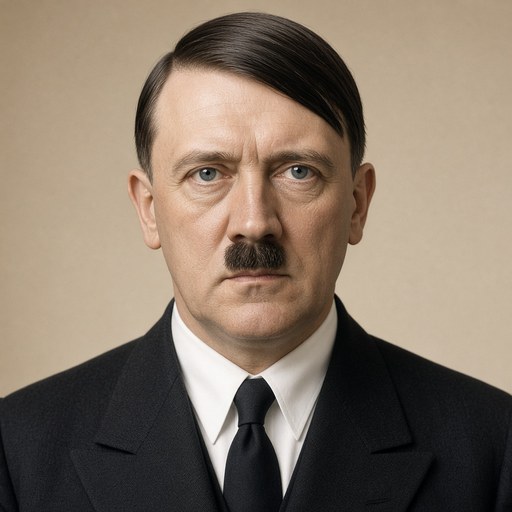
- Hitler addressed Nazi Party followers at the Bürgerbräukeller in Munich on November 8, 1934, commemorating the 1923 putsch, justifying the action taken then and honouring the fallen.
- Main themes
- Anniversary of the 8-9 November 1923 putsch, Clausewitz and reconstruction after collapse, necessity of action over talk, 1923 inflation and hunger, separatism and fear of Bolshevism in the North, pre-emptive decision to strike, fallen fighters of the Movement, blood as baptismal water of the Third Reich, vow never to capitulate
- Duration
- ~5 min
- Words
- 639
- Sentences
- 34
- Readability
- 69
- Grade
- 8.2
- Syntax
- 2.77
- Vocabulary
- 1.96
The broad sphere of national life a sentence belongs to. Every sentence has an Arena, so it is the denominator the other indices are read against.
Other34 sentences in 7 paragraphs
The significance of November 8 and 9, 1923 lies for us in the fact that this Movement proved its inner toughness and resilience back then. If Fate were ever to impose a similar burden upon us, we can recall the day when we believed to have already grasped hold of power only to find ourselves in prison a few hours later; the day when we were confident of having demonstrated our quickwittedness only to wake up the next morning empty-handed. How did it happen that we were nevertheless able to overcome this catastrophe? Back then, the Movement carried out its historic order, and there is only one thing left to say to today’s know-it-alls: either none of you has ever read Clausewitz, or if you have, you have not understood how to apply him to the present.
Clausewitz writes that reconstruction is possible even after a heroic collapse. Only cowards abandon their own cause, and that continues to take effect and spread like an insidious drop of poison. And then the realization dawns that it is still better, if necessary, to accept a horrible but sudden end than to bear horrors without end.
And then the time came when talk was not enough. For once, action had to be taken. For ultimately, only action can force men under its spell.
We had to act in the year 1923, because we were confronted at the time with the final attempt of the separatists in Germany. Want was appalling; inflation had robbed the people of all their worldly goods; hunger was rampant. The people could not count on a single tomorrow. Anyone who hoisted a flag was sure of a following. There were many people who simply said: it makes no difference who takes action. The main thing is that someone has the courage to do something. If another had had the courage to take action, the Volk would have followed him. It would have said: it’s a good thing that someone is taking the risk. Had the men we were faced with taken action, utmost danger would have been imminent. Others would have taken action on November 12, 1923 along the lines of the maxim we heard preached so often back then, namely: Northern Germany will become Bolshevist in any case, so we need to secede! We must have the North gutted! Only when that has been done can we later unite with it once again! Of course they knew how to divide. But how one would ever be able to reunite-that was the least of these gentlemen’s worries. And for that reason we were resolved back then to act first. We did not intend to stage a coup. But I had made one decision: if the opposition goes so far that I know that they will strike, I will strike four days earlier. And if people say to me, “Yes, but think of the consequences!” my reply is, “The consequences could never have been worse than if no action had been taken.”
We have but a single pain, that not all of those can be here who marched with us back then, that-tragically-a number of our very best, most loyal and most zealous fighters have not lived to see the goal for which they fought.
However, they too are present in spirit in our ranks, and in eternity they will know that their fight was not in vain.
The blood which they shed has become the baptismal water of the Third Reich. And thus let us look back in this new Reich upon that which lies behind us and do so in the most distant future, too, and let us bear in mind one article of faith: We shall be resolved at all times to take action! Willing at all times, if necessary, to die! Never willing to capitulate!