





- Context
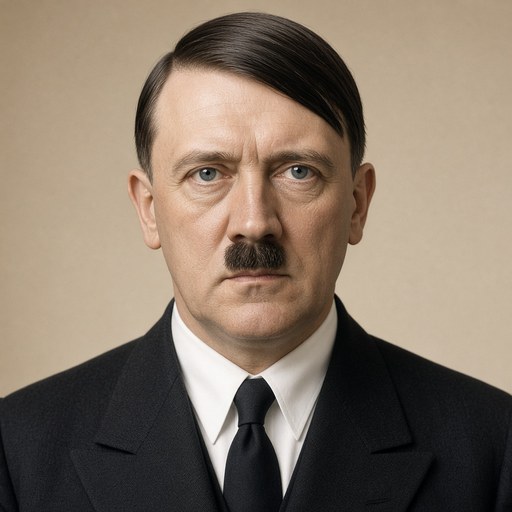
- Hitler addressed units of the new Wehrmacht at Zeppelin Field in Nuremberg on September 16, 1935, on Wehrmacht Day, praising the restored armed forces as heirs of the Old Army and urging duty and sacrifice.
- Main themes
- New German Wehrmacht, restoration of German armed forces after rearmament, soldier's duty and sacrifice, obedience and subordination, continuity with the Old Army, German military honor, memory of the First World War, sacrifices of the Volk for the army, army as school of the nation, upbringing of German youth
- Duration
- ~10 min
- Words
- 1,159
- Sentences
- 50
- Readability
- 62
- Grade
- 10.4
- Syntax
- 3.11
- Vocabulary
- 2.22
The broad sphere of national life a sentence belongs to. Every sentence has an Arena, so it is the denominator the other indices are read against.
Other50 sentences in 12 paragraphs
Soldiers of the new German Wehrmacht!
For the second time, units of the Army and the Navy have assembled at this spot; for the first time in the position of a free armed force (Wehrfreibeit). Now you have been joined by the new units of our German Wehrmacht which can now be shown to the German Volk in this, their new context.
The German was always a good soldier. For our Volk the service of arms was never an enforced service, but a service of the highest honor in every period of our history. It was thus all the more painful and dispiriting for the honorloving, decent German man not to be allowed to be a soldier-or if so, under dishonorable and humiliating circumstances. How successfully this situation has now been mastered is something evidenced to you, my soldiers, and today to the entire German Volk, in this display of the union between the German man as soldier and the weapons of modern technology. Now every young German man, should he be found worthy by the nation, will join your ranks. And you will now once again perform your service with arms which are in use today throughout the world.
This service requires of each and every one of you certain sacrifices. Each of you must make a sacrifice in terms of personal freedom; he must exhibit obedience and subordination, but also toughness, endurance and, above all, an utmost sense of duty. Those who believe this sacrifice must be wrung out of the German man are mistaken! Throughout the centuries, German men have done this voluntarily, and they were proud of their accomplishments. And not only in peacetime did the German man joyfully make this sacrifice to the nation as soldier; he did so no less when the crisis of the Reich called upon him to protect Volk und Vaterland. The German was not only a good soldier in peacetime, but a brave fighter at all times.
But what are all the sacrifices required of you and of us today compared to the sacrifices required of millions of us and our comrades twenty years ago? May each of you, should he ever perceive the duty of the soldier a burden, recall that eight days of drumfire required more in terms of sacrifice from the battalions and regiments of our Old Army than the service of peace during an entire year. The German Volk in arms was not brought to its knees by this. It was brought to its knees only because it lost its inner freedom, its inner belief in its rights. This faith has returned today, and this faith, my soldiers, belongs not only to hundreds of thousands, but to millions of you; and millions of our Volksgenossen embrace you with this burning faith, with this burning confidence and with this warm love.
And if you are personally required to make the sacrifices of obedience, of performing your duty, of subordination, of being tough, enduring, and efficient, do not forget, my soldiers, that the entire German Volk makes great sacrifices for you, too. It is a difficult task for the German Volk to build what is standing here and in countless other places in Germany. Our Volk must make difficult sacrifices, and it does so gladly. For first of all, it does not want to see its sons badly equipped and secondly, it no longer wants to see Germany defenseless.
So we continue to make these sacrifices mutually-the Volk for you, and you for the Volk! Both for Germany, our Volk, and our precious German Reich! And we are also making these sacrifices with the conviction that it does not require a war to reward us for doing so. Once Germany had a proud and brave army; it had heroic fighters. That is natural for the German soldier.
But the army was not only the nation’s great defense in wartime; in peacetime it was also the splendid school of our Volk. It made men of us all, and the sight of it has always bolstered in us the faith in the future of our Volk.
And this splendid Old Army is not dead; it was only sleeping and has now been resurrected in you! You, my comrades, bear at the points of your weapons and on your helmets a tremendous legacy. You are not something artificially created, something void of tradition and a past; rather, whatever else Germany may have to offer pales compared to what you must and can personify in terms of tradition. There is indeed no need for you to win for the German army any title to fame; it already has that, you need only preserve it! And as we stand here armed in steel and bronze, it is not because we feel it is necessary to repair the honor of the German Volk. As long as this honor was borne by the soldier, no one in the world has ever been able to rob us of it! Germany has never lost its military honor, least of all in the last war. Thus we need not recover this honor. But we will see to it in the future that not as much honor, not as much heroic courage, and not as many sacrifices are in vain as has been the case in the past.
This army of old-of which you are a continuation and whose representative and bearer of tradition you must be-offered the greatest sacrifices on the altar of the Vaterland ever required of an army from its Volk.
Demonstrate that you are worthy and deserving of these sacrifices! See to it that the nation can depend on you just as it could once depend on our splendid old military, on our Old Army and Wehrmacht. See to it that the trust of the nation can be placed in you just as it was once placed in the army, for you wear helmets from its most glorious age. Then the German Volk will love you; it will see in you the best part of the German Volk, just as it sends its best sons into this unique organization year after year. This Volk will then believe in its army and gladly and joyfully make any sacrifice out of the conviction that, in doing so, it is preserving the peace of the nation and securing the education of the German Volk. For you have become men, and we want the whole of German youth to attend this splendid, final school and likewise become the men you are. We want to raise a tough breed which is strong, reliable, loyal, obedient, and decent, so that we need not be ashamed of our Volk before history.
That is what the nation requests, what the nation hopes for and demands of you! And I know you will fulfill this demand and this hope and this request, for you are the new soldiers of the new German Reich!