





- Context
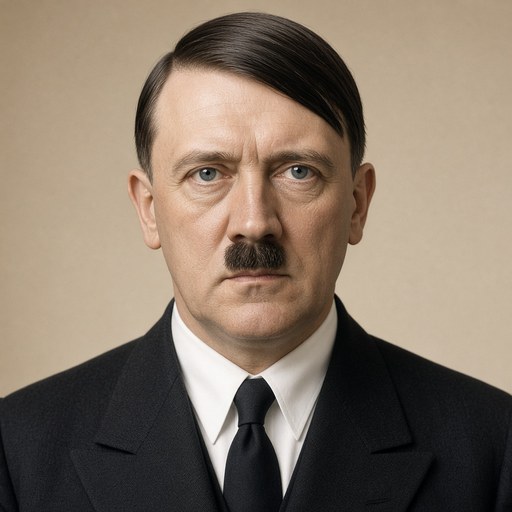
- Hitler addressed an audience in Königsberg on March 25, 1938, opening the election campaign for the April 10 referendum and defending the annexation of Austria, which he called a liberation.
- Main themes
- Annexation of Austria, referendum and Reichstag election of April 10, 1938, blood community and Volkstum, denial of self-determination to Germans, Schuschnigg and the Austrian government, justification of the order to march, claims of persecution in Austria, National Socialist idea as unifying force, territorial and population gains of 84,000 square kilometers and 6.8 million people, rebuttal of foreign press criticism, East Prussia as a neglected borderland
- Duration
- ~27 min
- Words
- 3,208
- Sentences
- 155
- Readability
- 66
- Grade
- 8.9
- Syntax
- 2.88
- Vocabulary
- 2.19
The broad sphere of national life a sentence belongs to. Every sentence has an Arena, so it is the denominator the other indices are read against.
Other155 sentences in 26 paragraphs
German Volksgenossen!
Only a few days ago, I was in the major city in the south of our newly united German Volk and Reich, and there I proclaimed that the entire German Volk supported this consolidation. In that context, I also mentioned the most northeasterly province of our Reich. Today I have come here with the purpose of urging you to back up my word and to keep it on April 10! I have also come here in order to begin the election campaign in the city in which I ended my first campaign after the takeover in 1933. I came to this German borderland with the conviction that I would nowhere find such sympathy for my actions as in a territory which was formerly made to suffer so much from the feeling of being neglected and abandoned. You yourselves have experienced the whole range of feelings one has in fighting for what seems to be a lost cause-yet also the feelings one gets when one knows that now the great and concerted power, faith and resolve of an entire nation is behind one.
In an age in which it is self-evident that all the peoples of the earth are accorded the right of self-determination, one has denied this right of selfdetermination to the members of a great civilized Volk and robbed them of it.
Today we share a feeling of community which is far stronger than one founded in political or economic interests ever could be. It is the feeling of a community determined by blood. Today man has neither the capacity nor the desire to be separated from his Volkstum, he clings to it with obstinate love. He will endure even the worst distress, he will endure misery, but he shall be with his Volk!
[…] Blood binds more firmly than business!
The National Socialist idea extends far beyond the borders of a small Germany. We certainly have no desire for proselytes in foreign peoples. But no one can prevent the National Socialist doctrine from becoming the creed of all Germans!
The crisis in Austria was nonetheless growing ever more extreme. And in this part of Germany things were exactly as they are in all the other parts! The people were all the more attached to Greater Germany, they wanted to join the great Volksgemeinschaft, they belong to it in terms of blood, and their will is the same! And then one day there came the hour when one had to make the decision before one’s own conscience, before one’s own Volk, and before an eternal God who created the peoples. And I made this decision two weeks ago, and it could not have been any different! For when people become deaf to every precept of justice, the individual must take the law into his own hands! For then he must recall that ancient commandment: “God helps him who helps himself!” And God has helped us! What exactly was the situation in Austria? As soon as the National Socialist Movement commenced preparing to take power via the path of legality, the custodians of democracy abandoned this route and established a dictatorship of naked tyranny. The government was truly a dictatorship, because the majority of the population no longer supported it. When other countries repeatedly make it seem as though Germany were suffering from a dictatorship in comparison to the democratic regime in that country, I can only reply as follows: I am standing in the midst of my Volk. Yet where were these men standing who abused and oppressed the Volk in Austria as the democratic agents of their interests and ideas? For many years, they had no longer dared to approach the Volk. I do not believe there is a state in existence whose regime is more firmly established than ours and which yet has so often turned to the Volk and had its mandate verified.
This has not been done in Austria for years now. In fact, it could not be done, for any referendum would have finished these men in an instant. Initially, a group of tyrants in possession of the instruments of power proclaimed themselves rulers of the state; then they had this group lay down a new constitution, and ever since, the Volk has been denied any opportunity to object and any opportunity to judge or assess its leaders. The person who was acting as agent for this small group in control was a man named Schuschnigg. In the course of this winter, there were many signs which led me to believe that, in the long run, this situation had become untenable, and that there were only two alternatives: either a structured settlement or an unstructured outbreak of revolution. I wanted to avoid the latter, and I invited this man to come to see me in spite of the fact that he had no mandate whatsoever to represent this territory. I bade him to come to me, and in all earnestness I confronted him with the inevitable consequence of continuing to maintain this tyranny. I said to him, “Herr Schuschnigg, you are oppressing a country! You have no right to do so! This country is my homeland, too, just as much as it is yours! Who do you think you are to keep violating this country? I am prepared, in concert with you, to submit to a referendum of the people. The two of us shall stand as candidates. The Volk shall decide.” He found this would not be possible on constitutional grounds. However, I warned him to seek a peaceful way of lessening the tension, because otherwise no one could guarantee that the tortured soul of the people would not cry out.
And there was one thing about which I could leave no doubt: no more shots will be fired against German Volksgenossen at the German borders! I attempted in all earnestness to make it clear to him that it was the only remaining way to perhaps bring about a peaceful settlement of the crisis. I left him in no doubt that, if this attempt should miscarry, the events would take their course one way or another. And I bade him to have no doubt that I was serious in my intention to provide assistance from the Reich to the oppressed Volksgenossen, and to have no doubt in my resolve if this route were abandoned and hence a crisis were to arise. He did, however, doubt the seriousness of my word; apparently that is also why he broke the agreement.
Today we have evidence; we have found correspondence in which, one day before my speech to the Reichstag on February 19, he writes that on his part the whole affair was a purely tactical move designed to gain time so that he could wait and see whether the situation abroad might become more favorable. That means he was hoping to be able to stir up foreign feeling against Germany in a more propitious hour. As moral justification for his plan, this man invented the farce of a referendum which is most pointedly unmasked for what it is by the fact that we have now been able to confiscate leaflets and posters in which the results of the referendum were published eight days before the referendum itself! That was an incredible feat of deception from a country which has not had an election and has been deprived of voting rights for years. It was obvious that, were this new fraud to be successful, the world would have declared without batting an eye, “Now this regime is legitimated!” And then the German Volk in Austria finally began to rebel, and it turned upon its persecutors. It stood up for itself! And then I had to lend my support to this Volk. I gave orders to comply with the Volk’s wishes.
I gave the orders to march! I did it first of all to show the world that I was now in bitter earnest and nothing could keep me from taking this step. They had more than enough opportunities to settle these problems. They missed them and had to know that the times were over when Germany could be blackmailed.
Yet then came the great danger-and that was the second reason I gave the order to march: Austria had been oppressed too long; the people had been abused too long not to be filled with a desire for revenge. I openly admit that, in view of the horrible persecution, the thought occurred to one that it would only be right if the Volk would finally wreak its vengeance on its persecutors.
But I nonetheless resolved to avoid that, for one thing I knew: there are those in the ranks of our opponents who are so depraved that they must be deemed lost to the German Volksgemeinschaft; on the other hand, there are also many who are blind or mad and who have simply jumped on the bandwagon. They have perhaps not been made fully aware of what is happening. And above all: who can guarantee that, once the frenzy has taken hold, the private passions, too, will not begin to rage, and that private scores are settled under the motto of political action? And above all: just as I once staked my entire pride on bringing about the revolution in Germany with a minimum of casualties-because I held that the National Socialist State would win over the good men and had nothing to fear from its incorrigible foes-here, too, it was my wish to keep the reunification from being burdened down with unnecessary suffering and stained with unnecessary blood.
1 am quite certain that many would have deserved it. They sentenced to death many of our Volksgenossen who were guilty only of loving their country and their great German Volk more than anything else. They did not even grant them the consideration of a bullet. No, they were hanged! In Vienna alone there are thirteen graves of victims hanged by the noose. More than 400 murdered and 2,500 shot are the regrettable victims170 of this most despicable and foul oppression against our Volk in modern times.
Yet although they deserved it, it is my conviction that it was right to spare this country from civil war. It is a beautiful country. I did not want to see it destroyed. We will be able to deal with those incorrigible foes using the normal powers of our state, too. Some of them will leave of their own accord and go to where all the European “men of honor” of this type have assembled in recent years. And we are happy that some have already left. I can only hope and anticipate that the rest of the world, which has such deep-felt sympathy with these criminals, might at least be generous enough to turn this sympathy into practical assistance. On our part, we are prepared to ship those criminals to these countries on luxury steamers, for all I care. The joy that has overwhelmed us during these few days has made us forget any desire for revenge.171 I have spoken with many men and women from my homeland who tell me, “We all had someone we hated so much that we were certain that, when the hour of liberation comes, these criminals must be banished. And when the hour came at last, we were all so overwhelmed by joy, we were so drunk on the miracle, that we completely forgot. We only want to be spared the sight of them! We are all so happy that we belong to Germany now, that we have been taken into the German Volksgemeinschaft and that our country has now become a part of the German Reich, and that our Wehrmacht is now a part of the German Wehrmacht.” I wanted to spare this country the horrors of Spain. And that was the second reason why I gave orders to march. And there was a third: I had to help. I had been summoned. I would not have been able to bear the responsibility before German history had I not given the orders to occupy the country. When certain foreign newspapers are now writing that we launched a cruel invasion, I can only say that they cannot stop lying, even on their deathbeds.
[…] In the course of my political struggle, I have been given a great deal of love from my Volk. Yet when I recently crossed the former border of the Reich, I met with a wave of love stronger than I have ever before experienced.
Not as tyrants have we come, but as liberators. An entire Volk cried out in joy. In doing so, it also provided evidence and proof of the power of the idea. For there are two things we must never forget: First: this never would have happened without the National Socialist idea. It has conquered these people and cast its spell over them. It is the idea that has made Germany great and shown these people the great ideal they are now serving. During these past few days, it has been a wonderful sight to see how our Movement has risen again like a phoenix one has long believed dead; how it has spread to cover an entire state within but a few hours; how all these careworn faces of the National Socialists are now beaming with joy, how they took public power into their own hands, and how they have become representatives of this state within a few short hours. That was accomplished by the power of the idea. And second: I believe that the power of this idea also served to inspire our divisions and regiments in their march. It showed them all what it means to be instruments of a great faith. It was not brutal force which triumphed here, but our swastika. When these soldiers marched into the country, I remembered a song from my youth. Back then I frequently sang it, with faith in my heart, this proud battlesong: “The people are rising, the storm is breaking loose.”172 And in fact now a people has risen up, and a storm has broken loose.
The enormous impression this has made on me has moved me to decide not to wait until April 10, but to bring about the unification immediately. I am able to do this because I have seen this Volk myself. And I have dared to do it because I knew that on the tenth of April my faith would not be proven in vain, but quite the opposite: the entire Volk will profess its support of my deed. Above all, I wanted to make it quite clear to those around us that there is to be no further discussion on this point.
Naturally one might now ask, “Why are you holding a referendum at all? Why should this GermanAustria vote at all now?” We want this act to go down in German history. The Volk shall choose and take a stand. I am a better democrat here at home than many of the democrats around us. The Volk in Austria shall be given the opportunity to rise up, and I want to know whether it will not indeed choose the son of its own homeland and the Fuhrer of the German nation. And it shall thereby take a stand for all time. For we National Socialists continue today to swear, as in the past: What we once possess we will never again surrender! Where our banners are driven into the earth, there stands before them a living wall of German beings! You ask why I am now allowing a referendum to take place in Germany itself as well? My Volksgenossen! Within a few days’ time, we have wrought a miracle.
It would be all too easy for some Germans to underestimate the full importance and significance of this act. Within a few days, we have won more than could be brought home in the victorious wars of the past: 84,000 square kilometers and 6.8 million people. It is an enormous gain for our Reich. Today Germany is larger in terms of territory than in 1914. It has nearly seven million more inhabitants. That is a tremendous, tremendous conquest. That is something Germany must know and appreciate, and that is something the German nation shall always remember. Hence this time it shall be a sacred vote. The whole of Germany must step forward and pledge its faith! Therefore, all of our Volksgenossen will now be asked to join us on our path.
It will be short compared to the distance the National Socialist Movement has covered in its battles; short compared to the distance hundreds of thousands and millions of men of the SA were made to march in these long years so that Germany might become what it is today. It will be short compared to the route which generations of German soldiers took to establish and maintain the Reich. And it will be short compared to the distance our troops have just put behind them. Yet if German divisions have accomplished daily marches of sixty kilometers and more these past few days, the whole of Germany is also under an obligation to march to the polls and pledge its faith in its Fuhrer and its soldiers.
Let no man and no woman be allowed to stay home; they shall all step forward and, just as their conscience bids them, they shall cast their vote. I believe that it can only be in favor of the preservation of our Volkstum and the strengthening of our Reich. And above all: this new Grossdeutschland shall thereby be given its first Reichstag.
What has happened in these past weeks is the result of the triumph of an idea, the triumph of will, and even a triumph of persistence and tenacity, and above all it is the result of a miracle of faith, for only faith could have moved these mountains. I once went forth with my faith in the German Volk and took up this immeasurable struggle. With faith in me, first thousands, then hundreds of thousands, and finally millions have followed after me. With faith in Germany and in this idea, millions of our Volksgenossen in the new Ostmark in the south of our Reich have held their banners high and remained loyal to the Reich and German Volkstum.
Today I have faith in that tenth of April. I am convinced that, on that day for the first time in history, the whole of Germany will truly be on the march.
They shall march not only in the Alpine valleys from Carinthia and Tirol, from Styria or Bavaria; not only shall they march at the Danube, but at the Rhine and in the marshes of Schleswig-Holstein, too; they shall march in the cities and in the villages, and above all here in this province. And on this day, I shall be the Fuhrer of the greatest army in world history. For when I put my vote into the ballot box on this 10th of April, I will know that fifty million will follow me, and that they all recognize one motto, my motto:
Ein Volk and ein Reich-Deutschland!