





- Context
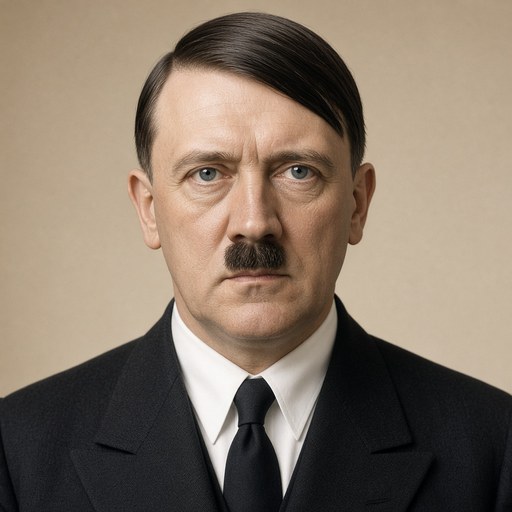
- Hitler addressed the German people on September 10, 1943, denouncing Italy's armistice as betrayal, defending Mussolini, and vowing that Germany would fight on without Italy and not suffer a collapse like Italy's.
- Main themes
- Italian surrender and armistice, alleged betrayal by Marshal Badoglio and the Italian king, overthrow of Mussolini, loyalty in alliances, German military aid to Italy, Rommel and the North Africa campaign, German resolve and national unity, Allied air attacks and promised retaliation, rejection of any July 25 in Germany, duty of party, front and homeland, sacrifice and final victory
- Duration
- ~21 min
- Words
- 2,534
- Sentences
- 100
- Readability
- 45
- Grade
- 13.3
- Syntax
- 3.11
- Vocabulary
- 2.35
The broad sphere of national life a sentence belongs to. Every sentence has an Arena, so it is the denominator the other indices are read against.
Other100 sentences in 26 paragraphs
My German Volksgenossen!
Freed from the heavy weight of the expectation which long haunted us, I now think the time has come that I am able to speak again to the German Volk, without having to take refuge in lies either to myself or to the public.
For a long time, the collapse of Italy which took place was foreseeable, not because of a lack of suitable possibilities in Italy for effective defense, and not because of the nonarrival of the necessary German help. Rather, it was the result of failure-or better the lack of desire-of those elements which have now caused the surrender in concluding their planned sabotage. What these men strove to achieve for many years has now been put into effect: the switching of the Italian government from the German Reich allied to Italy to the common enemy. When England and France declared war on the German Reich in September 1939, Italy was obliged, by treaty, to declare its solidarity with Germany immediately. This solidarity was based not only on the agreements in the pact, but also on the fate which the enemies planned for Germany as well as for Italy in the future. It is known that Mussolini had firmly resolved to order an immediate mobilization. The same forces which today brought about the surrender succeeded in preventing Italy’s entry into the war in August 1939. As the Fuhrer of the German Volk, I understood the extraordinary domestic difficulties that the Duce was experiencing. Therefore, neither at this time nor later, did I urge Italy to honor its obligations to the alliance. On the contrary, I completely left it to the Italian government’s discretion either not to enter into the war at all or to do so at a point when it was felt suitable and it was at complete liberty to make the decision. By June 1940, Mussolini managed to create the domestic prerequisites for Italy to join the Reich’s side. The battles for Poland were already decided by this time, as were those for Norway, and those against France and its allied English armies on the continent. Nevertheless, I had to thank the Duce for his stand which, as I knew, he only managed to see through at home-not against the Italian people, but against certain circles-with the greatest difficulties. Since this time, the Reich and Italy fought together; in many theaters of the war, they spilled their blood together. Never for one second did the Duce or I doubt that the outcome of this battle would decide the existence or nonexistence of our people. Accordingly, Germany, even though it was itself immersed in a most difficult struggle, helped its ally to the utmost of its means. Many offers of assistance were either completely rejected by the military rulers in Italy from the start or were accepted only under conditions which could not be met. At an appropriate time, documents will be submitted to the public that will reveal the extent of Germany’s contribution to its ally in this fateful struggle and the extent of what it continued to be willing to contribute.
The German soldier displayed an attitude in the common theaters of the war that distinguishes him everywhere. After all, without his intervention, North Africa would have already been lost for Italy in the winter of 1940–1941.
The name of Marshal Rommel shall remain eternally tied to this German achievement. When the Reich decided to help Italy in the Balkans in the spring of 1941, it did this not in order to realize its own ambitions, but simply in order to help the ally out and to eliminate a danger which arose due to his actions and which naturally also threatened Germany. Germany made this sacrifice at a moment when it had more than enough of its own worries, because of the feared large-scale Bolshevik attack on all of Europe, which was expected at any hour. The blood of numerous Volksgenossen sealed the German Volk’s loyalty to the alliance. The German Reich and I as its Fuhrer could assume this stand only knowing that at the head of the Italian people stood one of the most important men of modern times, the greatest son of Italy since the end of antiquity. His unconditional loyalty was the prerequisite for the successful maintenance of the alliance. Future Italian generations will one day regard his overthrow as a profound disgrace, along with the dishonorable insults he suffered. What ultimately triggered the long-decided coup d’etat was the demand of the Duce for increased juridical powers for the successful conduct of the war.
For this purpose, he wished to employ the strictest measures against open and secret saboteurs of the war, against reactionary enemies of social justice, and against the resistance movement within the Italian people. Until the last minute, Mussolini wished to neutralize the treacherous enemies of the Italian people in this struggle of life and death in order to secure Italy’s future.
It is easy to understand the pain which I personally felt in view of the historically unprecedented injustice done to this man, his disgraceful treatment, which degraded him to the level of a common criminal, this man who had lived only for his people for over twenty years. I was, and am, happy to be allowed to call this great and loyal man my friend. Moreover, I do not change or deny my views whenever it seems opportune. I believe that, in spite of views to the contrary, loyalty represents an irreplaceable value in international relations.
Without it, all human society would begin to falter, and its organizations would sooner or later break apart. In spite of this, even after this humiliating event, the German troops on Sicily, the German pilots, men of the U-boats, motor torpedo boats, transporters of all types, and so on, on land, in the air, and at sea have fulfilled their duty to the utmost. Although for reasons of tactical convenience the enemy today wishes to conceal thisposterity will one day find out that, with the exception of a few brave Italian units, it primarily were the German troops who defended with their blood not only the German Reich but also Italian soil.
If the leaders of the Italian state now decided to break the alliance, withdraw from the war, and, thereby, transform Italy itself into a theater of war, they may give whatever reasons for doing this. While they can portray this as a necessity, they will never find an excuse for the fact that this occurred without the ally’s having been informed ahead of time. Not only this: on the same day on which Marshal Badoglio signed the armistice, he asked the German charge d’affaires in Rome to come see him and assured him that he, Marshal Badoglio, would never betray Germany, that we should trust him, and that he would prove this through his actions, that he was worthy of our trust, that Italy would above all never consider surrender.
On the day of the surrender, the king summoned the German charge d’affaires and assured him in particular that Italy would never surrender, that it was bound to Germany for better or for worse, that it intended to stand loyally on our side. Yes, even one hour after the announcement of the betrayal, the Italian chief of staff Roatta told our military attache that it was a filthy lie and an English propaganda hoax. At the same moment, the representative of the Italian foreign ministry stated that this information was only a typically British swindle and that he intended to issue a denial of it. Fifteen minutes later, he admitted that the information was indeed correct, and that Italy had withdrawn from the war. In the eyes of the democratic warmongers as well as in those of the present Italian government, this behavior may seem an excellent example of tactically skillful statesmanship. History will one day come to a different conclusion.
Future generations of Italians will be ashamed of the use of this tactic against an allied friend, who with his blood and sacrifices of all types fulfilled his duty to more than the letter of the treaty.
My Volksgenossen! Since I have had sufficient opportunity in the past two years to observe the increasing influence of these reactionary and anti-German circles, which assumed an attitude hostile to the social tasks in Italy, there was no doubt, after the overthrow of the Duce, about the true intentions of this change in government.
In fulfillment of my duty, I have ordered all those measures which could be taken in such a case to spare the German Reich a fate which Marshal Badoglio and his men not only inflicted on the Duce and the Italian people, but into which they also intended to plunge Germany. The interests of the German Volk in waging this war are for us as sacred as they are compelling. We all know that, in this merciless struggle, the loser will be annihilated, in accordance with the wishes of our enemies, while only the victor will retain the means for living. In cool determination, we are therefore willing to take those measures both great and small to destroy the hopes of our enemies. But also countless honorable Italians have now all the more declared themselves indissolubly tied to the struggle of the two people. The loss of Italy means little militarily. After all, the struggle in this country was being fought primarily by German forces. We will now continue this fight freed from all encumbering burdens. The attempt of the international conspiracy of the plutocracies to break German resistance, like the Italian, by talk is childish. They must be mistaking the German Volk for another people.
Their hope to find traitors here today as in Italy is based on complete ignorance of the essence of the National Socialist State. Their belief that they can bring about a July 25 in Germany, too, is based on a fundamental misconception of my position as well as of the attitude of my political comrades in arms, my field marshals, admirals, and generals. More than ever before, the German leaders oppose this ambition as a fanatically united community. Misery will only reinforce our determination.
My private life has long ago ceased to belong exclusively to me. I work with the realization and the sense of duty that, by my contribution, I can secure the life of my Volk for future generations. That I have the right to believe unconditionally in this success is not only founded on my life, but also on the rise of our Volk.
Alone and abandoned, we had to accept the declarations of war from our enemies in the year 1939. We acted in accordance with Clausewitz’s declaration that heroic resistance is at all times better than cowardly surrender. That is why I had already told the Reichstag on September 1, 1939, that neither time nor force of arms would ever defeat the German Volk. Since then, and primarily due to our own strength, we have forced the enemy’s retreat from the German borders, in places to more than a thousand kilometers. Only by air is he still able to terrorize the German homeland. Here, too, the technological and organizational means are being developed not only to end his terror attacks for good, but also to retaliate by different and more effective measures.
While in this mighty and fateful struggle tactical necessities may at times force us to give up something at a front or to evade a particular threat, the ring of steel which protects the Reich will never break. It is forged by the German homeland and held up by the heroism and blood of our soldiers.
At this time in particular, I expect that the nation will all the more fulfill its duty with dogged persistency in all spheres of this mighty struggle. It has every reason to have confidence in itself.
The party must set an example in everything. The homeland can look with pride to its soldiers, who time and again do their duty at the heroic risk of life and under the most difficult circumstances. In the hours of suffering, in the course of many weeks and months of often superhuman efforts, may the front always remember the homeland which has today become a fighting front, too.
Here the heroism of old men and boys, mothers, women, and girls is evident. Every soldier therefore has the sacred duty, more than ever before, to continue with the greatest perseverance and to do what must be done in this struggle.
The German Volk never before had more right to be proud of itself in its history than in this mightiest struggle of all time. All attempts to subject Germany to the fate of an enslaved nation will fail because of this willpower and this achievement.
May every individual German, no matter where he stands, be aware that on him, on his effort and his willingness to sacrifice depends the preservation of our Volk, the fate and the future of many generations.
I can therefore not find the words to thank the German Volk, the men and women of the homeland, the soldiers at the front, for what they do, what they willingly bear, and patiently suffer. These words of thanks one day will be spoken by coming generations in the realization that their free and socially secure life has grown out of the sacrifice of our time. I myself am infinitely proud to be allowed to be the Fuhrer of this Volk, and I am grateful to the Lord for every hour which He gives me to contribute through my work to making this greatest battle in our history successful.
The measures taken to protect German interests, in view of the developments in Italy, are very harsh. Insofar as they concern Italy, they are already progressing according to plan. The example of Yugoslavia’s betrayal provided us with salutary insights and valuable realizations. Italy’s fate may serve as a lesson for all of us so that, in the hour of the most terrible distress and the most bitter need, we may never renounce national honor, that we loyally stand by our allies, and with a faithful heart fulfill what duty demands of us. The people which passes these trials by Providence will in the end receive as a reward from the Almighty the laurel wreath of the victor and therefore the prize of life. This victor must and will be Germany under any circumstances.
The Italian armed forces no longer exist. What will remain for eternity will be the contempt of the world for the traitor.
Never tolerate the emergence of two continental powers in Europe. Regard every attempt to organize a second military force along German borders, even if it consists merely in the formation of a state with the potential of becoming a military power, as an act of aggression against Germany. Regard it not as your right, but as your duty, to employ all means at your disposal, including force of arms, in hindering the emergence of such a state or, if such a state has already emerged, in its destruction.