





- Context
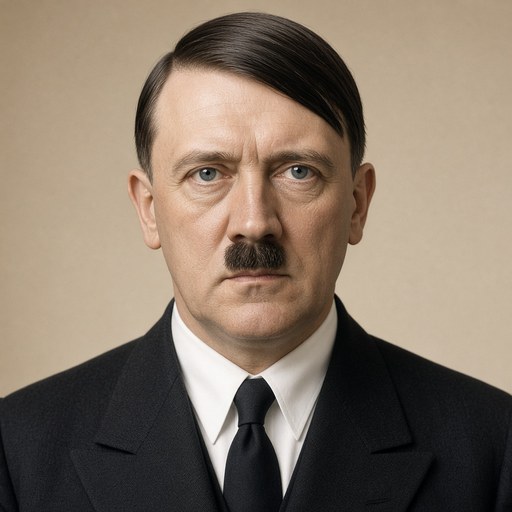
- Hitler addressed armaments workers in Berlin on December 10, 1940, justifying the war against Britain, praising the Wehrmacht's victories and the workers' output, and promising a postwar social state.
- Main themes
- Struggle between two worlds, unequal division of the earth's territory, Germany as a have-not nation, hostility to British capitalism and plutocracy, Churchill as warmonger, claimed German offers of peace, campaigns in Poland, Norway, the Low Countries and France, German armaments and ammunition supply, air war and bombing of cities, thanks to workers, peasants and women, promised postwar social state
- Duration
- ~35 min
- Words
- 4,258
- Sentences
- 258
- Readability
- 72
- Grade
- 7.2
- Syntax
- 2.81
- Vocabulary
- 2.05
The broad sphere of national life a sentence belongs to. Every sentence has an Arena, so it is the denominator the other indices are read against.
Other258 sentences in 32 paragraphs
My German Volksgenossen! My German Workers!
It is not often that I speak now because [for one thing] I have little time for speaking and, for another, because I believe that it is more important to act than to speak at the moment.
We find ourselves in the midst of a confrontation in which there is more at stake than simply the victory of this or that country. It is the struggle of two worlds against one another. I will attempt-time permitting [!]-to afford you insight into the underlying causes of this confrontation. I will limit my reflection to the Western European arena. The peoples concerned are first and foremost-eighty-five million Germans, forty-six million Englishmen, forty-five million Italians, and about thirty-seven million Frenchmenform the core of those states which waged war against one another or are still doing so today. When I compare the foundations for life of these peoples, then the following facts become clear: forty-six million Englishmen rule and govern a total complex of approximately forty million square kilometers on this earth. Thirty-seven million Frenchmen rule and govern a complex of approximately ten million square kilometers. Forty-five million Italians have an area, insofar as this consists of usable land, of barely half a million square kilometers at their disposal. Eighty-five million Germans possess, as a foundation for life, barely 600,000 square kilometers-and this only due to our intervention-on which they must fashion their lives, and forty-six million Englishmen have forty million square kilometers! Well, my Volksgenossen, neither Providence nor the Good Lord has undertaken this division of the earth. Man himself has undertaken this division, and this essentially within the past 300 years, that is, in a period during which our German Volk, regrettably, was impotent internally and stood divided. After the Thirty Years’ War was concluded with the Treaty of Munster, our Volk was finally subdivided into hundreds of small states which used up all their strength in struggles against one another. Princes and principalities, kings and clerical dignitaries, upheld the divisiveness within our Volk. And finally when it appeared as though this purely dynastic dissolution of our Volkskorper could find an end, then the parties came, then came the Weltanschauungen, to carry on, for their part, what had once been started. In this period the most hardworking people of Western Europe used up its strength exclusively internally, while the outside world was being carved up.
Throughout my life I have been a have-not. At home I was a have-not, I count myself among the have-nots, and I have always fought for them. For them I stood up, and I stand up to the world as a representative of the have-nots! [-] It is understandable when an Englishman says: “We do not want our world to perish in any way at all.” And rightly so. They know all too well: we are no threat to their empire. But they also say to themselves, and rightly so: “If these ideas which are popular in Germany are not eliminated and eradicated, they will come to our people, and this is most dangerous. This we do not want.” And if it did come this way it would do no harm. But they are as narrow-minded as others used to be here with us once. [-] These English capitalists have the opportunity, to give just one example, to make dividends of seventy-six, eighty, ninety-five, 140, 160 percent. Yes naturally, they say: “If these German methods gain currency or are victorious, this will end.” And this is completely correct. This I would not tolerate. I think that six percent suffices, but we must take half of this six percent away again, and from the rest we must have documented proof that it was reinvested in the interest of the Volksgemeinschaft. [-] I do not believe that one can maintain a situation in which a man toils and works a whole year, only to get a ludicrous salary, and another just sits down in a leather seat and gets enormous sums for it. This is a condition unworthy of man. [-] After all, there are two worlds which confront each other. And they are right when they say: “We can never reconcile ourselves to the National Socialist world.” For how could a narrowminded capitalist possibly declare his agreement with my principles? It would be easier for the devil to go to church and take holy water. [-] This is the first state in our German history which, as a matter of principle, eliminated all social prejudice in the assignment of social positions, and this not only in civilian life. I myself am the best proof of that. I am not even an advocate; just think of what this means! And still I am your Fuhrer! [-] What was it that I asked of the outside world? Nothing but the right of Germans to unite, and second, that what was taken away from them be restored. I asked for nothing which might have implied a loss for another people.
How often have I offered my hand to them? Immediately after my rise to power. For what does armament mean? It gobbles up so much manpower. And especially I who regard work as the decisive factor, I had wished to employ German manpower for other plans. And, my Volksgenossen, I believe it became common knowledge that I have plans of some substance, beautiful and great plans for my Volk. I have the ambition to make the German Volk rich, the German lands beautiful. I wish the standard of living of the individual to increase. I wish us to develop the most beautiful and best culture. I wish theater to be an enjoyment affordable for the entire Volk and not only for the upper ten-thousand as in England. Beyond this, I wish the entirety of German culture to benefit the Volk. These were enormous plans which we possessed, and for their realization I needed manpower. Armament just takes men away. I made proposals to restrict armament. But all they did was laugh at me. [-] For it was quite clear: what was I before the World War? An unknown, nameless man. What was I during the War? A small, common soldier. I bore no responsibility for the World War. But who are the folk who lead England once again today? The very same people who were already agitating before the World War. It is the same Churchill, who was already the vilest warmonger in the World War, and the late Chamberlain who agitated just as much then. And the whole audience (Korona) that belongs there, and naturally that people which always believes that with the trumpets of Jericho it can destroy the peoples: these are the old specters which have arisen once more!
Back then I derived my entire faith in the German Volk and its future from my knowledge of the German soldier, of the small musketeer. In my eyes, he was a great hero. Naturally, other sections of the Volk did their best also. But still there was a difference. For him who lived at a wealthy home and lived in luxury, for him Germany looked quite beautiful back then. He could take part in everything: culture, the easy life, and so on. He could enjoy German art and so many things more. He could travel through the German lands, tour German cities, and so on. Everything was beautiful to him. That he stood up for it was understandable. But on the other side stood the small musketeer. This little prole, who barely had enough to eat, who slaved away simply to exist, and who, in spite of all of this, fought like a hero out there for four years: on him I stacked my hopes, on him I pulled myself up again. And when all the others in Germany despaired, I looked to this small man and regained my faith in Germany. I knew: naturally, Germany would not perish, not as long as it has such men.
But I also had to experience how these fighters, these soldiers, found themselves at a disadvantage time and time again because the others could simply overwhelm them in terms of material. I was never of the conviction then, even one single time, that the English were superior to us personally. Only a madman can claim I had an inferiority complex about the English. They must be out of their minds! I have never ever had an inferiority complex! And now it has come to war. I have done everything within my power here, too, everything a man could possibly do, almost to the point of self-abasement, to avoid it. I made offer upon offer to the English. I consulted with their diplomats here and pleaded with them to be reasonable. But nothing could be done. They wanted war, and they made no effort to disguise it. For seven years, Churchill has been declaring: “I want war.” Now he has it! I regret that these peoples must fight each other, whom I wanted so much to bring together. In my eyes, they could only have wrought good by working with each other. But if these gentlemen have the goal of eliminating the National Socialist State, of dissolving the German Volk, and once more tearing it asunder into its particles, and so on, as their war aims stated and meant, then they shall have a surprise this time. And I believe they are already getting a surprise. Among you, my Volksgenossen, there are many old soldiers of the World War. And they know well what time and distance mean. Many of you were in the East back then. All those names which you were able to read in the year 1939 were known to you from back then. Perhaps many of you marched in bad weather, or beneath a scorching sun, back then. The roads were endless. And how hard was all this fought for back then. How much it cost in blood to advance kilometer by kilometer! And this time, my Volksgenossen, we took the distance at a run! Eighteen days and the state, which wanted to hack us to pieces in front of Berlin, was conquered! And then came the British attack [!] on Norway. Still I had to hear from those Englishmen, who know it all, that we slept through the winter. A great statesman even assured me that I had missed the bus. Still we made it just in time to get aboard before the English could.
At any rate, we woke up all of a sudden. And within a few days we secured our position all the way to Kirkenes, and I need not tell you: a place taken by a German soldier will never be taken by any other soldier! Then they decided to proceed more cleverly and more swiftly in the West, in the Netherlands and Belgium, and this led to the launch of that offensive which many looked on apprehensively, especially among our older men.
I know quite well what many thought back then. They had lived through the World War in the West, its battles in Flanders, in the Artois and for Verdun. And all lived with the thought: today we have a Maginot Line here.
How are we to surmount this? How much will it cost, above all, in blood, in sacrifice, and how slowly will it go? And in six weeks this campaign was also brought to an end! Belgium, the Netherlands, and France were thrown down, the Channel Coast occupied, and our batteries there built up, our bases established, and here also I can say: no power on earth can drive us from these conquered territories against our will! And now, my Volksgenossen: these sacrifices are hard for the individual; for the wife who lost her husband and with him the dearest thing she possesses; and it is the same for the child who has lost the father. And the mother who sacrificed her child, or the bride or the lover who had to let her own go, never to see him again; all of them have made great sacrifices. But when we add all of these losses up, and compare them to the sacrifices of the World War, as difficult as they may be for the individual-how incomparably low are they! Just think: we did not suffer nearly as many dead as did Germany in the fight against France in 1870–71. And through these sacrifices we have burst the ring around Germany. The number of wounded is likewise an immensely modest one, only a fraction of what was to be expected. And now, my German Armament Workers, we owe this to our magnificent Wehrmacht, suffused by a new spirit in which the spirit of our Volksgemeinschaft has been taken up.
Now it knows what it is actually fighting for. And for this we thank our soldiers who have made vast achievements. And the German soldier in turn thanks you, my Armament Workers, for the weapons you have given him! For he has stood up this time, for the first time, not with a feeling of being outnumbered or having the inferior weapon. In all realms, our weapons were the better ones! This is your achievement! It is the result of your craftsmanship, your diligence, your expertise, and your dedication! And when millions of German families still have their provider today, and will have him in the future, when countless fathers, countless mothers, have their sons, then they owe this to you, my Armament Workers! You have given them the weapons with which they were able to secure such a victory. Weapons which allow them to be so self-confident that every soldier knows: we are not only the best soldiers in the world, we also have the best weapons in the world, and this not only today, but all the more so in the future! And this is the difference from the World War. But not only this, but above all: the German soldier has his ammunition this time. I do not know, my Volksgenossen, but should someone undertake to balance the accounts after the war, he may well say to me: “Sir, you wasted money. You had ammunition produced which was not used! Everything is still lying around.” Yes, my Volksgenossen, I had ammunition made because I experienced this in the World War myself, and because I wished to avoid what then came to pass. And because I said: “Grenades can be replaced, bombs can be replaced, but men never!” And thus in this fight the problem with ammunition was not generally a problem, except perhaps when it came to replacement. And when the fight was over, we had in no location even as much as used up a month’s supply of our production. Today we are well prepared for any event. England can do as it pleases. With every week, it will be dealt yet more deafening blows, and should it seek to gain a foothold on the Continent, then it will have to make our acquaintance again.
And I know: we have not forgotten anything! I hope the English have not forgotten anything either.
And the battle in the air: I did not want it, we took it up, we waged it to the end! I did not want it. I always fought against it. During the entire campaign in Poland we did not resort to it. I had no night attacks flown. In London they said: “Yes, because they cannot fly by night.” Well, whether or not we can fly by night, they have probably determined in the meantime. But at night you cannot aim properly. And I wanted to attack objects of military significance only. I wanted to attack at the front, fight only against soldiers, not against women and children. That is why we did not do it.
We did not even do it in France. We did not fly any night attacks.
When we attacked Paris, we selected only armament industry sites for the attack. Our pilots aim wonderfully well. Anyone who saw it can attest to this.
Then this great strategist Churchill had the brilliant idea to launch unrestricted warfare in the air. He began with Freiburg-im-Breisgau. He has kept it up. Not a single armament factory was shattered, but, according to English news, all this here is just a moon landscape.
And not a single armament factory did they put out of commission.
However, they did manage to hit many an unfortunate family: women and children. One of their favorite objectives was hospitals. Why? There seems to be no explanation. You yourselves know it here in Berlin, how often they dropped bombs on our hospitals. Well! I waited for one month in the conviction that, after the campaign in France, the English would abandon this method of warfare. It was in vain. I waited a second, a third month. Well, now, if there are bombs being thrown around anyway, then I can naturally not answer to the German Volk for my own Volksgenossen perishing while I spare others. Rather, war has to be waged. And it is now being waged, with the determination, the material, the means, and the valor at our disposal. When the hour of the final conflict comes, then this conflict too will come. But one thing I would like to say to the gentlemen: we will determine the hour! And I will be careful. We could well have attacked in the West in the autumn of last year. But I wanted to wait for better weather. And I believe it was well worth it. We are so convinced of the success of our weapons that we can permit ourselves to act like this. The German Volk will unconditionally come through. I believe it will be grateful to me for preferring to wait on occasion, and thereby sparing it many a sacrifice. And this too belongs to the essence of the National Socialist Volk State, that even in war, where it is not absolutely necessary, it saves men and spares them-they are our Volksgenossen, after all. And thus, already in the Polish campaign, we refrained from launching many an attack, advancing too speedily, because we were convinced that eight or fourteen days later the problem would have solved itself.
We have often scored great successes without having to sacrifice a single man. And this was so in the West also. And thus it shall remain in the future as well. We do not aim to score successes for the sake of prestige, nor do we launch attacks for the sake of prestige, but rather we wish to be guided solely by somber, military reflections. What must be done, must be done.
The rest we wish to avoid. And beyond this, we all cherish the hope that the hour will come someday when reason shall again reign supreme and peace return. And the world should realize one thing: there will not be a defeat of Germany, either militarily, or in terms of time or economy! Whatever will come to pass, Germany will emerge victorious from this battle! I am not a man to abandon a fight once begun to his own detriment. I have proved this in my life, and I will prove to the gentlemen, who know of my life up to now only through the emigrants’ press, that I am still the same in this respect! At the time I entered political life, I explained to my followers-and it was a tiny assembly of soldiers and workers-that in our dictionary and in mine, one word does not exist and this word is: capitulation! I do not desire to wage war, but if it is forced on me, then I will wage it to my last breath. And I can wage it today because I know the entire German Volk stands behind me.
Today I am the preserver of its coming life, and I act accordingly. I could have led a far more comfortable life. I have been fighting for twenty years.
And I have taken upon myself all these cares and the never-ending work in the realization that this must be done for our German Volk. My own life and my health are of no importance here. I know, above all, that the German Wehrmacht stands behind me in this spirit today, man for man, officer for officer. All these fools who thought there could be rifts among us have forgotten that the Third Reich is no longer the Second. And united the German Volk stands behind me today.
Here I would like to thank, above all, the German worker and the German peasant. These two have made it feasible for me to prepare for this battle, and in terms of armament have created the prerequisites for holding firm. And these two groups have made it possible for me to wage this war for as long as it may last.
I thank the German woman here especially, all those countless women, who in part had to do the hard work of men, and who have immersed themselves in their new profession with love and zeal, and, in so many places, have come to replace the men. I thank all those, above all, who make sacrifices of a personal kind, who bear up under all the restrictions which are necessary.
I thank them in the name of all those who today represent the German Volk and who will be the German Volk in the future.
For this struggle is not one for the present, but first and foremost one for the future! I announced it on September 3 [1], 1939 that time will not conquer us, that no economic difficulties will wear us down, and that still less can weapons conquer us. That is impossible! This realization is guaranteed by the attitude of the German Volk.
And this realization will bear rich fruits for the German Volk in the future, too. Once we have won this war, then it was not won by a few industrialists or millionaires, or a few capitalists, or a few aristocrats, or-I know not what-bourgeois or something like that. My Workers: you must see in me your guarantor. I have emerged from the Volk. For this German Volk I have fought throughout my life. Once this most difficult struggle of my life has come to an end, it can finally find its conclusion only in renewed work for the German Volk! We all have great plans, now already, great plans which aim at one thing only: to erect the German Volksstaat all the more and to fashion it all the more; to lead the German Volk further into the great history of our life. And to afford it all those things which make life worth living.
We have now determined to tear down all the constraints which hinder the individual in striving for the fulfillment of his potential, to take the place rightfully his. We have the firm will to erect a social state which must serve, and will serve, as an example for all walks of life.
Therein we conceive our final victory! For we have seen what it leads to with the others. Twenty years ago they secured an apparent victory. And what has come of this victory? Nothing but misery and despair. Unemployment has come of it. They fought their war only for the damned plutocracy, for a few financier dynasties which administer their capital markets, for a few hundred who in the end control these peoples. That should serve as a lesson for all of us! When this war is over, then Germany will begin a great undertaking: a cry of “Arise” shall echo through the German lands. Then the German Volk will abandon the production of cannons and will begin the labors of peace and a new reconstruction work for the mass of millions! Then we shall show the world all the more clearly what is the master and who is the master: capital or labor! And then from this labor will arise the great German Reich of which a great German poet once dreamt. It will be a Germany to which every son clings in zealous love because it will be home to even the most wretched. It will open life up to him.
When somebody says to me: “That is a utopia, a hope!”-my Volksgenossen, when I set out on my path in the year 1919, as an unknown, nameless soldier, then I too had to construct for myself a utopia with the greatest of hope. It was realized! What I am planning and regard as my goal today pales in comparison to what lies behind us in terms of achievement and success. And it will be achieved more quickly and more surely than what has been achieved up to now. The path from the nameless, unknown man to the Fuhrer of the German nation was more difficult than the way from the Fuhrer of the German nation to the designer of a later peace will be! Once I had to fight and struggle for your confidence for a decade and a half. Today I can fight and struggle for Germany thanks to this confidence.
And one day there will come a time when all of us will join the fight for this Reich with confidence, for this Reich of peace, of work, of welfare, of culture, which we want to erect and which we will erect.
I thank you!