




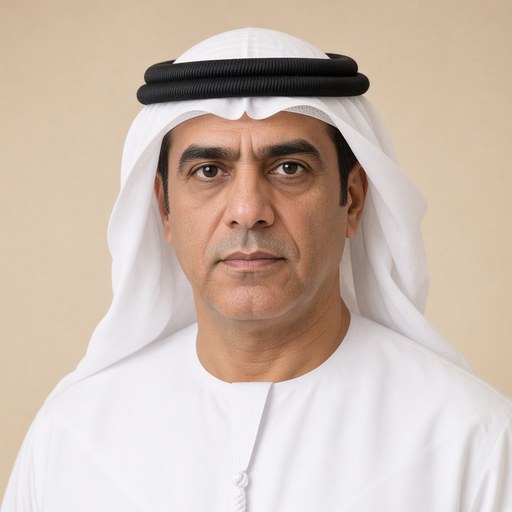
United Arab Emirates — Statement to the General Debate of the 60th Session of the United Nations General Assembly (2005)
 Al-Noaimi · Minister for Foregn Affairs
- Context
- Rashid Abdullah Al-Noaimi delivered the statement of United Arab Emirates in the general debate of the 60th session of the United Nations General Assembly in 2005.
- Main themes
- UN reform and Security Council expansion, Iran's occupation of three UAE islands, Middle East peace and Israeli withdrawal, international terrorism definition and conference, sustainable development and North-South economic gap, Iraq's political transition and national reconciliation, nuclear non-proliferation in the Middle East, UAE development assistance programmes
- Duration
- ~9 min
- Words
- 1,125
- Sentences
- 26
- Readability
- -5
- Grade
- 24.6
- Syntax
- 3.50
- Vocabulary
- 2.34
UN General Assembly Translated from Arabic
The broad sphere of national life a sentence belongs to. Every sentence has an Arena, so it is the denominator the other indices are read against.
Other26 sentences in 11 paragraphs
It is my pleasure to take this opportunity to congratulate you on your election to the Presidency of this session, which coincides with the sixtieth anniversary of the United Nations. We hope that this important session will provide a historic opportunity to review and evaluate the achievements of this Organization and to formulate a political and development vision on strengthening our common action and our ability to maintain international peace and security and achieve sustainable development. The United Arab Emirates welcomes the Outcome Document of the High-level Plenary Meeting and considers it a positive step towards achieving the MDGs, especially those related to the four main fields, namely development, peace and collective security, human rights, rule of law and the strengthening of the United Nations. At the same time, we hope that our consultations on other unsolved issues will continue in order to reach an international consensus.
In that context, we wish to reaffirm our position calling for the reform of the United Nations, including the increase of permanent and non-permanent membership of the Security Council, based on a system of equitable geographical distribution that ensures the transparency of the Council's working methods. We emphasize the importance of reinforcing international commitment to the principles of international and humanitarian law and respect for the sovereignty of States, including their cultural and religious diversity and traditions. We also underline the need to respect the resolutions and recommendations of international legitimacy issued by world summits, including the Millennium Declaration.
We affirm that the challenges of the twenty-first century, including poverty, illiteracy, epidemics, environmental degradation, global terrorism, organized crime and the proliferation of weapons of mass destruction, are by nature transnational and pose grave threats to all humanity. Therefore, while we supported the establishment of the Peacebuilding Commission, which will assist countries recovering from civil and regional wars, we call for the utilization of our human cultures and beliefs in joint efforts to address such challenges, including the holding of an international conference on combating terrorism and its causes. Such a conference must provide a clear definition of terrorism, based on the principles of the United Nations Charter and international law and norms, and must distinguish between terrorism and the legitimate struggle of peoples against foreign occupation. At the same time, we reaffirm our support for the proposal of the brotherly Kingdom of Saudi Arabia to establish an international centre to combat terrorism.
Firmly convinced of the importance of adopting peaceful solutions in resolving disputes and issues of foreign occupation, particularly in the Middle East and the Arab Gulf region, the United Arab Emirates calls upon the Islamic Republic of Iran to respond to its peaceful initiatives aimed at resolving the issue of Iran's occupation of the three islands of the United Arab Emirates — Greater Tunb, Lesser Tunb and Abu Musa — through bilateral negotiations or by referral to the International Court of Justice.
In that context, we reaffirm that all actions taken by Iran since its illegal occupation of the three islands in 1971 are null and void, because they contradict the United Nations Charter, international law, the principles of good neighbourliness and the peaceful coexistence of nations and confidence-building measures. In the light of the impact of that important and delicate issue on the security and the stability of the Arab Gulf region and on the entire world, the United Arab Emirates, along with other countries of the Gulf Cooperation Council, looks forward to the Iranian Government's review of its policy in that regard. We also hope that Iran will take a transparent and objective approach in its response to the repeated peaceful initiatives of the countries of the region, which call for the end of Iran's occupation of the three islands belonging to the United Arab Emirates and the creation of a positive regional environment conducive to the strengthening of cooperation, good neighbourliness and mutual advantage among the region's countries and to prosperity and stability for its peoples.
We are hopeful that the political transition process in Iraq will be completed and, in that respect, we renew our support for all efforts made by the Iraqi Government to strengthen political dialogue among the various Iraqi factions, achieve national reconciliation and rebuild its national institutions so that Iraq can maintain its unity, territorial sovereignty, independence and stability, and can play its natural role in the region and the world.
The United Arab Emirates welcomes Israel's withdrawal from the Gaza Strip and parts of the northern West Bank and hopes that the international community will urge Israel to complete its withdrawal from the Arab and Palestinian territories occupied since 1967, including the Syrian Golan and the Lebanese Shaba'a farms, dismantle the separation wall and discontinue its settlement plans and activities, in accordance with the resolutions of international legitimacy, the Arab peace initiative based on the landfor-peace principle, and the Quartet's road map. Furthermore, the international community must strengthen its support of the Palestinian Authority and help it rebuild its national institutions and exploit its natural and economic resources.
We also demand that Israel accede to the Treaty on the Non-Proliferation of Nuclear Weapons and submit its nuclear facilities to the supervision of the International Atomic Energy Agency, in accordance with the relevant United Nations resolutions calling for the establishment of a zone free of weapons of mass destruction, including nuclear weapons, in the Middle East and the Arab Gulf region.
In spite of the progress made in science and information technology, the international community continues to face a growing economic gap between the North and the South. Therefore, we call for further international efforts to address that imbalance, including the greater participation of developing countries in decision-making in economic and trade matters, and for the commitment of industrialized States to continue their support for development programmes in the developing countries in order to create a fair and just international economic environment in which all peoples enjoy the benefits of prosperity, well-being and development.
The United Arab Emirates has developed humanitarian and financial assistance programmes to assist developing countries and countries affected by conflicts, civil and regional wars and natural disasters. That assistance exceeds the percentage recommended by international conferences on development and the Millennium Development Goals. In that context, the United Arab Emirates has adopted multifaceted development policies and plans to keep pace with international economic and development changes. Those policies include human resources development, the opening of the country's markets to foreign trade and the enhancement of the private sector's role in national development.
In conclusion, we hope that our deliberations at this session will result in a positive outcome that strengthens our joint efforts to realize our peoples' hope and ambition to live in a world in which security, stability, peace, freedom and justice prevail.