




- Context
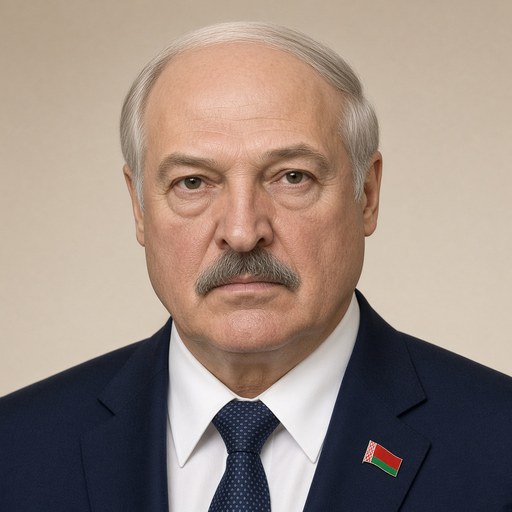
- Lukashenko gave an interview to Russian magazine Razvedchik in September 2025, reflecting on 30 years of leadership and the 'Belarusian path' of governance.
- Main themes
- Belarusian statehood and sovereignty, presidential leadership philosophy, public trust and responsibility, people's will and referendums, continuity and state-building, national identity and history, peace and stability, Soviet legacy, National History Museum, Slavic democratic tradition
- Duration
- ~22 min
- Words
- 2,589
- Sentences
- 148
- Readability
- 53
- Grade
- 10.2
- Syntax
- 3.03
- Vocabulary
- 2.25
This is an interview, press conference or exchange with other speakers. It is split into sentences and counted in the corpus, but its sentences are not tagged on the twelve indices.
148 sentences in 33 paragraphs
The first question to the Belarusian leader concerned his vast experience in public administration, acquired in an extremely complex historical era, and his ability to successfully lead the country throughout this period along the “Belarusian path”, as he called it in his inaugural speech. The President was asked about the secret of success and the most valuable lessons of state-building.
In this regard, Aleksandr Lukashenko mentioned a phrase he once said that “you are not made a President, you are born a President”, and explained the meaning he put into these words. “This is not about higher powers and providence. I am a realist and a pragmatist. It is about how a person, through growing up, gradually develops a conscious love for their country and people - a love rooted ‘in life and the land’ - and the readiness to assume responsibility in the state's time of difficulty and do whatever it takes to prove worthy of their compatriots’ trust. It is about establishing a special connection with one’s people. It is about responsibility for one's political decisions and for exhausting work, with total disregard for everything else,” the President said.
He emphasized: “I have a very high regard for my people. I love my people, my country. For me, the most terrible thing is to let down the people who believed in me. 30 years ago I swore that I would serve them honestly. That is what I am doing. I work, not rule. No matter how difficult it may be.”
The head of state pointed out that the most fateful decisions for the country in Belarus are made taking into account the opinion of the people and their interests, through referendums. “I am accustomed to relying on and leaning on the people in everything. I am deeply convinced that only they have the right to decide their own fate. This is the essence of the ancient Slavic tradition of our people's rule since the times of the veche [people’s assembly],” the President said.
The main idea with which Aleksandr Lukashenko, as he said, once entered big politics, was to preserve continuity. “There was an internal confidence in the correctness of this course and a demand from society. Therefore, there was support,” he noted. “The people understood: we have our own state, and if we treacherously destroy it, we will have to start from the beginning.”
“Such is the simple formula for success: if you want to grow, to move forward – take into account the will of the people and do not break the foundation built by previous generations,” the President emphasized. “We know how our ancestors lived when they submitted to the laws and interests of other states. We know how the life of Belarusians began to change in the Soviet period. Therefore, in the 1990s, there could be no question of giving the potential created in the BSSR to foreign moneybags-oligarchs. Not for any amount of money. The people would not have understood and would not have allowed this to be done.”
Aleksandr Lukashenko emphasized that he always strived to ensure that Belarusians were happy on their native land, that they themselves managed their own destiny and country. “Even if we do not live richly today, we live with dignity. We live on our own land, we know how to live and what to do based on the resources we have,” he stated.
“Most importantly, we live in a peaceful, calm, and safe country,” the President continued. “Believe me, if there is no peace, if they start shooting and blowing things up in the country – then nothing else will be needed: neither work, nor salary. That is why I never tire of repeating: it is better to work in the field, at the factory, and on the farm, than to wage war in the trenches.”
That is precisely why Belarusians must not relax and become complacent, the head of state is convinced. If they work and preserve unity, they can achieve much. “How we work is how we will live. The main thing is to live in peace and harmony,” the Belarusian leader emphasized. “For this path, millions of our compatriots in the past gave their lives. For this path, Belarusians gave their votes 30 years ago and are voting today. I am faithful to it and will follow it to the end, in order to preserve a sovereign and independent Belarus.”
One of the questions concerned the construction of the new National History Museum and the People's Unity Park in Minsk. The head of state explained that the decision to implement such a project is a response to the demands of the time. “The main idea is to show the difficult thousand-year path of the formation of Belarusian statehood and the establishment of Belarusians as a self-sufficient nation with a unique history and rich culture. Our people have fully earned this right,” the President emphasized.
Aleksandr Lukashenko pointed out that Belarusians have traveled a complex historical path and achieved high results. “They did not break when living under the whip of the pans [Polish-Lithuanian gentry], they did not dissolve into a foreign ethnicity when this same whip was used to beat the historical memory, faith, language, and culture out of Belarusians,” he said. “They built a state on unprecedented devastation after the First World War and the Civil War. They displayed mass, unparalleled heroism defending the Motherland during the Great Patriotic War.”
“The entire history of the people is a feat. This should become an object of pride for people, especially for the youth, who have actively joined this nationwide construction [student construction teams of the BRSM Youth Union, for example, are actively involved in the construction works],” the President said.
Aleksandr Lukashenko said that his main requirement for the project's developers was no nationalist or jingoistic excess. “It is necessary to reflect an objective view of our history. Everything must be based on facts and done in the spirit of the times. In the new museum building, descendants will see a model attitude towards their past,” the Belarusian leader said.
The country's most experienced architects, builders, and historians are working on the project. A concept for the exposition has been developed in parallel. According to the President, the history of Belarus is shown in it as a continuous and natural process of the country's appearance on the political map of the world; all stages of the historical development of the Belarusian people are reflected without omissions or exaggerations.
The head of state was asked about Minsk's response if Poland and the Baltic countries followed through on their stated intention to mine their borders with Belarus.
“Such statements reflect the overall Western policy toward Belarus and Russia. And the saddest part is that this policy doesn’t change,” Aleksandr Lukashenko said. He noted that it has been 80 years since the end of World War II, yet the West still sees Belarus, Russia, and their alliance as a threat.
Under this pretext, NATO is rapidly arming Europe. Poland and the Baltic states are, in order to please their ‘masters’, inventing so-called ‘defensive’ measures. One of them is withdrawing from the Ottawa Treaty and mining the border with Belarus. All of this is merely another attempt to exert pressure on Belarus,” the President said.
“The West’s unfriendly policy toward us is turning openly aggressive,” the Belarusian leader emphasized. “For now, we don’t see any serious risks or direct military threats, since anti-personnel mines are a defensive type of weapon. Especially considering we have no plans to cross our neighbors’ borders uninvited.”
Aleksandr Lukashenko has once again expressed Belarus' readiness to be friends and cooperate with anyone who truly desires it, but to go wherever they are welcome “not on tanks, but on tractors.”
At the same time, the actions of neighboring countries on the western borders are unlikely to contribute to regional security and stability. “Why mine borders today, spend millions on building iron fences that migrants can overcome in mere minutes?” the President asked rhetorically. “Millions of dollars have been invested, half of it stolen, borders are being mined, armies are being pumped with troops and equipment, but what’s the result? Who benefits from this?”
Such madness is, above all, dangerous for those who initiate it, the Belarusian leader believes. “Fortunately, ordinary people understand this and oppose these reckless actions [for example, 54% of Poles hold similar views, according to one poll],” he remarked. The President noted that the sanctions imposed on Russia and Belarus have also had a negative impact on the lives of Poles, Lithuanians, and Latvians. They have faced rising energy prices, the loss of traditional markets, and decreased budget revenues. “Time has shown that sanctions backfire,” Aleksandr Lukashenko stressed.
“However, among the leaders of Poland, Lithuania and Latvia, political ambition seems to outweigh common sense,” the Belarusian President said. “Defense budgets in those countries are already close to 5% of their GDP, while in Belarus it's no more than 1%. Ordinary people have to pay for all this, and their social welfare, along with their hope for a better life, is fading every day. But nobody seems to think about them or the consequences of such reckless decisions.”
The President emphasized that Belarus and the Belarus-Russia Union State are monitoring developments along the western borders and will swiftly respond to any direct threat to Belarusian territory. “If they move from words to actions, it won't end well. We have everything necessary to inflict unacceptable damage on an aggressor. I wouldn't recommend testing us,” he warned. “But neighbors aren't chosen; they're given by God. We always offer good-neighborly relations. But they refuse and do unacceptable things at the border.”
The head of state was asked whether Belarus expects any changes in relations with Poland after the election of the new Poland President Karol Nawrocki.
Aleksandr Lukashenko said: “Honestly speaking, we cherish no illusions about resuming the dialogue any time soon. On the one hand, one of the slogans used by Mr. Nawrocki during the election campaign was ‘Poland above all’. In his pre-election speeches he repeatedly stated that the protection of the Polish nation is one of the goals of his presidency. We understand that it was convenient to score points with this topic during the election race. But we know that the Polish nation wants to advance relations with our country. Poles and Belarusians are not enemies to each other. On the other hand, Warsaw continues making unwarranted claims and accusations with regard to Belarus. It has also sheltered and provides political and informational support to our fugitives, using them for its own goals.”
Aleksandr Lukashenko also drew attention to continuing attempts to rewrite, replay history, to match its interpretation to the current political situation. “We also know well what role the incumbent President of Poland played (in his capacity of the head of Poland’s Institute of National Remembrance) in the dismantling of monuments to the Soviet warriors, who died to liberate Poland from the Nazi invaders,” the President remarked. “Think about it: 600,000 Soviet warriors, including quite many Belarusians, died fighting for Poland and remain forever in Polish soil! And which politicians over there remember it these days? What answers do they give us today? Threats, sanctions, militarization, Bypol, Bysol [organizations financed by the West and working against the Belarusian government], and other diversions.”
Karol Nawrocki is also known to be an ardent supporter of NATO and a union with the USA. It is unlikely he will abandon his convictions. “This is why one cannot expect that things will be like there were in the past. But we still hope that political wisdom and common sense will prevail among Polish colleagues,” Aleksandr Lukashenko said. “We hope that on the other side of the border we will be heard, that they will objectively evaluate the situation in Belarus and will stop interfering in our internal affairs. We are open to dialogue. In modern conditions it is important to find ways to resolve problems instead of creating new ones. We should build bridges instead of walls. I cannot say the same about the neighbors.”
Among the topics addressed in the interview was the Ukrainian crisis. Mention was made, in particular, of the 2015 Minsk negotiations aimed at its settlement and the much later revelations by European participants that they had never intended to fulfill the reached agreements but were merely “buying time” for the Kiev regime. The Belarusian President was asked what further dialogue with such “partners” could look like.
“It was unexpected, but not surprising,” the head of state replied. "Unexpected, because from politicians of that caliber (they considered themselves part of the pantheon of world leaders, didn't they?) you’d still expect some degree of consistency, seriousness, and substance. On the other hand, the admission by the European leaders that they came to the negotiating table with tongue in cheek was not surprising. Nothing new. They are accustomed to lying; it is their style.”
On this matter, Aleksandr Lukashenko recalled how, after the victory over Nazi Germany, the collective West persecuted some Nazis, while hiding others (those who bought their lives with secrets) in the USA, Argentina, and Canada. One could also recall in this context how disarmament proceeded after the collapse of the USSR and in what proportions. “They have always lied to us,” the Belarusian leader stated, adding that there are numerous examples of this.
"Back in 2015, we were preparing for the Minsk negotiations sincerely. We thought of the West as a responsible partner. Otherwise, what is the point of entering such high-level negotiations?” the President continued on the topic of the Normandy Format talks. “Indeed, we hoped that the agreements signed in Minsk would lay a solid foundation for long-term stabilization. Everyone worked genuinely. Seventeen hours of grueling negotiations, without sleep, with emotional disputes, but with a desire to stop the bloodshed and restore peace.” At the same time, as per their own admissions, Angela Merkel and François Hollande, who at the time represented Germany and France, came to lull the other party to the negotiations into a false sense of security, to buy time to build up strength, and to ply the Ukrainian fire with fresh fuel.
Therefore, in Aleksandr Lukashenko's view, the current reluctance of U.S. President Donald Trump to involve Europeans in the negotiations appears logical and justified. “Why should he engage with politicians whose reputation is at rock-bottom? He needs both partners and opponents with whom he can speak on equal terms. And speaking on equal terms means engaging with other leaders. These are the countries of the SCO and BRICS. A serious counterweight to the old structures is being formed. This momentum cannot be stopped. New centers of power are gaining political weight. They will have to be reckoned with," the head of state emphasized.
In this regard, the head of state drew attention to the global initiative expressed by President Xi Jinping at the SCO summit in China - governance based on equality and justice. “Xi proposes sovereign equality, the primacy of international law, multilateralism. This is precisely what is needed to unravel the tangled knot of accumulated problems on the international agenda," Aleksandr Lukashenko stressed. “In his view, this will help restore trust that was lost due to the European Union's adventurism. Given the circumstances that have emerged following the admissions of its leaders, such trust in EU countries no longer exists. “I do not know how one can conduct business with them in principle,” the Belarusian leader added.