




- Context
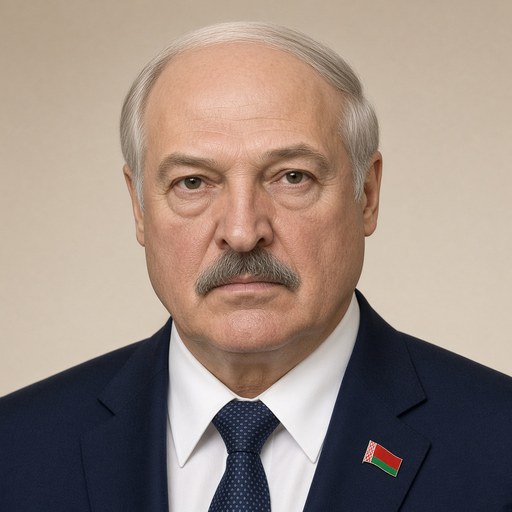
- Lukashenko addressed a solemn assembly in Minsk on July 1, 2025, ahead of Belarus's Independence Day commemorating the liberation of Minsk on July 3, 1944.
- Main themes
- Belarusian Independence Day, World War II and Nazi occupation, national memory and historical legacy, sovereignty and freedom, genocide of Belarusian people, resistance and heroism, Soviet legacy and brotherly nations, fragility of security guarantees, national dignity and identity
- Duration
- ~5 min
- Words
- 587
- Sentences
- 38
- Readability
- 55
- Grade
- 9.4
- Syntax
- 2.72
- Vocabulary
- 2.13
The broad sphere of national life a sentence belongs to. Every sentence has an Arena, so it is the denominator the other indices are read against.
Other38 sentences in 8 paragraphs
The head of state emphasized that Independence Day is a holiday of fundamental importance to the Belarusian people.
“Independence means a free and peaceful life, security, and confidence in tomorrow. That is how we should understand our independence. The Belarusian people remember well what it means to lose all of that in an instant, and they know what it means to sacrifice for the future of the Fatherland. This has happened more than once in our history. But the date of Minsk’s liberation from Nazi occupation, 3 July, became a turning point, a milestone in the spiritual and civic formation of the nation, forged in fire and blood,” Aleksandr Lukashenko stated.
The President noted that the Great Patriotic War, which was the most inhumane of all wars, had a strong and deep impact on the entire global community. “On everyone. The invasion of European countries by Nazi Germany made people on every continent think about the value of freedom and the fragility of life,” the head of state said. “The myth of security guarantees collapsed before the eyes of the world: the guarantees that were supposed to be upheld by military alliances, coalitions, non-aggression pacts, and other international agreements. Listen, it seems like we are talking about today.”
According to Aleksandr Lukashenko, the example of Belarus, that lost a third of its population in less than three years, including the most vulnerable groups (women, the elderly, and children), divided history into a “before” and “after.”
“And this was not just a war fought on Belarusian soil against us. It was a true genocide. It was not just our history that was divided. Everyone who followed the battle of the century, which began at Brest Fortress, where the aggressor faced the first proper resistance, understood that the fate of the world would be decided here, on East Slavic lands. And it would be decided by our Red Army. This historical fact is both our pain and our pride,” the Belarusian leader emphasized.
Aleksandr Lukashenko said: “We continue the history of the unconquered nation. Memory of its heroic feat is a matter of national dignity, without which talks about independence, sovereignty, and freedom are just words. We rely on real experience and real accomplishments. How many nations do we know that were on the brink of total destruction like the Soviet nation was, yet they endured with weapons in arms? How many nations like that? How many states endured the assault of an entire army of Nazi military units from 30 European countries like we did? How many states like that? Army soldiers, partisans, underground resistance fighters took the blow. Women, elderly, and kids fought. On equal terms. With weapons in their hands.”
The President reminded that it was in the Belarusian land that the invaders had faced the widespread and all-round resistance, had witnessed the unparalleled courage of people, who were strong in spirit and unbroken.
“We definitely share the glory of the Victory over the Nazi occupiers with the former Soviet republics. There is no other way. We remember everyone, who fought to their deaths for every centimeter of our land. With proper respect we treat the history of the country that defeated Nazi Germany and its satellites. And in the 1990s we deliberately chose the path of historical successors of this great power. We didn’t deny and we didn’t cancel our history. The term ‘brotherly nations’ is not a figure of speech for us. It is a legacy that we safeguard,” the head of state stated.