




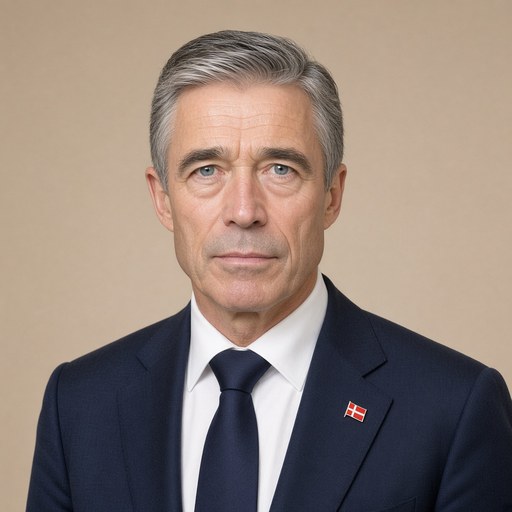
The Prime Minister's speech at the conference "Denmark, Greenland and the Future" on January 9, 2003, in the Landsting Hall.
 Anders Fogh Rasmussen · Prime Minister of Denmark
- Context
- Rasmussen addressed a conference on Denmark, Greenland and the Future in the Landsting Hall on January 9, 2003, discussing Greenlandic self-government and Realm community relations.
- Main themes
- Greenlandic self-government, Danish Realm community, home rule modernization, economic self-sufficiency, foreign policy cooperation, Faroe Islands, Greenlandic business development, block grant reform, Arctic society development, decentralization of responsibilities
- Duration
- ~8 min
- Words
- 977
- Sentences
- 50
- Readability
- 36
- Grade
- 11.7
- Syntax
- 2.74
- Vocabulary
- 2.09
Translated from Danish
The broad sphere of national life a sentence belongs to. Every sentence has an Arena, so it is the denominator the other indices are read against.
Other50 sentences in 33 paragraphs
I understand well that there is a desire in Greenland to debate Greenlandic self-government. It is entirely natural for any people to consider how to strengthen their identity and take responsibility for their own development. And to discuss where the boundaries should lie between the tasks they wish to solve themselves and the tasks they want to solve in a larger community.
There is fundamentally something healthy in decisions being made as close as possible to the people they concern. The government therefore gladly supports a development where Greenland – and the Faroe Islands – take over responsibility for as many tasks as possible.
* * *
The government's clear starting point is that we wish to maintain the realm community with both Greenland and the Faroe Islands.
Not necessarily as it looks today, and certainly not in contradiction to Greenlandic or Faroese wishes for new arrangements.
But we want to preserve the strength that is at the core of the community. A strength that not only gives us a sense of belonging and reminds us of our shared history, but which also has practical value in a world that is becoming increasingly globalized.
However, it is also my view that the bonds of the community can only endure when they do not feel constraining.
There is a need for continued development and modernization of the Realm Community.
* * *
Since the introduction of the home rule arrangement in 1979, Greenland's home rule has succeeded in building a modern Arctic society. This deserves great recognition.
This development has taken place, among other things, because efforts have been made from the Greenlandic side to make Greenland a part of the global community. The work to create a modern society that is based on good external relations and a place in international trade. That we from the Danish side have been able to support Greenland's opportunities and trade relations – including with the EU – is something we are of course pleased about.
But what has been crucial for Greenland is that the Landsting and the government have been aware that without a modernization of Greenlandic society, the Greenlandic economy would stagnate – to the detriment not only of the standard of living but also of the development of the home rule's responsibilities and competencies.
When there is now talk of a modernization of the home rule arrangement with increased self-government, this also requires a continued development of Greenlandic society. Where the business community has opportunities to adapt to the ever-new demands that are placed in an increasingly open world.
Greenland has already taken on significant tasks. All the important areas that directly affect the daily lives of Greenlandic citizens have been transferred to the home rule's competencies. This includes, among other things, the healthcare system, the social sector, and the education system – to mention the most costly.
And it includes economic policy and business policy – to mention a couple of central areas of importance for continued economic progress.
* * *
Today, there are only a few areas left that concern Greenlandic matters, where the government and the Folketing have the responsibility. These include, among other things, foreign policy.
In the area of foreign policy, Greenland wishes to be drawn closer into the decisions that have direct significance for Greenland.
The government finds that it would be natural to expand cooperation in the area of foreign policy and is prepared to discuss an arrangement where the Greenlandic government is authorized to act on behalf of the realm in such international matters that solely concern Greenland.
An authorization of the kind I mentioned at the opening of the Folketing would lie outside the current home rule law. The government is therefore prepared to implement legislation that gives the Greenlandic government such an authorization. For the sake of good order, I should perhaps mention that this also applies to the Faroese government.
Now that a new Greenlandic government has been formed after the election to the Landsting, we look forward to discussing this issue with the new government.
* * *
When we talk about increased self-government, we cannot avoid also talking about the economy and economic self-sufficiency.
It is the government's fundamental position, as I also indicated during my visit to Greenland in August, that a genuine, increased self-government must also be based on its own revenues. Only by having its own business and thus economic foundation does increased self-government have real content.
I therefore proposed to the then government that we jointly establish a committee to come up with proposals on how the Greenlandic business community can be strengthened and developed.
The proposal is an offer of cooperation aimed at making Greenland more economically self-sufficient. A replacement of the block grant with its own business revenues must primarily be in Greenland's own interest.
In the latest agreement on the block grant, there was also a provision for negotiations on the phasing out of the block grant when the agreement was to be extended from 2004. The background was that changes in the home rule arrangement were anticipated in light of the Greenlandic self-government commission's report, and that a lesser dependence on the state grant would be natural in this context.
* * *
I have previously indicated that I look forward to the Self-Government Commission's report with excitement. I continue to do so.
When the Landsting and the government have made their considerations based on the report, the government will discuss the Greenlandic wishes with the government.
So that together we can find reasonable solutions that all parties – the Folketing, the Landsting, the government, and the government – can be satisfied with.
I am confident that today's conference can provide us all with greater insight that we can use in our considerations and perceptions of the future relationship between Greenland and Denmark.
Good conference.
The original Danish. The tags above are read on the English translation's sentences.
Jeg forstår godt, at der i Grønland er et ønske om at debattere grønlandsk selvstyre. Det er helt naturligt for ethvert folk at overveje, hvordan man styrker sin identitet, tager ansvar for sin egen udvikling. Og drøfter hvor grænserne skal gå mellem de opgaver, man gerne vil løse selv og de opgaver, man vil løse i et større fællesskab.
Der er grundlæggende noget sundt i, at beslutninger bliver truffet så tæt som muligt på de mennesker, de vedrører. Regeringen støtter derfor gerne en udvikling, hvor Grønland – og Færøerne - overtager ansvaret for så mange opgaver som muligt.
* * *
Regeringens klare udgangspunkt er, at vi ønsker at bevare rigsfællesskabet med både Grønland og Færøerne.
Ikke nødvendigvis som det ser ud i dag, og slet ikke i modstrid med grønlandske eller færøske ønsker om nyordninger.
Men vi ønsker at bevare den styrke, som er kernen i fællesskabet. En styrke, som ikke blot giver os følelsen af samhørighed og erindrer os om vor fælles historie, men som også har praktisk værdi i en verden, som bliver stadig mere globaliseret.
Men det er samtidig min holdning at fællesskabets bånd kun kan bære, når de ikke føles snærende.
Der er behov for en fortsat udvikling og modernisering af Rigsfællesskabet.
* * *
Siden indførelsen af hjemmestyreordningen i 1979 er det lykkedes Grønlands hjemmestyre at opbygge et moderne arktisk samfund. Det fortjener stor anerkendelse.
Denne udvikling har fundet sted, bl.a. fordi man fra grønlandsk side har arbejdet på at gøre Grønland til en del af det globale samfund. Arbejdet på, at få skabt et moderne samfund, der bygger på gode eksterne relationer og en plads i det internationale handelssamkvem. At vi fra dansk side har kunnet støtte Grønlands muligheder og handelsrelationer - også til EU - er vi selvfølgelig glade for.
Men det afgørende for Grønland har været, at man i Landsting og landsstyre har været opmærksomme på, at uden en modernisering af det grønlandske samfund ville den grønlandske økonomi stagnere - til skade ikke alene for levestandarden, men også til skade for udviklingen i hjemmestyrets ansvar og kompetence.
Når der nu tales om en modernisering af hjemmestyreordningen med øget selvstyre, fordrer dette ligeledes en fortsat udvikling af det grønlandske samfund. Hvor erhvervslivet får muligheder for at tilpasse sig de stedse nye krav, som stilles i en stadig mere åben verden.
Grønland har allerede påtaget sig store opgaver. Alle de betydningsfulde områder, som direkte berører den grønlandske borgers dagligliv er overført til hjemmestyrets kompetence. Det gælder bl.a. sundhedsvæsenet, det sociale område samt uddannelsessystemet - for at nævne de mest omkostningstunge.
Og det gælder den økonomiske politik og erhvervspolitikken – for at nævne et par centrale områder af betydning for en fortsat økonomisk fremgang.
* * *
I dag er der kun få områder tilbage, som berører grønlandske forhold, og hvor det er regering og Folketing, der har ansvaret. Til disse hører bl.a. udenrigspolitikken.
På det udenrigspolitiske område har Grønland et ønske om at blive draget tættere ind i de beslutninger, som har direkte betydning for Grønland.
Regeringen finder, at det vil være naturligt at udbygge samarbejdet på det udenrigspolitiske område og er indstillet på at drøfte en ordning, hvor det grønlandske landsstyre bliver bemyndiget til at handle på rigets vegne i sådanne mellemfolkelige anliggender, der alene angår Grønland.
En bemyndigelse af den karakter, jeg nævnte ved Folketingets åbning, vil ligge uden for den nuværende hjemmestyrelov. Regeringen er derfor indstillet på at gennemføre en lovgivning, der giver det grønlandske landsstyre en sådan bemyndigelse. For god ordens skyld skal jeg måske nævne, at dette selvfølgelig også gælder det færøske landsstyre.
Da der nu efter valget til Landstinget er dannet et nyt grønlandsk landsstyre, glæder vi os til at drøfte dette spørgsmål med det nye landsstyre.
* * *
Når vi taler om øget selvstyre, kommer vi ikke uden om også at tale om økonomi og økonomisk selvbærenhed.
Det er regeringens grundholdning, som jeg også tilkendegav under mit besøg i Grønland i august, at et reelt, øget selvstyre også må bygge på egne indtægter. Kun ved at have sit eget erhvervsmæssige og hermed økonomiske grundlag får øget selvstyre et reelt indhold.
Jeg foreslog derfor det daværende landsstyre, at vi i fællesskab nedsætter et udvalg, som skal komme med forslag til, hvordan det grønlandske erhvervsliv kan styrkes og udvikles.
Forslaget er et tilbud om samarbejde med henblik på at gøre Grønland mere økonomisk selvbærende. En erstatning af bloktilskuddet med egne erhvervsindtægter må først og fremmest være i Grønlands egen interesse.
I den seneste aftale om bloktilskuddet blev der også lagt op til en forhandling om aftrapning af bloktilskuddet, når aftalen skulle forlænges fra 2004. Baggrunden var, at man forudså ændringer i hjemmestyreordningen i lyset af den grønlandske selvstyrekommissions betænkning, og at en mindre afhængighed af tilskuddet fra staten ville være naturlig i denne sammenhæng.
* * *
Jeg har tidligere tilkendegivet, at jeg imødeser Selvstyrekommissionens betænkning med spænding. Det gør jeg fortsat.
Når Landstinget og landsstyret har gjort sig sine overvejelser på baggrund af betænkningen, vil regeringen drøfte de grønlandske ønsker med landsstyret.
Så vi sammen kan finde fornuftige løsninger, som alle parter – Folketinget, Landstinget, landsstyret og regeringen – kan være tilfredse med.
Jeg er sikker på, at konferencen i dag kan give os alle en større indsigt, som vi kan bruge i vore overvejelser og opfattelse af det fremtidige forhold mellem Grønland og Danmark.
God konference.