




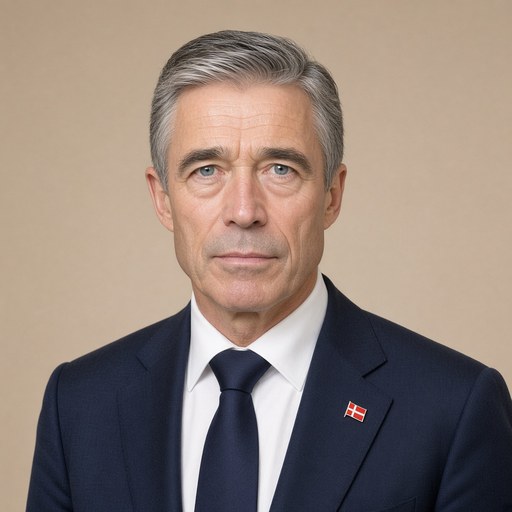
Prime Minister Anders Fogh Rasmussen's speech at the Industry's Annual Day on Thursday, September 26, 2002.
 Anders Fogh Rasmussen · Prime Minister of Denmark
- Context
- Rasmussen addressed Danish industry leaders at the Industry's Annual Day on September 26, 2002, reflecting on the ASEM 4 summit and advocating for globalization and Western values.
- Main themes
- Free trade and market economy, globalization as opportunity, Western fundamental values, Asia-Europe cooperation, ASEM summit, economic liberalization, open societies and democracy, terrorism and security, cultural exchange, mutual understanding across civilizations
- Duration
- ~23 min
- Words
- 2,712
- Sentences
- 186
- Readability
- 52
- Grade
- 9.6
- Syntax
- 2.67
- Vocabulary
- 2.12
Translated from Danish
The broad sphere of national life a sentence belongs to. Every sentence has an Arena, so it is the denominator the other indices are read against.
Other186 sentences in 77 paragraphs
Your Excellencies, ladies and gentlemen,
Just a few days ago, I had 25 heads of state and government from Asia and the EU meeting here at the Bella Center. We gathered for the so-called ASEM 4 summit. The purpose was to strengthen Asian-European cooperation in a wide range of areas – from combating terrorism to cooperation on trade, education, and culture.
To create a relaxed atmosphere, we had discarded the traditional conference tables. Instead, we sat in comfortable Arne Jacobsen armchairs, almost as if in a living room – without too many papers and without officials.
The unconventional setting fostered an open, direct, and very constructive dialogue. It became a dialogue about fundamental values and issues of significance for the future.
We sat here – 25 leaders from countries representing 2 billion people and over half of the world's production. It was a meeting between different cultures, indeed, different civilizations.
There were Christians and Muslims and Buddhists. There were representatives from communist dictatorships, a sultanate, and from liberal democracies. There were rich industrial countries, emerging Asian tigers, and less affluent developing countries.
In short: We were very different. Yet we could talk to each other. Yet we could have a very substantive dialogue about enhanced cooperation between Europe and Asia.
We discussed many topics. About increased exchange of students and researchers. About expanded cultural cooperation, including the exchange of artists and cultural activities. About bringing young people from Europe and Asia together for sports events and other activities. All to improve mutual understanding across borders, cultures, and civilizations.
But it struck me that what truly bound these very different countries together was the desire for more economic cooperation, for free trade, and for an expanded market economy.
As a concrete result of the summit, the EU and the Asian countries will now explore the possibilities of strengthening the Euro's role in the Asian markets and in general as an international currency. China has already increased the share of Euro in its currency reserves.
This is very interesting considering that the ASEM group includes, among others, the two communist countries, China and Vietnam. But both countries have initiated a very exciting reform process. A process that gradually opens the economy to the outside world and allows more and more private initiative at home. It is a very exciting and very promising development.
I have no doubt that the gradual liberalization of the economy will also lead to a gradual liberalization of political life.
And now I come to the core of what I want to say this evening. Market economy and free trade are powerful tools for promoting understanding and cooperation across national borders. Open economies and open societies, in general, are an effective means to prevent dictatorship and oppression.
Globalization is therefore not a threat. Globalization is an opportunity for the free exchange of goods, services, capital, people, information, news, thoughts, and ideas. Globalization thus helps to promote cultural understanding across borders. And the more we trade with each other, the more we know about each other, the less the risk that we will go to war against each other.
A wise man once said: If goods are not allowed to cross borders, then soldiers will.
We do not always realize that free trade and market economy rest on a fundamental set of values. A set of values that has proven so strong that even communist systems gradually adopt the mindset. A set of values that has led to unprecedented prosperity in our part of the world.
The foundation of tangible, material values is something we can somewhat floridly call "the fundamental values of the Western world" – the belief in the right to life, liberty, and property. And within that framework, we can flourish as human beings. In thoughtfulness and helpfulness.
This is not airy talk.
The right to life, liberty, and property is the prerequisite for people to live together – without having to fear each other.
It is the prerequisite for people to cooperate based on their own foundations – in everything from the family to the corporation.
It is the prerequisite for being able to test new solutions in everything from forms of cohabitation to fundamental research.
It is the prerequisite for being able to forge new paths in everything from the world of culture to the world of trade.
Respect for the individual. The right to life, liberty, and property. The open society, democracy, and religious tolerance. These are the fundamental values that have lifted our part of civilization from poverty to prosperity. And these are the fundamental values that we must fight for and defend against terrorists and power-hungry dictators who hate our way of life and our life values.
Just a few days ago – on September 11 – I was in New York, on the anniversary of the horrific terrorist attack against the United States. It was a moving experience. First and foremost, it was a day of mourning. A day when the whole world shared the grief for the dead and the sympathy for the bereaved.
But at the same time, it was impressive to see how quickly and consistently American society has regained its strength. Yes, in a way, the terrorist attack has probably made American society even stronger. Because each individual American has become more aware of the values that the USA is built upon.
I feel the same way. The terrorists represent the dark Middle Ages and an authoritarian worldview. Their attacks on the symbols of the free world have only strengthened our will to defend our ideals of freedom and our way of life.
The terrorists may destroy our buildings. But they cannot destroy our life values.
It is my duty as a politician to defend these values. It is a duty that business leaders must also take on. But where politicians defend the values – if necessary with military force – business leaders can defend Western values by expanding their trade. Even in countries with dictatorships.
For trade is an effective way to give the oppressed in a medieval society a glimpse of the Western world.
The medieval dark men in Al Qaeda and in Iraq do not like Western consumption patterns, Western advertisements – and everything else that expresses Western ideals.
The medieval dark men do not like the information that always accompanies free trade flows. I remember when the army imposed martial law in Poland in the 1980s. The first images of the oppression I saw were smuggled out by long-distance truck drivers.
The medieval dark men do not like the individual economic prosperity and freedom that comes from trade. Trade is often the prerequisite for creating a prosperous Western-oriented middle class that can give the oppressors problems in the long run.
Trade always benefits the more liberal forces. Trade helps to foster democratic and prosperous 'open societies'.
My message to Danish companies is therefore: As long as you operate safely within the framework of the law, you should trade with companies from all over the world. It is only beneficial for the values of the Western world.
Do not doubt your values. I do not doubt them. And I do not doubt that trade helps to promote freedom and democracy.
I would like to mention another example of how open societies, democracy, respect for the individual’s life, liberty, and property can help us achieve a better world.
At the Johannesburg summit recently – where Danish Industry was also well represented – I once again had the opportunity to experience how poor people in poor countries can achieve a better life through foreign investments.
The world needs economic growth – primarily for the sake of the poorest people in the poorest countries. The need for economic growth may seem secondary to some in our rich part of the world. But in developing countries, it is the difference between life and death – future and demise. Economic growth is the prerequisite for being able to feed oneself and one’s family. For being able to keep disease at bay. For being able to provide children with a proper education. For being able to secure energy for the household without clearing the forests.
A few years ago, many development commentators believed that the most sensible thing was to collectivize agriculture, build state-owned production to replace imports, and otherwise introduce socialism. These thoughts still linger in the minds of some.
But the most effective help to developing countries is to give them complete free access to the world market. Then they can sell their products, generate income, and initiate positive social and economic development.
But free trade alone will not solve the problem. Economic growth also depends on an incorruptible, limited state power.
Free trade and increased private and foreign investments require good governance and democracy in developing countries. Corruption and abuse of power are obstacles to sustainable development. Therefore, we must insist that developing countries, in return for better market access, increased aid, and more investments, commit to good governance, democracy, the rule of law, individual freedom, openness, and free exchange of information, including a free press. Good governance is a prerequisite for attracting investments and for a positive return on development aid. Therefore, it must naturally be included as a requirement for developing countries.
We must emphasize this alongside free trade. Our values are valid. Even in the poorest countries. Yes, they are the prerequisite for prosperity, plain and simple.
Finally, I would like to mention a third example of how liberal democracy and market economy have proven their strength as a means to give people a better existence.
After World War II, Europe was divided into a communist Eastern Europe and a liberal Western Europe. Western Europe flourished. Eastern Europe lagged behind.
In the end, the communist dictatorships collapsed under their own inefficiency. The populations revolted. New democracies were established.
And now we face the historic task of bringing these new democracies into our community, the EU.
On July 1 of this year, Denmark took over the presidency of the EU. It is the largest foreign policy task Denmark has ever had.
For six months, Denmark will lead the EU. Six months is not much. But it will be six months that will leave a lasting mark on European history.
In December, we must conclude the presidency by making a historic decision. A historic decision to expand the EU by up to ten new countries. Eight of these countries are former communist dictatorships. This is truly historic. Who would have dared to believe in the fall of the Wall, the dissolution of the Soviet Union, the blossoming of new democracies in Eastern and Central Europe, and an expansion of the EU with over 70 million people who previously lived under communist oppression just 15 years ago?
Back in the 1980s, the Danish defense was preparing to strike back against Polish landing craft in Køge Bay. Today, Danish companies are preparing to increase trade with Poland. Poland can become one of Denmark's most important trading partners. An enemy has become a friend. All Danes have reason to be excited. Yes, for all Europeans, a new and rich perspective is emerging.
The theme of the Danish presidency is "One Europe." And that is precisely what it is about. Uniting Europe. Healing the old wounds from two world wars and the Cold War. Now we must finally close one of the bloodiest chapters in European history.
Now is the time to finalize the expansion. Now is the time to show that we can heal Europe.
Now is the time to show the Eastern and Central European peoples that they did not throw the communists out in vain.
Now is the time to demonstrate that our words about freedom and democracy are not reserved for ourselves, but values we wish to share with others.
Now is the time to create the framework for a new, free, strong, and rich Europe.
The understanding of the foundation of Western societies is unfortunately sometimes lacking.
Therefore, there is good reason to sharpen the discussion about our societal values – not just through loose talk about humanism and tolerance.
We must clarify what the real driving forces of our societies are. They are values such as extensive individual freedom to experiment and act – the right to try to create one’s own future. Respect and tolerance for those who go their own way – and do not necessarily want to conform.
In the 1970s, it was said that everything was politics. Today, there is a tendency to say that everything is about values.
When we talk so much about values today, it may be because we have forgotten some of the basic knowledge of previous generations. It has been fashionable to dismiss 'bourgeois virtues' such as duty, mutual consideration, diligence, and frugality.
There has been a tendency to regard all opinions as 'equally valid'. But in doing so, everything also became equally bad.
In these years, there are signs that we have learned from the mistakes of the 20th century. The debate about values is an expression of some positive trends in society. We have just said goodbye to the twentieth century and all its catastrophic experiments with omnipotent states.
Most have realized that the societies that thrive best are those that appeal to people's individual values – their 'inner compass' – rather than regulate them.
Therefore, we must remember to polish the values from time to time. Not for ritual reasons. But so that they can retain their juice and power.
Let me give a couple of examples that must also mean something in the business world.
The joy of property rights must be strengthened by making more Danes direct owners of businesses. Danes should increasingly feel their sense of community with the companies operating in the country. And the best approach is ownership of them. If we are to expand ownership, it requires both reasonable tax systems – but also well-functioning and trustworthy capital markets.
Here I am glad that Danish companies have not ended up in the same crisis of trust as several American companies. This is probably due to the fact that we have a good practice where the boards keep the management in check. To you directors who find this cumbersome, I can only say: You are right! But in the end, it serves us all best.
Another example of how our values need new vigor and strength is based on the belief that each individual can make a difference in their own life.
It simply has to be more attractive to work and make an extra effort. And here, the tax on labor plays a significant role, of course. I take the tax debate very seriously. And therefore, there will never be any inflation in my statements about what future tax policy should be.
Tax cuts are not something you promise. It is something you implement.
Ladies and gentlemen,
We do not think much about values in our daily lives. But it is thought-provoking that even Martin Luther recognized what attitude is needed to create the values we must live by. Martin Luther expressed it this way: "You must earn your living by your own work, so that you can have your own and also give something to the needy. You owe this, and if you do not do so, God will not regard you as a Christian, but will judge you as a thief and a robber, because you are idle and do not work for what you earn, but have taken the blood and sweat of others."
Here, Luther clearly states what it is really about: Anyone who is able must make an effort and create value not only to support themselves but also to help those in need.
This is, in fact, the value set upon which modern market economy rests.
You do not think about this in your daily lives. Nor should you. You should run an efficient business that generates profit, so there is something for the shareholders and for investments in the future, and thus for the development of our entire society.
But it is indeed nice to know that the efforts to create a decent profit rest on a solid Lutheran ethic!
The original Danish. The tags above are read on the English translation's sentences.
Your Excellencies, mine damer og herrer,
For ikke mange dage siden havde jeg 25 stats- og regeringsledere fra Asien og EU til møde her i Bella Centret. Vi var samlet til det såkaldte ASEM 4 topmøde. Formålet var at styrke det asiatisk-europæiske samarbejde på en lang række områder – lige fra bekæmpelse af terror til samarbejde om handel, uddannelse og kultur.
For at skabe en afslappet stemning havde vi smidt de traditionelle konferenceborde ud. I stedet sad vi i behagelige Arne Jacobsen lænestole, næsten som i en dagligstue – uden alt for mange papirer og uden embedsmænd.
Den utraditionelle ramme skabte en åben, direkte og meget konstruktiv dialog. Det blev en dialog om grundlæggende værdier og spørgsmål af betydning for fremtiden.
Vi sad hér – 25 ledere fra lande, der repræsenterer 2 milliarder mennesker og over halvdelen af verdens produktion. Det var et møde mellem forskellige kulturer, ja, forskellige civilisationer.
Der var kristne og muslimer og budhister. Der var repræsentanter for kommunistiske diktaturer, et sultanat og fra liberale demokratier. Der var rige industrilande, frembrusende asiatiske tigre og mindre velstående udviklingslande.
Kort sagt: Vi var meget forskellige. Alligevel kunne vi snakke sammen. Alligevel kunne vi have en meget indholdsrig dialog om forstærket samarbejde mellem Europa og Asien.
Vi snakkede om mange emner. Om øget udveksling af studenter og forskere. Om udvidet kulturelt samarbejde, bl.a. ved udveksling af kunstnere og kulturelle aktiviteter. Om at bringe unge mennesker fra Europa og Asien sammen til sportsarrangementer og andre aktiviteter. Alt sammen for at forbedre den mellemfolkelige forståelse på tværs af grænser, kulturer og civilisationer.
Men det slog mig, at det, som for alvor bandt disse meget forskellige lande sammen, det var ønsket om mere økonomisk samarbejde, om frihandel og udvidet markedsøkonomi.
Som et konkret resultat af topmødet vil EU og de asiatiske lande nu undersøge mulighederne for at forstærke Euro’ens rolle på de asiatiske markeder og i det hele taget som internationalt betalingsmiddel. Kina har allerede øget andelen af Euro i sin valutabeholdning.
Det er meget interessant i betragtning af, at ASEM-kredsen bl.a. tæller de to kommunistiske lande, Kina og Vietnam. Men begge lande har startet en meget spændende reformproces. En proces som gradvis åbner økonomien over for omverdenen og tillader mere og mere privat initiativ på hjemmefronten. Det er en meget spændende og meget perspektivrig udvikling.
Jeg er ikke i tvivl om, at den gradvise liberalisering af økonomien også vil føre til en gradvis liberalisering af det politiske liv.
Og så er jeg ved kernen i det, jeg gerne vil sige i aften. Markedsøkonomi og frihandel er stærke redskaber til at fremme forståelse og samarbejde over landegrænserne. Åbne økonomier og åbne samfund i det hele taget er et effektivt redskab til at forebygge diktatur og undertrykkelse.
Globalisering er derfor ikke en trussel. Globalisering er en chance for fri udveksling af varer, tjenester, kapital, mennesker, informationer, nyheder, tanker og idéer. Globalisering er derfor med til at fremme kulturel forståelse over landegrænserne. Og jo mere vi handler med hinanden, jo mere vi ved om hinanden, desto mindre er risikoen for, at vi drager i krig mod hinanden.
En klog mand sagde en gang: Hvis ikke varerne får lov at passere grænserne, så gør soldaterne.
Vi gør os ikke altid klart, at frihandel og markedsøkonomi hviler på et fundamentalt værdisæt. Et værdisæt, som har vist sig så stærkt, at selv kommunistiske systemer gradvis adopterer tankegangen. Et værdisæt, som har ført til en enestående velstand i vor del af verden.
Fundamentet under de håndgribelige, materielle værdier er noget, som vi lidt floromvundet kan kalde ”den vestlige verdens fundamentale værdier” – troen på retten til liv, frihed og ejendom. Og inden for den ramme kan vi blomstre som mennesker. I omtanke og hjælpsomhed.
Det er ikke luftig snak.
Retten til liv, frihed og ejendom er forudsætningen for, at mennesker kan leve sammen – uden at skulle frygte hinanden.
Det er forudsætningen for, at mennesker kan samarbejde ud fra hver deres grundlag – i alt fra familien til aktieselskabet.
Det er forudsætningen for at kunne afprøve nye løsninger i alt fra samlivsformer til grundforskning.
Det er forudsætningen for at kunne gå nye veje i alt fra kulturens verden til handelens verden.
Respekten for det enkelte menneske. Retten til liv, frihed og ejendom. Det åbne samfund, demokrati og religiøs tolerance. Det er de grundværdier, som har løftet vor del af civilisationen fra fattigdom til velstand. Og det er de grundværdier, som vi skal kæmpe for og forsvare mod terrorister og herskesyge diktatorer, som hader vor livsform og vore livsværdier.
For ikke så mange dage siden - den 11. september - var jeg i New York, på årsdagen for det grufulde terrorangreb mod USA. Det var en bevægende oplevelse. Først og fremmest var det en sørgedag. En dag hvor hele verden delte sorgen over de døde og medfølelsen med de efterladte.
Men samtidig var det imponerende at se, hvor hurtigt og konsekvent det amerikanske samfund har genfundet sin styrke. Ja, på en måde har terrorangrebet nok gjort det amerikanske samfund endnu stærkere. Fordi den enkelte amerikaner er blevet mere bevidst om de værdier, som USA bygger på.
Jeg føler det på samme måde. Terroristerne repræsenterer den mørke middelalder og det autoritære livssyn. Deres angreb på den frie verdens symboler har kun styrket vor vilje til at forsvare vore frihedsidealer og vor livsform.
Terroristerne kan måske smadre vore bygninger. Men de kan ikke smadre vore livsværdier.
Det er min opgave som politiker at forsvare disse værdier. Det er en opgave, som også virksomhedsledere må påtage sig. Men dér hvor politikerne forsvarer værdierne - om nødvendigt med militær magt - kan virksomhedslederne forsvare vestlige værdier ved at udvide deres handel. Også i lande med diktaturer.
For handel er en effektiv måde at give de undertrykte i et middelalderligt samfund et indblik i den vestlige verden.
De middelalderlige mørkemænd i Al Qaeda og i Irak kan ikke lide vestlige forbrugsmønstre, vestlige reklamer - og alt andet som er udtryk for vestlige idealer.
De middelalderlige mørkemænd kan ikke lide de informationer der altid følger med frie handelsstrømme. Jeg husker, da hæren indførte undtagelsestilstand i Polen i 80'erne. De første billeder af undertrykkelsen, jeg så, var smuglet ud af langturschauffører.
De middelalderlige mørkemænd kan ikke lide den individuelle økonomiske velstand og frihed, der følger af handel. Handel er ofte forudsætningen for at skabe en velstående vestligt orienteret middelklasse, som kan give undertrykkerne problemer på længere sigt.
Handel gavner altid de mere frisindede kræfter. Handel er med til at fremelske demokratiske og velstående 'åbne samfund'.
Mit budskab til danske virksomheder er derfor: Så længe I opererer sikkert inden for lovgivningens rammer, skal I handle med alverdens virksomheder. Det er kun til gavn for den vestlige verdens værdier.
Lad være med at tvivle på jeres værdier. Jeg tvivler ikke på dem. Og jeg tvivler ikke på, at handel er med til at fremme frihed og demokrati.
Jeg vil gerne nævne et andet eksempel på, at åbne samfund, demokrati, respekt for det enkelte menneskes liv, frihed og ejendom kan hjælpe os til en bedre verden.
Ved Johannesburg-topmødet for nylig - hvor også Dansk Industri var godt repræsenteret - fik jeg endnu en gang lejlighed til at opleve, hvordan fattige mennesker i fattige lande kan få et bedre liv gennem udenlandske investeringer.
Verden har brug for økonomisk vækst – først og fremmest af hensyn til de fattigste mennesker i de fattigste lande. Behovet for økonomisk vækst virker måske underordnet for nogle i vor rige del af verden. Men i ulandene er det forskellen på liv og død – fremtid og undergang. Økonomisk vækst er forudsætningen for at kunne brødføde sig selv og sin familie. For at kunne holde sygdom fra døren. For at kunne give børnene en ordentlig skolegang. For at kunne skaffe energi til husholdningen uden at rydde skovene.
For få år siden mente en hel del ulandsdebattører, at det mest fornuftige var at kollektivisere landbruget, opbygge statsejet produktion til erstatning for import og i øvrigt indføre socialisme. Disse tanker rumsterer stadig i hovederne på enkelte.
Men den mest effektive hjælp til ulandene er at give dem en fuldstændig fri adgang til verdensmarkedet. Så kan de nemlig afsætte deres produkter, skabe indtjening og sætte en positiv social og økonomisk udvikling i gang.
Men frihandel vil ikke kunne løse opgaven alene. Økonomisk vækst afhænger også af en ukorrupt, begrænset statsmagt.
Frihandel og øgede private og udenlandske investeringer forudsætter god regeringsførelse og demokrati i udviklingslandene. Korruption og magtmisbrug er hindringer for en bæredygtig udvikling. Derfor må vi insistere på, at udviklingslandene som modydelse for bedre markedsadgang, øget bistand og flere investeringer forpligter sig til god regeringsførelse, demokrati, retssikkerhed, individuel frihed, åbenhed og fri udveksling af informationer, herunder fri presse. God regeringsførelse er en forudsætning for tiltrækning af investeringer og for et positivt udbytte af udviklingsbistand. Derfor skal det naturligt indgå som krav til ulandene.
Det skal vi slå på side om side med frihandel. Vore værdier duer. Også i de fattigste lande. Ja, de er forudsætningen for velstand slet og ret.
Endelig vil jeg nævne et tredje eksempel på, at liberalt demokrati og markedsøkonomi har vist sin styrke som middel til at give mennesker en bedre tilværelse.
Efter anden Verdenskrig blev Europa delt i et kommunistisk Østeuropa og et liberalt Vesteuropa. Vesteuropa blomstrede. Østeuropa sakkede agterud.
Til sidst brød de kommunistiske diktaturer sammen under deres egen ineffektivitet. Befolkningerne gjorde oprør. Nye demokratier blev grundlagt.
Og nu står vi med den historiske opgave at lukke disse nye demokratier ind i vort fællesskab, EU.
Den 1. juli i år overtog Danmark formandskabet for EU. Det er den største udenrigspolitiske opgave, Danmark nogen sinde har haft.
I seks måneder står Danmark i spidsen for EU. Seks måneder er ikke meget. Men det vil blive seks måneder, som sætter sig et varigt spor i Europas historie.
Til december skal vi afslutte formandskabet med at træffe en historisk beslutning. En historisk beslutning om at udvide EU med op til ti nye lande. Otte af disse lande er tidligere kommunistiske diktaturer. Det er i sandhed historisk. Hvem ville for blot 15 år siden have turdet tro på Murens fald, Sovjetunionens opløsning, opblomstring af nye demokratier i Øst- og Centraleuropa og en udvidelse af EU med over 70 millioner mennesker, som før levede under kommunistisk undertrykkelse?
Tilbage i firserne rustede det danske forsvar sig til at slå igen over for polske landgangsfartøjer i Køge Bugt. I dag ruster danske virksomheder sig til at øge handelen med polske. Polen kan blive én af Danmarks vigtigste handelspartnere. Fjende er blevet til ven. Alle danskere har grund til at være begejstrede. Ja, for alle europæere tegner der sig et nyt og rigt perspektiv.
Overskriften for det danske formandskab er, ”Ét Europa”. Og det er netop, hvad det drejer sig om. At samle Europa. At hele de gamle sår fra to verdenskrige og Den Kolde Krig. Nu skal vi endegyldigt lukke ét af de mest blodige kapitler i Europas historie.
Det er nu, vi skal have udvidelsen på plads. Det er nu, vi skal vise, at vi magter at hele Europa.
Det er nu, vi skal vise de øst- og centraleuropæiske folk, at de ikke forgæves kastede kommunisterne på porten.
Det er nu, vi skal demonstrere, at vore ord om frihed og demokrati ikke er forbeholdt os selv, men værdier vi ønsker at dele med andre.
Det er nu, vi skal skabe rammerne for et nyt, frit, stærkt og rigt Europa.
Forståelsen for de vestlige samfunds fundament er desværre til tider ringe.
Derfor er der god grund til at skærpe diskussionen om vore samfunds værdier – ikke bare gennem løs snak om humanisme og tolerance.
Vi skal gøre klart, hvad der er de egentlige drivkræfter for vore samfund. Det er værdier som udstrakt individuel frihed til at eksperimentere og handle – retten til at prøve at skabe sin egen fremtid. Respekten og tolerancen for dem, der går deres egne veje – og ikke nødvendigvis vil indordne sig.
I 70'erne sagde man, at alt var politik. I dag er der en tendens til at sige, at alt handler om værdier.
Når vi i dag taler så meget om værdier, kan det være, fordi vi har glemt en del af tidligere generationers basale viden. Det har været moderne at kaste vrag på 'borgerlige dyder' som f.eks. pligt, gensidig hensyntagen, arbejdsomhed og sparsommelighed.
Der har været en tendens til at betragte alle meninger som 'lige gode'. Men dermed blev alt også lige skidt.
I disse år er der tegn på, at vi har lært af det 20. århundredes fejltagelser. Debatten om værdier er udtryk for nogle positive tendenser i samfundet. Vi har netop sagt farvel til det tyvende århundrede og alle dets katastrofale eksperimenter med almægtige stater.
De fleste har indset, at de samfund, der trives bedst, er dem, der appellerer til menneskers individuelle værdier – deres 'indre kompas' – frem for at regulere dem.
Derfor skal vi huske at pudse værdierne af fra tid til anden. Ikke af rituelle årsager. Men for at de kan bevare deres saft og kraft.
Lad mig give et par eksempler, som også må betyde noget i erhvervslivet.
Glæden ved ejendomsretten skal styrkes ved at gøre flere danskere til direkte ejere af erhvervslivet. Danskerne skal i højere grad fornemme deres skæbnefællesskab med de virksomheder, som opererer i landet. Og den bedste indgangsvinkel er ejerskabet til dem. Hvis vi skal udbrede ejerskabet forudsætter det både rimelige skattesystemer - men også velfungerende og tillidsvækkende kapitalmarkeder.
Her er jeg glad for, at danske virksomheder ikke er havnet i samme tillidskrise, som adskillige amerikanske virksomheder. Det skyldes nok at vi har en god praksis, hvor bestyrelserne holder direktionerne i ørene. Til jer direktører, der synes, at det er besværligt, kan jeg kun sige: I har ret! Men det tjener jo os alle bedst i sidste ende.
Et andet eksempel på, at vore værdier skal have ny saft og kraft, tager udgangspunkt i troen på, at hver enkelt kan gøre en forskel i sit eget liv.
Det skal simpelthen være mere attraktivt at arbejde og yde en ekstra indsats. Og her spiller skatten på arbejdskraft selvfølgelig en betydelig rolle. Jeg tager skattedebatten særdeles alvorligt. Og derfor vil der aldrig gå inflation i mine udmeldinger om, hvad den fremtidige skattepolitik bør være.
Skattelettelser er ikke noget man lover. Det er noget man gennemfører.
Mine damer og herrer,
Vi går ikke og tænker så meget på dette med værdier i det daglige. Men det er tankevækkende, at allerede Martin Luther havde blik for, hvad der skal til af holdning for at skabe de værdier, som vi skal leve af. Martin Luther udtrykte det således: ”Du skal ernære dig med dit eget arbejde, for at du kan have dit eget og også kan give den trængende noget. Det er du skyldig, og gør du ikke således, vil Gud ikke betragte dig som en kristen, men vil dømme dig som tyv og røver, fordi du går ledig og ikke selv arbejder for det, hvorved du ernærer dig, men har taget andres blod og sved”.
Her siger Luther i klar tekst, hvad det i virkeligheden drejer sig om: Enhver, som er i stand til det, skal yde en indsats og skabe værdier til ikke blot at forsørge sig selv, men også at hjælpe dem, som har hjælp behov.
Det er i virkeligheden det værdisæt, som moderne markedsøkonomi hviler på.
Det går I ikke og tænker på i det daglige. Det skal I heller ikke. I skal drive effektiv forretning, der giver overskud, så der bliver noget til aktionærerne og til investeringer i fremtiden og dermed til udvikling af hele vort samfund.
Men det er da meget rart at vide, at bestræbelserne på at skabe et pænt overskud hviler på en solid luthersk etik!