




- Context
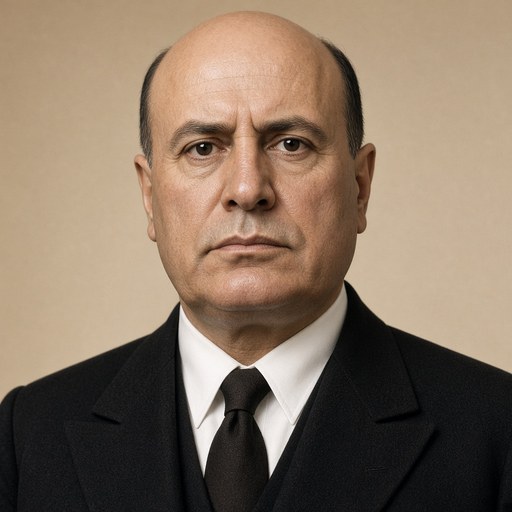
- Mussolini spoke against war and in defence of the socialist position on its relation to revolution on November 17, 1912, apparently to a socialist audience; the occasion and place are not stated in the text.
- Main themes
- War as imposed on the peoples, bourgeois enthusiasm for war, socialism as opponent of war, critique of soldierly courage, war and revolution in history, Paris Commune, Russo-Japanese war and Russian reaction, Libyan war atrocities, moral autonomy of the working class, risk of a European conflagration
- Duration
- ~7 min
- Words
- 811
- Sentences
- 46
- Readability
- 65
- Grade
- 8.5
- Syntax
- 2.73
- Vocabulary
- 2.34
Translated from Italian Source: it.wikisource.org ↗
The broad sphere of national life a sentence belongs to. Every sentence has an Arena, so it is the denominator the other indices are read against.
Other46 sentences in 6 paragraphs
But let us return to the war. A war of peoples? Not at all; the peoples suffer it. No one has the right to say that the peoples applaud the sharp-eyed plunder of governments. When were they ever asked whether they wished to go and kill or die? There are millions upon millions of men who live a purely economic life: they eat, they drink, they reproduce; but everything that is civil, political, cultural life is completely unknown to them. They do not have even the embryo of a principle of moral autonomy: this is the herd that suffers war and goes to the slaughter without even asking why.
The bourgeois, on the other hand, when they sing the praises of war, are in their proper place. War for war's sake is what they want. This is the arrière pensée of these gentlemen. A war that would free them from socialism, while it is still a young shoot easy to cut down.
In fact the Vaterland, the Austrian clerical organ that chose to call itself Fatherland, wrote plainly that a European war "would free us from socialism for 50 years". But let us be clear: we are not against war out of cowardice. If we were faint-hearted we would not be in this place. And besides, we do not believe that true courage is that of the soldier who, drunk on brandy, runs to the slaughter of himself and of others. That is a courage of an inferior kind, base, primordial; it is an unthinking courage. More than that: socialism is an even better adversary of war than bourgeois and democratic pacifism is. We are against it because it represents the utmost exploitation of the worker. With war, that is, the proletarian is called upon to shed his own blood, after having given all his sweat in the workshops.
And if only it were true, at least, that war precedes and prepares revolution. It is an illusion, a sophism. Let us read history. The connection between the American War of Secession and the French Revolution is a distant one. Moreover, Lafayette, who took part in it, adopted an ambiguous and uncertain attitude at the beginning of the Revolution. It was the people of Paris who demolished the Bastille, it was the people who in three days and three nights made 50,000 pikes and, urged on by Camille Desmoulins, hurled themselves upon the fortress that represented and symbolised the ancien régime. The bloody days of '48 in Paris, are they perhaps connected with some war? Ah! the Commune! It was born of an unfortunate war, and it is this flaw in its origin that killed it.
Let us come to more recent wars. The one of '97 between Greece and Turkey, the one of '98 between Spain and the United States did not give rise to revolutionary movements. It seemed that the Russo-Japanese war would feed the Russian revolutionary fire, but instead, after the bloodiest of red Sundays, it is the most ferocious reaction that triumphs, and official Russia – with the open protection of the Slavs of the Quadruple Alliance – regains in the concert of the European Powers the ascendancy it had lost on the plains of Manchuria under the deadly blows of the little men of Japan. By contrast, the latest political revolutions of any importance, in Portugal and in China, are not connected with any war. To make a revolution you need citizens, that is, soldiers who remain citizens, intelligent rifles; but war barbarises, bestialises, brutalises men.
Indeed, the most ferocious butchers of the Communards were the soldiers who had fought the colonial wars in Algeria and had grown accustomed to every kind of atrocity. Did not the Italian soldiers come back from the glorious Libyan exploit with the ears of Bedouins cut off and kept as precious relics? War does not create revolutionary feeling where it does not exist; on the contrary, it depresses it, and where it is weak it crushes it. We are a minority, it is true, but what does it matter? This obliges us to continue our battle. It is a matter of creating the moral autonomy of the working class, which until now has been a passive instrument in the hands of all the bourgeois hierarchies. The danger of European conflagrations will return. But then let us hope we will be ready. One of two things. It is a matter of creating the moral autonomy of the proletariat in order to prevent war. And if the bourgeoisie nevertheless wants to attempt the supreme gamble, the proletariat will know how to take advantage of it for its own specific demands, and then bourgeois rule – already corroded, undermined and worn out – will shatter to pieces. On that day the question of the human race will be united. The new history will begin.
The original Italian. The tags above are read on the English translation's sentences.
Ma ritorniamo alla guerra. Guerra di popoli? Ma no; i popoli la subiscono. Nessuno è autorizzato a dire che i popoli applaudano all’occhiuta rapina dei governi. Quando mai essi furono interpellati sulla volontà loro di andare ad uccidere o a morire? Ci sono milioni e milioni di uomini che vivono di una vita puramente economica: mangiano, bevono, si riproducono; ma tutto ciò che è vita civile, politica, culturale è a loro completamente ignoto. Non hanno neppure in embrione un principio di autonomia morale: è questo il gregge che subisce la guerra e va al macello senza chiedersi nemmeno perché.
I borghesi invece quando inneggiano alla guerra sono al posto loro. La guerra per la guerra, essi vogliono. E questa l’arrière pensée di lor signori. La guerra che li liberi dal socialismo, intanto che esso è virgulto facile ad essere stroncato.
In fatti il Vaterland, l’organo clericale austriaco che ha voluto intitolarsi Patria, ha chiaramente scritto che una guerra europea “ci libererebbe per 50 anni dal socialismo”. Ma precisiamo: noi non siamo contrari alla guerra per viltà. Se fossimo dei pusillanimi non saremmo a questo posto. E poi non crediamo che il coraggio vero sia quello del soldato che ubbriaco di acquavite corre al macello di sé e d’altrui. È un coraggio di un genere inferiore, basso, primordiale; è un coraggio incosciente. Di più: il socialismo è anche miglior avversario della guerra, di quanto non lo sia il pacifismo borghese e democratico. Noi siamo contrari ad essa perché rappresenta il massimo di sfruttamento del lavoratore. Il proletario, con la guerra, è cioè chiamato a versare il proprio sangue, dopo aver dato, nelle officine, tutto il proprio sudore.
E fosse vero, almeno, che la guerra precede, prepara la rivoluzione. È una illusione, un sofisma. Leggiamo nella storia. La relazione fra la guerra di secessione degli Stati Uniti e la Rivoluzione francese è lontana. Del resto Lafayette che vi partecipò, tenne agli inizi della Rivoluzione un contegno ambiguo ed incerto. Fu il popolo di Parigi che demolì la Bastiglia, fu il popolo che in tre giorni e in tre notti fabbricò 50 mila picche e incitato da Camillo Desmoulins si gettò sulla fortezza che rappresentava e simboleggiava l’ancien régime. Le giornate sanguinose del ’48 a Parigi sono forse in relazione con qualche guerra? Ah! la Comune! È nata da una guerra sfortunata, ed è questo vizio d’origine che l’ha uccisa.
Veniamo alle guerre più vicine. Quella del ’97 fra Grecia e Turchia, quella del ’98 fra la Spagna e gli Stati Uniti non hanno suscitato movimenti rivoluzionari. Pareva che la guerra russo-giapponese dovesse alimentare l’incendio rivoluzionario russo, ma invece dopo la sanguinosissima domenica rossa, è la reazione più feroce che trionfa e la Russia ufficiale – colla protezione manifesta degli slavi della Quadruplice – riprende nel concerto delle Potenze europee quell’ascendente che aveva perduto nei piani di Manciuria sotto ai colpi micidiali dei piccoli uomini del Giappone. Per contro le ultime rivoluzioni politiche di qualche importanza nel Portogallo e in Cina non sono in relazione con nessuna guerra. Per fare la rivoluzione occorrono dei cittadini, cioè dei soldati che rimangano cittadini, dei fucili intelligenti, ma la guerra imbarbarisce, imbestia, abbrutisce gli uomini.
Difatti i più feroci massacratori dei Comunardi furono i soldati che avevano fatto le guerre coloniali in Algeria e si erano abituati ad ogni genere di atrocità. I soldati italiani non sono forse tornati dalla gloriosa gesta libica colle orecchie dei beduini tagliate e conservate come reliquie preziose? La guerra non crea il sentimento rivoluzionario là dove non esiste; anzi lo deprime e quando è debole lo atterra. Noi siamo minoranza, è vero, ma che importa? Questo ci impone di continuare la nostra battaglia. Si tratta di creare l’autonomia morale della classe operaia che è stata sin qui strumento passivo nelle mani di tutte le gerarchie borghesi. Il pericolo di conflagrazioni europee tornerà. Ma allora speriamo di essere pronti. Delle due l’una. Si tratta di creare l’autonomia morale del proletariato per impedire la guerra. E se la borghesia vorrà comunque tentare il gioco supremo, il proletariato saprà approfittarne per le sue specifiche rivendicazioni e allora il dominio borghese – già corroso, minato e logorato – andrà in frantumi. Quel giorno la questione del genere umano sarà unita. Comincerà la nuova storia.