




We Are Not Against Labour, But Against The Socialist Party, In As Far As It Remains Anti-Italian

- Context
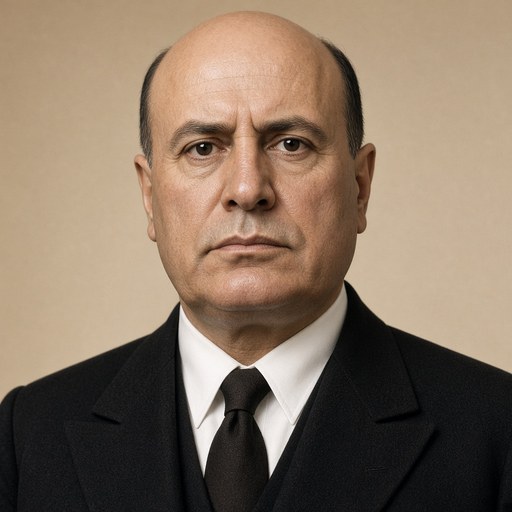
- Mussolini addressed a gathering of the people of Ferrara, apparently on or around May 24, 1920, the anniversary of Italy's entry into the war, defending intervention and Fascist support for labour while attacking the Socialist Party.
- Main themes
- Anniversary of Italian intervention in the war, defence of the war and victory, idealisation of labour, attack on the Socialist Party as anti-Italian, Bolshevism as a wrecked ship, peasants and the land question, the arditi and Fiume and Dalmatia, martyrs Battisti, Sauro and Rismondo, Fascist agrarian movement in Ferrara, nation as indestructible unity
- Duration
- ~30 min
- Words
- 3,627
- Sentences
- 135
- Readability
- 52
- Grade
- 12.7
- Syntax
- 3.35
- Vocabulary
- 2.29
The broad sphere of national life a sentence belongs to. Every sentence has an Arena, so it is the denominator the other indices are read against.
Other135 sentences in 41 paragraphs
Words, at certain times, can be facts. Let us act, then, in such a way that all the words we utter now may be potential facts to-day, and reality to-morrow.
Five years ago, at this time, popular enthusiasm burst forth in all the streets and squares of the towns of Italy. Looking back now and studying the documents of those times, I can state, with certainty and a clear conscience, that the cause of intervention was not taken up by the so-called middle classes, but by the best and healthiest part of the Italian people. And when I say the people, I mean also the proletariat, because nobody could imagine that the thousands and thousands of citizens who followed Corridoni were all from the middle class. I remember that one Agricultural Chamber of Labour, that of Parma, declared in favour of intervention on the part of Italy with a great majority. And even admitting that the war was a mistake, which I do not admit, he who scorns the sacrifice which has been made is despicable.
If you want to go back and make a critical examination, I am ready to argue with anybody and to maintain: First, that the war was desired by the Central Powers, as has been confessed by the politicians of the German Republic and confirmed by the imperial archives. Secondly, that Italy could not have remained neutral, and thirdly, that if she had, she would find herself, to-day, in a worse condition than she actually does.
On the other hand, we who intervened must not be surprised if the sea is tempestuous. It would be absurd to expect that a nation which had just passed through so grave a crisis would recover itself in twenty-four hours. And when you think that after two years we have not yet got our peace, when you think of the weakness of those who govern us, you will realise that certain crises of doubt are inevitable. But the war gave that which we required of it—it gave us victory.
Let us idealise Labour. When, not long ago, you hissed the song of the sickle and the hammer, you certainly did not mean to disdain these two instruments of human labour. There is nothing more beautiful and noble than the sickle, which gives us our bread, and nothing finer than the hammer, which shapes metals. We must not despise manual work. We must understand that if it is overrated to-day, it is because mankind, as a whole, is suffering from a lack of material goods. It is natural, therefore, that those who produce these necessaries are excessively overrated. We do not represent a reactionary element. We tell the masses not to go too far, and not to expect to transform society by means of something which they do not understand. If there is to be transformation, it must come when the historical and psychological elements of our civilisation have been taken into account.
Let us unmask the Deceivers. We do not intend to oppose the movement of the working classes, only to unmask the work of mystification which is carried on by a horde of middle-class, lower-middle-class and pseudo-middle-class men, who think that they have become the saviours of humanity by the mere fact of being possessed of a card of membership. “We are not against the proletariat, but against the Socialist Party in as far as it continues to be anti-Italian.” The Socialist Party continued, after the victory, to abuse the war, to fight against those who had been in favour of intervention, threatening reprisals and excommunication. Well, I, for my part, shall not give way. I laugh at excommunication, and as for reprisals, we shall answer with sacred reprisals. But we cannot go against the people, because the people made the war. We cannot look askance at the peasants, who to-day are agitating for the solution of the land question. They commit excesses, but I ask you to remember that the backbone of the infantry was the peasantry.
Repentance. We do not deceive ourselves by thinking that we shall succeed in sinking completely the now wrecked ship of Bolshevism. But I already note signs of repentance. I think that some day the working classes, tired of letting themselves be duped, will turn to us, recognising that we have never flattered them, but have always told them the brutal truth, working really in their interests. If, to-day, Italy has not fallen into the Hungarian abyss, it is due to us, because we have saved them by active interposition and by our life.
We have then one clear duty, which is to understand the social phenomenon which is developing before our eyes, and to fight the deceivers of the people and maintain a sure and immovable faith in the future of the nation.
Towards Equilibrium. There has been a period of lassitude on the morrow of all great historical crises. But afterwards, little by little, the tired muscles recover. All that which before was neglected and despised becomes once more honoured and admired. To-day nobody wants to talk of war, and it is natural. But when a certain period of time has elapsed, things will change, and a large part of the Italian people will recognise the moral and material value of victory, they will honour those who fought and will rebel against those Governments which do not guarantee the future of the nation. All the people will honour the great “arditi.” It was the “arditi” who went to the trenches singing, and if we returned from the Piave and the Isonzo, if we still hold Fiume, and are still in Dalmatia, it is due to them.
Three martyrs, among the thousands who were consecrated to the war, clearly defined what were to be the destinies of the nation. Battisti tells us that the boundary of Italy should be at the Brenner; Sauro that the Adriatic must be an Italian sea and commercially Italo-Slav; while Rismondo tells us that Dalmatia is Italian. Very well! Let us swear upon the standard which bears the sign of death, of that death which gives life, and the life which does not fear death, to keep faith to the sacrifice of these martyrs!
People of Ferrara! and I say people intentionally, because that which I see before me now is a marvellous gathering of the people, in both the Roman and Italian sense of the word. I see among you children who are upon the threshold of life, and not long ago I shook hands with an old Garibaldian, a survivor of that heroic Italy which was born at Nola in 1821, when two cavalry officers hoisted the flag of liberty against the Bourbons, and which triumphed at Vittorio Veneto with the great and magnificent victory of the Italian people. I see also among you factory hands and their brothers of the fields.
We, Fascisti, have a great love for the working classes. But our love, in as far as it is pure, is seriously disinterested and intransigent. Our love does not consist in burning incense and creating new idols and new kings, but in telling upon every occasion and in every place the plain truth, and the more this truth is unpalatable the greater the need to speak it out.
We, Fascisti, hitherto slandered and maligned, wished to continue the war in order to obtain freedom of movement in Italy, and although not giving way to a sense of weak demagogism, we are the first to recognise that the rights of the labouring classes are sacred, and even more so the rights of those who work the soil. And here I can give hearty praise to the Fascisti of Ferrara, who have undertaken with facts, and not with the useless words of the politicians, that agrarian revolution which must gradually give the peasants the possession of the soil. I strongly encourage the Fascisti of Ferrara to go on as they have begun, and to become the vanguard of the Fascista agrarian movement in all Italy.
How does it come about that we are said to be sold to the middle classes, capitalism and the Government? But already our enemies dare no longer continue this accusation, so false and ridiculous is it. This impressive meeting would move a heart harder than mine, and shows me that you have done justice to those base calumnies put into circulation by people who believed in the eternity of their fortunes, while in reality they had barricaded themselves in a castle which must fall with the first breath of a Fascista revolt. And this Fascista revolt, and we could also use the more sacred and serious word revolution, is inspired by indestructible and moral motives and has nothing to do with incentives of a material nature. We, Fascisti, say that above all the competition and those differences which divide men—and which might almost be called natural and inevitable, since life would be extraordinarily dull if everybody thought in the same way—above all this there is a single reality, common in all, and it is the reality of the nation and of the country to which we are bound, as the tree is bound by its roots to the soil which nourishes it.
Thus, whether you like it or not, the country is an indestructible, eternal and immortal unity, which, like all ideas, institutions and sentiments in this world, may be eclipsed for a time, but which revives again in the depths of the soul, as the seed thrown in the soil bursts into flower with the coming of the warmth of spring. We have thus, by our furious blows, broken the unworthy crust beneath which lay imprisoned the soul of the proletariat. There were those among the proletariat who were ashamed to be Italian; there were those who, brutalised by propaganda, shouted “Welcome to the Germans!” and also “Long live Austria!” They were for the most part irresponsible but sometimes wicked! Well we, Fascisti, want to bring into every city, into every part of the country, even the most remote, the pride and passion of belonging to the most noble Italian race; the race which has produced Dante, which has given Galileo, the greatest masterpieces of art, Verdi, Mazzini, Garibaldi and d’Annunzio to the world, and which has produced the people who won Vittorio Veneto.
And not this only. We do not intend to push the working classes backwards. All that which they have won and which they will win is sacred. But they must acquire these conquests by material and moral improvement. We, Fascisti, do not speak only of rights, we speak also of duty, as Mazzini would have wished. We have not only the verb “to take,” we have also the verb “to give,” because sometimes when our country calls, whether she be threatened by an internal or external enemy, we exact both from our adherents and from those who sympathise with us readiness even for the supreme sacrifice. And you, Fascisti of Ferrara, have consecrated the Fascista ideals with martyrdom.
If the idea of Fascismo had not contained in itself great potentiality, nobility and beauty, do you think that it would have spread with this tremendous impetus! Do you think that seven lives would have been given for it, lives which point out to us the path of perseverance and victory? A short time ago I went to your cemetery. One by one we visited the graves and threw our flowers upon them. Those seconds of silence which we passed there were pregnant with feeling. Each one of us felt that within those graves were the bodies of young men in the flower of their days, men who were certainly loved and who had before them all the possibilities of life. They are dead; they have fallen. But we, in this great hour of your history, O people of Ferrara, will recall them one by one in the orders of the day; and since they are not dead, because their mortal clay is transformed in the infinite play of the possibilities of the universe, we ask of the pure, bright blood of the youth of Ferrara the inspiration to be true to our ideals, to be faithful to our nation. And so we are content that our flags, after having saluted the dead, smile on life, because the working people of Ferrara, and of all Italy, have found the true path that had been forgotten, have cast off all those ignoble politicians who had filled their heads with lying fables.
We, O Italians of Ferrara, have no need to go beyond our boundaries, beyond the seas, in order to find the word of wisdom and of life. We do not need to go to Russia in order to see how a great people may be massacred. We do not need to turn the pages of the Muscovite gospels; gospels which the prophets themselves are reviling since, overwhelmed by the reality of life, they are denying them. We have no need to imitate others, because brilliant original minds are to be found in Italy in all branches of civilisation and learning. And if there is to be Socialism, it cannot be the bestial, tyrannical Socialism of yesterday, it can only be the Socialism of Carlo Pisacane, of Giuseppe Ferrari and Giuseppe Mazzini.
Here, O people of Ferrara, is your history, your life and your future. And we, who have undertaken this hard battle, which has cost us tens and hundreds of lives, we do not ask you for salaries, we do not ask you for votes. We only ask you for one thing, and that is that you shall shout with us “Long live Italy!”
“MY FATHER WAS A BLACKSMITH AND I HAVE WORKED WITH HIM; HE BENT IRON,
I am particularly glad to have seen these works, already known to me by what has been accomplished in them in the last five strenuous years. I am not going to make a speech, but, as has always been—and always will be—my way, I shall tell you things clearly as they are, things that will interest you.
The Government over which I have the honour of presiding is not, cannot and does not wish to be anti-proletariat. The workmen are a vital part of the nation; they are Italians and, like all Italians, when they work, when they produce and when they live orderly lives, must be protected, respected and defended. My Government is very strong and does not need to seek a great deal of outside support; it neither asks for it nor refuses it. If the workmen’s organisations choose to give me support, I shall not reject it. But we shall have to come to a clear understanding and to make definite agreements in order to avoid dissension later.
I was deeply moved just now while I was visiting the factory, and seemed for an instant to be living again the bygone days of my youth. Because I do not come of an aristocratic and illustrious family. My ancestors were peasants who tilled the earth, and my father was a blacksmith who bent red-hot iron on the anvil. Sometimes, when I was a boy, I helped my father in his hard and humble work, and now I have the infinitely harder task of bending souls. At twenty I worked with my hands—I repeat, with my hands—first as a mason’s lad and afterwards as a mason. And I do not tell you this in order to arouse your sympathy, but to show you how impossible it is for me to be against the working class. I am, however, the enemy of those who, in the name of false and ridiculous ideologies, try to dupe the workmen and drive them towards ruin.
You will have the opportunity of realising that more valuable than my words will be the acts of my Government, which, in all that it does, will be inspired by and keep before it these three fundamental principles:
First: The NATION, which is an undeniable reality.
Secondly: The necessity of PRODUCTION, because greater and better production is not only the interest of the capitalist but also of the workman; since the workman, together with the capitalist, loses his livelihood and falls into poverty if the productions of the nation do not find a market in the trade-centres of the world.
Thirdly: THE PROTECTION OF THE LEGITIMATE RIGHTS OF THE WORKING CLASSES.
Keeping these three essential principles in sight, I intend to give peace to Italy and to make her more respected at home and abroad.
Nobody wants to go in search of adventures which will imperil the lives and wealth of the citizens; but, on the other hand, neither do we wish to follow a policy of renunciation nor allow Italy to be the last considered among the nations. In order that we may be listened to in international conferences—conferences which are of the greatest importance to you workmen—it is necessary that the most rigid discipline be maintained at home, as no one will listen to us if we have a disturbed and unsettled country behind us.
You, workmen, must not think that it is only the head of the Government who is speaking to you now, but a man who knows you well and who is known by you; a man who understands your value and what you can and what you cannot do. But, as the head of the Government, I tell you that this one over which I preside is serious, strong and sure of itself, and no slow-moving bureaucracy; it is a Government that wishes to act in the interests of the working classes, interests which will always be recognised when they are just.
The workmen thought that they could, and ought to, disassociate themselves from the life of the nation; and this has been a great mistake. They ought, instead, to be a most intimate part of the nation, so that all our long and laborious toiling may not be miserably lost.
This is the message which comes from our dead, who, hovering above us, repeat this command.
The Italian people must somehow find that medium of harmony necessary for the reconstruction and development of civilisation; and if there be rebellious and seditious minorities they must be inexorably stamped out.
Treasure up these words in your hearts and remember the motto of the Fascista Syndicates:
I raise my glass with you and drink to the future and the fortunes of Italian industry, that it may take a glorious place in the eyes of the whole world.
You must certainly be aware of the fact that I take a great interest in your city—an interest which dates from 1915 when Genoa, together with Milan and Rome, led the way to revolution; because the revolution which has brought the Fascisti into power began in the May of 1915, was continued in the October of 1922, and goes on still, and will go on for some time. I am very pleased to accept your message, and I thank you with sincere cordiality.
I must tell you that the Government over which I have the honour of presiding never has had, never can and never will have the intention of following a so-called antilabour policy. On the contrary, I want to praise the working classes, who do not put obstacles in the way of the Government, who work, and who have practically abolished strikes. They have redeemed themselves, because they no longer believe in the Asiatic Utopia which came from Russia; they believe in themselves, in their work; they believe in the possibility, which for me is a certainty, of a prosperous Italian nation.
You have been directly interested in this greatness of the nation, and you, who come from such a live centre as Genoa, are the most suited to feel this ferment of new life, all this active preparation for a new destiny.
The Government, as you see, governs for all, over the heads of all, and, if necessary, against all. It governs for all, because it takes into account all general interests; it governs against all, when any group, whether of the middle class or of the proletariat, tries to put its interests before the general interests of the nation. I am sure that if the working classes—of which you are the aristocratic minority—continue to give this noble exhibition of tranquillity and discipline, the nation, which was upon the verge of ruin, will recover itself completely.
I do not say things which have not been well considered and thought over; and, after two months of government, I tell you that if the Fascista revolution had been postponed for another few months or perhaps only another few weeks, the nation would have fallen into a state of chaos. All that we are performing now is really work in arrears; we are freeing the citizens from the weight of laws which were the result of a foolish demagogic policy; we are freeing the State from all those superstructures which were suffocating it, from all the economic functions which it was unfitted to perform; we are working to balance the budget, which means re-establishing the value of the lira, which means taking a position of dignity and influence in the international world.
The Italy which we wish to make, which we are building up day by day, which we shall succeed in making, as it is our aim and our immovable determination to do, will be a magnificent creation of power and of wisdom. You can rest assured that in this Italy the workman—and all labour both of the brain and of the hands—will take, as is right, the first place.