





- Context
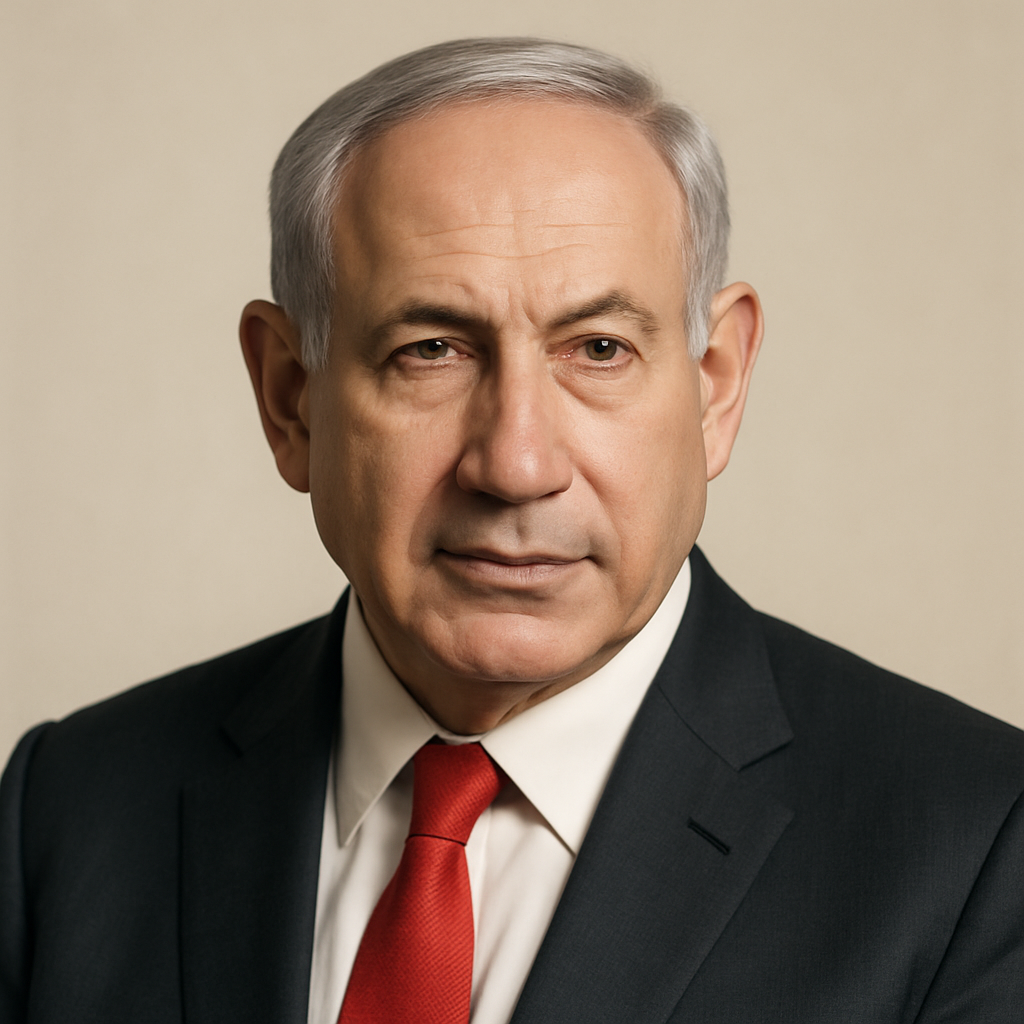
- Netanyahu spoke at a July 2023 event unveiling the 'One Israel' transportation plan, praising ministerial colleagues and reflecting on landmark reforms throughout his tenure.
- Main themes
- Transportation reform, economic liberalization, conceptual struggle in reform, free market economy, taxation policy, natural gas extraction, Iran nuclear deal opposition, Arab-Israeli normalization, cost of living, infrastructure development, One Israel plan
- Duration
- ~6 min
- Words
- 719
- Sentences
- 41
- Readability
- 58
- Grade
- 9.4
- Syntax
- 2.81
- Vocabulary
- 2.01
The broad sphere of national life a sentence belongs to. Every sentence has an Arena, so it is the denominator the other indices are read against.
Other41 sentences in 11 paragraphs
I would like to thank my colleagues, Transportation Minister Miri Regev, Finance Minister Bezalel Smotrich and Deputy Minister – my Deputy Minister – Uri Maklev, and all of you, the people who did the very important work in the various ministries and authorities, which has led to this point and will hold us at this point.
I had considerable satisfaction now, after what I have heard. I will tell you why: I have led more than a few reforms in my years as Prime Minister and as Finance Minister, many reforms. The hardest part in passing a reform is the conceptual struggle, the struggle of the idea.
The struggle to turn Israel from a half-socialist country into a free economy was not simple. We struggled over the very idea. The way in which the state ensures the welfare of its citizens by better planning and controlling the economy will not allow the forces of an active market to work. These were real debates. A high level of taxation is needed to finance social needs. And who could think that a lower level of taxation could, in effect, lead to greater revenues from taxation that would allow us to finance the needs of the disabled, education, the elderly and so on and so forth.
The conceptual struggle is the most difficult in any reform, including the contemporary. This is the most difficult struggle. This was in the economy, in gas, where we had a major struggle. Are we working, are we missing the mark when we extract the gas from the depths of the sea? Are we hurting coming generations? Must we leave this buried deep down? We thought that we had to bring this out for every possible reason, for protecting the environment, for reasons of geo-politics, to lower the price of electricity – and we see today that the price of electricity in Israel is among the lowest in the world thank to the gas.
But there was a conceptual debate, for years, to leave the gas in the sea. It was dangerous for the Israeli economy, for the environment, if it were to continue using coal, and dangerous for security; we had a major struggle.
We needed to struggle against the agreement with Iran, which gave them billions. 'These billions will make Iran a more moderate country; they will start to invest in their people. They will not invest in terrorism all around them. They will not advance their nuclear program.' A giant struggle. Today, most of the world understands this but it was a giant struggle.
It was the same with the cost of living, that the government should come in and control prices, use its power and authority to control prices. Then if we control prices, the prices will be lower – no. Today, most citizens of Israel understand that competition, imports, opening up to imports, opening markets, these are what lower prices. The conceptual struggle is of the highest magnitude.
In the diplomatic sphere, we were told for a quarter of a century that 'There will be no peace with the Arab states if you do not first make an agreement with the Palestinians. But it is impossible to make an agreement with the Palestinians if they want us to disappear in this agreement. Therefore, it was necessary to go to the Arab states first, to do the exact opposite. The conceptual struggle is the most important.
I am satisfied today because the conceptual struggle in transportation has been decided in the optimal manner. How do you know that the struggle has been decided? When the things you wanted to advance are advanced by your friends and colleagues in a much better way than I could have advanced them.
I am truly satisfied because I think that everyone, even the correspondents and the cynics, understand that a great thing is happening here. We are already underway.
I would be remiss if I did not refer to our friend, former Transportation Minister Yisrael Katz, who did exceptional work in paving the way – in every sense of the word – for his successors. This partnership that we made. And are making, will change the face of the state of Israel in an extraordinary way. Then I am satisfied and I hope that you are too.