




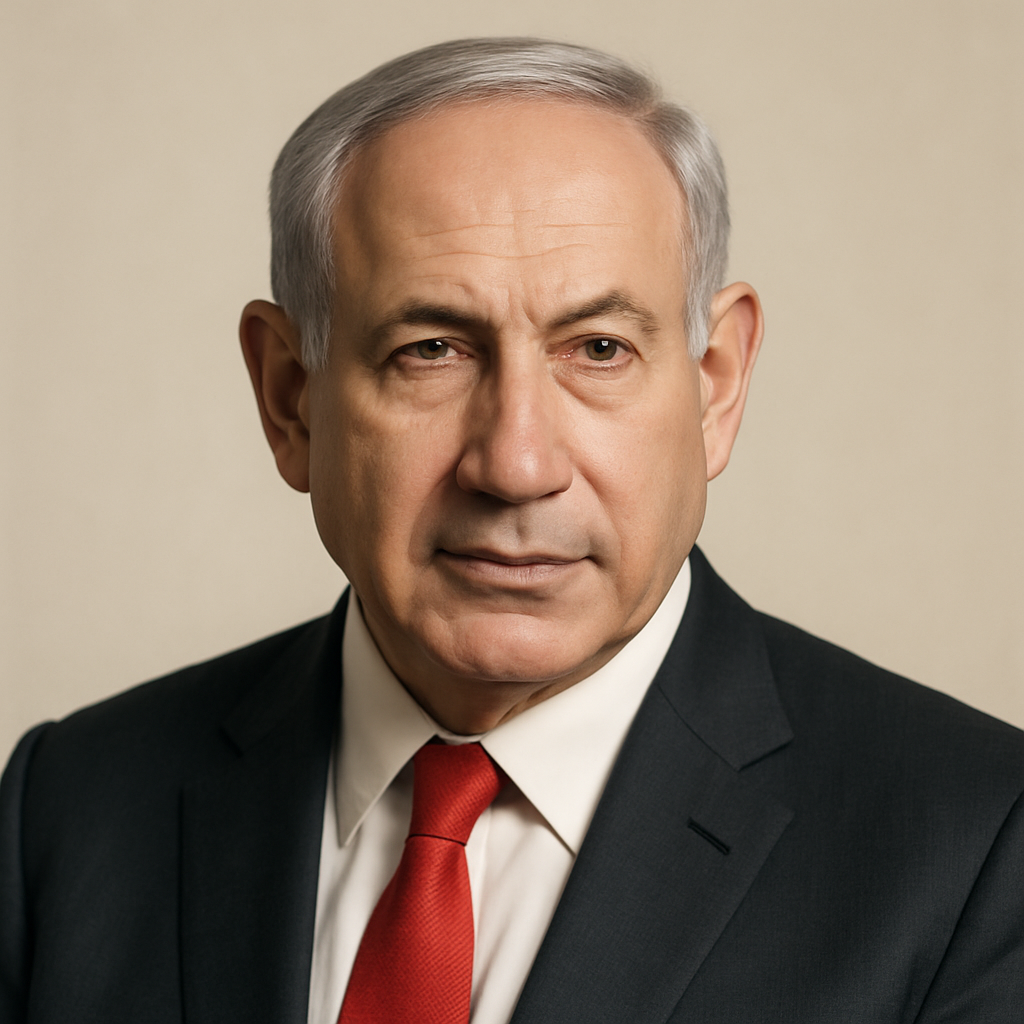
PM Netanyahu's Speech at a Special Knesset Session on the Hostages
 Benjamin Netanyahu · Prime Minister of Israel
- Context
- Netanyahu addressed a special Knesset session on December 25, 2023, detailing diplomatic and military efforts to secure the release of hostages held by Hamas since the October 7 attacks.
- Main themes
- Hostage crisis, diplomatic efforts for hostage release, military pressure in Gaza, individual hostage cases, international outreach, Hamas, families of hostages, Israeli-Palestinian conflict, Red Cross engagement, unity of the Israeli nation
- Duration
- ~11 min
- Words
- 1,299
- Sentences
- 74
- Readability
- 70
- Grade
- 7.8
- Syntax
- 2.90
- Vocabulary
- 2.04
The broad sphere of national life a sentence belongs to. Every sentence has an Arena, so it is the denominator the other indices are read against.
Other74 sentences in 17 paragraphs
Dear Families, Mr. Speaker, Government ministers, Members of Knesset,
During my years as Prime Minister, I met with representatives of all the major powers and their ambassadors in Israel, including ambassadors of China, but I don't remember inviting the Chinese ambassador to a meeting; usually they invite themselves. Several days ago, I invited him to come and asked him to convey a message directly to the president of China, Xi Jinping. The message was regarding a young, Israeli woman, Noa Argamani, a student who is supposed to start her third year at Ben-Gurion University. Noa was taken hostage at that same event you are all familiar with, together with her boyfriend. I met her mother, Leora, several times. She came with her husband Ya'akov. Leora was born in China.
I told the ambassador that I was asking him to please tell Xi Jinping, outside of protocol, outside the rules, which I know very well, that this is the daughter of a Chinese mother and that I am asking for his personal intervention with regard to Noa Argamani, because her mother is begging not only for Noa's life, but also for her own life, as she has advanced stage cancer. She told me what she said many times: 'I only ask to see my Noa once more in the time I have left.' The ambassador got back to me and said that this request had reached the President of China.
There is another head of state I approached—I had not spoken with him for many long months—and that is the president of Russia, Vladimir Putin. I spoke with him just days ago, and I told him that I was asking for him to intervene in the matter of the hostages, including Andrey Kozlov, Alex Lobanov and Alexander Trupanob. He said he would try to act in this regard. The next day, Russia's deputy foreign minister called for the immediate unconditional release of all the hostages.
I tell you all this to make one thing clear: We, my colleagues and I, are making every effort, both seen and unseen, to bring our hostages home.
Several days ago, I met with the president of the Red Cross. It was at my office in Tel Aviv, and I placed a box of medicines of the table, medicines that a considerable number of the hostages, whose pictures are presented, here need. Some are even life-saving medications. I told her, 'Take this box, pass it along. Give it to the Hamas operatives in Rafah. This is what I ask and demand of them.' She did not agree, and it was a difficult conversation.
Yesterday, my wife, Sara, sent a letter to the Pope, and she asked for his involvement on the matter of all the hostages. She asked him to approach the president of the Red Cross to ask that they visit our hostages and transfer their medicines.
We are making every effort. I won't go into all my conversations with President Biden, French President Macron, the Prime Minister of Britain and with leaders from around the world. I also won't describe the efforts we are making even as we speak, which I don't think should be detailed. I want to simply emphasize: We will shake every tree and turn over every rock to bring all our hostages home. I say this not only as part of a collective, but on an individual basis, because each and every one of them, like you, like me, is precious.
Since the beginning of the war, I met with the families of the hostages, together with the members of the War Cabinet and on my own, including in the past several days. I hear your personal stories. I listened to Sharon Sharabi, who told me and my wife about his brother Yossi, who was taken hostage at Kibbutz Be'eri, while his wife, Nira, was able to save their daughters and seven other citizens. His brother Eli, who was taken hostage, lives near him in Kibbutz Be'eri.
We also met with Ali Ziyadne, who was elated after the release of two of his cousins, Aisha and Bilal, but this joy was mixed with worry and sadness over the condition of his brother Youssef and his brother Hamza, who are still being held by Hamas. We looked each other in the eyes at these meetings. We spoke honestly and openly, heart to heart, from a grieving heart to a burning heart. Because I look at every picture, and this is not just lip service and you all know it.
What my colleagues said here today is true. This brings the nation together, and what unites us is that this is a sacred mission. So I say again: We will continue to make every effort to bring them home.
I want to tell you, members of Knesset and dear families, we would not have succeeded in freeing more than 100 hostages thus far without military pressure. All the pressures that we are applying, diplomatic, intelligence and others, would not succeed without military pressure. We will not be able to release all the hostages without military pressure, operational pressure, diplomatic pressure. And therefore there is one thing we will not do—we will not stop fighting.
I came here directly from Gaza. Just an hour ago, I was in the Salatin neighborhood, which abuts Jabaliya and Beit Lahiya. There, in the dust and the mud and among the ruins, I met the heroic and determined fighters of the Bahad 1 reserves brigade. You should hear them. I spoke with Brigade Commander Yehuda, who commands the reserves brigade. I asked him what they most needed. He told me that there are battles all the time and that they killed terrorists, and that unfortunately they lost several of their brothers-in-arms, but that they keep fighting. They kill terrorists all the time, day in and day out, even on an hourly basis. I asked him, 'What do you need the most?' And he answered, 'Time. We need time.'
We need to keep going until the end. I spoke with Uri, a battalion commander in the reserves. He is a father of eight children. Five of his family members are fighting in Gaza. He told me, 'We need to keep going until the end.' He hasn't been home in two months. He told me, 'My wife is at home and tells me to take two more months. Take however long it takes. To the end.'
I heard similar statements from the family members of our brave fallen soldiers. You should hear them. They speak with broken hearts and with tears in their eyes, but I must tell you, with their heads held high. They weep and I embrace them, and they stand with their heads held high. From the depths of their grief, they cry out, 'Our children did not die in vain. We cannot stop the war until we ensure total victory over those who seek to kill us.'
To you, IDF soldiers, and to you, hurting families and relatives of the hostages, and from this podium, I say: We are not stopping and we will not stop until we are victorious, because we have no country but this one, and we have no other way. Together with you, together with every home in Israel and every citizen of Israel, I pray for the well-being of our hostages, our brothers and sisters: 'Our brothers, the entire family of Israel, who are delivered into distress and captivity, whether they are on sea or dry land – may God have mercy on them and remove them from stress to relief, from darkness to light, from subjugation to redemption now, speedily and soon.'
I would like to add another prayer, a prayer for the well-being of our IDF soldiers: