





- Context
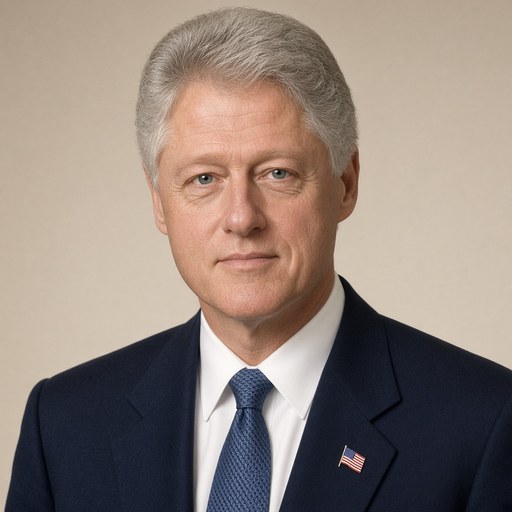
- President William J. Clinton delivered the State of the Union address on 24 January 1995 at the United States Capitol, focusing on domestic policy and responding to the Republican Party's recent congressional victories.
- Main themes
- Brady bill and assault weapons ban, AmeriCorps national service corps, illegal immigration and border security, middle class bill of rights, minimum wage increase, health care reform, Mexico financial stabilization program
- Duration
- ~44 min
- Words
- 5,237
- Sentences
- 255
- Readability
- 66
- Grade
- 9.1
- Syntax
- 2.89
- Vocabulary
- 1.82
The broad sphere of national life a sentence belongs to. Every sentence has an Arena, so it is the denominator the other indices are read against.
Other255 sentences in 38 paragraphs
I don't want to destroy the good atmosphere in the room or in the country tonight, but I have to mention one issue that divided this body greatly last year. The last Congress also passed the Brady bill and, in the crime bill, the ban on 19 assault weapons. I don't think it's a secret to anybody in this room that several Members of the last Congress who voted for that aren't here tonight because they voted for it. And I know, therefore, that some of you who are here because they voted for it are under enormous pressure to repeal it. I just have to tell you how I feel about it. The Members of Congress who voted for that bill and I would never do anything to infringe on the right to keep and bear arms to hunt and to engage in other appropriate sporting activities. I've done it since I was a boy, and I'm going to keep right on doing it until I can't do it anymore. But a lot of people laid down their seats in Congress so that police officers and kids wouldn't have to lay down their lives under a hail of assault weapon attack, and I will not let that be repealed. I will not let it be repealed.
I'd like to talk about a couple of other issues we have to deal with. I want us to cut more spending, but I hope we won't cut Government programs that help to prepare us for the new economy, promote responsibility, and are organized from the grassroots up, not by Federal bureaucracy. The very best example of this is the national service corps, AmeriCorps. It passed with strong bipartisan support. And now there are 20,000 Americans, more than ever served in one year in the Peace Corps, working all over this country, helping people person-to-person in local grassroots volunteer groups, solving problems, and in the process earning some money for their education. This is citizenship at its best. It's good for the AmeriCorps members, but it's good for the rest of us, too. It's the essence of the New Covenant, and we shouldn't stop it.
All Americans, not only in the States most heavily affected but in every place in this country, are rightly disturbed by the large numbers of illegal aliens entering our country. The jobs they hold might otherwise be held by citizens or legal immigrants. The public service they use impose burdens on our taxpayers. That's why our administration has moved aggressively to secure our borders more by hiring a record number of new border guards, by deporting twice as many criminal aliens as ever before, by cracking down on illegal hiring, by barring welfare benefits to illegal aliens. In the budget I will present to you, we will try to do more to speed the deportation of illegal aliens who are arrested for crimes, to better identify illegal aliens in the workplace as recommended by the commission headed by former Congresswoman Barbara Jordan. We are a nation of immigrants. But we are also a nation of laws. It is wrong and ultimately self-defeating for a nation of immigrants to permit the kind of abuse of our immigration laws we have seen in recent years, and we must do more to stop it.
The most important job of our Government in this new era is to empower the American people to succeed in the global economy. America has always been a land of opportunity, a land where, if you work hard, you can get ahead. We've become a great middle class country. Middle class values sustain us. We must expand that middle class and shrink the under class, even as we do everything we can to support the millions of Americans who are already successful in the new economy.
America is once again the world's strongest economic power: almost 6 million new jobs in the last 2 years, exports booming, inflation down. High-wage jobs are coming back. A record number of American entrepreneurs are living the American dream. If we want it to stay that way, those who work and lift our Nation must have more of its benefits. Today, too many of those people are being left out. They're working harder for less. They have less security, less income, less certainty that they can even afford a vacation, much less college for their kids or retirement for themselves. We cannot let this continue. If we don't act, our economy will probably keep doing what it's been doing since about 1978, when the income growth began to go to those at the very top of our economic scale and the people in the vast middle got very little growth, and people who worked like crazy but were on the bottom then fell even further and further behind in the years afterward, no matter how hard they worked.
We've got to have a Government that can be a real partner in making this new economy work for all of our people, a Government that helps each and every one of us to get an education and to have the opportunity to renew our skills. That's why we worked so hard to increase educational opportunities in the last 2 years, from Head Start to public schools, to apprenticeships for young people who don't go to college, to making college loans more available and more affordable. That's the first thing we have to do. We've got to do something to empower people to improve their skills.
The second thing we ought to do is to help people raise their incomes immediately by lowering their taxes. We took the first step in 1993 with a working family tax cut for 15 million families with incomes under $27,000, a tax cut that this year will average about $1,000 a family. And we also gave tax reductions to most small and new businesses. Before we could do more than that, we first had to bring down the deficit we inherited, and we had to get economic growth up. Now we've done both. And now we can cut taxes in a more comprehensive way. But tax cuts should reinforce and promote our first obligation: to empower our citizens through education and training to make the most of their own lives. The spotlight should shine on those who make the right choices for themselves, their families, and their communities.
I have proposed the middle class bill of rights, which should properly be called the bill of rights and responsibilities because its provisions only benefit those who are working to educate and raise their children and to educate themselves. It will, therefore, give needed tax relief and raise incomes in both the short run and the long run in a way that benefits all of us. There are four provisions. First, a tax deduction for all education and training after high school. If you think about it, we permit businesses to deduct their investment, we permit individuals to deduct interest on their home mortgages, but today an education is even more important to the economic well-being of our whole country than even those things are. We should do everything we can to encourage it. And I hope you will support it.
Second, we ought to cut taxes $500 for families with children under 13. Third, we ought to foster more savings and personal responsibility by permitting people to establish an individual retirement account and withdraw from it, tax-free, for the cost of education, health care, first-time homebuying, or the care of a parent. And fourth, we should pass a "GI bill" for America's workers. We propose to collapse nearly 70 Federal programs and not give the money to the States but give the money directly to the American people, offer vouchers to them so that they, if they're laid off or if they're working for a very low wage, can get a voucher worth $2,600 a year for up to 2 years to go to their local community colleges or wherever else they want to get the skills they need to improve their lives. Let's empower people in this way, move it from the Government directly to the workers of America.
Now, any one of us can call for a tax cut, but I won't accept one that explodes the deficit or puts our recovery at risk. We ought to pay for our tax cuts fully and honestly. Just 2 years ago, it was an open question whether we would find the strength to cut the deficit. Thanks to the courage of the people who were here then, many of whom didn't return, we did cut the deficit. We began to do what others said would not be done. We cut the deficit by over $600 billion, about $10,000 for every family in this country. It's coming down 3 years in a row for the first time since Mr. Truman was President, and I don't think anybody in America wants us to let it explode again. In the budget I will send you, the middle class bill of rights is fully paid for by budget cuts in bureaucracy, cuts in programs, cuts in special interest subsidies. And the spending cuts will more than double the tax cuts. My budget pays for the middle class bill of rights without any cuts in Medicare. And I will oppose any attempts to pay for tax cuts with Medicare cuts. That's not the right thing to do.
I know that a lot of you have your own ideas about tax relief, and some of them I find quite interesting. I really want to work with all of you. My test for our proposals will be: Will it create jobs and raise incomes; will it strengthen our families and support our children; is it paid for; will it build the middle class and shrink the under class? If it does, I'll support it. But if it doesn't, I won't.
The goal of building the middle class and shrinking the under class is also why I believe that you should raise the minimum wage. It rewards work. Two and a half million Americans, two and a half million Americans, often women with children, are working out there today for $4.25 an hour. In terms of real buying power, by next year that minimum wage will be at a 40-year low. That's not my idea of how the new economy ought to work. Now, I've studied the arguments and the evidence for and against a minimum wage increase. I believe the weight of the evidence is that a modest increase does not cost jobs and may even lure people back into the job market. But the most important thing is, you can't make a living on $4.25 an hour, especially if you have children, even with the working families tax cut we passed last year. In the past, the minimum wage has been a bipartisan issue, and I think it should be again. So I want to challenge you to have honest hearings on this, to get together, to find a way to make the minimum wage a living wage. Members of Congress have been here less than a month, but by the end of the week, 28 days into the new year, every Member of Congress will have earned as much in congressional salary as a minimum wage worker makes all year long.
Everybody else here, including the President, has something else that too many Americans do without, and that's health care. Now, last year we almost came to blows over health care, but we didn't do anything. And the cold, hard fact is that, since last year, since I was here, another 1.1 million Americans in working families have lost their health care. And the cold, hard fact is that many millions more, most of them farmers and small business people and self-employed people, have seen their premiums skyrocket, their copays and deductibles go up. There's a whole bunch of people in this country that in the statistics have health insurance but really what they've got is a piece of paper that says they won't lose their home if they get sick.
Now, I still believe our country has got to move toward providing health security for every American family. But I know that last year, as the evidence indicates, we bit off more than we could chew. So I'm asking you that we work together. Let's do it step by step. Let's do whatever we have to do to get something done. Let's at least pass meaningful insurance reform so that no American risks losing coverage for facing skyrocketing prices, that nobody loses their coverage because they face high prices or unavailable insurance when they change jobs or lose a job or a family member gets sick. I want to work together with all of you who have an interest in this, with the Democrats who worked on it last time, with the Republican leaders like Senator Dole, who has a longtime commitment to health care reform and made some constructive proposals in this area last year. We ought to make sure that self-employed people in small businesses can buy insurance at more affordable rates through voluntary purchasing pools. We ought to help families provide long-term care for a sick parent or a disabled child. We can work to help workers who lose their jobs at least keep their health insurance coverage for a year while they look for work. And we can find a way—it may take some time, but we can find a way—to make sure that our children have health care.
You know, I think everybody in this room, without regard to party, can be proud of the fact that our country was rated as having the world's most productive economy for the first time in nearly a decade. But we can't be proud of the fact that we're the only wealthy country in the world that has a smaller percentage of the work force and their children with health insurance today than we did 10 years ago, the last time we were the most productive economy in the world. So let's work together on this. It is too important for politics as usual.
Much of what the American people are thinking about tonight is what we've already talked about. A lot of people think that the security concerns of America today are entirely internal to our borders. They relate to the security of our jobs and our homes and our incomes and our children, our streets, our health, and protecting those borders. Now that the cold war has passed, it's tempting to believe that all the security issues, with the possible exception of trade, reside here at home. But it's not so. Our security still depends upon our continued world leadership for peace and freedom and democracy. We still can't be strong at home unless we're strong abroad.
The financial crisis in Mexico is a case in point. I know it's not popular to say it tonight, but we have to act, not for the Mexican people but for the sake of the millions of Americans whose livelihoods are tied to Mexico's wellbeing. If we want to secure American jobs, preserve American exports, safeguard America's borders, then we must pass the stabilization program and help to put Mexico back on track. Now let me repeat: It's not a loan. It's not foreign aid. It's not a bailout. We will be given a guarantee like cosigning a note, with good collateral that will cover our risks. This legislation is the right thing for America. That's why the bipartisan leadership has supported it. And I hope you in Congress will pass it quickly. It is in our interest, and we can explain it to the American people because we're going to do it in the right way.
You know, tonight, this is the first State of the Union Address ever delivered since the beginning of the cold war when not a single Russian missile is pointed at the children of America. And along with the Russians, we're on our way to destroying the missiles and the bombers that carry 9,000 nuclear warheads. We've come so far so fast in this post-cold-war world that it's easy to take the decline of the nuclear threat for granted. But it's still there, and we aren't finished yet. This year I'll ask the Senate to approve START II to eliminate weapons that carry 5,000 more warheads. The United States will lead the charge to extend indefinitely the Nuclear Non-Proliferation Treaty, to enact a comprehensive nuclear test ban, and to eliminate chemical weapons. To stop and roll back North Korea's potentially deadly nuclear program, we'll continue to implement the agreement we have reached with that nation. It's smart. It's tough. It's a deal based on continuing inspection with safeguards for our allies and ourselves.
This year I'll submit to Congress comprehensive legislation to strengthen our hand in combating terrorists, whether they strike at home or abroad. As the cowards who bombed the World Trade Center found out, this country will hunt down terrorists and bring them to justice. Just this week, another horrendous terrorist act in Israel killed 19 and injured scores more. On behalf of the American people and all of you, I send our deepest sympathy to the families of the victims. I know that in the face of such evil, it is hard for the people in the Middle East to go forward. But the terrorists represent the past, not the future. We must and we will pursue a comprehensive peace between Israel and all her neighbors in the Middle East. Accordingly, last night I signed an Executive order that will block the assets in the United States of terrorist organizations that threaten to disrupt the peace process. It prohibits financial transactions with these groups. And tonight I call on all our allies and peace-loving nations throughout the world to join us with renewed fervor in a global effort to combat terrorism. We cannot permit the future to be marred by terror and fear and paralysis.
From the day I took the oath of office, I pledged that our Nation would maintain the best equipped, best trained, and best prepared military on Earth. We have, and they are. They have managed the dramatic downsizing of our forces after the cold war with remarkable skill and spirit. But to make sure our military is ready for action and to provide the pay and the quality of life the military and their families deserve, I'm asking the Congress to add $25 billion in defense spending over the next 6 years. I have visited many bases at home and around the world since I became President. Tonight I repeat that request with renewed conviction. We ask a very great deal of our Armed Forces. Now that they are smaller in number, we ask more of them. They go out more often to more different places and stay longer. They are called to service in many, many ways. And we must give them and their families what the times demand and what they have earned.
Just think about what our troops have done in the last year, showing America at its best, helping to save hundreds of thousands of people in Rwanda, moving with lightning speed to head off another threat to Kuwait, giving freedom and democracy back to the people of Haiti. We have proudly supported peace and prosperity and freedom from South Africa to Northern Ireland, from Central and Eastern Europe to Asia, from Latin America to the Middle East. All these endeavors are good in those places, but they make our future more confident and more secure.
Well, my fellow Americans, that's my agenda for America's future: expanding opportunity, not bureaucracy; enhancing security at home and abroad; empowering our people to make the most of their own lives. It's ambitious and achievable, but it's not enough. We even need more than new ideas for changing the world or equipping Americans to compete in the new economy, more than a Government that's smaller, smarter, and wiser, more than all of the changes we can make in Government and in the private sector from the outside in. Our fortunes and our posterity also depend upon our ability to answer some questions from within, from the values and voices that speak to our hearts as well as our heads; voices that tell us we have to do more to accept responsibility for ourselves and our families, for our communities, and yes, for our fellow citizens.
We see our families and our communities all over this country coming apart, and we feel the common ground shifting from under us. The PTA, the town hall meeting, the ball park, it's hard for a lot of overworked parents to find the time and space for those things that strengthen the bonds of trust and cooperation. Too many of our children don't even have parents and grandparents who can give them those experiences that they need to build their own character and their sense of identity. We all know that while we here in this Chamber can make a difference on those things, that the real differences will be made by our fellow citizens, where they work and where they live and that it will be made almost without regard to party. When I used to go to the softball park in Little Rock to watch my daughter's league and people would come up to me, fathers and mothers, and talk to me, I can honestly say I had no idea whether 90 percent of them were Republicans or Democrats. When I visited the relief centers after the floods in California, northern California, last week, a woman came up to me and did something that very few of you would do. She hugged me and said, "Mr. President, I'm a Republican, but I'm glad you're here." Now, why?
We can't wait for disasters to act the way we used to act every day, because as we move into this next century, everybody matters. We don't have a person to waste. And a lot of people are losing a lot of chances to do better. That means that we need a New Covenant for everybody.
For our corporate and business leaders, we're going to work here to keep bringing the deficit down, to expand markets, to support their success in every possible way. But they have an obligation when they're doing well to keep jobs in our communities and give their workers a fair share of the prosperity they generate. For people in the entertainment industry in this country, we applaud your creativity and your worldwide success, and we support your freedom of expression. But you do have a responsibility to assess the impact of your work and to understand the damage that comes from the incessant, repetitive, mindless violence and irresponsible conduct that permeates our media all the time. We've got to ask our community leaders and all kinds of organizations to help us stop our most serious social problem, the epidemic of teen pregnancies and births where there is no marriage. I have sent to Congress a plan to target schools all over this country with antipregnancy programs that work. But Government can only do so much. Tonight I call on parents and leaders all across this country to join together in a national campaign against teen pregnancy to make a difference. We can do this, and we must.
And I would like to say a special word to our religious leaders. You know, I'm proud of the fact the United States has more houses of worship per capita than any country in the world. These people who lead our houses of worship can ignite their congregations to carry their faith into action, can reach out to all of our children, to all of the people in distress, to those who have been savaged by the breakdown of all we hold dear. Because so much of what must be done must come from the inside out and our religious leaders and their congregations can make all the difference, they have a role in the New Covenant as well.
There must be more responsibility for all of our citizens. You know, it takes a lot of people to help all the kids in trouble stay off the streets and in school. It takes a lot of people to build the Habitat for Humanity houses that the Speaker celebrates on his lapel pin. It takes a lot of people to provide the people power for all of the civic organizations in this country that made our communities mean so much to most of us when we were kids. It takes every parent to teach the children the difference between right and wrong and to encourage them to learn and grow and to say no to the wrong things but also to believe that they can be whatever they want to be.
I know it's hard when you're working harder for less, when you're under great stress, to do these things. A lot of our people don't have the time or the emotional stress, they think, to do the work of citizenship. Most of us in politics haven't helped very much. For years, we've mostly treated citizens like they were consumers or spectators, sort of political couch potatoes who were supposed to watch the TV ads either promise them something for nothing or play on their fears and frustrations. And more and more of our citizens now get most of their information in very negative and aggressive ways that are hardly conducive to honest and open conversations. But the truth is, we have got to stop seeing each other as enemies just because we have different views. If you go back to the beginning of this country, the great strength of America, as de Tocqueville pointed out when he came here a long time ago, has always been our ability to associate with people who were different from ourselves and to work together to find common ground. And in this day, everybody has a responsibility to do more of that. We simply cannot want for a tornado, a fire, or a flood to behave like Americans ought to behave in dealing with one another.
I want to finish up here by pointing out some folks that are up with the First Lady that represent what I'm trying to talk about—citizens. I have no idea what their party affiliation is or who they voted for in the last election. But they represent what we ought to be doing.
Cindy Perry teaches second graders to read in AmeriCorps in rural Kentucky. She gains when she gives. She's a mother of four. She says that her service inspired her to get her high school equivalency last year. She was married when she was a teenager—stand up, Cindy. She was married when she was a teenager. She had four children. But she had time to serve other people, to get her high school equivalency, and she's going to use her AmeriCorps money to go back to college.
Chief Stephen Bishop is the police chief of Kansas City. He's been a national leader—stand up, Steve. He's been a national leader in using more police in community policing, and he's worked with AmeriCorps to do it. And the crime rate in Kansas City has gone down as a result of what he did.
Corporal Gregory Depestre went to Haiti as part of his adopted country's force to help secure democracy in his native land. And I might add, we must be the only country in the world that could have gone to Haiti and taken Haitian-Americans there who could speak the language and talk to the people. And he was one of them, and we're proud of him.
The next two folks I've had the honor of meeting and getting to know a little bit, the Reverend John and the Reverend Diana Cherry of the A.M.E. Zion Church in Temple Hills, Maryland. I'd like to ask them to stand. I want to tell you about them. In the early eighties, they left Government service and formed a church in a small living room in a small house, in the early eighties. Today that church has 17,000 members. It is one of the three or four biggest churches in the entire United States. It grows by 200 a month. They do it together. And the special focus of their ministry is keeping families together.
Two things they did make a big impression on me. I visited their church once, and I learned they were building a new sanctuary closer to the Washington, DC, line in a higher crime, higher drug rate area because they thought it was part of their ministry to change the lives of the people who needed them. The second thing I want to say is that once Reverend Cherry was at a meeting at the White House with some other religious leaders, and he left early to go back to this church to minister to 150 couples that he had brought back to his church from all over America to convince them to come back together, to save their marriages, and to raise their kids. This is the kind of work that citizens are doing in America. We need more of it, and it ought to be lifted up and supported.
The last person I want to introduce is Jack Lucas from Hattiesburg, Mississippi. Jack, would you stand up? Fifty years ago, in the sands of Iwo Jima, Jack Lucas taught and learned the lessons of citizenship. On February 20th, 1945, he and three of his buddies encountered the enemy and two grenades at their feet. Jack Lucas threw himself on both of them. In that moment, he saved the lives of his companions, and miraculously in the next instant, a medic saved his life. He gained a foothold for freedom, and at the age of 17, just a year older than his grandson who is up there with him today— and his son, who is a West Point graduate and a veteran—at 17, Jack Lucas became the youngest Marine in history and the youngest soldier in this century to win the Congressional Medal of Honor.
All these years later, yesterday, here's what he said about that day: "It didn't matter where you were from or who you were, you relied on one another. You did it for your country." We all gain when we give, and we reap what we sow. That's at the heart of this New Covenant.
Responsibility, opportunity, and citizenship, more than stale chapters in some remote civic book, they're still the virtue by which we can fulfill ourselves and reach our God-given potential and be like them and also to fulfill the eternal promise of this country, the enduring dream from that first and most sacred covenant. I believe every person in this country still believes that we are created equal and given by our Creator the right to life, liberty and the pursuit of happiness. This is a very, very great country. And our best days are still to come.
Thank you, and God bless you all.