




- Context
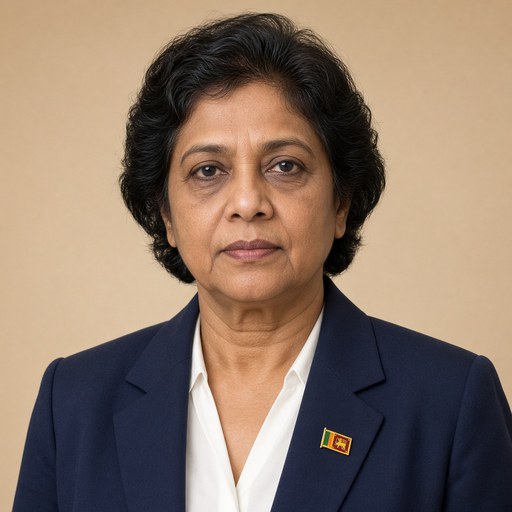
- Kumaratunga delivered a lecture at CERI, Paris in June 2011 examining the relationship between the state and religion in South Asia.
- Main themes
- Secularism and state-religion separation, religion and politics, South Asian political history, anti-colonial movements, formation of independent states, religious legitimization of power, European origins of secularism, historical context of governance
- Duration
- ~1 min
- Words
- 169
- Sentences
- 7
- Readability
- 35
- Grade
- 14.3
- Syntax
- 3.39
- Vocabulary
- 2.47
The broad sphere of national life a sentence belongs to. Every sentence has an Arena, so it is the denominator the other indices are read against.
Other7 sentences in 3 paragraphs
CERI,Paris – June 2011
Secularism implies the relationship between Religion and Politics, more specifically between Religion and the State. The concept of secularism has drawn its sources from the philosophy that Humans can order their lives and their societies without recourse to transcendent or supra natural powers, and hence they could also organize and manage the State and its government , without direct connections with the religious establishment. Thus evolved the concept of Secularism and the separation of the Sate from Religion, taking root in Europe and spreading its message across the globe.
In South Asia, the concept was popularized in the 20th century, mainly during the anti-colonial struggles and the consequent formation of new, independent States in the 2nd half of the century. Until this period, in South Asia, as in the West and other parts of Asia, the State and Religion were closely intertwined. Religion played an important role in legitimizing the State and rulers, the degree of its significance, varying in accordance with different historical contexts.