




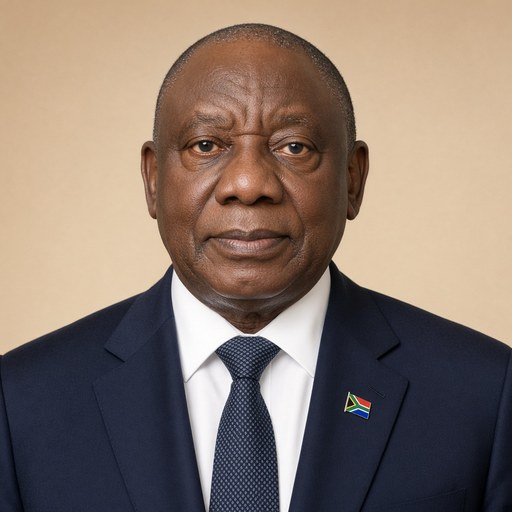
Address by President Cyril Ramaphosa at the 10th Education International Africa Regional Conference, Sandton Convention Centre, Johannesburg
 Cyril Ramaphosa · President of South Africa
- Context
- Ramaphosa addressed the 10th Education International Africa Regional Conference in Johannesburg on 21 November 2023, focusing on building resilient education systems.
- Main themes
- Resilient education systems, decolonisation of education, COVID-19 pandemic impact on education, digital transformation and STEAM curriculum, educational inequality and the digital divide, role of educators and teacher unions, curriculum reform, human rights and democracy in education, African perspectives in education, partnerships in education advocacy
- Duration
- ~7 min
- Words
- 892
- Sentences
- 49
- Readability
- 29
- Grade
- 13.7
- Syntax
- 2.70
- Vocabulary
- 2.39
The broad sphere of national life a sentence belongs to. Every sentence has an Arena, so it is the denominator the other indices are read against.
Other49 sentences in 42 paragraphs
Programme Director, Deputy Minister of Education, Dr Reginah Mhaule, Premier of Gauteng, Mr Panyaza Lesufi, President of Education International, Ms Susan Hopgood, General Secretary of Education International, Mr David Edwards, Vice President of Education International for Africa, Mr Mugwena Maluleke, Education International regional representatives and members of the executive board, Representatives of the various unions, Delegates, Guests, Ladies and Gentlemen,
It is my privilege to address this 10th Africa Regional Conference of Education International, with its focus on shaping the future of education on our continent and beyond.
The theme of this Conference – Standing Together for Resilient Education Systems in Times of Crisis – resonates with our nation’s journey.
The story of South Africa is one of resilience and, where communities have united in pursuit of a common cause.
When the COVID-19 pandemic swept across the globe, it brought a crisis of unprecedented scale. Yet our resilience steered us through.
The pandemic hastened digital transformation and altered patterns of work and education.
It forced us to confront and appreciate the essential nature of health care, revealing both the robustness and fragility of our societies in the face of hardship.
The pandemic was not just a crisis of health, but also of education. It underscored the vast disparities in our education systems, with the digital divide becoming more pronounced.
While some learners adapted swiftly to online learning, others, particularly those from disadvantaged backgrounds, experience great challenges.
We saw how rural communities and students with disabilities were disproportionately affected. With schooling disrupted, inequalities in education were exacerbated.
As we navigated these turbulent waters, the world was confronted with political upheavals and conflicts.
These crises further strained our social fabric, affecting the livelihoods of countless individuals and denying many children their fundamental right to education.
In these times of instability, it is even more critical for nations to stand united in pursuit of equal access to education for all.
Education is the cornerstone upon which societies build their future.
Through education, we cultivate respect for human rights, the rule of law and the principles of democracy.
As the work of the UN High-Level Panel on the Teaching Profession demonstrates, the adaptation of education systems to a rapidly changing world is one of the most important tasks of the moment.
This panel draws expertise from diverse stakeholders, including ministers of education, labour representatives, teacher unions and civil society organisations, and includes our own Minister of Basic Education Ms Angie Motshekga.
It underscores the importance of educators’ voices in finding solutions to educational challenges.
Educators play a fundamental and irreplaceable role in shaping our societies, and their insights are invaluable in our quest for sustainable solutions.
Curriculum reform that responds to the changing world of work is another vital task.
In South Africa, we are on the brink of a significant educational reform with the implementation of the Coding and Robotics curriculum from Grade R to Grade 9.
This initiative is part of our broader strategy to integrate STEAM subjects into our education system.
By doing so, we aim to equip our learners with the digital skills necessary to thrive in a fast-paced world.
The decolonisation of education has become increasingly important.
The discussions at this conference, focusing on tackling racism, decolonising education and promoting democracy, human rights and trade union rights, could not be more timely.
The project of decolonising education in Africa is not just a matter of academic interest. It is a pressing need.
We must challenge colonial theories and practices to build resilient education systems that are centred on African perspectives and experiences.
This requires a shift away from a Eurocentric worldview to embrace a more diverse and inclusive perspective.
We must acknowledge and value the knowledge systems of all peoples and integrate them into our curricula and knowledge selection processes.
The responsibility to nurture and defend the right to education extends to all parts of society.
Labour movements, civil society organisations and non-governmental organisations operating within the educational sphere must collaborate to protect this critical space.
Through such partnerships, we can prepare our learners to be active, informed citizens in democratic societies.
The role of organisations such as Education International are vital.
As advocates for quality education, your mission is to ensure inclusive and equitable learning opportunities for all.
We know that quality education is not just a matter of access. What is also needed are safe, conducive environments where the rights of all learners are respected and upheld.
By improving access to education, we can alleviate poverty and empower marginalised communities, unlocking their potential and contributing to the development of nations.
As I conclude, I encourage you to explore the rich tapestry of South Africa’s history and culture during your stay.
I invite you to visit landmarks of our democracy, such as the Hector Pieterson Museum in Soweto, Constitution Hill and Freedom Park. These sites offer a view into our struggle for freedom and the values we hold dear as a nation.
Thank you again for the invitation to address this gathering. Your commitment to advancing education, particularly in times of crisis, is crucial for the future of our continent and the world.
I wish you all success in your deliberations and look forward to the outcomes of this conference.
Together, we can build education systems that are resilient and capable of inspiring and empowering future generations.
I thank you.