




President Cyril Ramaphosa's address on the occasion of a virtual UNGA75 Summit on Biodiversity
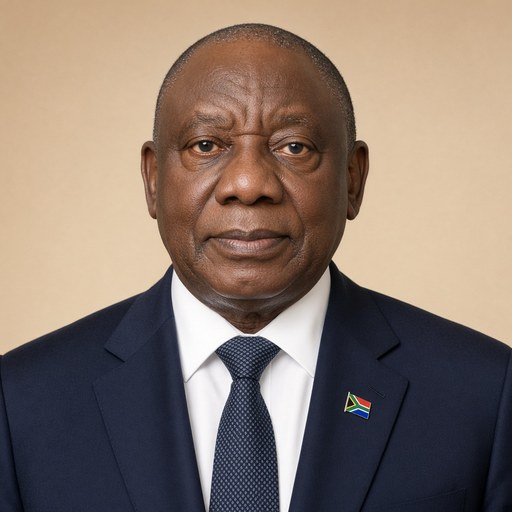
 Cyril Ramaphosa · President of South Africa
- Context
- Ramaphosa addressed the virtual UN General Assembly Summit on Biodiversity on 30 September 2020, urging global commitment to conservation amid the COVID-19 pandemic.
- Main themes
- Biodiversity loss, COVID-19 pandemic and environmental linkages, sustainable development, conservation of ecosystems and species, circular economy, zoonotic disease prevention, climate change, sustainable land and food management, indigenous and community inclusion, South Africa's biodiversity commitments, post-pandemic green recovery
- Duration
- ~3 min
- Words
- 405
- Sentences
- 19
- Readability
- 18
- Grade
- 16.0
- Syntax
- 2.82
- Vocabulary
- 2.35
The broad sphere of national life a sentence belongs to. Every sentence has an Arena, so it is the denominator the other indices are read against.
Other19 sentences in 5 paragraphs
Excellencies, Distinguished guests, Ladies and gentlemen, The coronavirus pandemic has had badly affected the ability of national economies to respond to challenges like environmental degradation and climate change. But even as we prioritise economic revival and reconstruction, we must maintain our collective commitment to environmental conservation. This is even more important when considering that there are strong linkages between environmental destruction and the emergence of new deadly diseases in humans. Biodiversity loss, deforestation, the loss of farmland, animal habitat loss and the consumption of wild species are creating conditions for infectious diseases that we will soon be unable to control. South Africa commits to working with the UN Environment Programme in the development of tools to track the future emergence of zoonotic diseases.
South Africa is the third most mega biodiverse country in the world, with unique species and ecosystems found nowhere else on earth. As a signatory to the Convention on Biological Diversity, we are working to conserve our biodiversity, promote its sustainable use and ensure the benefits of the commercial use of genetic resources are fairly distributed. We have a Biodiversity Economy strategy that integrates the sustainable management of biodiversity with job and business creation opportunities. We have increased our territorial protected areas and our protected ocean space.
As nations of the world, we must appreciate the complex interdependence between nature, economic activity and human development. In pursuit of sustainable development, our recovery strategies can, and should, strike a balance between environmental and economic imperatives. We need a holistic approach to achieving Sustainable Development Goal 15 on halting biodiversity loss. As responsible global citizens, we need to change our behaviour and consumption patterns and integrate approaches to improve conservation of species and ecosystems. We need to adopt sustainable land management practices, restore degraded lands, implement sustainable food production models and develop more climate-friendly agriculture. There needs to be a shift away from economic models that value growth for growth’s sake towards a circular economy. We must engage with local communities, drawing on traditional knowledge, and promote the inclusion of women and indigenous populations in bioprospecting and other sectors.
As we emerge from the coronavirus pandemic, not only must we raise the ambition of our biodiversity targets, we must also ensure that the recovery effort fosters greater and not less harmony with nature. Through improved awareness, collaboration and collective determination, we can ensure that we build back both better and greener.
I thank you.