




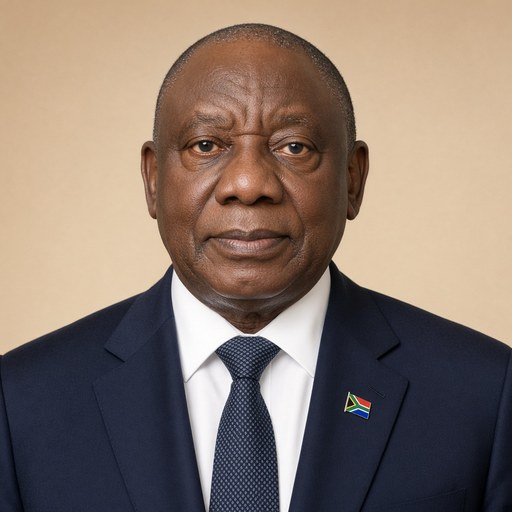
Remarks by President Cyril Ramaphosa at the handover of the Report of the G20 Extraordinary Committee of Independent Experts of Global Inequality, Tuynhuys, Cape Town
 Cyril Ramaphosa · President of South Africa
- Context
- Ramaphosa addressed experts and media at Tuynhuys, Cape Town, to receive the G20 Extraordinary Committee on Global Inequality report ahead of the G20 Leaders' Summit.
- Main themes
- Global inequality, G20 presidency of South Africa, expert committee report, inclusive growth, human dignity, democracy and fairness, Global South, vaccine apartheid, food and energy prices, debt and trade wars, government action on inequality, international cooperation
- Duration
- ~4 min
- Words
- 466
- Sentences
- 25
- Readability
- 43
- Grade
- 11.9
- Syntax
- 2.94
- Vocabulary
- 2.21
The broad sphere of national life a sentence belongs to. Every sentence has an Arena, so it is the denominator the other indices are read against.
Other25 sentences in 18 paragraphs
Minister of International Relations and Cooperation, Mr Ronald Lamola, Professor Joseph Stiglitz and members of the G20 Extraordinary Committee of Independent Experts on Global Inequality, Representatives of Oxfam, Distinguished guests, Members of the media,
I am honoured and please to receive this seminal report on global inequality.
This is the first time that a report of this nature – on a matter so fundamental to global stability and human progress – is presented for consideration by the G20.
When I announced the establishment of this Extraordinary Committee in August 2025, I said:
“People across the world know how extreme inequality undermines their dignity and chance for a better future. They saw the brutal unfairness of vaccine apartheid, where millions in the Global South were denied the vaccines to save them.
“They see the impacts of rising food and energy prices, of debt, of trade wars, all driving this growing gap between the rich and the rest of the world, undermining progress and economic dynamism.”
The report that is being handed over today is a rigorous and analytical account of what so many of the world’s people know from their daily experience. This report examines the causes and the drivers of inequality. Most importantly, this report lays out prudent and pragmatic steps we can take to reduce it.
This report, which is a blueprint for greater equality, supports the goal of South Africa’s G20 Presidency to put inequality on the international agenda. It correctly asserts that inequality is a betrayal of people’s dignity, an impediment to inclusive growth and a threat to democracy itself.
Addressing inequality is our inescapable generational challenge. We have the means to build a fair, just and equal world. We have the resources to narrow gap between and within countries.
Now, with this report, we have clear actions that we can take as governments, as societies and as the global community to reduce inequality.
It is now up to us, the leaders of the G20 and the leaders of the world, to demonstrate the necessary will and commitment.
I congratulate Professor Joseph Stiglitz and his Extraordinary Committee of such renowned experts for this effort. I am grateful also to those individuals and organisations that provided resources and support for this work.
This report is a work of great quality and significance.
It provides a solid platform on which to launch a renewed global effort to tackle inequality.
I am looking forward to discussing this report at the G20 Leaders’ Summit in Johannesburg later this month.
This remarkable work is not just for the benefit of the leaders of the G20.
It is for the benefit of the broader international community, for national governments and for all people who want to make the world a better, fairer and more equal place.
I thank you.