





- Context
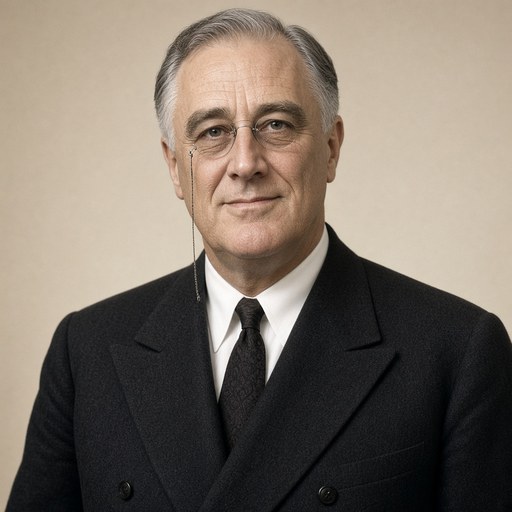
- Roosevelt addressed the people of San Antonio at the Alamo on June 11, 1936, during a visit and wreath-laying, honouring its defenders and linking their sacrifice to national unity.
- Main themes
- Heroes of the Alamo, sacrifice of Travis, Bowie, Crockett and Bonham, Texas independence and statehood, "Remember the Alamo" as national symbol, pioneer virility and ideals, national unity over local interest, new problems met with new courage, national war for humanity without bloodshed, Travis' "I shall never surrender", wreath-laying at the shrine
- Duration
- ~4 min
- Words
- 428
- Sentences
- 17
- Readability
- 49
- Grade
- 12.6
- Syntax
- 3.33
- Vocabulary
- 2.31
Source: The American Presidency Project ↗
The broad sphere of national life a sentence belongs to. Every sentence has an Arena, so it is the denominator the other indices are read against.
Other17 sentences in 7 paragraphs
Governor Allred, Mr. Mayor, my friends of San Antonio: Fate has been kind to me today.
In my many travels, a visit to the Alamo has hitherto been impossible. I, therefore, welcome this opportunity of visiting this shrine to pay my small tribute to the heroes who laid down their lives a hundred years ago, in order that Texas might become, first, an independent Nation, and later a mighty State of the Union.
We are not lacking in many monuments of noble deeds, but the Alamo stands out in high relief as our noblest exemplification of sacrifice, heroic and pure. Travis and Bowie and Crockett and Bonham, and the hundred and seventy-eight who were their comrades, by their supreme sacrifice, made Texas live. Without the inspiration of the cry, "Remember the Alamo," this great Southwest might never have become a part of the Nation. Without the tradition of the Alamo, every community throughout the land, every young man and every young woman about to enter upon the duties of citizenship, would have lacked one of our noblest symbols of the American spirit.
I cannot help feeling that the brave men who died here saw on the distant horizon some forecast of the century that lay ahead. I hope they know that we have not discarded or lost the virility and ideals of the pioneer. I hope they know that the overwhelming majority of the Americans of 1936 are once more meeting new problems with new courage—that we, too, are ready and willing to stand up and fight for truth against falsehood, for freedom of the individual against license by the few. Unlike them, we do not need to take up arms; we are not called upon to die; we can carry on a national war for the cause of humanity without shedding blood.
The heroes of the Alamo fought not solely for their individual homes or their individual communities. They knew their families and their immediate neighbors could not survive if the great Southwest fell. United action alone could win.
So we, in this latter day, are thinking and acting in terms of the whole Nation, understanding deeply that our firesides, our villages, our cities and our States cannot long endure if the Nation fails. Travis' message, "I shall never surrender," is a good watchword for each and every one of us today.
It is with a feeling of deep reverence and humble veneration that I have placed a wreath on this shrine where the blood of a hundred and eighty-two Americans was shed—but not shed in vain.