




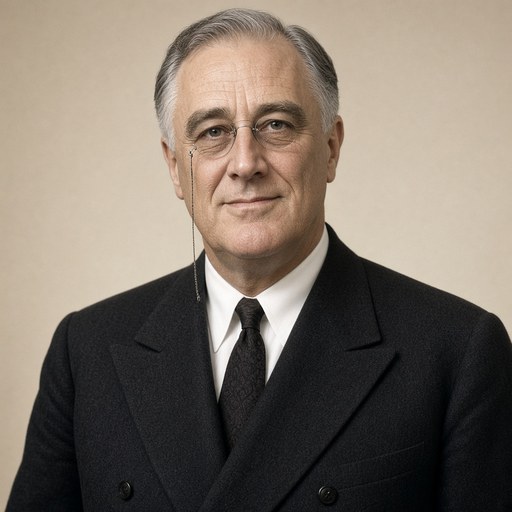
Radio Address in Honor of General Krzyzanowski of Poland.
 Franklin D. Roosevelt · President of the United States
- Context
- Roosevelt delivered a radio address on October 11, 1937, honoring General Krzyzanowski as his remains were consigned to Arlington National Cemetery, praising Polish-American friendship and the shared ideal of liberty.
- Main themes
- General Wladimir Krzyzanowski, reinterment at Arlington National Cemetery, American-Polish friendship, Polish ideal of liberty, Pulaski and Kosciuszko, Polish contribution to American history, restoration of Polish independence, freedom over force, conscience over brute strength, national unity of diverse origins
- Duration
- ~5 min
- Words
- 549
- Sentences
- 18
- Readability
- 42
- Grade
- 15.0
- Syntax
- 3.05
- Vocabulary
- 2.44
Source: The American Presidency Project ↗
The broad sphere of national life a sentence belongs to. Every sentence has an Arena, so it is the denominator the other indices are read against.
Other18 sentences in 6 paragraphs
Mr. Chairman, Mr. Ambassador, Ladies and Gentlemen: In the epic struggle of the human race to govern itself Poland for centuries has been the champion of freedom. Through stress and storm, whether her sun shone brightly or suffered long though temporary eclipse, she has ever fought to hold aloft the torch of human liberty.
Because we hold this ideal of liberty in common, ours has been a long and unbroken friendship with the people of Poland. From the days of our struggle to achieve nationhood, unbroken by any rift through the century and a half of our life as a Nation, the American people and the people of Poland have maintained a friendship based upon this common spiritual ideal.
General Krzyzanowski, whose patriotism we commemorate today, is another link to bind us to the people from whom he came in the full tide of youthful promise when shadows lay over the land which gave him birth. It is a high privilege to bear witness to the debt which this country owes to men of Polish blood. Gratefully we acknowledge the services of those intrepid champions of human freedom—Pulaski and Kosciuszko—whose very names are watchwords of liberty, and whose deeds are part of the imperishable record of American independence. Out of the past they speak to us to bid us guard the heritage which they helped to bestow. They and the millions of other men and women of Polish blood, who have united their destinies with those of America-whether in the days of Colonial settlement, in the War to attain independence, in the hard struggle out of which emerged our national unity, in the great journeyings across the Western Plains to the slopes of the Pacific, on farm or in town or city-through all of our history they have made their full contribution to the upbuilding of our institutions and to the fulfillment of our national life.
These are the thoughts and reflections that come to mind today as we consign to Arlington National Cemetery the honored dust of a son of Poland who faithfully served the country of his adoption. General Krzyzanowski was the embodiment of the Polish ideal of liberty. Into the making of that ancient ideal had gone the struggles and the vicissitudes of a thousand years of Polish national life. He whom we honor today, no less than those of his blood and kindred, who preceded him to America or who followed him to our shores, brought to us, and with us became partakers in, a common aspiration of freedom. Neither time nor distance could erase from stout Polish hearts the memory of a glorious struggle for liberty, a struggle which in our own day and generation happily ended in the restoration of Poland to nationhood and to her rightful place as a sovereign state.
As we sympathized in her aspirations to freedom, so we rejoice in her attainment of independence..
We as a Nation seek spiritual union with all who love freedom. Of many bloods and of diverse national origins we stand before the world today as one people united in a common determination. That determination is to uphold the ideal of human society which makes conscience superior to brute strength, the ideal which would substitute freedom for force in the governments of the world.