




- Context
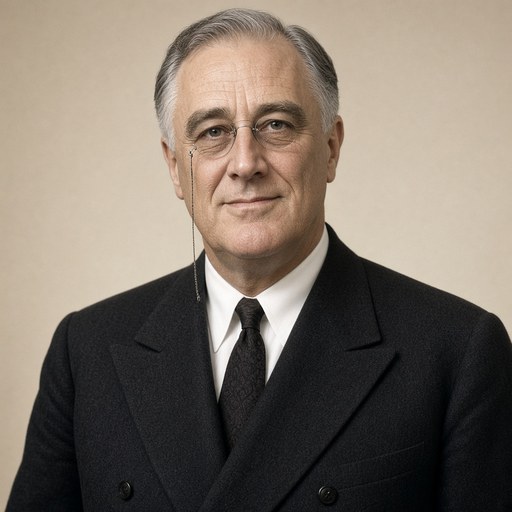
- Roosevelt addressed a group of stockmen on July 8, 1936, praising cooperation under the Taylor Act and noting the purchase of about sixty million more acres of public grazing land.
- Main themes
- Grazing policy on public lands, Taylor Act cooperation, local users' role in land management, over-grazing, drought and falling water table, soil blowing away, loss of tree cover, purchase of sixty million additional acres, experimental conservation work, Roosevelt's Georgia farm
- Duration
- ~3 min
- Words
- 411
- Sentences
- 18
- Readability
- 68
- Grade
- 9.4
- Syntax
- 3.13
- Vocabulary
- 1.61
Source: The American Presidency Project ↗
The broad sphere of national life a sentence belongs to. Every sentence has an Arena, so it is the denominator the other indices are read against.
Other18 sentences in 4 paragraphs
It is good to see you all, and I wish I could attend the conferences you are having because I have been tremendously interested in the problem of public lands, not only on the forestry end but, especially in the State of New York itself, on the grazing end. I run into it on my other farm down in Georgia where we have a good deal of that problem. I am glad that this cooperative movement is going so well because, under this Taylor Act, one of the essentials is to have cooperation from the people who use the public land.
During the past two or three years we have made great progress along that line; and we have certainly learned a great deal about the use and care of land. During our lifetime we have had some pretty horrible examples of the misuse of land. People who live on the land are becoming more and more conscious of the misuse to which the land has been put. We are learning each year about the better use of land. Twenty-five or thirty years ago very few people understood, for instance, what over-grazing really meant. We have come to understand it better. We do not know about it fully. Nor do we know what the final solution of the problem of drought is going to be.
We do know that in a great many parts of the country the water table, as we call it, is dropping down pretty seriously and that in a good many areas the top surface of the land is blowing away. We also know that a good many areas, that used to be in trees, are no longer in trees. We have not the final answer; and it is up to all of you good people to help us to find the final answer. A lot of the work is still experimental; and that is why the interest of the local people is of such great importance.
We are buying under this new Act, I think, sixty million acres more to be added to the original acreage under the Taylor Act, and we are getting a national policy in regard to it which seems to be working out pretty well. I am keen about the work you are doing. As I said, I wish I could go to your own conferences and sit in with you because, like everybody else, I have a good deal to learn.