




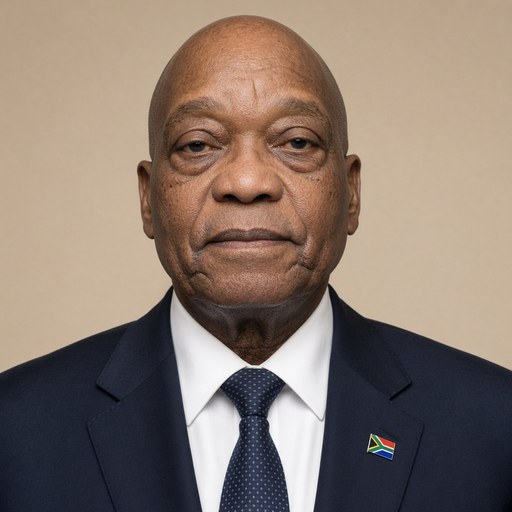
Remarks by President Jacob Zuma to the UN Secretary General’s Global Education First Initiative, High-Level Roundtable, UN Headquarters, New York, USA
 Jacob Zuma · President of South Africa
- Context
- Zuma addressed the UN Secretary General's Global Education First Initiative High-Level Roundtable in New York on 26 September 2013, speaking as a Member State Champion.
- Main themes
- Quality education for all, education funding, Global Education First Initiative, South Africa's education progress, student financial aid, poverty eradication and job creation, private sector role in education, international development assistance, post-apartheid education reform, MDGs and multilateral initiatives
- Duration
- ~5 min
- Words
- 642
- Sentences
- 30
- Readability
- 26
- Grade
- 14.5
- Syntax
- 2.70
- Vocabulary
- 2.43
The broad sphere of national life a sentence belongs to. Every sentence has an Arena, so it is the denominator the other indices are read against.
Other30 sentences in 28 paragraphs
Excellencies,
Ladies and Gentlemen,
When I accepted the privilege of serving as one of the Member State Champions of this Initiative, I indicated that the provision of quality education to all is one of the key priorities of the South African Government.
Our direct involvement in the Global Education First Initiative (GEFI) is therefore in support of South Africa’s national priorities and interests when it comes to education.
Access to quality education and training enhances a developing country’s ability to address poverty eradication, promote job creation and improve other socio-economic challenges.
Education for all and, for that matter, quality education for all, requires funding.
When the new democratically elected government was inaugurated in 1994 in South Africa, it was faced with the challenge of integrating fifteen departments of education into a single education system, a legacy of racial segregation.
The integration was complex and also called for the review of the funding of the education system.
In essence, the new system had to cater for the diverse needs of the entire South African society informed by a need to create a new non-racial and non-sexist society.
The principles that were key to determining funding of the education system were:
· Access;
· Equality; and
· Redress.
As a developing country, South Africa firmly believes that the government should take the lead in the provision of education to its people.
Whilst much still has to be done, we have made significant progress in making education accessible to all.
For example the establishment of the National Student Financial Aid Scheme which only charges interest on student loans 12 months after a student has graduated or left university.
Funding for student loans at Universities has increased from 2.2 billion rand (R2,2 billion) in 2010 benefitting one hundred and forty eight thousand three hundred and eighty seven (148 387) students to R3,6 billion rand in 2013, targeting two hundred and ten thousand (210 000) students.
We further continue to provide financial assistance for postgraduate students to complete their Honours, Master’s and Doctoral Degrees. These students enter into loan agreements with the National Student Financial Aid Scheme and the money they pay back is earmarked to fund future postgraduate students.
Students from poor households receive full bursaries from the state to attend Further Education and Training Colleges to expand access to education.
Investment in Further Education and Training College bursaries has increased from 318 million rand in 2010, benefitting sixty one thousand seven hundred and three (61 703) students, to one point nine billion rand (R1.9 billion) in 2013, targeting two hundred and twenty two thousand, eight hundred and seventeen (222 817) financially needy students.
A second important component of funding of education is the private sector. In this regard, South Africa has a number of schools that have been built and resourced by the private sector which is much appreciated.
Excellencies,
The need for international assistance is crucial for developing countries.
Funding and development agencies, as well as donors have a crucial role to play in prioritizing and providing funding and assistance for education.
This calls for synergies between international development goals, such as MDG two and multilateral initiatives such as Education for All and the Global Education First Initiative which are aimed at supporting States to reach these goals.
I believe these multilateral initiatives and interventions can galvanise us all to act with single-mindedness to prioritise education, to source funding for it and to achieve quality education for all in the run-up to 2015 and beyond.
I wish to once again thank you Mr Secretary-General for the honour availed to me to serve as one of the initial Member State Champions and pledge my unambiguous commitment and support to the Global Education First Initiative as well as the realisation of its ideals in order to ensure a life of dignity for all.
I thank you.