




Address at the 39th African Union Assembly, Addis Ababa
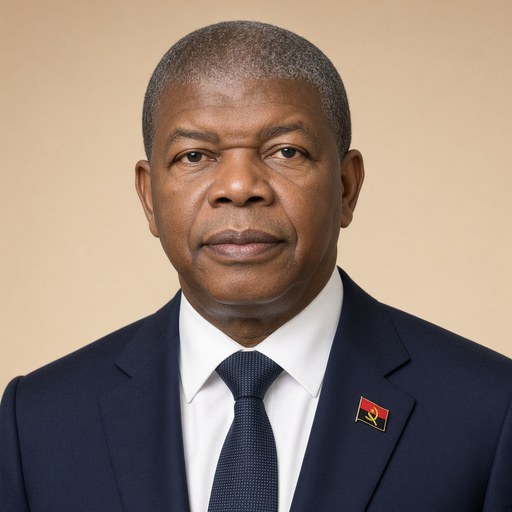
 João Manuel Gonçalves Lourenço · President of Angola
- Context
- Lourenço, as outgoing African Union Chairperson, opened the 39th Ordinary Session of the AU Assembly in Addis Ababa on February 14, 2026, reviewing Angola's chairmanship and proposing an Extraordinary Session on peace and security in Luanda.
- Main themes
- Opening of the 39th Ordinary Session of the African Union Assembly, water availability and safe sanitation under Agenda 2063, Angolan Chairmanship of the African Union, Luanda Financing Summit and infrastructure investment, African Continental Free Trade Area, conflicts in Sudan and eastern DRC, unconstitutional changes of government in Madagascar and Guinea-Bissau, rejection of recognition of Somaliland, African Union institutional reform, proposed Extraordinary Session in Luanda, Luanda Biennale on the culture of peace
- Duration
- ~26 min
- Words
- 3,145
- Sentences
- 94
- Readability
- 11
- Grade
- 20.0
- Syntax
- 3.12
- Vocabulary
- 2.62
The broad sphere of national life a sentence belongs to. Every sentence has an Arena, so it is the denominator the other indices are read against.
Other94 sentences in 80 paragraphs
- His Majesty Mswati III of the Kingdom of Eswatini
- His Majesty Letsie III of the Kingdom of Lesotho
- His Excellency Abiy Ahmed Ali, Prime Minister of the Federal Democratic Republic of Ethiopia and Host of the Assembly;
- His Excellency Évariste Ndayishimiye, President of the Republic of Burundi and Next Chairperson of the African Union;
- Their Excellencies Heads of State and Government of the African Union;
- His Excellency Ahmed Aboul Gheit, Secretary-General of the League of Arab States;
- His Excellency Mahmoud Abbas, President of the State of Palestine;
- Her Excellency Giorgia Meloni, Prime Minister of the Italian Republic;
- His Excellency António Guterres, Secretary-General of the United Nations;
- Their Excellencies Representatives of Heads of State and Government of the African Union;
- His Excellency Mahmoud Ali Youssouf, Chairperson of the African Union Commission;
- Distinguished Members of the Diplomatic Corps accredited in Addis Ababa;
- Excellencies;
- Ladies and Gentlemen;
It is with the highest honour that, as Chairperson of the African Union, I take the floor to address Your Excellencies at this Grand Assembly, to open the 39th Ordinary Session of the Assembly of Heads of State and Government of the African Union, dedicated to a theme of strategic importance for the present and future of our continent, namely “Assuring Sustainable Water Availability and Safe Sanitation Systems to Achieve the Goals of Agenda 2063”.
I would like to begin by expressing my deepest gratitude to His Excellency Abiy Ahmed Ali, Prime Minister of the Federal Democratic Republic of Ethiopia, and to the Ethiopian people for the warm welcome and generous hospitality extended to all delegations since our arrival in this country of particular significance to our continent, by virtue of its history and for hosting the headquarters of the African Union, the organization that unites all the peoples of Africa.
During this Assembly, we will discuss issues of great importance for the functioning and growth of the African Union, and we will reflect on the objectives set by the organisation for the year that has just ended, on the results achieved and on what remains to be done.
We will likewise endeavour to jointly chart the most appropriate course of action to ensure the effective operationalization of matters relating to water as a vital, irreplaceable and strategic resource, essential to economic development, public health, food security, social stability and peace in Africa.
We will also highlight the need to work hard to ensure that access to drinking water and sanitation is not just a technical issue, but a political and moral commitment to our peoples, because, despite the abundance of water resources on the continent, we continue to see countless situations where African citizens are deprived of safe access to drinking water and adequate sanitation, which is a collective challenge that requires courageous, integrated and sustainable responses.
The efforts we have undertaken to build the Africa we want cannot be fully realized without making significant investments that deliver tangible results in the water and sanitation sector.
Only in this way will we be able to ensure universal and equitable access to these services and fulfil the aspirations of Agenda 2063, particularly with regard to inclusive development, human capital, climate resilience and good governance. Your Excellencies,
Ladies and Gentlemen,
Exactly one year ago, the Republic of Angola assumed the Chairmanship of the African Union with the firm determination to advance initiatives contributing to the attainment of the overarching objectives enshrined in Agenda 2063, as well as to the effective operationalisation of the theme “Justice for Africans and People of African Descent through Reparations”, adopted by our Organisation as the central theme for the year 2025.
This mission, entrusted to my country for the first time, has allowed me, with your support, to contribute to the progress of our common cause, based on the shared values inspired by the founding fathers of Pan-Africanism.
Throughout this mandate, we have sought to strengthen the role of the African Union as a platform for political coordination and concrete action, by promoting closer synergy between Member States and the Regional Economic Communities, reinforcing preventive approaches to the impacts of climate change, mobilising strategic partnerships for the financing of resilient infrastructure, and reaffirming the following principles:
Sustainable development is inseparable from stability and lasting peace; The full development of Africa will only be possible if no one is left behind. It is within this framework that the Angolan Chairmanship of the African Union was structured, upholding Infrastructure and Human Capital as Key Pillars of Africa’s Comprehensive Development, underpinned by fundamental strategic priorities, namely Peace, Security and Good Governance; Sustainable Development and Economic Growth; Continental Integration; Human Capital and Infrastructure; and the Strengthening of Strategic Partnerships and Effective, Inclusive Multilateralism.
As part of the implementation of the main objective focused on the above-mentioned theme, we worked in coordination with the African Union Commission to hold the 3rd Luanda Financing Summit for Africa's Infrastructure Development in Africa, which took place in October 2025.
This event, aligned with the US-Africa Business Forum held in June of the same year and with the priority actions defined at the continental level within the framework of the acceleration of the Second Ten-Year Plan for the implementation of Agenda 2063 for the period 2024-2033, was a unique opportunity to articulate our national, regional and continental development strategies in line with our ambitions for growth, transformation and regional integration.
At the Infrastructure Summit and also at the Business Forum with the US, we were able to unite Africa's key partners around the fulfilment of the continent's great development dream and thus mobilise significant financial resources to invest in sectors such as health, agribusiness, tourism, digital transformation, integrated economic corridors, rail networks, transnational motorways, the African single electricity market and the development of the African Aviation Master Plan.
We recently announced in Dubai the launch of a major platform entrusted with mobilising dormant financial capital dispersed across the world to invest in Africa, within an innovative framework aimed at leveraging our natural resources for the economic and social development of the continent.
This is the Global Summit for Investment in Africa, whose main promoter is Dr Akimwini Adesina and which will hold its first summit in Luanda at the end of this year.
In this way, we have demonstrated that Africa is capable of mobilising, planning and acting collectively to build solid foundations for a better future. In carrying out the initiatives described above, we also aimed to emphasise the acceleration of the implementation and operationalisation of the African Continental Free Trade Area as the true engine of Africa's economic and social transformation.
This flagship project of the African Union’s Agenda 2063 has the potential to strengthen us as a bloc in a world increasingly marked by polarization, thereby advancing meaningful integration, which remains one of the central pillars of our collective action.
In this context, I am confident that we will continue to work together to expand transnational transport and energy infrastructure projects aimed at connecting our peoples and our markets, as exemplified by the significant investment my country has undertaken in the Lobito Corridor, to mention but one example. Without roads, ports and adequate digital and energy networks, without consistent infrastructure, integration will remain an unattainable dream. Considering that Africa cannot be a spectator, but a central player in the transformation of the world, for the preservation of its strategic, structural and existential interests, we participated on behalf of the continent in the G20 Summit, the Tokyo International Conference on African Development (TICAD), the African Union- European Union Summit, the Fourth International Conference on Financing for Development in Seville, and the 80th Session of the United Nations General Assembly in New York.
Participation in these events was extremely important for Africa, because we took advantage of these occasions to defend our common position on issues vital to the continent, such as reforming the International Financial Architecture to make it more inclusive, effective and adapted to current challenges, supporting the reduction of African countries' debt costs and increasing access to sustainable financing, strengthening our renewable energy production capacity, increasing climate resilience and social protection.
We reaffirm our commitment to multilateralism based on respect for international law and the United Nations Charter and to reform of the United Nations system, with particular emphasis on the Security Council, which must reflect the reality of today's world in order to ensure a balance between different geopolitical interests and regain its ability to fully play its role as guarantor of world peace and security.
We advocate the promotion of the African Continental Free Trade Area as the engine of continental economic integration and as an important tool for global trade stability.
In addition, we highlight the need for the support of these partners for investment in Africa's industrial development and for the transformation of our agricultural systems to make them resilient to climate change.
The Angolan Presidency has also paid particular attention to the internal functioning of the African Union, from a technical, legal, administrative and organisational point of view.
I would like to highlight the initiative to strengthen general working methods by adopting a more agile, less bureaucratic model capable of leading to effective resolutions and solid conclusions, supported by an agenda that can be addressed within a reasonable timeframe.
This effort, which has already gained consensus among Member States, will lead to the adoption of a decision of great importance during the current Ordinary Session of the Assembly.
In parallel with this, and still within the scope of the reforms that our organisation needs in order to function better, I would like to highlight and commend the commitment and dedication shown by His Excellency William Ruto, President of the Republic of Kenya and Champion of Institutional Reforms, who will present us with a consolidated report on the ongoing process.
This document will reflect the desire to streamline the Union's structures, contain administrative costs and strengthen the coherence between institutional reforms, operational effectiveness and the credibility of our continental organisation. Your Excellencies,
Ladies and Gentlemen,
Issues relating to the promotion of peace, security and stability in Africa have also been at the heart of our action, since any effort to build the Africa we want will only be possible if we succeed in realising the dream of silencing the guns in Africa.
We have undertaken a collective effort to identify swift, robust and effective solutions to bring an end to the protracted conflicts that undermine the stability of the continent, to terrorism and violent extremism, to unconstitutional changes of government, with two new cases recorded in Madagascar and Guinea-Bissau, to maritime piracy, as well as to other institutional crises that weaken security in Africa.
As Chairperson of the African Union and African Union Champion for Peace and Reconciliation in Africa, we continue to take action to contribute to the resolution of the complex conflicts ravaging Sudan and the DRC.
We are deeply concerned about the intensification of clashes between the Sudanese Armed Forces and the Rapid Support Forces, which have plunged the country into an unprecedented humanitarian crisis, with thousands of deaths, massive population displacements and essential infrastructure destroyed. It is important that the world turns its attention to this catastrophe unfolding in Sudan, so that it can be resolved quickly and the civilian population protected. We must continue to join forces to help the people of Sudan find the right path to peace, harmony and national reconciliation.
With regard to the situation in the Democratic Republic of the Congo, notwithstanding the initiatives undertaken by the Republic of Angola and the Republic of Kenya, which followed the negotiation of the ceasefire in Doha and the signing of the Washington, D.C. Peace Agreement, we continue to observe with concern the deterioration of the security and humanitarian situation, marked by the recent occupation of new strategic positions and the establishment of a parallel administration in the territories occupied by the M23.
In order not to lose the gains achieved under the Washington DC and Doha Processes, which recognise the need for inter-Congolese dialogue, Angola has developed initiatives to highlight the vital and urgent importance of starting dialogue as an important step towards national reconciliation and the achievement of lasting peace throughout the country.
In the context of these efforts, I would like to take this opportunity to congratulate the diplomatic initiatives of His Excellency Faure Gnassingbé, President of the Council of Togo and Mediator of the Peace Process in Eastern DRC, who, in seeking African solutions to African problems, has been developing actions that can help preserve peace and security in this sister country.
The expansion of terrorist groups that continue to severely affect Mali, Burkina Faso, Niger, Nigeria and northern Cameroon, jeopardising the security of populations and the cohesion of states, is also a cause for serious concern. In Somalia, despite the efforts of the Federal Government and the African Union, through the AUSSOM Stabilisation Support Mission, repeated terrorist attacks are weakening the entire Horn of Africa region, with an impact on Southern Africa, particularly northern Mozambique.
I therefore call for increased support in all areas, including greater advocacy among international partners, in particular the United Nations Security Council, with a view to mobilising the additional resources that are essential to the success of this peace mission.
I also take this opportunity to reiterate the African Union's firm position that it rejects any initiative aimed at recognising Somaliland as an independent entity, as this violates the principles of the Constitutive Act of the African Union and the norm of the inviolability of borders inherited from independence.
The preservation of the sovereignty, territorial integrity, unity and stability of the Federal Republic of Somalia is non-negotiable.
Africa has a strong institution that is capable of meeting the major challenges facing our continent, thanks to the quality of its approach to fundamental issues and its ability to coordinate the major initiatives we have sought to implement in order to put Africa on the path to development.
The African Union enjoys growing prestige, as can be seen from the interest shown by many of our international partners in making their voices heard in our conclaves, because they recognise our continent's potential both in terms of the contribution it can make with its resources to the development of humanity, and in terms of its courageous yet sensible, moderate and balanced political positions on international peace and security, the global economy and trade, and the energy, food, humanitarian and climate crises facing the world.
Your Excellencies,
Ladies and Gentlemen,
As a member of the Peace and Security Council for the 2024-2026 term, my country is committed to strengthening this fundamental body of our continental organisation and adapting the African Peace and Security Architecture (APSA) to current challenges.
We need to improve the effectiveness of our conflict prevention and resolution mechanisms so that the African Union can strengthen its capacity to respond to crises that directly affect Member States.
On this basis, in view of the increase in security crises in Africa, I have decided to propose that an Extraordinary Session of the Assembly of Heads of State and Government of the African Union be held in Luanda later this year, dedicated to analysing ways and means of responding to the threats to peace, security and development on our continent.
I am convinced that this initiative could contribute significantly to strengthening the mechanisms and means of conflict prevention, management and resolution in Africa.
We are witnessing the emergence of new phenomena that should not be legitimised and endorsed by the African Union Peace and Security Council. When we talk about the need to restore constitutional order after power has been seized by unconstitutional means, we are not saying that it is restored as long as the perpetrators of the coup d'état hold elections and get themselves elected. This is a way of whitewashing an act that lacks legitimacy, which unfortunately is beginning to be seen as normal and therefore acceptable, when in reality it threatens the foundations of our principles and the peace and security of the continent.
This cannot become a new normal way of gaining power, because it would be an indirect way of encouraging coups d'état, which are then whitewashed and everything is fine.
Ladies,
Gentlemen,
As part of the contribution that the Republic of Angola has sought to make towards stability, peace and concord on our continent, we have been convening, every two years in the city of Luanda, the Pan-African Forum for the Culture of Peace and Non-Violence in Africa, the Biennale of Luanda, a platform for dialogue, reflection and cooperation that brings together political leaders, academics, artists and representatives of civil society around the promotion of peace, tolerance and solidarity among the peoples of Africa.
This event, which will celebrate its fourth edition in October this year in partnership with the African Union and UNESCO, will be held under the theme: “Strengthening Water Governance in Africa as a Tool for Conflict Prevention, Mediation and Resolution,” in alignment with the theme of the year 2026 adopted by our Organization.
In this context, I invite you to join us in Luanda and actively participate in this important event.
Your Excellencies,
Ladies and Gentlemen,
We are living in an era of global geopolitical reconfiguration, making it essential for Africa to defend strong and common positions on vital issues such as climate change, health, human rights, peace and food security, and multilateralism, which should be seen as the most important tool for restoring world order. The current geopolitical context, marked by a worrying weakening of global governance institutions, has greatly undermined the positive advances made in the field of multilateralism in recent decades.
This fragility is particularly acute in Africa, forcing us to redouble our efforts to defend our interests, our peoples and our nations.
We must therefore continue to build a stable, integrated Africa, where conflicts are prevented and resolved by African mechanisms that are strong and consistent. That is why I call on Member States to adopt more responsible, inclusive and forward-looking governance, so that our institutions reflect the collective will and strengthen the confidence of our youth in our common project.
Africa has the resources, knowledge and political will to turn its challenges into opportunities. What is required is consistency in action, responsibility in implementation and solidarity among our States.
This Ordinary Session should enable us to assess progress, identify constraints and, above all, make clear and measurable commitments capable of producing real impacts on the lives of our populations.
It should also reinforce our collective determination to build a more resilient, fairer and more prosperous Africa, in line with the vision of Agenda 2063 and the legitimate aspirations of the African peoples.
With these words, I hereby declare officially open the 39th Ordinary Session of the Assembly of the African Union.
Thank you all very much.