




Speech to New Zealand National Service, United Nations Memorial Cemetery, Busan, South Korea
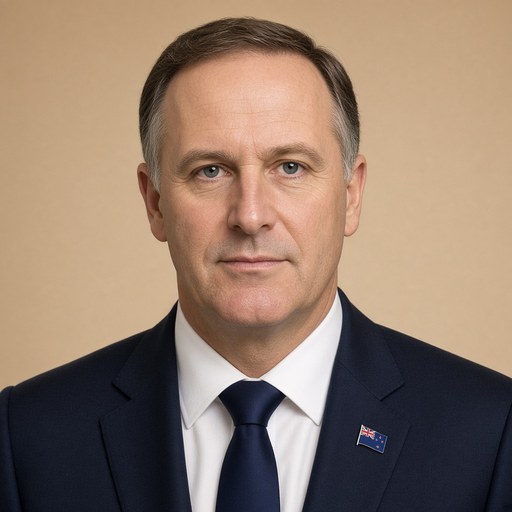
 John Key · Prime Minister of New Zealand
- Context
- Key addressed a New Zealand national commemorative service at the UN Memorial Cemetery in Busan, South Korea, marking the 60th anniversary of the Korean War armistice.
- Main themes
- Korean War 60th anniversary commemoration, New Zealand military sacrifice and service, United Nations collective defence, South Korea's postwar development, remembrance of fallen soldiers, NZ-South Korea bilateral relations, freedom and democracy, armistice anniversary
- Duration
- ~6 min
- Words
- 760
- Sentences
- 31
- Readability
- 45
- Grade
- 13.1
- Syntax
- 2.84
- Vocabulary
- 2.08
The broad sphere of national life a sentence belongs to. Every sentence has an Arena, so it is the denominator the other indices are read against.
Other31 sentences in 11 paragraphs
I would like to begin by specially acknowledging the presence of our party of New Zealand Korean War veterans who have journeyed to Korea to pay their respects to their fallen comrades and mark the 60th anniversary of the end of fighting in the Korean War. Sixty years ago yesterday the guns fell silent across the Korean peninsula.
The armistice that ended hostilities in the devastating war that had raged across this country for more than three years had come into effect.
This terrible conflict, that claimed three million lives, began on 25 June 1950 when North Korea launched an all-out invasion of its southern neighbour. The United Nations responded promptly to this act of blatant aggression by asking its members to help defend the Republic of Korea. Sixteen nations answered this call by sending combat troops and others provided non-combatant support.
Within days New Zealand offered the services of two Royal New Zealand Navy frigates. In July New Zealand decided to commit a ground force based on an artillery regiment to serve as part of the United Nations Command. New Zealand's contribution was small, but was a significant one for our country. In total about 6000 Royal New Zealand Navy and New Zealand Army personnel served in Korea between 1950 and 1957 of whom 45 lost their lives.
The decision to come to the aid of South Korea had the overwhelming support of New Zealanders. In the New Zealand Parliament strong and appropriate parallels were drawn between North Korea's aggression and the lust for power and territory that had led to the Second World War. In 1950, as they do now, New Zealanders knew that freedom cannot be taken for granted and sometimes must be fought for. We share this belief with the people of South Korea and with the other United Nations members who fought in the Korean War.
There could not be a more appropriate place for us to hold our national commemorative service than here, surrounded as we are by the graves or memorials of more than 2000 of the 84,000 members of the United Nations Forces who made the ultimate sacrifice during the Korean War. Thirty-six New Zealanders are buried or commemorated here and we are adjacent to our national memorial. The land for the cemetery was gifted by the Republic of Korea to the United Nations. This generous act is a good example of the great respect and appreciation Koreans have always shown towards those who came to their homeland's defence.
This cemetery is a quiet place of commemoration and remembrance, but you only need to lift up your eyes to see that we are surrounded by the bustling city of Busan. Without the service and sacrifice made by the men buried or commemorated here and by all the other members of the United Nations Forces the view from the cemetery would be very different indeed.
The New Zealanders buried or commemorated here would I think be pleased to know that 60 years on some of their former comrades and other New Zealanders have gathered to once again remember their sacrifice. They would also be pleased to see how the Republic of Korea has developed since the 1950s.
Sixty years ago South Korea was a poor country that had been ravaged by war. The New Zealanders who fought in Korea were impressed by the fortitude and determination of the Korean people. These qualities were critical to successfully resisting North Korea's aggression, and in building the thriving, prosperous democracy the Republic of Korea is today. Our veterans and all those who served in the United Nations Forces can take great pride in the fact that their efforts made it possible for the people of the Republic of Korea to enjoy the freedoms and quality of life they have today.
In 1950, New Zealanders knew very little about Korea. By the end of the war knowledge of Korea and Koreans had improved, but very few people in New Zealand or South Korea could have imagined that 60 years later relations between our two nations would have developed to the extent that they have. Today we enjoy a close relationship based on friendship and shared values, which encompasses important trade and other links.
Today, we join together to remember the service and sacrifice made by all the New Zealanders who came to the defence of the Republic of Korea during its ordeal. The contribution made by the New Zealand forces during the Korean War is a proud chapter in our nation's history and will never be forgotten.