





- Context
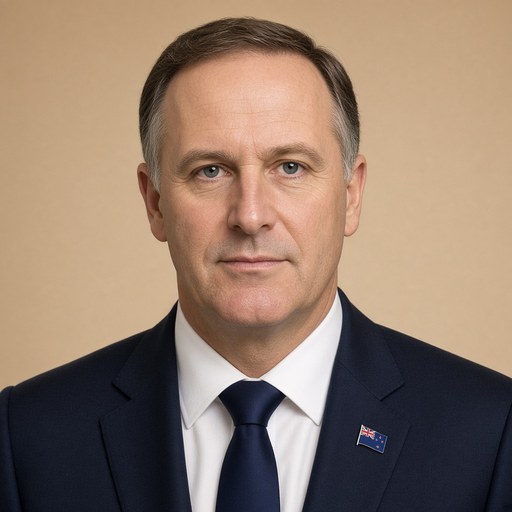
- Key addressed Wellington business leaders on 30 October 2013, reviewing the National-led Government's economic record approaching its five-year anniversary in office.
- Main themes
- Fiscal consolidation and budget surplus, economic growth and competitiveness, Business Growth Agenda, regional development, public service reform, Canterbury earthquake rebuild, small business support, primary sector exports, debt reduction, infrastructure investment, employment and job creation, tax policy
- Duration
- ~21 min
- Words
- 2,571
- Sentences
- 123
- Readability
- 49
- Grade
- 11.5
- Syntax
- 2.94
- Vocabulary
- 2.13
The broad sphere of national life a sentence belongs to. Every sentence has an Arena, so it is the denominator the other indices are read against.
Other123 sentences in 114 paragraphs
Ladies and gentlemen, nine days from now marks five years since the National-led Government was elected – November the 8th, 2008.
Much has happened over that time.
Five years ago, the country faced a lot of challenges. The world was in the depths of the worst financial crisis since the Great Depression.
The economy had been in recession for more than a year and some economists were predicting unemployment to go higher than 10 per cent.
Government spending was out of control, having increased by 50 per cent over the previous five years.
I recall Treasury telling us that if we kept the policy settings we’d inherited, we would never see another Budget surplus again and government debt would rise to the levels we are currently seeing in Europe.
So we set about implementing our plan to get New Zealand out of a deep hole, and we’ve been adapting that plan as we’ve gone along, to take new challenges, like the Canterbury earthquakes, into account.
We were prepared to run deficits for a few years, to support the fragile economy, preserve jobs and protect the most vulnerable New Zealanders from the worst of the recession. That meant increasing debt.
But at the same time, we set out a credible path back to surplus and a plan to start paying back this debt.
That plan involved reining in expenses and getting on top of the longer-term drivers of government spending.
The turnaround in the Government’s books has been nothing short of remarkable.
We are now on track to be in surplus in the next financial year, after which we will start reducing debt as a proportion of GDP.
And that turnaround has been achieved without any slashing and burning, as we’ve seen other countries forced to do.
We’ve had sound and proven policies, we’ve done what we said we would do, and we’ve taken people with us.
Alongside our fiscal agenda, we’ve also over the past five years been seeking better results from our public services, and been working hard to support Cantabrians through the aftermath of the earthquakes and the rebuild of their city.
We’ve also set out a programme to build a more productive and competitive economy that supports higher incomes and more jobs.
We’ve achieved a lot with this programme -- for example the tax package in 2010, the introduction of 90-day trials, and a significant investment in skills, training and apprenticeships.
The Government’s Business Growth Agenda includes initiatives in 366 areas to help Kiwi businesses grow and provide jobs all around the country.
It includes work on things like resource management law reform, water storage, electricity transmission, oil and gas exploration, primary growth R&D partnerships, and Roads of National Significance.
The BGA is about encouraging growth and jobs, and we are seeing real progress.
New Zealand was one of the fastest growing economies in the OECD in 2012.
Business and consumer confidence levels are high, and manufacturing and services indices are at high levels.
And our growth is being led out of our regions, with just-released export figures showing a lift in primary sector exports this quarter.
The dairy industry, food and beverage generally, and the forestry sector, are important contributors to New Zealand’s economy.
And that's reflected in the strength of our regions, nearly all of which have lower unemployment than Auckland, including the whole of the South Island.
Census 2013 shows that populations have grown in 15 of our 16 regional council areas since the last Census in 2006.
Growth rates are strong in places like the Waikato, Taranaki, West Coast, Canterbury, Otago and Southland.
And we have one of the smallest variations in economic activity between our regions in the whole of the developed world.
But of course we would like stronger growth rates, and that is possible if we provide more opportunities and the confidence for businesses to invest and grow.
At the highest level we are balancing the books, getting debt down, keeping tax rates competitive, and helping to keep interest rates lower for longer over the economic cycle.
This helps give businesses the confidence to raise money and invest.
At the next level, we are putting in place policies to reduce burdens on businesses -- especially small business.
This includes getting ACC levies down, introducing the 90-day trial periods, reforming the RMA so it’s easier to expand a business, investing more in R&D co-funding to lift innovation, and assisting small firms to grow exports with NZTE.
The Government is also encouraging some key commercial projects in the regions to help lift growth.
In Hawke’s Bay that means projects like irrigation, and oil and gas exploration; in Northland it’s treaty settlements, land productivity and the Puhoi to Wellsford highway. And in the Manawatu it’s the Food HQ project, and the highway link to Wellington.
Of course, any discussion of what we’re doing wouldn’t be complete without mention of probably our most transformational project -- the roll-out of ultra-fast broadband and rural broadband.
Some $1.1 billion of the $1.65 billion UFB programme is being invested outside of Auckland and Christchurch.
It will lift connectivity and productivity for businesses right across New Zealand.
The Opposition is talking the regions down at the moment, but that is just politics.
Actually, the policies they are promoting would damage regional economies.
A recipe of more taxes, nationally-equalised pay rates no matter where you live, a rollback of employment law reform, higher ACC rates and a reversal of RMA reforms would severely damage growth.
It is the National-led Government that has the vision, the agenda, and the projects to lift the growth rate of our regions even further.
Ladies and Gentlemen, our careful, considered plans are working.
The economy is growing, and we are on track for 2 to 3 per cent annual growth over the next few years.
This will put us among the fastest growing developed countries in the world.
Wages are increasing. Household incomes are growing. Mortgage interest rates are at 50-year lows and cost of living increases have been very modest indeed.
Some 65,000 net new jobs have been created in the last two years and the unemployment rate is expected to drop as the economy gathers strength.
Business and consumer confidence are improving as we see momentum build towards a stronger, more stable, economy that delivers higher incomes and more jobs.
The crucial thing now is to stay the course and truly obtain the long-term benefits for our families and communities that we have all been working hard for.
Earlier in the year I made the observation that Wellington has seen a number of corporate head offices leaving.
While there might be a range of views about that, no one can doubt about the changing shape of Wellington and the development of a range of smart, savvy new companies particularly in the ICT sector.
Wellington is known for its creative industries, with film, innovation, and creative design all well represented here.
Wellington is a thriving city for education. Victoria University, Massey and Otago all have campuses here, alongside other institutions like Weltec, Whitireia and the Open Polytechnic.
And Wellington is a leading science centre, with organisations like Niwa, GNS, the MacDiarmid Institute and the Malaghan Institute all headquartered here.
It is also the home of our new high-tech HQ for innovative businesses, Callaghan Innovation, which is growing into a strong supporter of this sector.
Wellington is well represented in high-tech and medium-tech manufacturing, and is particularly well represented in ICT.
The TIN 100 survey of NZ's high-tech businesses shows that Wellington firms like Xero, Catalyst IT, Datacom, and Fronde Systems are leading the development of this exciting sector.
New Zealand’s digital economy over $2 billion in export earnings last year, and ICT exports grew at over 10 per cent per year between 2002 and 2012.
I know that Wellington City Council is keen to encourage growth in this sector, and is proposing a Tech Quarter in the central city.
The Government is obviously keen to see the sector grow further, and we’ve taken a number of steps in the Business Growth Agenda to encourage innovative ICT firms to grow, invest, export, and employ.
We established Callaghan Innovation in February to accelerate the commercialisation of innovation in New Zealand firms.
In Budget 2013 we allocated almost $100 million more for supporting business R&D, taking our annual level of R & D co-funding for innovative kiwi businesses to a record $142 million a year.
We also set aside over $30 million for a repayable grants programme for start-up businesses.
Today we have announced that government grants of up to $450,000 per company will be invested from that money into start-up technology companies, by up to four commercial incubators located in different places around the country.
Science and Innovation Minister Steven Joyce also announced today the launch of a new NZTE-led initiative to help New Zealand digital technology firms compete and grow globally, and lift exports further.
The Digital Technology High Impact Programme will be delivered by NZTE and Callaghan Innovation, in partnership with the New Zealand Technology Industry Association.
It will see the Government investing more than $3 million over the next three years to take advantage of the opportunity created by the global boom in demand for these technologies, which are revolutionising the nature of businesses in all sectors.
It will target support to firms working in the areas of software, web services, software development, gaming development, post production, animation and mobile technology.
These announcements will help further lift the growth of ICT and technology firms right here in Wellington.
As the capital city, Wellington also has a large concentration of highly skilled people working in and around the public sector.
Since National came into office in 2008, there’s been a lot of talk about numbers in the public service.
The truth is that New Zealand couldn’t afford to keep growing the public sector at the rate Labour had for the previous nine years.
We came in promising to cap the number of people working in core government administration, and we have successfully achieved that.
The initial cap was announced in early 2009 at 38,859. It was reset in 2012 and at December last year the actual number in core government administration was just a tad over 36,000.
That is a million miles away from the deep cuts some countries have had to impose during the Global Financial Crisis.
At the same time as looking to stabilise numbers, we have also been looking at ways to bolster front line services and get more efficiency in the back office.
That’s allowed us to establish an environment where both ministers and public sector organisations can take a longer-term view, rather than rushing in to grab random savings.
Most importantly of all, however, we have got departments focused on results.
Last year, Cabinet agreed on a set of 10 result areas we believe are important for New Zealand.
These targets are already driving better results for our communities -- such as less crime, shorter waiting times in our hospitals, and greater achievement in our schools. They are improving the lives of families up and down the country.
We not only signed up for these results, but we signed up to the publication of them and the regular reporting of them in a way that no other Cabinet has ever done.
It’s quite a big step for politicians to voluntarily cut down their room to manoeuvre about what they are trying to achieve.
But we’ve done that because of the confidence we have in our public service to achieve those results.
And this new focus is actually driving a quiet revolution in the public service.
The New Zealand public is also picking up that something significant has changed for the better.
The State Services Commission does a quarterly survey of user satisfaction with public services, and the latest results have just been released.
They show overall satisfaction has risen from 68 per cent when we took office to 73 per cent today, and trust in public servants to do what’s right has increased from 67 to 77 per cent.
Those are very positive and pleasing changes.
I want to turn now to Wellington’s importance as a crucial transport hub.
The city links the North and South Islands, and is the biggest centre in the lower North Island.
It needs strong transport connections with areas like Horowhenua, Manawatu, and Whanganui so those regions can develop further.
Wellington’s importance as a transport hub is why there is such large-scale government investment in infrastructure here.
This investment ranges from the upgrade of the Wellington Northern Corridor from Levin to Wellington Airport -- a huge, staged series of projects that includes Transmission Gully -- through to big investments in improving commuter rail.
I believe the recent earthquakes have boosted the already-strong case to upgrade routes into and out of the region so it can better cope with such events.
The cost of the Wellington Northern Corridor is expected to be about $2.5 billion.
As well as the strategic advantages of improving the region’s links with the rest of the Lower North Island, the corridor will vastly improve the daily commute.
For example, the morning peak travel time from Levin to Wellington is expected over time to improve by an astonishing 40 minutes.
For people living up the coast, the hospital, the airport, the CBD, and other destinations in Wellington will be up to 40 minutes closer.
In effect it will shrink distances across the region -- with all the benefits that flow from that.
The corridor is expected to create thousands of jobs during construction.
It will reduce the projected number of fatal and serious crashes from 140 to 100 in the five years after construction is complete.
I can also tell you that Transmission Gully is now well on the way to becoming a reality after decades of discussion.
This Government is proud of accelerating this project.
Cabinet approved the project as a public-private partnership last November, resource consents have been granted, and two consortiums were short-listed in April this year.
The preferred bidder is expected to be announced early next year – at this stage the indication is February -- and construction is expected to start in the second half of 2014.
The expectation is that the 27km Transmission Gully section of the northern corridor will be open for traffic by 2020.
This is fantastic and long-awaited news, and I’m sure it’s welcomed by everyone here today.
But it’s not just Transmission Gully. The Kapiti Expressway is planned to start shortly, along with other sections of the Levin to Wellington Road of National Significance.
Ladies and gentlemen, earlier this year I spoke in Auckland about the importance of that city and the investment we’re making in vital infrastructure there.
In Christchurch last month I spoke about the real progress and momentum being made on the rebuild of the city.
But while Auckland plays a large role by virtue of its size, and Christchurch is experiencing huge investment following a natural disaster, all of New Zealand is equally on the Government’s radar – including Wellington.
With the growth we are seeing, particularly in the ICT sector in this city, and its assured future as the centre of government and the public service, Wellington has great prospects ahead of it.
I’m sure you all want to be part of that future.
Thank you.