




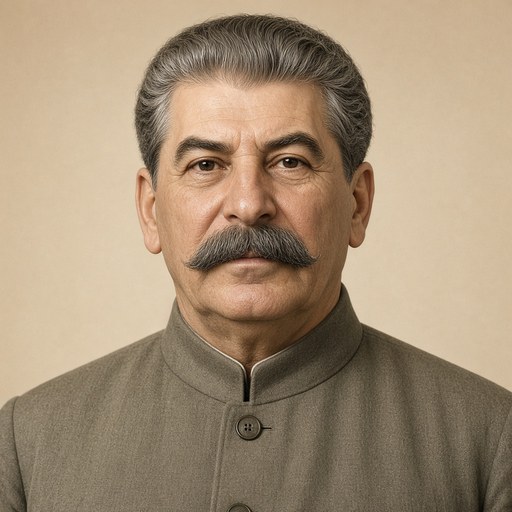
Excerpt from a Speech on the Military Question Delivered at the Eighth Congress of the R.C.P.(B.)

- Context
- Stalin addressed the Eighth Congress of the R.C.P.(B.) on the military question on March 21, 1919, arguing for a strictly disciplined regular army in place of volunteer forces and rejecting Smirnov's project.
- Main themes
- Strictly disciplined regular army, failure of the volunteer army, loss of Kazan, Krasnov's advance from the South, peasant majority in the army, re-education of non-proletarian elements, proletarian leadership at the front and rear, political departments in the army, workers' and peasants' army, rejection of Smirnov's project
- Duration
- ~3 min
- Words
- 386
- Sentences
- 13
- Readability
- 47
- Grade
- 13.9
- Syntax
- 4.12
- Vocabulary
- 2.33
Source: Marxists Internet Archive ↗
The broad sphere of national life a sentence belongs to. Every sentence has an Arena, so it is the denominator the other indices are read against.
Other13 sentences in 4 paragraphs
All the questions touched upon here boil down to one: is Russia to have, or not to have, a strictly disciplined regular army? Six months ago, after the collapse of the old, tsarist army, we had a new, a volunteer army, an army which was badly organized, which had a collective control, and which did not always obey orders. This was at a time when an Entente offensive was looming. The army was made up principally, if not exclusively, of workers. Because of the lack of discipline in this volunteer army, because it did not always obey orders, because of the disorganization in the control of the army, we sustained defeats and surrendered Kazan to the enemy, while Krasnov was successfully advancing from the South. . . . The facts show that a volunteer army cannot stand the test of criticism, that we shall not be able to defend our Republic unless we create another army, a regular army, one infused with the spirit of discipline, possessing a competent political department and able and ready to rise at the first command and march against the enemy.
I must say that those non-working-class elements— the peasants—who constitute the majority in our army will not voluntarily fight for socialism. A whole number of facts bear this out. The series of mutinies in the rear and at the fronts, the series of excesses at the fronts show that the non-proletarian elements comprising the majority of our army are not disposed to fight for communism voluntarily. Hence our task is to re-educate these elements, infusing them with a spirit of iron discipline, to get them to follow the lead of the proletariat at the front as well as in the rear, to compel them to fight for our common socialist cause, and, in the course of the war, to complete the building of a real regular army, which is alone capable of defending the country.
That is how the question stands. . . . Either we create a real workers' and peasants' army, a strictly disciplined regular army, and defend the Republic, or we do not, and in that event our cause will be lost. . . .
Smirnov's project is unacceptable, because it can only undermine discipline in the army and make it impossible to build a regular army.