




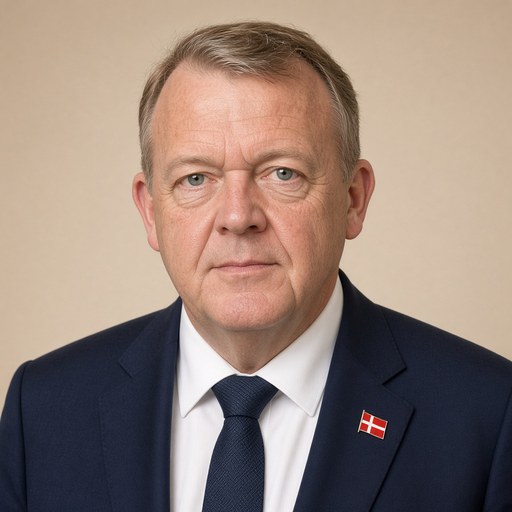
Prime Minister Lars Løkke Rasmussen's speech at the Think Tank EUROPA's annual meeting on "Denmark's Future in Europe" on November 11, 2015.
 Lars Løkke Rasmussen · Prime Minister of Denmark
- Context
- Rasmussen addressed Think Tank EUROPA's annual meeting in Copenhagen on November 11, 2015, speaking on Denmark's role and future within the European Union.
- Main themes
- Denmark's future in Europe, EU cooperation and effectiveness, refugee and migration crisis, national sovereignty vs. European integration, EU external border control, economic and financial crisis, globalization and open economy, EU reform, subsidiarity and burden of EU regulation, terrorism and security, Russia and geopolitical challenges, Danish national interests in the EU
- Duration
- ~16 min
- Words
- 1,899
- Sentences
- 157
- Readability
- 56
- Grade
- 8.1
- Syntax
- 2.51
- Vocabulary
- 2.09
Translated from Danish
The broad sphere of national life a sentence belongs to. Every sentence has an Arena, so it is the denominator the other indices are read against.
Other157 sentences in 72 paragraphs
Thank you for the floor. And thank you for the invitation to be here today.
I have been looking forward to the conference. Rarely has a topic been more relevant than the one you have set aside for this morning.
There is a great need for a factual discussion about our future in Europe. An informed and democratic conversation about Denmark in the EU. A debate about how we best safeguard our interests in the European reality of which we are a part, whether we like it or not.
Thank you to the think tank EUROPA for the work you do for that.
I am also trying to do my part. In a few hours, I will fly to Valletta to participate in the EU-Africa summit on migration and in an informal EU summit on the refugee crisis. The EU-Africa summit was scheduled after the tragic boat accidents off Lampedusa in April. Since then, the flow of refugees through the Balkans has really picked up speed.
The EU has never faced as many and as serious challenges as it does today.
The refugee crisis. The economic and financial crisis. The euro crisis. Russia's annexation of Crimea. The civil wars in Syria and Libya. Terrorism.
This puts the political system to the test. And there lies a paradox in crisis management.
On the one hand, it is obvious that no member state can solve the challenges alone. We need solid European cooperation. On the other hand, people's skepticism towards the EU is rising.
Opponents – both on the right and the left – present the EU as the problem. As if the refugee crisis, cross-border crime, the economic and financial crisis would go away if we did not have the EU. Or that countries would handle the challenges better on their own.
I believe it is the other way around. Without the EU, the challenges would be far greater.
The problem is not the EU as an idea or vision. The problem is that EU cooperation does not always work well enough in practice. We must be honest about that.
European cooperation is a large and heavy machine that takes time to get up to speed.
This is partly a consequence of the way we have structured the cooperation. The EU will never function like the USA. And that is how it should be.
We are 28 independent member states that cooperate closely. I have never wanted a European federal state. In the EU, we are constantly seeking a balance between national self-determination and effective binding cooperation. It is the balance we have sought in connection with the euro crisis. And it is the balance we seek when we handle the refugee crisis. Between the need for common solutions on the one hand and the respect that immigration is a national matter on the other.
This means that we in the EU often have to compromise on efficiency to respect national self-determination. A heavy EU machine is thus to some extent the price we pay for respect for the individual member states.
When we do not have the same kind of central institutions in the EU as in a federal state, it is crucial that member states adhere to the rules of the game.
They did not do so leading up to the economic and financial crisis. We all know the consequences.
In the refugee crisis, some member states have also disregarded the rules. That cannot continue. We need to have effective control of the EU's external borders. That is the prerequisite for having lifted controls at the internal borders.
The EU is built on trust between countries.
We each need to live up to our responsibilities. We each need to contribute to making the cooperation work. And we must together safeguard the enormous progress that has been made in European cooperation over the last sixty years.
***
Global developments are still accelerating. And Denmark, as a small country with an open economy, is incredibly dependent on international cooperation. On free markets. On a rules-based international order.
We cannot hide and hope that the problems will go away.
We must believe that our own values are strong enough to change something. We must work to influence the direction the world is heading.
The EU is our best tool to influence the world around us. To address the problems that globalization brings. And to ensure that our interests are taken into account.
I have no doubt that when we want to preserve the Denmark we cherish. When we want to ensure the welfare state, freedom, and security. When we want to promote our interests. We must put effort into strengthening binding European cooperation.
For me, the challenge is how we can achieve a better and more effective Europe. In some areas, we need more EU. Where it adds real value to work more closely together. Security for citizens, free trade, competitiveness.
In other areas, we need less EU. Where cooperation becomes an unnecessary burden. The EU should stay out of areas where member states can do better on their own. For example, the organization of national welfare systems.
Of course, not everything that comes from Brussels is fantastic. We all know examples of unnecessary regulations and bureaucracy.
But if we want to do something about it, it does not help to stand with our arms crossed and hope that others will take the load. We must step up ourselves.
***
One of the most obvious places where the EU provides concrete added value for citizens is in European police cooperation, Europol.
That is why the Danes will have a referendum on December 3.
Europol means that the police of the member states can cooperate quickly and effectively to uncover serious crimes across borders. Child pornography rings. Organized drug crime. Traveling gangs of thieves.
We have enormous advantages from being part of Europol. Danish police use Europol's information database on suspects and accused individuals every day.
In 2014, Danish police made over 70,000 direct searches in Europol's information system. That is close to 200 searches every day. Without that option, Danish police would be at a disadvantage.
Opponents say that we can just get an agreement like Norway has.
But the fact is that Norway's agreement is clearly worse than full membership. The Norwegians themselves say so. And besides, we have no guarantee that we can even get a B-membership.
If we vote no, we have no idea what will happen – other than that we will be excluded from the police cooperation as we know it today.
On the other hand, we know what we get if we vote yes. Then Denmark remains a full member of Europol. With a yes, we maintain the status quo.
Transforming the opt-out on justice into an opt-in arrangement is clearly in Denmark's interest.
What we want is an arrangement like the one that the United Kingdom and Ireland already have today. And which they are very satisfied with.
And it is not just about Europol.
Before long, we will find ourselves in a similar situation regarding cooperation between the prosecuting authorities of EU countries in Eurojust. We will also have to leave that if we do not transform the opt-out on justice into an opt-in arrangement.
With an opt-in arrangement, Denmark can participate in the upcoming regulation on European passenger lists. It is an important part of counter-terrorism and other serious crime.
With an opt-in arrangement, we can ensure that a Danish restraining order against a violent ex-partner also applies in other EU countries. That is important for citizens' security.
With an opt-in arrangement, we can ensure that Danish companies can better collect debts across borders. That is important for fair and equal competition.
There are many parts of the EU's justice cooperation that Denmark has a clear interest in participating in. Exactly 22 existing legal acts.
I have not heard a single solid argument against Danish participation in any of the 22 legal acts. Not one.
I think it is fair enough to be against binding European cooperation. Or against Europol. But then one should state outright that for ideological reasons, one does not want Denmark to participate in binding EU cooperation on counter-terrorism, on child abductions, and on combating sexual abuse of children.
Instead, opponents of the opt-in arrangement try to make this a question of technique. To cast doubt on the Folketing's ability to make decisions in Denmark's interest.
But we know that the opt-in arrangement works in practice. The United Kingdom and Ireland have shown that. Therefore, we should have the same advantageous arrangement. An arrangement that gives us a free choice in contrast to all the other EU countries. The possibility to choose what we want to participate in and to opt out of what we do not want.
The no side does not believe that the Folketing is capable of making those choices. I believe that is the Folketing's most important task and responsibility: To safeguard Denmark's interests through conscious political choices.
* * *
When we decided nearly a year ago to call a referendum on the opt-out on justice, no one foresaw the refugee crisis.
But even then, we stated in the Europol agreement that we would not opt into legal acts in the area of asylum and immigration, which Denmark is currently outside of. And that each party to the agreement has a veto in that regard.
To avoid any doubt about what the opt-in arrangement means, I have further guaranteed that it will require a new referendum – if it should ever become relevant to enter into the EU's asylum policy.
The Social Democrats and the Conservatives have endorsed that guarantee. It will now be written into the remarks of the bill. It will thus be part of the bill that the Danes will vote on December 3.
It is the same model we know from the National Compromise. Voters have been able to rely on that for more than twenty years.
No one can seriously imagine that the Folketing would not respect the promises made back then. No one would dream of the Folketing abolishing or changing the opt-outs without a prior referendum. That was the case in 1993, and it is the case today.
With the guarantee that is now included in the remarks to the bill that the Folketing will pass tomorrow, and which the population must approve on December 3, it should be clear to everyone that the referendum is not about asylum and immigration.
* * *
Will we here in Denmark set the rules ourselves? Or will we leave it to others to decide for us?
That is fundamentally what the referendum on December 3 is about.
Without the opt-in arrangement, we will have to go cap in hand every time we want to participate in cooperation in the legal area. And we have no influence on how the rules will look.
With the opt-in arrangement, we decide for ourselves.
We will gain more self-determination – not less.
A no on December 3 will be a no to Denmark continuing to participate in effective European police cooperation.
A yes will ensure that Denmark remains a full member of Europol. We have had enormous benefits from that since 1998.
It is up to each individual Dane to ensure a result that serves Denmark's interests.
Thank you for the floor.
The original Danish. The tags above are read on the English translation's sentences.
Tak for ordet. Og tak for invitationen til at være med i dag.
Jeg har set frem til konferencen. For sjældent har et emne været mere aktuelt end det, som I har sat formiddagen af til.
Der er i høj grad brug for en saglig diskussion af vores fremtid i Europa. En oplyst og demokratisk samtale om Danmark i EU. En debat om, hvordan vi bedst varetager vores interesser i den europæiske virkelighed, som vi er en del af, hvad enten vi kan lide den eller ej.
Tak til Tænketanken EUROPA for det arbejde, I gør for det.
Jeg forsøger så også selv at gøre min del. Om få timer flyver jeg til Valletta for at deltage i EU-Afrika topmødet om migration og i et uformelt EU-topmøde om flygtningekrisen. EU-Afrika topmøde blev sat i kalenderen efter de tragiske bådulykker ud for Lampedusa i april. Siden da tog flygtningestrømmene igennem Balkan for alvor fart.
EU har aldrig stået over for så mange og så alvorlige udfordringer som i dag.
Flygtningekrisen. Den økonomiske og finansielle krise. Eurokrisen. Ruslands annektering af Krim. Borgerkrigene i Syrien og Libyen. Terrorisme.
Det sætter det politiske system på en prøve. Og der ligger et paradoks i krisehåndteringen.
På den ene side er det åbenlyst, at ingen medlemslande kan løse udfordringerne alene. Vi har brug for et solidt europæisk samarbejde. På den anden side stiger folks skepsis overfor EU.
Modstanderne – både til højre og til venstre - præsenterer EU som problemet. Som om flygtningekrisen, den grænseoverskridende kriminalitet, den økonomiske og finansielle krise ville gå væk, hvis vi ikke havde EU. Eller landene ville håndtere udfordringerne bedre hver for sig.
Jeg mener, at det er lige omvendt. Uden EU ville udfordringerne være langt større.
Problemet er ikke EU som idé eller vision. Problemet er, at EU-samarbejdet ikke altid fungerer godt nok i praksis. Det må vi være ærlige om.
Det europæiske samarbejde er en stor og tung maskine, som det tager tid at få op i omdrejninger.
Det er til dels en konsekvens af den måde, vi har indrettet samarbejdet på. EU vil aldrig komme til at fungere som USA. Og sådan skal det være.
Vi er 28 selvstændige medlemsstater, der samarbejder tæt. Jeg har aldrig ønsket en europæisk forbundsstat. I EU søger vi hele tiden en balance mellem national selvbestemmelse og et effektivt forpligtende samarbejde. Det er den balance vi har søgt i forbindelse med Euro-krisen. Og det er den balance, vi søger, når vi håndterer flygtningekrisen. Mellem behovet for fælles løsninger på den ene side og respekten for, at indvandring er et nationalt anliggende på den anden side.
Det betyder, at vi i EU ofte må gå på kompromis med effektiviteten for at respektere den nationale selvbestemmelse. En tung EU maskine er altså til en vis grad den pris, vi betaler for respekten for de enkelte medlemsstater.
Når vi ikke har samme form for centrale institutioner i EU, som i en forbundsstat, er det til gengæld helt afgørende, at medlemsstaterne holder sig til spillereglerne.
Det gjorde de ikke op til den økonomiske og finansielle krise. Vi kender alle konsekvenserne.
I flygtningekrisen har nogle medlemslande også set stort på reglerne. Det går ikke. Vi bliver nødt til at have en effektiv kontrol med EU's ydre grænser. Det er forudsætningen for, at vi har ophævet kontrollen ved de interne grænser.
EU bygger på tillid mellem landene.
Vi skal hver især leve op til vores ansvar. Vi skal hver især bidrage til, at samarbejdet kan fungere. Og vi skal sammen værne om de enorme fremskridt, der er gennemført i det europæiske samarbejde over de sidste tres år.
***
Den globale udvikling går stadig hurtigere. Og Danmark er som et lille land med en åben økonomi utrolig afhængig af internationalt samarbejde. Af frie markeder. Af en retsbaseret international orden.
Vi kan ikke gemme os og håbe, at problemerne går over.
Vi må tro på, at vores egne værdier er stærke nok til at forandre noget. Vi må arbejde for at påvirke den retning, verden går i.
EU er vores bedste værktøj til at påvirke verden omkring os. Til at håndtere de problemer, som globalisering fører med sig. Og til at sikre, at der bliver taget hensyn til vores interesser.
Jeg er ikke et øjeblik i tvivl om, at når vi skal bevare det Danmark, som vi holder af. Når vi skal sikre velfærdsstat, frihed og tryghed. Når vi skal fremme vores interesser. Så må vi lægge kræfter i at styrke det forpligtende, europæiske samarbejde.
For mig er udfordringen, hvordan vi får et bedre og mere effektivt Europa. På nogle punkter skal vi have mere EU. Der hvor det giver reel merværdi at arbejde tættere sammen. Tryghed for borgerne, frihandel, konkurrenceevne.
På andre punkter skal vi have mindre EU. Der hvor samarbejdet bliver en unødvendig byrde. EU skal holde sig fra områder, hvor medlemsstaterne kan gøre det bedre selv. For eksempel indretningen af de nationale velfærdssystemer.
Selvfølgelig er det ikke alt, der kommer fra Bruxelles, der er fantastisk. Vi kender alle eksempler på overflødige regler og bureaukrati.
Men hvis vi vil gøre noget ved det, så nytter det altså ikke noget, at vi står med korslagte arme og håber på, at andre tager slæbet. Så skal vi selv helt frem på banen.
***
Et af de helt oplagte steder, hvor EU giver en konkret merværdi for borgerne, er det europæiske politisamarbejde Europol.
Derfor skal danskerne til folkeafstemning den 3. december.
Europol betyder, at medlemsstaternes politi kan samarbejde hurtigt og effektivt for at afsløre alvorlige forbrydelser på tværs af grænserne. Børneporno-ringe. Organiseret narkokriminalitet. Omrejsende tyvebander.
Vi har enorme fordele af at være med i Europol. Dansk politi bruger dagligt Europols informationsdatabase over mistænkte og sigtede.
I 2014 foretog dansk politi over 70.000 direkte søgninger i Europols informationssystem. Det er tæt på 200 søgninger hver dag. Uden den mulighed vil dansk politi blive stillet ringere.
Modstanderne siger, at vi da bare kan få en aftale, som den Norge har.
Men sagen er den, at Norges aftale er klart dårligere end et fuldt medlemskab. Det siger nordmændene selv. Og i øvrigt har vi ingen sikkerhed for, at vi overhovedet kan få et b-medlemskab.
Hvis vi stemmer nej, så aner vi ikke hvad der sker – ud over at vi ryger ud af politisamarbejdet, som vi kender det i dag.
Vi ved derimod, hvad vi får, hvis vi stemmer ja. Så forbliver Danmark fuldt medlem af Europol. Med et Ja fastholder vi status quo.
At omdanne retsforbeholdet til en tilvalgsordning er i klar dansk interesse.
Det vi ønsker, er en ordning, som den Storbritannien og Irland allerede har i dag. Og som de er meget tilfredse med.
Og det drejer sig ikke kun om Europol.
Inden længe vil vi stå i en tilsvarende situation vedrørende samarbejdet mellem EU-landenes anklagemyndigheder i Eurojust. Det må vi også forlade, hvis vi ikke omdanner retsforbeholdet til en tilvalgsordning.
Med en tilvalgsordning kan Danmark deltage i den kommende forordning om europæiske flypassagerlister. Det er et vigtigt led i terrorbekæmpelse og anden alvorlig kriminalitet.
Med en tilvalgsordning kan vi sikre, at et dansk tilhold over for en voldelig eks-kæreste også kommer til at gælde i de andre EU-lande. Det er vigtigt for borgerens tryghed.
Med en tilvalgsordning kan vi sikre, danske virksomheder bedre kan inddrive gæld på tværs af grænserne. Det er vigtigt for lige og fair konkurrence.
Der er mange dele af EU’s retssamarbejde, som Danmark har en klar interesse i at deltage i. Helt præcis 22 eksisterende retsakter.
Jeg har ikke hørt et eneste solidt argument imod dansk deltagelse i nogen af de 22 retsakter. Ikke et eneste.
Jeg synes sådan set, at det er fair nok at være imod et forpligtende europæisk samarbejde. Eller imod Europol. Men så bør man sige ligeud, at man af ideologiske årsager slet ikke ønsker, at Danmark deltager i et forpligtende EU-samarbejde om terrorbekæmpelse, om børnebortførelser og om bekæmpelse af seksuelt misbrug af børn.
I stedet forsøger modstanderne af tilvalgsordningen at gøre det her til et spørgsmål om teknik. At så tvivl om Folketingets evne til at træffe beslutninger i dansk interesse.
Men vi ved, at tilvalgsordningen virker i praksis. Det har Storbritannien og Irland vist. Derfor skal vi have den samme fordelagtige ordning. En ordning, som giver os et frit valg i modsætning til alle de andre EU-lande. Muligheden for at vælge det til, som vi ønsker at være med i, og vælge det fra, som vi ikke ønsker.
Nej siden mener ikke, at Folketinget er i stand til at lave de valg. Det mener jeg, er Folketingets fornemste opgave og ansvar: At varetage Danmarks interesser gennem bevidste politiske valg.
* * *
Da vi for snart et år siden besluttede at udskrive en folkeafstemning om retsforbeholdet, var der ingen, som forudså flygtningekrisen.
Men allerede dengang fastslog vi i Europol-aftalen, at vi ikke ville tilvælge retsakter på området for asyl og indvandring, som Danmark i dag står udenfor. Og at hvert aftaleparti har veto i den henseende.
For at undgå enhver tvivl om, hvad tilvalgsordningen betyder, har jeg yderligere garanteret, at det vil kræve en ny folkeafstemning – hvis det nogensinde skulle blive aktuelt at gå ind i EU’s asylpolitik.
Den garanti har Socialdemokraterne og de Konservative tilsluttet sig. Den bliver nu skrevet ind i lovforslagets bemærkninger. Det vil altså være en del af det lovforslag, som danskerne skal stemme om den 3. december.
Det er samme model, vi kender fra Det Nationale Kompromis. Det har vælgerne kunnet stole på i mere end tyve år.
Ingen kan da seriøst forestille sig, at Folketinget ikke respekterer løfterne fra dengang. Ingen ville drømme om, at Folketinget afskaffede eller ændrede forbeholdene uden en forudgående folkeafstemning. Det gjaldt i 1993, og det gælder i dag.]
Med den garanti, som nu indgår i bemærkningerne til lovforslaget, som Folketinget vedtager i morgen, og som befolkningen skal godkende den 3. december, bør det altså stå klart for enhver, at folkeafstemningen ikke handler om asyl og indvandring.
* * *
Vil vi her i Danmark selv fastlægge reglerne? Eller vil vi overlade det til andre at bestemme for os?
Det er dybest set, hvad folkeafstemningen den 3. december handler om.
Uden tilvalgsordningen skal vi gå med hatten i hånden, hver gang vi ønsker at deltage i samarbejdet på det retlige område. Og vi har ingen indflydelse på, hvordan reglerne kommer til at se ud.
Med tilvalgsordningen bestemmer vi selv.
Vi vil få mere selvbestemmelse – ikke mindre.
Et nej den 3. december vil være et nej til, at Danmark fortsat skal deltage i et effektivt europæisk politisamarbejde.
Et ja vil sikre, at Danmark forbliver fuldt medlem af Europol. Det har vi haft enorme fordele af siden 1998.
Det er op til hver enkelt dansker at sikre et resultat, der tjener Danmarks interesser.
Tak for ordet.