




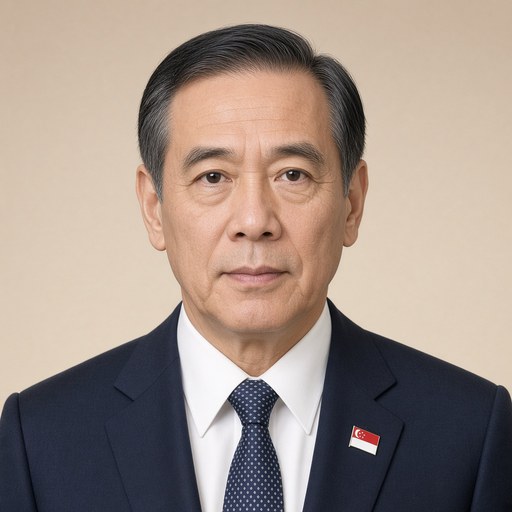
PM Lee Hsien Loong at the 11th World Chinese Entrepreneurs Convention
 Lee Hsien Loong · Prime Minister of Singapore
- Context
- Lee addressed the 11th World Chinese Entrepreneurs Convention in Singapore on 6 October 2011, welcoming overseas Chinese business leaders to discuss new economic patterns and opportunities.
- Main themes
- Chinese entrepreneurship diaspora, Singapore-China economic ties, global economic landscape shifts, East-West business integration, innovation and technology, Asian economic growth, Chinese community networks, reform and opening-up, multinational business opportunities, resilience amid global financial crises
- Duration
- ~22 min
- Words
- 2,602
- Sentences
- 130
- Readability
- 34
- Grade
- 13.4
- Syntax
- 3.14
- Vocabulary
- 2.19
Translated from Multiple languages
The broad sphere of national life a sentence belongs to. Every sentence has an Arena, so it is the denominator the other indices are read against.
Other130 sentences in 35 paragraphs
Mr. Huang Mengfu, Vice Chairman of the National Committee of the Chinese People's Political Consultative Conference, Mr. Zhang Songsheng, President of the Singapore Chinese Chamber of Commerce and Industry, distinguished guests, good morning.
First of all, let me extend a warm welcome to our guests from overseas. Welcome to Singapore for the World Chinese Entrepreneurs Convention. Singapore is the host country for the first World Chinese Entrepreneurs Convention. I am very pleased that after a gap of 20 years, we are once again able to host this grand international conference.
Since 1991, the global economic landscape has undergone fundamental changes. Breakthroughs in technology have had a profound impact on economic activities and business models; the Asian economy has also multiplied several times, gradually shifting the center of the world economy from the West to the East. For individual enterprises, this is a world where only the fittest survive. The American magazine Fortune publishes its Fortune Global 500 list every year, and many of the companies that were on the list 20 years ago have now declined or even disappeared. In their place, many new and unprecedented enterprises have emerged. In this entirely new situation, this year's convention focusing on "new patterns" and "new dynamics" is very appropriate and meaningful.
Singapore integrates Eastern and Western cultures, and the general populace is proficient in two languages, allowing for direct communication and exchange with Westerners and people from Hong Kong, Taiwan, and Macau. We are familiar with Western systems and management concepts, while also inheriting the traditional culture and spirit of Asia. Therefore, Singapore has always been a crossroads for trade and culture between the East and West, providing a natural and ideal environment for international exchanges.
Singapore has established close economic and trade ties with major economies around the world and has become a regional operating center for many multinational companies and a gathering place for international talent. China's rapid development in recent years has provided many business opportunities for Singapore. We have established trade links with China through various channels. For example, the governments of Singapore and China have undertaken several major cooperative projects, including the establishment of the Suzhou Industrial Park and the Tianjin Eco-City. Singapore has also formed joint business councils with seven provinces in China to vigorously promote trade exchanges between the two places.
For a long time, Chinese communities around the world have actively sought opportunities for development in their respective countries. They have demonstrated an entrepreneurial spirit, establishing many large-scale enterprises, and after achieving success, they give back to society, supporting education and public welfare, making significant contributions to the development of local societies and their respective countries. Over the past 30 years, as China has adopted reform and opening-up policies, Chinese entrepreneurs from various regions have sought business opportunities in China, investing in factories and significantly boosting the Chinese economy. In addition, extensive networks and business connections have been established among Chinese entrepreneurs, becoming an undeniable commercial force internationally.
In recent years, the world economy has been fraught with crises, with dark clouds looming. The economies of Europe and the United States are currently plagued by financial issues. However, despite the unclear macroeconomic situation, there are many bright spots in the long-term prospects of the world economy, so we should not be overly pessimistic. The emergence of new technologies and the thriving Asian economy present many opportunities for entrepreneurs. If entrepreneurs can grasp economic trends, adeptly use technology, and boldly innovate and take risks, they will have the chance to stand out and establish new and successful enterprises. The success of enterprises can drive national economic development and add new momentum to the world economy. I hope that you will take advantage of this gathering to engage in in-depth discussions and exchanges on these topics, making this year's convention even more meaningful.
Finally, let me congratulate the successful holding of the 11th World Chinese Entrepreneurs Convention. Next, let me continue my speech in English. Thank you!
The Chinese Entrepreneur Diaspora
Although the WCEC is only 20 years old, it honours a centuries-old phenomenon. Way back in the 2nd century B.C., during the Han dynasty, Chinese envoys explored the Western Regions – the Central Asian lands far west of China, and traders opened the Silk Road to trade with Rome. Later, from as early as the Song dynasty more than a thousand years ago, and perhaps even earlier, overseas Chinese communities sprung up all over Southeast Asia. Over the last two centuries, Chinese have emigrated to every continent in the world, often to work as labourers in plantations, railroads, or mines.
Wherever they went, these Chinese communities thrived. They shared a culture of hard work and thrift, and focused on preserving family ties and educating their children. Many worked their way up from poor beginnings to become successful businessmen. They may not have had good family backgrounds, or much education, but they had native ability and drive, keen business instincts and the resilience to overcome setbacks. They succeeded, and often, prominent businessmen became community leaders and philanthropists, helping to organise the local community and contributing to society in many ways.
This was especially true in Southeast Asia, where Chinese communities got together to support one another in areas where colonial governments were unable to cope. For instance, in Singapore, successful businessmen like Tan Kah Kee, Lee Kong Chian and Tan Tock Seng set up schools, hospitals and other public institutions which remain till this day. The same happened in many other countries.
Although the Chinese settled down around the world, their identities, family ties and loyalties often remained with China. They not only supported their families and extended families back home, but also political causes in China. For instance, overseas Chinese played an important part in the 1911 Chinese Revolution. In the last years of the Qing dynasty, Chinese communities and businesses all over the Pacific Rim, as far away as Hawaii and San Francisco, supported Sun Yat Sen and the Tong Meng Hui. They set up offices around the world and donated funds for the uprisings. Some overseas Chinese returned to China to fight the hated Manchus, participated in uprisings, and some were martyred. These included Chinese from Singapore, whose contributions and those of the Singaporean Chinese community will be displayed in the Sun Yat Sen Villa when it re-opens on Saturday. Later in the Sino-Japan war too, overseas Chinese communities raised funds and rallied to support the motherland, which for them was China.
Over the years, the sense of identity of overseas Chinese communities has changed. The international context has altered. In an age of nation states, overseas Chinese are citizens of the countries they belong to, and they see themselves as such; their national loyalties take precedence over ethnic identities. So Singaporean Chinese, after generations in Singapore and decades of nation-building and living in a multi-cultural society, see themselves as Singaporeans first, and ethnic Chinese second. Singaporean Chinese have become quite different from Chinese from China or other countries, so much so that as a result, new immigrants or foreign workers who are ethnic Chinese but who come to Singapore from China, Hong Kong and other lands, and are new to Singapore take a while to adjust to our norms.
But one thing remains unchanged – many ethnic Chinese are still successful entrepreneurs, and we are happy to welcome many of you here to this convention.
New Global Environment, New Chinese Enterprise, New Impetus
The global environment continues to evolve. China’s rapid growth and transformation will continue for many more years to come. In the three decades since Deng Xiaoping launched his policy of reform and liberalisation in 1978, China has lifted more than 600 million people out of poverty, and become the second-largest economy in the world with a GDP of US$5 trillion. China’s role in the world will only continue to grow.
As China’s economy develops, new Chinese enterprises are emerging. More are becoming large established companies with significant international operations. For instance, the number of Chinese companies in the Fortune Global 500 list has increased over the last 10 years from 12 companies to now 61 companies. Other Chinese companies may not be as international, but they dominate their domestic markets, such as baidu.com in China. Many other small Chinese companies are starting up, hoping to one day convert from a carp into a dragon and join the ranks of successful multinationals.
Chinese entrepreneurs have played an important role in China’s modernisation and development. Ethnic Chinese capital from around the world provided initial investments for new industries. Overseas Chinese linked up international Chinese businesses with contacts in China, perhaps in their ancestral provinces or cities or counties, and spawned many successful projects, partly for reasons of pride, partly because they saw a good business opportunity. In the process, they both drew upon and built up guanxi, their connections, their links, with their fellow Chinese around the world.
Outside China, the global economy is going through a very difficult period. The US faces major fiscal difficulties and bitter political gridlock. The EU’s debt crisis reflects deep structural problems regarding the future of the Eurozone and the European currency. Japan’s economic weakness and political problems continue to hamper its development. The large international trade and fiscal imbalances that contributed to the global economic crisis three years ago have not gone away.
But not everything is doom and gloom. Notwithstanding their present difficulties, the US, EU and Japan are powerful economies, with sophisticated technology, advanced R&D and large markets. It will take China many years to catch up with them, qualitatively, even if they may be the biggest economy in the world, and the US, EU and Japan will remain major players on the global economy for a long time to come.
In Southeast Asia, ASEAN member countries are enjoying steady growth. They are conscious of the competition posed by China and India, and are enhancing their competitiveness through regional integration among ASEAN countries, as well as Free Trade Agreements with their main trading partners, with China, with Japan, with Australia, negotiating one with Europe. With a combined population of 500 million people and a growing middle-class, ASEAN countries offer many opportunities for businesses.
In addition, new technologies are changing the global business landscape and creating new opportunities, even as they pose challenges to existing businesses. They are fundamentally altering the landscape and restructuring jobs and entire industries. They have increased connectivity, shrunk supply chains and opened new markets. It is a dynamic environment, which favours nimble and creative companies. In such an environment, entrepreneurship will be at a premium.
All entrepreneurs know that the best opportunities are found in the most difficult situations. Thus, it is all the more important for entrepreneurs to stay positive and optimistic, discern hidden possibilities and pursue their business ideas passionately. Your success will not only benefit yourselves, but will help to rejuvenate economies and create a brighter future for everyone.
Within this new environment, Singapore will continue to seek to stand out as a key node in the global marketplace. Entrepreneurs and companies can take advantage of our cultural diversity, world-class business infrastructure and connections as a Global-Asia hub to grow and prosper. We aim to make Singapore a useful partner to Chinese entrepreneurs all around the world and succeed together with all of you.
Looking ahead, what role can Chinese entrepreneurs play in this new environment? I humbly offer three suggestions – enhancing links, modernising companies, and strengthening communities.
Firstly, Chinese entrepreneurs can continue enhancing their links with one another, and in so doing, bringing the countries they belong to closer together and better integrated with one another. Chinese entrepreneurs are located all over the world, from the US and Australia to Africa and Latin America, and have each adapted to their respective local contexts. Many of you are here from all these lands today. At the same time, you maintain ties with other Chinese entrepreneurs around the world by your common cultures and values, and through conventions and meetings like this one. This global network is a strategic resource for Chinese entrepreneurs everywhere, as it is for other diasporas which have been successful in business, such as the Jews and Sindhis. It benefits not just the Chinese companies but the economies you belong to and, by bringing these economies closer together, the global economy.
However, Chinese entrepreneurs cannot rely on guanxi alone for success. In China itself, guanxi has been particularly important. But as China opens up more to the world, and as more Chinese people travel and operate overseas and become used to international norms and ways of doing business, they will have a wider choice of partners and networks to work with, whether for funding, business collaborations or access to new markets. This is already happening. Hence, Chinese entrepreneurs have to upgrade yourselves and raise your game to remain useful and to keep their market positions.
Secondly, Chinese entrepreneurs should strive to build modern and professional businesses. Many Chinese companies start out as family-owned enterprises, but a family basis for a business has its limits. Relying on family members makes it difficult to scale the business, for example to manage subsidiaries or overseas offices. Succession is often an issue, beyond the founding generation. It also makes it hard to compete against global businesses that hire and promote the best talent from all over the world, regardless of family ties.
Beyond a certain point as companies grow and expand, businesses have to adopt a more systematic and professional structure, including hiring talent from around the world, appointing them to key positions on merit and establishing a more institutionalised HR system. Sometimes the founders are reluctant to do so for fear of “losing control” over their business, but this is a necessary step for the company to compete internationally and be truly world-class.
One company which has made this leap is Huawei Technologies. Founded in 1988, Huawei’s founders realised that to succeed, Huawei would have to benchmark its processes and systems to world-class companies. It hired IBM Consulting to revamp its HR, IT, Finance and R&D systems when it began to internationalise, and learnt Western management systems to enhance its competitiveness. Today, it has become a Fortune Global 500 company. That is the way for many companies to go.
Finally, Chinese entrepreneurs should strengthen links with their local communities. You should go beyond merely growing the business, to share your success with the communities you belong to, and contribute to the societies that enabled you to succeed. In today’s globalised world, the gaps between winners and losers are widening, having a social conscience is particularly important, both for individuals and for firms, to reach across the gap, to show that you are part of the society, of the community, and your success depends on the support of this community. Successful entrepreneurs and businesses which help others through philanthropy or community work will enhance their standing with the local community, and help gain them goodwill that is critical for the long term.
Conclusion
Conventions like the WCEC are very useful to exploring these issues. I am glad that several of these topics will be discussed at the Convention’s plenaries and learning journeys. Beyond these sessions, I also hope that participants will make use of every opportunity to interact informally, strengthen your networks and pursue new business opportunities with one another, and if you have time, to see our beautiful city, and learn something a little bit interesting about Singapore.
I wish you all a fruitful Convention, and I now declare the 11th World Chinese Entrepreneurs Convention open.
The original Multiple languages. The tags above are read on the English translation's sentences.
中华人民共和国全国政协副主席黄孟复先生 新加坡中华总商会会长张松声先生 各位来宾 大家早上好
首先,让我向来自海外的嘉宾表示热烈的欢迎,欢迎你们到新加坡出席世界华商大会。新加坡是第一届世界华商大会的主办国。我很高兴在相隔20年之后,我们能够再度主办这个盛大的国际会议。
自1991年以来,世界经济形势发生了根本的变化。科技的突破对经济活动和商业模式产生深远的影响;亚洲经济也翻了几番,使世界经济重心逐渐从西方移向东方。对个别的企业而言,这是个适者生存的世界。美国《财富》杂志每年发布世界500强(Fortune Global 500)名单,20年前排行榜上的许多企业,今天已经走向没落,甚至消失了。取而代之的,是不少新型的、前所未见的企业。在这全新的形势下,今年的华商大会着重讨论“新格局”和“新动力”,是十分贴切和有意义的。
新加坡融贯东西文化,一般人民通晓两种语文,能够很自在地跟西方人士和中港台人士直接沟通和交流。我们熟悉西方的体制和管理观念,又继承了亚洲的传统文化和精神面貌。因此,新加坡向来是东西商贸和文化的交汇地,为国际交流提供了一个自然和理想的环境。
新加坡跟世界各大经济体建立了紧密的经贸联系,并且成了许多跨国企业的区域营业中心和国际人才的聚集地。中国近年来发展神速,为新加坡提供了许多商机。我们通过各种途径跟中国建立了商贸联系。例如,新中两国政府进行几项重大的合作项目,包括建立苏州工业园和天津生态城。新加坡也跟中国的七个省成立了联合商业理事会,全力推动两地的商贸交流。
长久以来,世界各地的华人在各自国家积极争取发展的机会。他们发挥创业的精神,建立了许多很具规模的企业,同时在取得成功后回报社会,支持文教和公益事业,对当地社会的发展,对各自的国家,做出很多贡献。过去30年,随着中国采取改革开放的政策,各地华商纷纷在中国寻找商机,投资设厂,对中国经济起了相当大的推动作用。此外,各地华商之间建立广泛的人脉关系和商业联系,成为国际上一股不容忽视的商业力量。
近年来,世界经济危机四伏,乌云笼罩。欧美经济体目前深受财务问题所困扰。然而,尽管宏观形势不明朗,世界经济长远的前景具有不少的亮点,因此我们不应该太过悲观。新科技的涌现和欣欣向荣的亚洲经济,都为商人带来很多机遇。如果商人能够把握经济动向,善于使用科技和勇于创新,冒险尝试,将有机会脱颖而出,建立全新和成功的事业。企业的成功能够带动国家经济的发展,也能够为世界经济增添新的动力。我希望诸位利用这次的聚会,针对这些课题进行深入的探讨和交流,使今年的华商大会更具意义。
最后,让我祝贺第11届世界华商大会成功举行。接着,让我用英语继续演讲。谢谢!
The Chinese Entrepreneur Diaspora
Although the WCEC is only 20 years old, it honours a centuries-old phenomenon. Way back in the 2 nd century B.C., during the Han dynasty, Chinese envoys explored the Western Regions – the Central Asian lands far west of China, and traders opened the Silk Road to trade with Rome. Later, from as early as the Song dynasty more than a thousand years ago, and perhaps even earlier, overseas Chinese communities sprung up all over Southeast Asia. Over the last two centuries, Chinese have emigrated to every continent in the world, often to work as labourers in plantations, railroads, or mines.
Wherever they went, these Chinese communities thrived. They shared a culture of hard work and thrift, and focused on preserving family ties and educating their children. Many worked their way up from poor beginnings to become successful businessmen. They may not have had good family backgrounds, or much education, but they had native ability and drive, keen business instincts and the resilience to overcome setbacks. They succeeded, and often, prominent businessmen became community leaders and philanthropists, helping to organise the local community and contributing to society in many ways.
This was especially true in Southeast Asia, where Chinese communities got together to support one another in areas where colonial governments were unable to cope. For instance, in Singapore, successful businessmen like Tan Kah Kee, Lee Kong Chian and Tan Tock Seng set up schools, hospitals and other public institutions which remain till this day. The same happened in many other countries.
Although the Chinese settled down around the world, their identities, family ties and loyalties often remained with China. They not only supported their families and extended families back home, but also political causes in China. For instance, overseas Chinese played an important part in the 1911 Chinese Revolution. In the last years of the Qing dynasty, Chinese communities and businesses all over the Pacific Rim, as far away as Hawaii and San Francisco, supported Sun Yat Sen and the Tong Meng Hui. They set up offices around the world and donated funds for the uprisings. Some overseas Chinese returned to China to fight the hated Manchus, participated in uprisings, and some were martyred. These included Chinese from Singapore, whose contributions and those of the Singaporean Chinese community will be displayed in the Sun Yat Sen Villa (晚晴园) when it re-opens on Saturday. Later in the Sino-Japan war too, overseas Chinese communities raised funds and rallied to support the motherland, which for them was China.
Over the years, the sense of identity of overseas Chinese communities has changed. The international context has altered. In an age of nation states, overseas Chinese are citizens of the countries they belong to, and they see themselves as such; their national loyalties take precedence over ethnic identities. So Singaporean Chinese, after generations in Singapore and decades of nation-building and living in a multi-cultural society, see themselves as Singaporeans first, and ethnic Chinese second. Singaporean Chinese have become quite different from Chinese from China or other countries, so much so that as a result, new immigrants or foreign workers who are ethnic Chinese but who come to Singapore from China, Hong Kong and other lands, and are new to Singapore take a while to adjust to our norms.
But one thing remains unchanged – many ethnic Chinese are still successful entrepreneurs, and we are happy to welcome many of you here to this convention.
New Global Environment, New Chinese Enterprise, New Impetus
The global environment continues to evolve. China’s rapid growth and transformation will continue for many more years to come. In the three decades since Deng Xiaoping launched his policy of reform and liberalisation in 1978, China has lifted more than 600 million people out of poverty, and become the second-largest economy in the world with a GDP of US$5 trillion. China’s role in the world will only continue to grow.
As China’s economy develops, new Chinese enterprises are emerging. More are becoming large established companies with significant international operations. For instance, the number of Chinese companies in the Fortune Global 500 list has increased over the last 10 years from 12 companies to now 61 companies. Other Chinese companies may not be as international, but they dominate their domestic markets, such as baidu.com in China. Many other small Chinese companies are starting up, hoping to one day convert from a carp into a dragon and join the ranks of successful multinationals.
Chinese entrepreneurs have played an important role in China’s modernisation and development. Ethnic Chinese capital from around the world provided initial investments for new industries. Overseas Chinese linked up international Chinese businesses with contacts in China, perhaps in their ancestral provinces or cities or counties, and spawned many successful projects, partly for reasons of pride, partly because they saw a good business opportunity. In the process, they both drew upon and built up guanxi , their connections, their links, with their fellow Chinese around the world.
Outside China, the global economy is going through a very difficult period. The US faces major fiscal difficulties and bitter political gridlock. The EU’s debt crisis reflects deep structural problems regarding the future of the Eurozone and the European currency. Japan’s economic weakness and political problems continue to hamper its development. The large international trade and fiscal imbalances that contributed to the global economic crisis three years ago have not gone away.
But not everything is doom and gloom. Notwithstanding their present difficulties, the US, EU and Japan are powerful economies, with sophisticated technology, advanced R&D and large markets. It will take China many years to catch up with them, qualitatively, even if they may be the biggest economy in the world, and the US, EU and Japan will remain major players on the global economy for a long time to come.
In Southeast Asia, ASEAN member countries are enjoying steady growth. They are conscious of the competition posed by China and India, and are enhancing their competitiveness through regional integration among ASEAN countries, as well as Free Trade Agreements with their main trading partners, with China, with Japan, with Australia, negotiating one with Europe. With a combined population of 500 million people and a growing middle-class, ASEAN countries offer many opportunities for businesses.
In addition, new technologies are changing the global business landscape and creating new opportunities, even as they pose challenges to existing businesses. They are fundamentally altering the landscape and restructuring jobs and entire industries. They have increased connectivity, shrunk supply chains and opened new markets. It is a dynamic environment, which favours nimble and creative companies. In such an environment, entrepreneurship will be at a premium.
All entrepreneurs know that the best opportunities are found in the most difficult situations. Thus, it is all the more important for entrepreneurs to stay positive and optimistic, discern hidden possibilities and pursue their business ideas passionately. Your success will not only benefit yourselves, but will help to rejuvenate economies and create a brighter future for everyone.
Within this new environment, Singapore will continue to seek to stand out as a key node in the global marketplace. Entrepreneurs and companies can take advantage of our cultural diversity, world-class business infrastructure and connections as a Global-Asia hub to grow and prosper. We aim to make Singapore a useful partner to Chinese entrepreneurs all around the world and succeed together with all of you.
Looking ahead, what role can Chinese entrepreneurs play in this new environment? I humbly offer three suggestions – enhancing links, modernising companies, and strengthening communities.
Firstly, Chinese entrepreneurs can continue enhancing their links with one another, and in so doing, bringing the countries they belong to closer together and better integrated with one another. Chinese entrepreneurs are located all over the world, from US and Australia to Africa and Latin America, and have each adapted to their respective local contexts. Many of you are here from all these lands today. At the same time, you maintain ties with other Chinese entrepreneurs around the world by your common cultures and values, and through conventions and meetings like this one. This global network is a strategic resource for Chinese entrepreneurs everywhere, as it is for other diasporas which have been successful in business, such as the Jews and Sindhis. It benefits not just the Chinese companies but the economies you belong to and, by bringing the these economies, closer together, the global economy.
However, Chinese entrepreneurs cannot rely on guanxi alone for success. In China itself, guanxi has been particularly important. But as China opens up more to the world, and as more Chinese people travel and operate overseas and become used to international norms and ways of doing business, they will have a wider choice of partners and networks to work with, whether for funding, business collaborations or access to new markets. This is already happening. Hence, Chinese entrepreneurs have to upgrade yourselves and raise your game to remain useful and to keep their market positions.
Secondly, Chinese entrepreneurs should strive to build modern and professional businesses. Many Chinese companies start out as family-owned enterprises, but a family basis for a business has its limits. Relying on family members makes it difficult to scale the business, for example to manage subsidiaries or overseas offices. Succession is often an issue, beyond the founding generation. It also makes it hard to compete against global businesses that hire and promote the best talent from all over the world, regardless of family ties.
Beyond a certain point as companies grow and expand, businesses have to adopt a more systematic and professional structure, including hiring talent from around the world, appointing them to key positions on merit and establishing a more institutionalised HR system. Sometimes the founders are reluctant to do so for fear of “losing control” over their business, but this is a necessary step for the company to compete internationally and be truly world-class.
One company which has made this leap is Huawei Technologies. Founded in 1988, Huawei’s founders realised that to succeed, Huawei would have to benchmark its processes and systems to world-class companies. It hired IBM Consulting to revamp its HR, IT, Finance and R&D systems when it began to internationalise, and learnt Western management systems to enhance its competitiveness. Today, it has become a Fortune Global 500 company. That is the way for many companies to go.
Finally, Chinese entrepreneurs should strengthen links with their local communities. You should go beyond merely growing the business, to share your success with the communities they belong to, and contribute to the societies that enabled you to succeed. In today’s globalised world, the gaps between winners and losers are widening, having a social conscience is particularly important, both for individuals and for firms, to reach across the gap, to show that you are part of the society, of the community, and your success depends on the support of this community. Successful entrepreneurs and businesses which help others through philanthropy or community work will enhance their standing with the local community, and help gain them goodwill that is critical for the long term.
Conclusion
Conventions like the WCEC are very useful to exploring these issues. I am glad that several of these topics will be discussed at the Convention’s plenaries and learning journeys. Beyond these sessions, I also hope that participants will make use of every opportunity to interact informally, strengthen your networks and pursue new business opportunities with one another, and if you have time, to see our beautiful city, and learn something a little bit interesting about Singapore.
I wish you all a fruitful Convention, and I now declare the 11 th World Chinese Entrepreneurs Convention open.
Explore related topics