




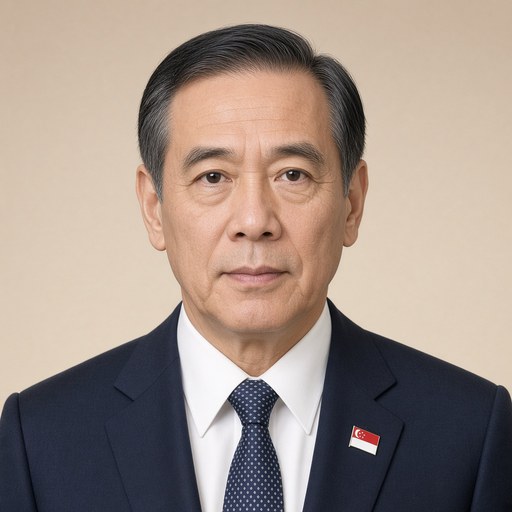
PM Lee Hsien Loong at 40th Anniversary of Speak Mandarin Campaign
 Lee Hsien Loong · Prime Minister of Singapore
- Context
- Lee addressed the 40th Anniversary of the Speak Mandarin Campaign in Singapore on 22 October 2019, reflecting on its history and evolving challenges.
- Main themes
- Speak Mandarin Campaign anniversary, Mandarin language promotion, bilingualism in Singapore, language shift to English, Chinese Singaporean identity, Singapore-China business ties, cultural roots and heritage, Singaporean Mandarin uniqueness, Young Bilingual Professionals, language environment changes
- Duration
- ~12 min
- Words
- 1,415
- Sentences
- 75
- Readability
- 45
- Grade
- 11.7
- Syntax
- 2.89
- Vocabulary
- 2.19
The broad sphere of national life a sentence belongs to. Every sentence has an Arena, so it is the denominator the other indices are read against.
Other75 sentences in 23 paragraphs
Mr Chua Chim Kang, Chairman, Promote Mandarin Council, Past Council Chairmen, Ladies and Gentlemen,
Good afternoon.
I am honoured to be here for the 40th anniversary of the Speak Mandarin Campaign, and to reflect on the achievements of the Campaign.
Mr Lee Kuan Yew launched the Speak Mandarin Campaign in 1979 to encourage Chinese Singaporeans to speak more Mandarin and less dialects. He wanted to, raise the standard of Mandarin and forge cohesion of the Chinese community, by bringing the different dialect groups together. In those days, communication was a challenge because most Chinese spoke their own dialects and might not understand other dialects. Many also graduated from school without a working command of English, Mandarin, or any dialects. This limited their prospects, moreover it was not conducive for Singapore’s progress.
Hence, the government launched the Speak Mandarin Campaign. Good results were achieved within a few years. The number of dialect-only speakers came down significantly, the number of Mandarin speakers went up, and our Mandarin standards improved.
Later on, the trend changed, and more Chinese began speaking English.
So in the 1990s, the Speak Mandarin Campaign shifted its target audience, focussing on encouraging English-speaking Singaporeans to speak more Mandarin. Learning Mandarin has not only helped us better understand our roots and culture, it also helped us build a deeper connection with the wider Chinese culture. There were also practical benefits when we engaged China.
At that time, China’s economy was opening up to the world and taking off. Many Singaporeans were working in China, or starting businesses there. And being bilingual allowed Singaporeans to have the best of both worlds. This helped to persuade parents and students to appreciate the value of Chinese, and they became more willing to put in the effort to learn the language.
Ng Chia Yong (黄加勇) who works in China is a good example. In his early days in China, Chia Yong could not express himself clearly in Mandarin because the Mandarin he had learnt in school had become rusty. As a result, Chia Yong often hit snags when communicating with the Chinese. However, his Mandarin improved through daily use. Now, he has become not only fluent but also familiar with professional terms, and can even negotiate business deals and legal agreements in Mandarin.
Chia Yong is one of eight who have been recognised by the Promote Mandarin Council and Business China as a Young Bilingual Professional. We hope that they will inspire others to learn Mandarin as well. There are many like Chia Yong whose Mandarin have improved after spending time in China. Some may not have enjoyed learning Chinese in school, or under the supervision of their teachers and parents. But now, many of them feel that it was worthwhile to pay heed to their teachers and parents’ advice.
Today, most young Chinese Singaporeans can understand and speak Mandarin, although not always fluently. We need to acknowledge that we are losing our bilingual competitive advantage. People all over the world are learning Mandarin eagerly, and everyone knows that speaking good Mandarin is a necessary skill in China.
In order to create the environment to speak Mandarin, we have kept up our efforts to encourage the use of Mandarin - whether in a social settings or where appropriate for work purposes.
But our language environment continues to change. 20 years ago, more than half of the Chinese households used mainly Mandarin at home but it is quite different now. Today, many Chinese families use English as their main language. Every year, the Ministry of Education will conduct a survey with the parents of primary one students. The findings showed that 71% of Chinese families use English as their main language at home. This trend is not just limited to Chinese families – the number of Malay and Indian families who use mostly English at home have also risen, and their situation is similar to the Chinese households today.
The Speak Mandarin Campaign must adapt to this major shift. We have to put in more effort to encourage the use of Mandarin in our daily lives, and find ways to keep the language alive and preserve the uniqueness of our Mandarin. The Mandarin spoken in Singapore is influenced by other languages and dialects – for example, the words “Pasar” and “Kampung” are derived from Malay, while “Popiah” and “Pak Tor” stemmed from dialects. Not only that, local terms have also been created based on Singapore’s unique developments. For instance, “HDB”, “Chinatown”, “Pioneer Generation”, “Merdeka Generation” and other terms. These terms reflect our diverse multicultural identity, and the richness of our Mandarin. Next month, we will be launching the Database of Singaporean Mandarin Terms comprising these uniquely Singaporean terms, with more terms being added progressively to the database. This will also help Chinese Singaporeans develop a deeper sense of our own identity, and become more confident in the language when we interact with others.
Over the years, the Campaign has come up with many creative ideas – such as The Family Talent Competition 《讲华语运动亲子才艺比赛》, where grandparents and parents can bond with their grandchildren and children, while learning and speaking Mandarin; and the “My Story” Public Speaking Competition《我的故事》演讲比赛, an oratorical competition for students to build their confidence in expressing themselves in Mandarin. As such, I would like to thank the Promote Mandarin Council for their innovative ideas, efforts and contributions over the years.
Similarly, the Chinese community, Chinese media, and schools have complemented the Government’s efforts and policies to promote Mandarin. First, I would like to offer special thanks to the Chinese clans and associations, and other important partners such as Business China and the Committee to Promote Chinese Language Learning. They have contributed much to the promotion of Mandarin through their interesting activities. The Singapore Hokkien Huay Kuan is a good example – they set up the Hokkien Huay Kuan Cultural Academy, where they organise a myriad of activities, such as music, dance, calligraphy, drama and crosstalk. I visited the Academy recently and was pleasantly surprised to see that they were even teaching coding in Mandarin! The students clearly enjoyed learning how to code.
Second, I would like to thank our local Chinese media, which plays an important role in providing quality Chinese content for all ages. Now, they also need to create content for digital devices and online, and all of them have upheld their mission and remained steadfast in their duty.
And finally, thank you to our mother tongue teachers for their dedication and contributions. They have imparted their love for the Chinese language and culture to the younger generations of Singaporeans. Our teachers today make learning Mandarin more interesting, and they use technology to aid learning. As a result, classroom learning becomes more effective and sparks students’ interests in the language.
At the same time, I hope parents will speak more Mandarin to your young children at home, so that they can immerse in the language from a young age. Family members can play their role by speaking more Mandarin at home – this is a stage where children are most sensitive to pronunciations and intonations, and can acquire a language more easily. And then when they are a bit older, they will not only learn the language with ease, but also find it fun to communicate with their family members in Mandarin, and understand the benefits of speaking Mandarin.
In an English-speaking society like ours, it does take considerable effort to create the Mandarin-speaking environment at home. Many parents who are bilingual tell me that they have to make a conscious effort to speak Mandarin with their family, if not, it is easy to default to speaking English and more effort would be needed to revert to speaking Mandarin. Nonetheless, I hope everyone will persevere because it is worth the effort.
The Speak Mandarin Campaign has made significant contributions in sustaining and encouraging the use of Mandarin in our society over the last forty years, but it is a never ending journey, because our society and context will continue to change. I hope that the Campaign will continue to come up with fresh and innovative ways to promote Mandarin. I would also like to encourage Singaporeans to participate actively in these activities, to maintain Singapore’s bilingual advantage and preserve our multiculturalism. The Government will also continue to provide its full support.
I can speak Mandarin, so can you. I hope we will continue to speak Mandarin, and find the joy in it. Thank you.
Explore related topics