




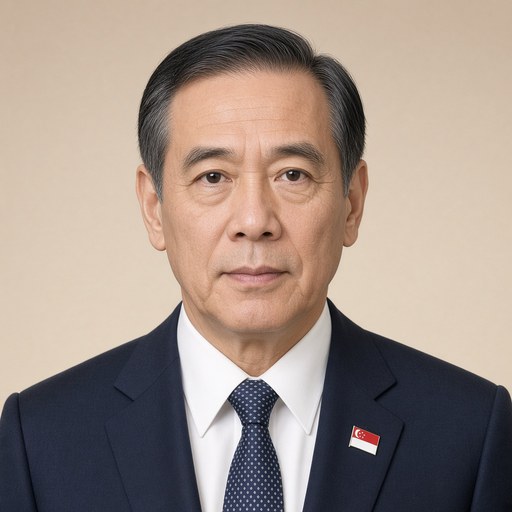
PM Lee Hsien Loong at the Book Launch of the Late Mr Ho See Beng
 Lee Hsien Loong · Prime Minister of Singapore
- Context
- Lee Hsien Loong spoke at the book launch honoring late labor pioneer Ho See Beng in Singapore on 5 December 2014, ahead of SG50.
- Main themes
- Singapore labor movement history, NTUC founding, anti-communist struggle in trade unions, pioneer generation tribute, national memory, labor-management partnership, workers' welfare, PAP history, Singapore's 50th anniversary, Ho See Beng's legacy
- Duration
- ~12 min
- Words
- 1,453
- Sentences
- 72
- Readability
- 52
- Grade
- 10.6
- Syntax
- 2.98
- Vocabulary
- 2.40
Translated from Multiple languages
The broad sphere of national life a sentence belongs to. Every sentence has an Arena, so it is the denominator the other indices are read against.
Other72 sentences in 18 paragraphs
Mrs. Ho See Beng (Madam Lee Beng Kiow), family of the late Mr. Ho See Beng, Mr. Lim Swee Say, friends, ladies and gentlemen. A very good afternoon to all of you. I am very honoured to be here today to celebrate a distinguished pioneer, Mr. Ho See Beng (何思明), who has left his indelible mark on Singapore history. Let me first start with a few words in Mandarin.
Good afternoon, everyone! This book titled "Fearless and Challenging" narrates the life of Mr. Ho. His story reflects the experiences of many founding fathers. When Mr. Ho first immigrated from China to Singapore, he was just a poor boy. With strong willpower and a passion for Singapore, he worked hard and strived for success. In the early 1960s, the labor movement in Singapore was divided into two factions: the pro-communist faction and the non-communist faction. Ho See Beng and other labor leaders — Mr. T. S. Tiffany, Mr. Sheh Meiguo, and Mr. G. Kandasamy — decided to support the non-communist National Trade Union Congress, which is today’s NTUC.
At that time, pro-communist elements frequently organized strikes. This greatly affected the income of workers, leading to widespread suffering. The non-communist labor leaders, undeterred by difficulties, actively fought for better conditions for workers and sought to empower them. After years of effort, they broke the old framework of labor-capital opposition, established a good labor-management partnership, ensured the welfare of workers, and opened a new chapter for the labor movement in Singapore.
At that time, Ho See Beng was involved in the establishment of the NTUC Cooperative. The cooperative also set up various agencies and organizations to take care of the living needs of workers. The book "Fearless and Challenging" records how Mr. Ho and his team overcame numerous difficulties and crises to seek welfare for workers and ultimately achieve victory.
I will not elaborate on the contents of the book here, but I encourage everyone to read it for yourselves. In addition to serving in the unions, Mr. Ho also served as a Member of Parliament for 21 years. In Parliament, he continued to fight for the rights of unions and workers with the same spirit of serving the people.
His lifelong contributions have inspired and touched his children. His daughter, Ms. Ho Yuzhu, later also served as a Member of Parliament for ten years, fulfilling her social responsibilities.
I thank Mr. Ho See Beng for everything he did for us during his lifetime, and I hope the younger generation can emulate the labor movement pioneers in this book, our founding generation, the seniors present, and those who have contributed to Singapore, leading Singapore to reach another peak. Now let me speak in English.
The Relevance of National Memory
Friends, the launch of this book is timely because it is just before our nation’s 50th birthday and coincides with the 60th birthday of the PAP and is a meaningful contribution to the growing literature about the formative years of our nation. This revival of interest in our national history is heartening, especially among younger Singaporeans. They are asking questions, asking why we are the way we are. As we look back on our history, it is useful both to celebrate our successes, as well as to consider how differently things might have turned out so that we can learn from the choices and actions of pioneers like See Beng, chart our future wisely and confidently, recognise and honour our pioneers who overcame many challenges to shape our nation and create today’s Singapore.
A Champion For Labour
That we enjoy harmonious and stable industrial relations now is not an accident and not a natural state of affairs, but the result of a long struggle.
In the 1950s and 1960s, industrial relations in Singapore were confrontational. We had high unemployment, poor working conditions and social unrest. The Communists had infiltrated the major unions. As a result, when the PAP split in 1961, with the pro-communists leaving the party to form the Barisan Sosialis, the Trade Union Congress also split. The pro-Communist unions organised in SATU – the Singapore Association of Trade Unions. They used the legitimate grievances of workers for political ends – staging strikes and work stoppages to undermine the government and destabilise society. The non-communist unions, the minority then, formed the NTUC – the National Trade Union Congress. See Beng himself thought the PAP were bound to lose, so overwhelming did the communists seem.
But nevertheless, out of loyalty and conviction, he joined the other NTUC stalwarts, including Devan Nair, Seah Mui Kok and G. Kandasamy, to rally moderate unions behind the PAP and resist the communists. Much to See Beng’s surprise, the PAP prevailed and NTUC became the dominant trade union grouping in Singapore. We rightly celebrate the lions of the movement like Lee Kuan Yew and Goh Keng Swee, but the lions could have not been lions had they not had lion-hearted lieutenants and supporters – and See Beng was among the most stout-hearted among them. If not for cadres like him, the PAP and NTUC might not have prevailed.
Once the political battle was settled, the pioneer unionists turned to economic development, improving the lives of workers to constructive harmonious cooperation. They were instrumental in reorienting the unions to Tripartism, which was a dramatic change from traditional, adversarial industrial relations to close collaboration between unions, employers and the government. Now we could now solve problems through negotiation and arbitration, instead of resorting to strikes, riots and other industrial action. Tripartism and harmonious labour relations became critical factors in making us competitive, attracting investments and creating many good jobs for our workers and it elevated the standing and the role of union leaders too – today it is common for union leaders to sit on statutory boards and be actively involved in informing policymaking, whether on the MediShield Life panel or the CPF panel.
But most of all, our pioneer unionists were driven by the goal of improving the lives of workers. They broke new ground to do so, like setting up social enterprises – NTUC Welcome Supermarket, now Fairprice, to keep down the cost of living for workers. Income to provide affordable insurance for workers and other cooperatives – many of which have become household names and still benefit Singaporeans today, and See Beng was personally involved in these and particularly with Welcome.
It was in this spirit that in addition to his work in the unions, See Beng served as a Member of Parliament for 21 years, representing Bras Basah for many years and later Khe Bong. For his many contributions, he was awarded the Bintang Bakti Masyarakat (Lintang), the Public Service Star (Bar) in 1990. See Beng retired as a MP in 1984, the same year when I entered politics – so we did not overlap in Parliament. But I served together with Geok Choo, his daughter. I remember Geok Choo’s interview by the Secretary-General’s Committee before she entered politics. I am not sure if she remembers, but I do. Mr. Goh Chok Tong chaired the panel, but Mr. Lee Kuan Yew was on it too. He asked her – “Did you discuss your joining politics with your father?” She said: “Yes”. He said, “What did your father say?” She replied: “He said: ‘If you do it, give your heart and soul to it.’” Mr. Lee’s comment was that See Beng had given Geok Choo the right advice. Her answer left a deep impression on me and indeed that is what Geok Choo did when she served as an MP for ten years.
Conclusion
See Beng gave his heart and soul to the cause, the movement, even when he believed that the PAP and NTUC were not going to win. It is good that this book, chronicling his life and legacy, is being published now, as we celebrate the PAP’s 60th anniversary and as Singapore prepares to celebrate SG50 next year. The book does not tell the story from the vantage point of the big names from the era but it gives a view from the perspective of a man of simple but profound courage who stood up to be counted at a tumultuous and pivotal moment in our history and made a difference. The story of Ho See Beng, a washerwoman’s son, reminds us that each and every Singaporean, no matter what his background, how humble he may be, he or she has a contribution to make to the Singapore story. May it inspire young Singaporeans to emulate the extraordinary tenacity, courage and conviction of our pioneers and may they take Singapore on to similar great successes. Once again, congratulations on the launch of this book. Thank you very much.
The original Multiple languages. The tags above are read on the English translation's sentences.
Mrs Ho See Beng (Madam Lee Beng Kiow), family of the late Mr Ho See Beng, Mr Lim Swee Say, friends, ladies and gentlemen. A very good afternoon to all of you. I am very honoured to be here today to celebrate a distinguished pioneer, Mr Ho See Beng (何思明), who has left his indelible mark on Singapore history. Let me first start with a few words in Mandarin.
大家下午好!这本名为《无所畏惧、勇于挑战》的书,叙述了何先生的一生。他的故事反映了多位建国前辈的经历。何先生刚从中国移民来到新加坡的时候,只是个赤贫小子。他凭着坚强的毅力,和对新加坡的一股热诚,不断努力,奋发向上。六十年代初, 新加坡的劳工运动分成两派:亲共产党派和非共产党派。何思明和其他工运领袖 — 蒂凡那先生、佘美国先生、甘达三美先生 (G. Kandasamy) 都决定支持非共的全国职工总会,就是今天的NTUC。
当时,亲共分子多次举行罢工。这大大影响了工友的收入,民不聊生。非共派的工运领袖不畏艰辛,排除万难,积极的为工人争取更好的条件,争取工人的自持。经过多年的努力,他们打破了劳资对立的旧框架,建立了良好的劳资政伙伴关系,保障了工友的福利,为新加坡工运掀起了新的篇章。
当时,何思明就参与了创办职总合作社的工作。合作社旗下也设有不同机构和组织,照顾工友的生活所需。《无所畏惧、勇于挑战》这本书,记载了何先生和他的团队当时如何克服重重困难和危机,为工友谋福利,最后争取胜利。
书里面的内容我在这里就不多提,也鼓励大家自己读一读。除了在工会服务以外,何先生也担任了21 年的国会议员。在国会里,他本着同样为民服务的精神,继续为工会和工友争取权益。
他一生的贡献也启发、感动了他的孩子。女儿何玉珠女士后来也当了十年的议员,尽了对社会的责任。
我感谢何思明先生生前为我们所做的一切,也希望年轻一代能效仿书中的工运先驱、我们建国一代、在场的前辈们,以及为新加坡做出贡献的人士,带领新加坡攀上另一个高峰。现在让我用英语发言。
The Relevance of National Memory
Friends,the launch of this book is timely because it is just before our nation’s 50th birthday and coincides with the 60th birthday of the PAP and is a meaningful contribution to the growing literature about the formative years of our nation. This revival of interest in our national history is heartening, especially among younger Singaporeans. They are asking questions, asking why we are the way we are. As we look back on our history, it is useful both to celebrate our successes, as well as to consider how differently things might have turned out so that we can learn from the choices and actions of pioneers like See Beng, chart our future wisely and confidently, recognise and honour our pioneers who overcame many challenges to shape our nation and create today’s Singapore.
A Champion For Labour
That we enjoy harmonious and stable industrial relations now is not an accident and not a natural state of affairs, but the result of a long struggle.
In the 1950s and 1960s, industrial relations in Singapore were confrontational. We had high unemployment, poor working conditions and social unrest. The Communists had infiltrated the major unions. As a result, when the PAP split in 1961, with the pro-communists leaving the party to form the Barisan Sosialis, the Trade Union Congress also split. The pro-Communist unions organised in SATU – the Singapore Association of Trade Unions. They used the legitimate grievances of workers for political ends – staging strikes and work stoppages to undermine the government and destabilise society. The non-communist unions, the minority then, formed the NTUC – the National Trade Union Congress. See Beng himself thought the PAP were bound to lose, so overwhelming did the communists seem.
But nevertheless, out of loyalty and conviction, he joined the other NTUC stalwarts, including Devan Nair, Seah Mui Kok and G. Kandasamy, to rally moderate unions behind the PAP and resist the communists. Much to See Beng’s surprise, the PAP prevailed and NTUC became the dominant trade union grouping in Singapore. We rightly celebrate the lions of the movement like Lee Kuan Yew and Goh Keng Swee, but the lions could have not been lions had they not had lion-hearted lieutenants and supporters – and See Beng was among the most stout-hearted among them. If not for cadres like him, the PAP and NTUC might not have prevailed.
Once the political battle was settled, the pioneer unionists turned to economic development, improving the lives of workers to constructive harmonious cooperation. They were instrumental in reorienting the unions to Tripartism, which was a dramatic change from traditional, adversarial industrial relations to close collaboration between unions, employers and the government. Now we could now solve problems through negotiation and arbitration, instead of resorting to strikes, riots and other industrial action. Tripartism and harmonious labour relations became critical factors in making us competitive, attracting investments and creating many good jobs for our workers and it elevated the standing and the role of union leaders too – today it is common for union leaders to sit on statutory boards and be actively involved in informing policymaking, whether on the MediShield Life panel or the CPF panel.
But most of all, our pioneer unionists were driven by the goal of improving the lives of workers. They broke new ground to do so, like setting up social enterprises – NTUC Welcome Supermarket, now Fairprice, to keep down the cost of living for workers. Income to provide affordable insurance for workers and other cooperatives – many of which have become household names and still benefit Singaporeans today, and See Beng was personally involved in these and particularly with Welcome.
It was in this spirit that in addition to his work in the unions, See Beng served as a Member of Parliament for 21 years, representing Bras Basah for many years and later Khe Bong. For his many contributions, he was awarded the Bintang Bakti Masyarakat (Lintang), the Public Service Star (Bar) in 1990. See Beng retired as a MP in 1984, the same year when I entered politics – so we did not overlap in Parliament. But I served together with Geok Choo, his daughter. I remember Geok Choo’s interview by the Secretary-General’s Committee before she entered politics. I am not sure if she remembers, but I do. Mr Goh Chok Tong chaired the panel, but Mr Lee Kuan Yew was on it too. He asked her – “Did you discuss your joining politics with your father?” She said: “Yes”. He said, “What did your father say?” She replied: “He said: ‘If you do it, give your heart and soul to it.’” Mr Lee’s comment was that See Beng had given Geok Choo the right advice. Her answer left a deep impression on me and indeed that is what Geok Choo did when she served as an MP for ten years.
Conclusion
See Beng gave his heart and soul to the cause, the movement, even when he believed that the PAP and NTUC were not going to win. It is good that this book, chronicling his life and legacy, is being published now, as we celebrate the PAP’s 60th anniversary and as Singapore prepares to celebrate SG50 next year. The book does not tell the story from the vantage point of the big names from the era but it gives a view from the perspective of a man of simple but profound courage who stood up to be counted at a tumultuous and pivotal moment in our history and made a difference. The story of Ho See Beng, a washerwoman’s son, reminds us that each and every Singaporean, no matter what his background, how humble he may be, he or she has a contribution to make to the Singapore story. May it inspire young Singaporeans to emulate the extraordinary tenacity, courage and conviction of our pioneers and may they take Singapore on to similar great successes. Once again, congratulations on the launch of this book. Thank you very much.
Explore related topics