




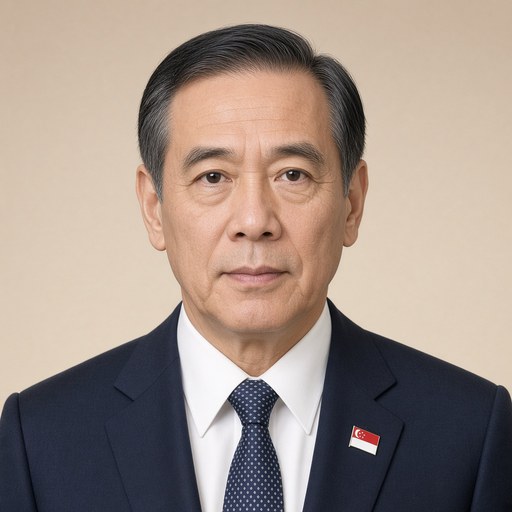
Prime Minister Lee Hsien Loong at the Chinese Development Assistance Council 30th Anniversary Open House.
 Lee Hsien Loong · Prime Minister of Singapore
- Context
- Lee addressed the CDAC 30th Anniversary Open House on 18 September 2022, celebrating the self-help group's three decades of community and education support in Singapore.
- Main themes
- Chinese Development Assistance Council 30th anniversary, social mobility, community self-help, education support, tuition and mentoring programmes, low-income families, cost of living challenges, volunteerism, Chinese community in Singapore, social cohesion, CDAC headquarters renovation
- Duration
- ~14 min
- Words
- 1,644
- Sentences
- 94
- Readability
- 47
- Grade
- 11.0
- Syntax
- 3.00
- Vocabulary
- 2.25
Translated from Multiple languages
The broad sphere of national life a sentence belongs to. Every sentence has an Arena, so it is the denominator the other indices are read against.
Other94 sentences in 29 paragraphs
Distinguished guests,
Ladies and gentlemen,
Good morning!
I am very pleased to celebrate the 30th anniversary of the Chinese Development Assistance Council (CDAC) with all of you, to witness this important milestone, and to affirm the achievements that CDAC has made over the years.
CDAC was established in 1992 as a self-help group initiated by the local Chinese community. In its early days, it undertook two major tasks. First, to support students from disadvantaged families to ensure they have the opportunity to receive a good education and realize their potential. Second, to help low-wage workers enhance their skills to ensure they keep pace with the times and strive for advancement.
Over the years, under the leadership of the Board of Directors, CDAC has implemented various assistance programs, focusing on promoting social mobility through community assistance and education. For example, the scholarships and employment assistance provided by CDAC, as well as the tutoring classes it offers, benefit nearly 18,000 households each year. For families with greater needs, CDAC also adopts a case management approach to provide more tailored assistance. This includes the Homework Supervision Group program, which facilitates one-on-one interactions between volunteers and students. Students not only receive help with their studies but also develop their character, starting from a better starting point in life.
This embodies the spirit of CDAC's "Planting Grass, Growing Trees." Here, I would like to sincerely thank the staff, volunteers, and partners of CDAC for their unwavering support and selfless dedication over the past thirty years. You have always upheld the spirit of "each person contributing a little," helping countless individuals in need from various aspects, allowing them to feel the warmth of society.
Today, our country is facing many challenging issues. In recent months, the prices of energy and food have risen, increasing the burden on many families. This cost of living issue affects all households, but low-income and vulnerable groups are hit the hardest.
At such a time, the mission that CDAC carries is more important than ever. This is because you understand the unique issues faced by the Chinese community best, and you can mobilize the strength of the entire community to help those in need, ensuring that no one is left behind.
I am also pleased to see that the renovation of CDAC's headquarters has just been completed. This means that the headquarters now has more classrooms and space to host a wider range of activities and courses. The new facilities also include a playroom, allowing children to learn through play, thereby building confidence and sparking creativity. The newly refreshed headquarters not only provides a more comfortable and pleasant overall environment but also offers students more opportunities for communication and interaction.
I am confident that CDAC will continue to play its role well, perpetuating the spirit of mutual assistance and upward mobility within the Chinese community, and contributing to social cohesion. I wish CDAC continued growth and success, and may it continue to work hand in hand with the government to ensure the well-being of the people in the many years to come.
Next, let me say a few words in English.
Friends, Ladies and Gentlemen,
Good morning.
I am delighted to join you today to celebrate the Chinese Development Assistance Council (CDAC)’s 30th anniversary. It is a significant milestone for CDAC. In these three decades your members, volunteers and partners have done much hard work, and helped many beneficiaries. You have made a significant difference to countless students and households, and to the wider community.
In particular, I want to thank Mr. Chua Thian Poh for his leadership and distinguished service to the CDAC over the past 26 years, including as Chairman of the Board of Trustees for the past 10 years. I also welcome the new Chairman of the Board of Trustees, Mr. Roland Ng, who will bring new leadership to the Board and build upon the strong foundations of the CDAC.
CDAC’s 30th anniversary is not just a celebration of its past achievements, but also an opportunity to dedicate itself to its future goals. With a refurbished headquarters and fresh facilities, the CDAC is ready and equipped to face the next 30 years with renewed strength and purpose.
Supporting the Community
The CDAC was established in 1992 as a Self-Help Group (SHG) for the Chinese community by the Singapore Chinese Chamber of Commerce and Industry, and the Singapore Federation of Chinese Clan Associations. Like other SHGs, the CDAC augments the Government’s efforts to take care of those who are less fortunate.
It has focused on promoting social mobility through education. Many children and their families have benefitted from the CDAC’s mentoring support, tuition programmes, and financial aid. This year alone, the Tuition Programme has run classes – both in-person and online – for 5,000 students, and the CDAC-SFCCA Bursary spent almost $3 million to more than 7,000 deserving students. Across CDAC’s bursaries, tuition programmes and job support schemes, close to 18,000 households have benefitted. At the same time, there are also families in difficult situations who need greater and more tailored support. That is why CDAC has also adopted a case management approach, and deepened its support for such families, including implementing the Supervised Homework Group programme which has helped 125 students from vulnerable family backgrounds through dedicated tutorship and mentoring. This is the CDAC’s approach of “Planting Grass, Growing Trees.” In order to outreach and help as many people as possible, yet focusing resources to assist and develop the most vulnerable. In turn, the beneficiaries have come forward to volunteer, and to help others. Some have even become mentors to the next generation like Ms. Jolin Toh. In primary school, she attended the CDAC Tuition Programme. Recently she graduated from Nanyang Polytechnic with a diploma in Nursing, and received the Ngee Ann Kongsi Award for All-Round Achievement. Now she is looking forward to university. But she never forgot the support she received from CDAC, so she volunteered to be a mentor with the CDAC. She is supporting and guiding primary school students in CDAC’s Supervised Homework Group programme, to help them do better in school, and achieve their goals.
In these and many other ways, the CDAC has uplifted the Chinese community over the past three decades. The other ethnic-based Self-Help Groups – Mendaki, SINDA, and the Eurasian Association – are doing good work too. In fact, Mendaki is also celebrating its anniversary this year – its 40th anniversary. Still, from time to time, people ask: are ethnic-based SHGs still relevant in our multi-racial society? Why not merge them all together, and create one larger and more inclusive outfit to serve all ethnic groups?
Actually, the large majority of Government resources already go towards helping all Singaporeans, regardless of race. But on top of that, we have the SHGs, funded with some Government help, but mostly from donations from their respective communities – people contribute from 50 cents to three dollars per worker every month to CDAC. We will lose something precious if we do not have the SHGs. Because SHGs better understand the unique characteristics and needs of their different communities. They are well-placed to tailor their assistance and customise programmes most relevant for their communities. They can also address issues forthrightly, without raising racial or religious sensitivities. SHGs also are a vehicle for more successful Singaporeans to help and support fellow members from their own communities. It is a very natural human impulse, and it strengthens the bonds between members of the community. It builds a sense of self-reliance and pride in the community, which complements their Singapore identity. We want to continue to make the most out of this positive energy. The SHGs have done good work over many years, and continue to receive strong support from their communities.
Therefore, we should continue to maintain our SHGs, and provide them with the means to work with and uplift their own communities. At the same time, we encourage them to collaborate with one another, to reinforce Singapore’s social compact and strengthen our multiracial identity. I am glad to see that our SHGs have been doing just that. They run joint programmes which create opportunities for interaction across the different races, strengthening mutual understanding and support. For example, they have a Collaborative Tuition Programme, which started out 20 years ago (in 2002) now has over 175 tuition centres. SHGs also run Big Heart Student Care Centres to provide academic support and after-school student care services to students of all races. They are also collaborating and operating Vibrance@Yishun – a special centre – together, catering to students from all communities.
Way Ahead
SHGs like the CDAC have contributed to the success of a multi-racial Singapore.
We have built a harmonious and cohesive society, and enjoyed good economic growth and upward mobility. I thank the CDAC and its partners for your unremitting efforts and good work. You have made a big difference to the families who needed additional academic help and social support.
Looking ahead, CDAC’s mission remains a crucial one. We have made steady progress, and raised socio-economic levels across the board. But there will always be some who are not doing as well as others, and we will always want to give them extra help, so that they have every opportunity to do well. Therefore, you will always have a role to play. As our economy becomes more developed, and the external environment more challenging. Economic growth will be harder to come by, and social mobility will be tougher to sustain. We will have to work more at these goals, and SHGs will help us to do this.
I am confident that the CDAC will keep up its good work so that everyone, regardless of family circumstance, can join in to build a brighter future for yourselves, and for your nation.
Thank you and congratulations on your 30th anniversary! Happy Birthday!
The original Multiple languages. The tags above are read on the English translation's sentences.
各位嘉宾
女士们、先生们
大家早上好!
非常高兴能和各位一起庆祝华社自助理事会成立 30 周年,共同见证这个重要 的里程碑,并且肯定华助会这些年来所取得的成就。
华助会在 1992 年成立,它是由本地华族社群发起的自助团体。成立初期,它 肩负了两大任务。首先,扶持来自弱势家庭的学生,以确保他们有机会接受 良好教育和发挥潜能。第二,帮助低薪工友提升技能,以确保他们与时并进、 力争上游。
这些年来, 华助会在董事会的领导下,实行了各项援助计划,并且着重通过 社区援助和教育促进社会流动性。例如,华助会所提供的助学金和就业援助, 以及开办的补习班等,每年让近 1 万 8000 户家庭受惠。至于那些有更多需要 的家庭,华助会也采用个案管理的方式,给予更贴切地援助 。包括,通过功 课督导小组计划,让义工和学生进行一对一的交流。学生除了在课业上得到 帮助,也能培养人格,从更好的人生起跑点出发。
这就是华助会‘种草,植树’的精神。在此,我要衷心感谢华助会的职员、 义工和伙伴们这三十年来的不懈支持和无私奉献。一直以来,你们秉持着 “一人一点心”的精神,从各个方面帮助无数有需要的人士,让他们感受到 社会的温情。
如今,我国正面对许多棘手的挑战。最近几个月,能源和食品的价格提高了, 许多家庭的负担也加重了。这个生活费问题影响了所有的家庭,但低收入和 弱势群体受到的冲击最大。
在这样的时刻,华助会所肩负的使命,比过去任何时候更加重要。这是因为, 你们最了解华社所面对的独特问题,并且能够动员整个社群的力量,去帮助 有需要的同胞,确保没有人被抛在后头。
我很高兴看到华助会总部的翻新工程也刚好竣工。这一来,总部有了更多课 室和空间,可以举办更丰富的活动和课程。新的设施还包括一间游戏室,让 孩子们能够在游戏中学习,从而建立自信和激发创意。焕然一新的总部除了 整体环境变得更加舒适怡人,也让学生有更多交流和互动的场所。
我有信心,华助会能继续扮演好自己的角色,延续华社互助向上的精神,为 促进社会凝聚力做出贡献。在此祝愿华助会不断发展壮大,在未来的许多年 里,继续和政府携手合作,保障人民的福祉。
接下来,让我用英语讲几句话。
Friends, Ladies and Gentlemen
Good morning
I am delighted to join you today to celebrate the Chinese Development Assistance Council (CDAC)’s 30th anniversary. It is a significant milestone for CDAC. In these three decades your members, volunteers and partners have done much hard work, and helped many beneficiaries. You have made a significant difference to countless students and households, and to the wider community.
In particular, I want to thank Mr Chua Thian Poh for his leadership and distinguished service to the CDAC over the past 26 years, including as Chairman of the Board of Trustees for the past 10 years. I also welcome the new Chairman of the Board of Trustees, Mr Roland Ng, who will bring new leadership to the Board and build upon the strong foundations of the CDAC.
CDAC’s 30th anniversary is not just a celebration of its past achievements, but also an opportunity to dedicate itself to its future goals. With a refurbished headquarters and fresh facilities, the CDAC is ready and equipped to face the next 30 years with renewed strength and purpose.
Supporting the Community
The CDAC was established in 1992 as a Self-Help Group (SHG) for the Chinese community by the Singapore Chinese Chamber of Commerce and Industry, and the Singapore Federation of Chinese Clan Associations. Like other SHGs, the CDAC augments the Government’s efforts to take care of those who are less fortunate.
It has focussed on promoting social mobility through education. Many children and their families have benefitted from the CDAC’s mentoring support, tuition programmes, and financial aid. This year alone, the Tuition Programme has run classes – both in-person and online – for 5,000 students, and the CDAC-SFCCA Bursary spent almost $3 million to more than 7,000 deserving students. Across CDAC’s bursaries, tuition programmes and job support schemes, close to 18,000 households have benefitted. At the same time, there are also families in difficult situations who need greater and more tailored support. That is why CDAC has also adopted a case management approach, and deepened its support for such families, including implementing the Supervised Homework Group programme which has helped 125 students from vulnerable family backgrounds through dedicated tutorship and mentoring. This is the CDAC’s approach of “Planting Grass, Growing Trees”. In order to outreach and help as many people as possible, yet focussing resources to assist and develop the most vulnerable. In turn, the beneficiaries have come forward to volunteer, and to help others. Some have even become mentors to the next generation like Ms Jolin Toh. In primary school, she attended the CDAC Tuition Programme. Recently she graduated from Nanyang Polytechnic with a diploma in Nursing, and received the Ngee Ann Kongsi Award for All-Round Achievement. Now she is looking forward to university. But she never forgot the support she received from CDAC, so she volunteered to be a mentor with the CDAC. She is supporting and guiding primary school students in CDAC’s Supervised Homework Group programme, to help them do better in school, and achieve their goals.
In these and many other ways, the CDAC has uplifted the Chinese community over the past three decades. The other ethnic-based Self-Help Groups – Mendaki, SINDA, and the Eurasian Association – are doing good work too. In fact, Mendaki is also celebrating its anniversary this year – its 40th anniversary. Still, from time to time, people ask: are ethnic-based SHGs still relevant in our multi-racial society? Why not merge them all together, and create one larger and more inclusive outfit to serve all ethnic groups?
Actually, the large majority of Government resources already go towards helping all Singaporeans, regardless of race. But on top of that, we have the SHGs, funded with some Government help, but mostly from donations from their respective communities – people contribute from 50 cents to three dollars per worker every month to CDAC. We will lose something precious if we do not have the SHGs. Because SHGs better understand the unique characteristics and needs of their different communities. They are well-placed to tailor their assistance and customise programmes most relevant for their communities. They can also address issues forthrightly, without raising racial or religious sensitivities. SHGs also are a vehicle for more successful Singaporeans to help and support fellow members from their own communities. It is a very natural human impulse, and it strengthens the bonds between members of the community. It builds a sense of self-reliance and pride in the community, which complements their Singapore identity. We want to continue to make the most out of this positive energy. The SHGs have done good work over many years, and continue to receive strong support from their communities.
Therefore, we should continue to maintain our SHGs, and provide them with the means to work with and uplift their own communities. At the same time, we encourage them to collaborate with one another, to reinforce Singapore’s social compact and strengthen our multiracial identity. I am glad to see that our SHGs have been doing just that. They run joint programmes which create opportunities for interaction across the different races, strengthening mutual understanding and support. For example, they have a Collaborative Tuition Programme, which started out 20 years ago (in 2002) now has over 175 tuition centres. SHGs also run Big Heart Student Care Centres to provide academic support and after-school student care services to students of all races. They are also collaborating and operating Vibrance@Yishun – a special centre – together, catering to students from all communities.
Way Ahead
SHGs like the CDAC have contributed to the success of a multi-racial Singapore.
We have built a harmonious and cohesive society, and enjoyed good economic growth and upward mobility. I thank the CDAC and its partners for your unremitting efforts and good work. You have made a big difference to the families who needed additional academic help and social support.
Looking ahead, CDAC’s mission remains a crucial one. We have made steady progress, and raised socio-economic levels across the board. But there will always be some who are not doing as well as others, and we will always want to give them extra help, so that they have every opportunity to do well. Therefore, you will always have a role to play. As our economy becomes more developed, and the external environment more challenging. Economic growth will be harder to come by, and social mobility will be tougher to sustain. We will have to work more at these goals, and SHGs will help us to do this.
I am confident that the CDAC will keep up its good work so that everyone, regardless of family circumstance, can join in to build a brighter future for yourselves, and for your nation.
Thank you and congratulations on your 30th anniversary! Happy Birthday!
Explore related topics