




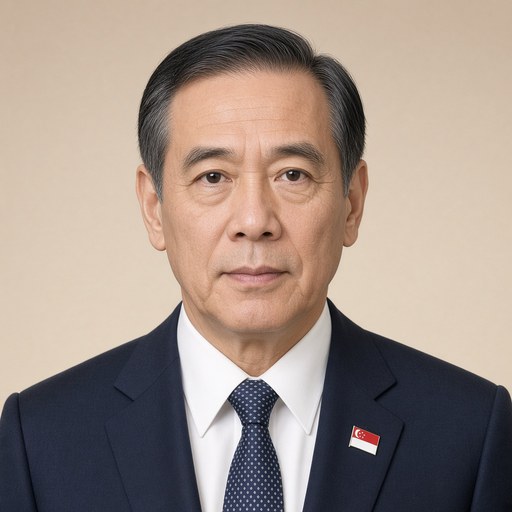
Prime Minister Lee Hsien Loong at Chung Cheng High School's 75th Anniversary Gala Dinner
 Lee Hsien Loong · Prime Minister of Singapore
- Context
- Lee addressed the Chung Cheng High School 75th Anniversary Gala Dinner on 10 July 2014, celebrating the school's history and bilingual education achievements.
- Main themes
- Chung Cheng High School 75th anniversary, Special Assistance Plan (SAP) schools, bilingual and bicultural education, Chinese language proficiency, mother tongue education policy, Chinese cultural values, Singapore education history, international school exchanges, government commitment to multilingualism
- Duration
- ~17 min
- Words
- 1,980
- Sentences
- 97
- Readability
- 48
- Grade
- 11.3
- Syntax
- 3.11
- Vocabulary
- 2.27
Translated from Multiple languages
The broad sphere of national life a sentence belongs to. Every sentence has an Arena, so it is the denominator the other indices are read against.
Other97 sentences in 27 paragraphs
Dear teachers, parents, alumni of Chung Cheng High, and students,
Good evening, everyone!
First of all, I would like to sincerely congratulate Chung Cheng High School on its 75th anniversary!
Over the years, Chung Cheng High School has provided students with a comprehensive secondary education, while continuously imparting excellent Chinese cultural values to them. Since its founding, for 75 years, Chung Cheng High School has nurtured generation after generation of diligent students. In the first national examination after World War II—the examination in 1946—Chung Cheng achieved outstanding results, ranking among the top in the nation. Up until the late 1970s, in 1979, when we established the Special Assistance Plan (SAP) schools, Chung Cheng was selected as one of the SAP schools, providing students with courses in both English and Chinese as first languages. In addition, the school actively promotes Chinese culture on campus, such as drama, calligraphy, painting, and martial arts. Chung Cheng High School also actively collaborates with educational institutions in Singapore and abroad to host a variety of activities, allowing students to have a more enriching learning experience. Here, I would like to welcome the representatives from Fudan University Affiliated High School in Shanghai; welcome to Singapore. Since 2009, Chung Cheng High School students have had the opportunity to participate in immersion programs arranged by Fudan University in Shanghai. I would also like to welcome the representatives from Chongqing Second Foreign Language School to Singapore. Since 2006, Chung Cheng has begun exchanges with Chongqing Second Foreign Language School. In addition to sending students to Chongqing for immersion studies, every year, a group of students from Chongqing also comes to Singapore for immersion. We thank them for coming from afar to support Chung Cheng.
The history of Chung Cheng High School reflects the government's continuous commitment to creating the most conducive environment for local students to learn their mother tongue from the past to the present. Our goal is to assist all citizens in mastering their mother tongue according to their respective abilities. This is also the reason we established the Special Assistance Plan schools. We hope to cultivate a new generation of bilingual and bicultural students through a learning approach where both languages are treated as first languages, along with the long history and rich Chinese cultural atmosphere of the SAP schools. These students can be well-rooted in Chinese culture while fully integrating into our multi-racial and multi-cultural society.
To be honest, at the beginning, we were not very sure whether the Special Assistance Plan would be successful. Firstly, in SAP schools, students must master two languages, English and Chinese, and learn them at the level of first languages, which, given Singapore's language environment at the time, was really not easy for students. Secondly, since English is our primary working language and is considered to have higher economic value, many parents wanted their children to prioritize learning English over Chinese. Thirdly, since studying the newly formulated bilingual curriculum requires more time and effort, we were uncertain whether parents and students would be willing to choose SAP schools.
However, we made a firm decision, the government invested resources, teachers dedicated their efforts, students put in their hard work, and parents supported us. Everyone worked together to persist in implementing the SAP program. Fortunately, all the SAP schools later produced impressive results, and students maintained a good level of proficiency in Chinese.
When it comes to the level of Chinese proficiency among locals, some individuals concerned about the future of the Chinese language occasionally provide feedback to me: they feel that the current level of Chinese among citizens is not as good as it used to be. However, we must understand that it is inappropriate to compare today's society and language environment with that of the 1950s. We must look at it from another perspective: if we had not implemented the bilingual policy, promoted the Chinese language, and established SAP schools, today's Singapore might have become a society that speaks only English. Therefore, in an environment where English is the working language, maintaining the current level of Chinese proficiency among citizens is actually not easy. Of course, we will continue to strive to assist citizens in achieving the highest level of proficiency in their mother tongue according to their abilities.
In addition to providing strong support for SAP schools, we also provide the necessary resources for all schools nationwide to help more students learn Chinese well. In last year's O-Level examinations, 30% of Chinese students chose Higher Chinese, nearly double the proportion from 2000. The Chinese Language Learning Committee has also encouraged more citizens to engage with the Chinese language through various vibrant activities. The number of teachers, students, and parents participating in these activities can reach as many as 100,000 in a year. It is evident that the government is taking a multi-faceted approach to promote the Chinese language, and our efforts are effective.
This is our overarching policy: to ensure that all Singaporeans are rooted in their ethnic culture and uphold good values; to not forget our roots and to remember the source of our sustenance—this is also an important value that Chung Cheng High School teaches its students.
Local SAP schools have nurtured countless outstanding graduates. These graduates are proficient in both languages and cultures. They have made contributions to the nation in various fields such as academia, education, journalism, and the arts.
Here, I would like to especially commend an outstanding senior alumnus of Chung Cheng, Mr. Lim Tze Peng, a renowned painter and calligrapher. At the age of 94, Mr. Lim is a recipient of the Singapore Cultural Medallion and a master in the local calligraphy and painting scene. He has used his unique brush to document many of Singapore's disappearing landscapes. In a media interview, Mr. Lim stated that it was the emphasis on traditional cultural arts at Chung Cheng High School that cultivated his interest in calligraphy, ultimately leading him to pursue a career in creating calligraphy and paintings. To celebrate the 75th anniversary of his alma mater, Mr. Lim has generously donated over a hundred of his works to the school as a token of gratitude for the nurturing he received. I am honored to have just officiated the opening ceremony of the "Lim Tze Peng Art Gallery" within the school. Thank you, Mr. Lim Tze Peng!
Next, I would like to recognize an alumnus who embodies the spirit of "remembering the source of our sustenance" and "taking from society and giving back to society," Mr. Wee Cho Yaw, the Chairman of the Board. Mr. Wee has made significant contributions to our education sector, including the development of Chung Cheng High School. Mr. Wee graduated in 1948. He has served on the Board of Chung Cheng High School for nearly half a century, which is almost as long as Singapore's history as an independent nation, and for 20 of those years, he served as the Chairman of the Board. Mr. Wee has led the school board, providing advice and support for the school's development. For example, he has strongly supported various school activities, especially those that promote biculturalism and preserve the school's excellent ethos and traditions. He has also overseen several construction and renovation projects at the school. Additionally, he has actively assisted the school in fundraising to provide better education and facilities for students, including the construction of this auditorium named after his father, Mr. Wee Keng Chuan. Thank you, Mr. Wee Cho Yaw! Thank you for your strong support of Singapore's education sector.
In this rapidly changing era of globalization, being able to clearly understand one's identity and know where one's roots lie will provide us with more stable strength to stay true to ourselves.
Now, let me say a few words in English.
Distinguished guests, ladies and gentlemen,
May I wish Chung Cheng High and your School Management Committee a very Happy 75th birthday!
Chung Cheng High has come a long way in these three quarters of a century. You have developed bicultural students steeped in Chinese culture, who fit in well into our multi-racial and multi-religious society. You have nurtured young men and women into upright and responsible citizens.
Many people have contributed to Chung Cheng High’s success, but one person deserves special mention tonight, and that’s your Chairman Mr. Wee Cho Yaw. He graduated in 1948, 66 years ago. He served the School Management Committee for nearly half a century, including as its Chairman for 20 years, and made many significant contributions. And he exemplifies the school spirit of contributing and giving back to the community. Thank you, and I wish many students will follow your example.
Indeed, many students and alumni reflect the Chung Cheng spirit (中正精神). The students volunteer for worthy causes. They care for the elderly in the school’s adopted one-room flats at Pipit Road. The alumni fly the Chung Cheng flag high, and do Singapore proud. I spoke about Mr. Lim Tze Peng just now in my Chinese speech, who has donated 100 paintings to the school which has opened a gallery in his honour. But there are other examples too, like Mr. Lim Nghee Huat, who was the first person from Southeast Asia to complete the world’s toughest footrace: the Badwater Ultra-marathon at Death Valley. To do the Badwater Ultra-marathon, you have to run 217km across the hottest place on earth, where the temperature may be more than 50 degrees Celsius. And Mr. Lim did so not just to challenge himself, but also to raise more than $500,000 for charity over the last 10 years. He embodies the school spirit of “自强不息”- to press on and never give up. And soon, he is going to depart to challenge Death Valley again, and we wish him all the best!
Gazetting of Administration Building and Entrance Arch
One of Chung Cheng’s biggest strengths is the support it receives from the community. For example, the funds raised from the dinner tonight will be put towards developing the school here – Chung Cheng High School (Main), and also the school in Yishun.
The Administration Building, 竹林楼, also reflects this community support. The school first wanted to build a proper auditorium back in the 1940s, to stage students’ performances, but resources were scarce. And so the students, teachers, management committee, alumni and other members of the school family rallied together, and spent over 20 years to raise funds to realise this objective, and finally they completed the school and the hall in 1967. Many of the alumni who are here today have contributed. They may not personally have benefitted from the facilities, but they can be proud that the building has stood the test of time.
And so I was very happy this evening to announce that the Administration Building and the Entrance Arch to Chung Cheng High have now been gazetted as National Monuments, something that the whole Chung Cheng family and indeed all Singaporeans, can be proud of. Chung Cheng High (Main) will co-organise a public forum with the National Heritage Board to share more about the history and significance of the Administrative Building and the Entrance Arch. Through these efforts, we will have a good way to help Singaporeans learn about the rich heritage of the places around us, and the efforts of those who have come before us. This is most timely on the eve of SG50, the fiftieth year of our independence.
Conclusion
Chung Cheng High has had a successful 75 years. It is a respected educational institution, and an important part of our national school system. To continue to thrive, it must evolve with the times, while staying rooted in its values and heritage. I am confident that your teachers, students and alumni will uphold the Chung Cheng spirit and values, and take the school to higher peaks in future.
Thank you very much, and congratulations and happy birthday once again!
The original Multiple languages. The tags above are read on the English translation's sentences.
各位老师、家长、中正校友和同学们
大家晚上好!
首先,我要衷心祝贺中正中学75周年校庆快乐!
这些年来,中正中学为学生提供了全面的中学教育 ,而校方也持续向学生传递优良华族文化和价值观。从创校至今,75年了,中正中学培育了一代又一代的莘莘学子。二战后的第一届全国会考中—就是1946年的会考,中正以优异的成绩,在全国名列前矛。一直到70年代末,1979年,我们设立特选中学时,中正获选为特选中学之一,为学生提供英文和华文,同样为第一语文的课程。此外,校方也积极在校园内推广华族文化,如戏剧、书法、绘画、以及武术等。中正中学也积极与新加坡和国外的教育学院主办多样化的活动,让学生有更充实的学习经验。在这里, 我要欢迎上海复旦大学附中的代表们,欢迎你们到新加坡来。自2009年,中正中学的学生就有机会到上海参加复旦大学安排的浸濡计划。我也要欢迎重庆第二外国语学校代表到新加坡来。从2006年,中正就跟重庆二外开始交流,中正学生除了到重庆浸濡学习,每年也有一群来自重庆的学生会到新加坡浸濡。感谢他们远道而来支持中正。
中正中学的历史,在在反映了从过去到现在,政府一直致力为本地学生,营造最有利于学习母语的环境。我们的目标是协助所有国人,根据他们各自的能力所及,学好母语。这也是我们设立特选中学的原因。我们希望通过双语都是第一语文的学习方式,以及特选学校的悠久历史及浓厚的华族文化氛围,培养出新一代精通双语和双文化的学生。这些学生能够很好地扎根于华族文化,也能够完全融入我国多元种族、多元文化的社会。
老实说,刚开始的时候,我们也不太肯定特选中学计划是否会成功。 一来,在特选学校,学生必须同时学好两种语文,英文和华文,再加上是以第一语文的程度来学习,以新加坡当时的语言环境情况,对学生来说,真的很不容易。二来,由于英语是我们主要的工作语言,并且被认为具有更高的经济价值,因此许多家长想要孩子们重视英文的学习,甚于华文。三来,由于修读新制定的双语课程,需要投入更多的时间和精力,我们不确定家长和学生们,是否愿意选择特选学校。
但是,我们下了决心,政府投入了资源,老师付出了心血,学生们付出了他们的努力,加上家长们的支持。大家齐心协力,坚持把特选学校计划给办下去。所幸的是,所有的特选学校后来都全都交出了漂亮的成绩单,学生也都维持了良好的华文华语水平。
谈到本地华文华语的水平,有些关心华语文前景的人士,会时不时的向我反馈:他们觉得时下国人的华语、华文水平,大不如以前。但是,我们必须了解,要把现在的社会和语言环境跟50年代时期的环境相比,是不恰当的。我们必须从另外一个角度看:如果当初我们没有推行双语政策,推广华语,办特选学校,今天的新加坡,可能已经是一个完全讲英语的社会了。所以,在一个以英语作为工作语言的环境里,能够把国人的华语文水平,维持在今天的程度,其实已经不容易了。当然,我们会继续努力,尽力协助国人达到他们能力所及的最高母语程度。
我们除了给予特选学校鼎力支持,同时也为全国所有学校提供所需的资源,帮助更多学生学好华文。去年O水准考试中,共有30%的华族学生选择高级华文,比2000年的比例,多出了将近一倍。推广华文学习委员会也通过各种多姿多采的活动,鼓励更多国人接触华文华语。参加这些活动的老师、学生和家长,在一年内可达到十万人之多。可以看出,政府以多管齐下的方式来推广华文华语,而我们的努力是有效的。
这就是我们的大方针:确保所有的新加坡人能扎根于母族文化,保持优良的价值观;不忘根本,不忘饮水思源—— 而这也是中正中学,时时教导学生的重要价值观。
本地的特选学校,栽培了无数的优秀毕业生。这些毕业生精通双语双文化。在学术界、教育界、新闻界和艺术界等领域,发挥他们的专长,也为国家作出了贡献。
在这里,我要特别表扬一名杰出的资深中正校友,那就是我们著名的书画家林子平先生。高龄94岁的林先生,是新加坡文化奖得主,也是本地书画界的泰斗。他用独特的画笔,将许多新加坡消失中的风景给记录了下来。在接受媒体访问时,林先生说,正是中正中学重视传统文化艺术的风气,让他培养了书法的兴趣,最终走上了创作书画的道路。庆贺母校75周年纪念,林先生特地给母校送上了一份大礼,他将一百多幅作品捐给了母校,以感谢母校的培育之恩。我很荣幸刚才能为学校内的“林子平艺术馆”主持了开幕仪式。感谢林子平老先生!
接下来,我要表彰一位身体力行,充分实践“饮水思源”,“取诸社会,用诸社会”的校友,那就是董事会主席黄祖耀先生。黄先生对我国的教育事业,包括中正中学的发展,作出了显著的贡献。黄祖耀先生是在1948年毕业的。他在中正中学董事会服务了将近半个世纪,这几乎跟新加坡作为独立国家的历史一样长,而其中有20年的时间,是担任董事会的主席。黄先生领导学校董事会,为学校的发展献策献力。例如,他大力支持学校的各种活动,尤其是有助推广双文化以及保留优良校风和传统的活动。他也监督了学校的多项建筑和翻新计划。另外,他也积极协助学校筹款,以便为学生提供更好的教育和设施,包括兴建这座以他的父亲——黄庆昌先生——的名字命名的大礼堂。谢谢您,黄祖耀先生!感谢您对新加坡教育事业的大力支持。
在瞬息万变的全球化时代,能明确了解自己的身份,知道自己根在何处,将能够给予我们更稳定的力量,坚守本位。
现在,让我用英文讲几句。
Distinguished guests, ladies and gentlemen
May I wish Chung Cheng High and your School Management Committee a very Happy 75th birthday!
Chung Cheng High has come a long way in these three quarters of a century. You have developed bicultural students steeped in Chinese culture, who fit in well into our multi-racial and multi-religious society. You have nurtured young men and women into upright and responsible citizens.
Many people have contributed to Chung Cheng High’s success, but one person deserves special mention tonight, and that’s your Chairman Mr Wee Cho Yaw. He graduated in 1948, 66 years ago. He served the School Management Committee for nearly half a century, including as its Chairman for 20 years, and made many significant contributions. And he exemplifies the school spirit of contributing and giving back to the community. Thank you, and I wish many students will follow your example.
Indeed, many students and alumni reflect the Chung Cheng spirit (中正精神). The students volunteer for worthy causes. They care for the elderly in the school’s adopted one-room flats at Pipit Road. The alumni fly the Chung Cheng flag high, and do Singapore proud. I spoke about Mr Lim Tze Peng just now in my Chinese speech, who has donated 100 paintings to the school which has opened a gallery in his honour. But there are other examples too, like Mr Lim Nghee Huat, who was the first person from Southeast Asia to complete the world’s toughest footrace: the Badwater Ultra-marathon at Death Valley. To do the Badwater Ultra-marathon, you have to run 217km across the hottest place on earth, where the temperature may be more than 50 degrees Celsius. And Mr Lim did so not just to challenge himself, but also to raise more than $500,000 for charity over the last 10 years. He embodies the school spirit of “自强不息”- to press on and never give up. And soon, he is going to depart to challenge Death Valley again, and we wish him all the best!
Gazetting of Administration Building and Entrance Arch
One of Chung Cheng’s biggest strengths is the support it receives from the community. For example, the funds raised from the dinner tonight will be put towards developing the school here – Chung Cheng High School (Main), and also the school in Yishun.
The Administration Building, 竹林楼, also reflects this community support. The school first wanted to build a proper auditorium back in the 1940s, to stage students’ performances, but resources were scarce. And so the students, teachers, management committee, alumni and other members of the school family rallied together, and spent over 20 years to raise funds to realise this objective, and finally they completed the school and the hall in 1967. Many of the alumni who are here today have contributed. They may not personally have benefitted from the facilities, but they can be proud that the building has stood the test of time.
And so I was very happy this evening to announce that the Administration Building and the Entrance Arch to Chung Cheng High have now been gazetted as National Monuments, something that the whole Chung Cheng family and indeed all Singaporeans, can be proud of. Chung Cheng High (Main) will co-organise a public forum with the National Heritage Board to share more about the history and significance of the Administrative Building and the Entrance Arch. Through these efforts, we will have a good way to help Singaporeans learn about the rich heritage of the places around us, and the efforts of those who have come before us. This is most timely on the eve of SG50, the fiftieth year of our independence.
Conclusion
Chung Cheng High has had a successful 75 years. It is a respected educational institution, and an important part of our national school system. To continue to thrive, it must evolve with the times, while staying rooted in its values and heritage. I am confident that your teachers, students and alumni will uphold the Chung Cheng spirit and values, and take the school to higher peaks in future.
Thank you very much, and congratulations and happy birthday once again!
Explore related topics