




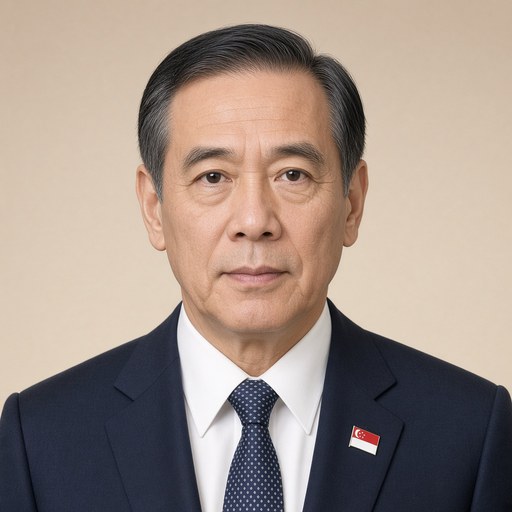
Prime Minister Lee Hsien Loong at the Citizens' Consultative Committee 50th Anniversary & Grassroots 50 Celebration Dinner
 Lee Hsien Loong · Prime Minister of Singapore
- Context
- Lee addressed grassroots leaders and CCC representatives at the 50th anniversary dinner of the Citizens' Consultative Committees and Grassroots 50 Celebration on 29 October 2015.
- Main themes
- Citizens' Consultative Committee anniversary, community building, social cohesion, grassroots organizations, People's Association, multiracial harmony, government-people relations, innovation in community work, youth engagement, national identity, volunteerism
- Duration
- ~23 min
- Words
- 2,757
- Sentences
- 140
- Readability
- 51
- Grade
- 11.0
- Syntax
- 2.82
- Vocabulary
- 2.13
Translated from Multiple languages
The broad sphere of national life a sentence belongs to. Every sentence has an Arena, so it is the denominator the other indices are read against.
Other140 sentences in 34 paragraphs
Ladies and Gentlemen
Let me first begin in Mandarin
Representatives of the Citizens' Consultative Committees from various districts:
Good evening, everyone!
For the past fifty years, the Citizens' Consultative Committees under the People's Association have played a crucial role in community building. In Singapore's multi-ethnic and multi-religious society, residents from different backgrounds must be able to unite and coexist harmoniously for our society to remain stable and harmonious. The Committees have played a very important role in promoting interaction and cohesion among residents. Without the grassroots leaders of the Committees working silently behind the scenes for a long time, laying a solid social foundation for Singapore and assisting in the stable development of our society, we certainly would not enjoy the stable life we have today. Therefore, I would like to take this opportunity to sincerely say to the People's Association and the Committees, as well as the grassroots leaders: Thank you all! You have worked hard!
In fact, building a cohesive society is a daunting task that cannot be achieved overnight; it is, in fact, an endless endeavor. Over the past half century, the grassroots organizations of the People's Association have gradually established an effective network, becoming an important communication bridge between the people and the government. We must continue to strengthen this mechanism and make good use of it to enhance the relationships among the people and between the people and the government. Looking to the future, the strategic goal of the People's Association has not changed, which is to unite citizens of different races, religions, and social backgrounds, and to work hand in hand with the government to build a better home.
However, as our society continues to change, this means that our grassroots organizations must also keep pace with the times, constantly seeking innovation and change in order to better serve residents. To achieve this goal, we should strive in three areas. First, depth. We should think about how to further deepen mutual understanding among residents and their sense of identity with Singapore, as well as to establish a stronger spirit of mutual assistance. For example, grassroots organizations can host activities that interest residents, allowing them to feel that participating in these community activities is not only beneficial to themselves but also adds enjoyment to their lives. At the same time, grassroots organizations can provide innovative and appropriate platforms for residents to gain a deeper understanding of Singapore's history, development, and the major challenges our country faces. Grassroots leaders themselves must also possess this knowledge so that they can better understand how to handle these issues when making judgments and responding to new challenges, especially when facing issues that may threaten national security, ensuring that the people's resilience and cohesion among residents are not affected. This is the first aspect, depth.
Second, breadth. With the development of society, we see that the views and interests of our citizens have become more diverse. It is foreseeable that we will see more different social groups and civil organizations emerging. Therefore, grassroots organizations of the People's Association should actively reach out to these new groups, combining the strengths of existing partners to jointly promote community work and foster a spirit of mutual assistance and love within the community. As the community diversifies, the activities of the People's Association must also diversify, and the partners of the People's Association must also diversify. This is breadth.
Third, thickness. Today, the solid foundation that the People's Association has is the legacy left behind by the grassroots leaders of the founding generation over decades. We must actively cultivate the younger generation, encouraging them to join in community building so that this important work can be passed down. The previous generation did well, and we must continue to work hard and nurture the next generation to do even better than we did. In this way, through continuous self-renewal, the People's Association can continue to thrive.
Singapore has entered a new stage of development, and grassroots organizations such as the People's Association and the Consultative Committees will continue to play an important role. Because your service targets and partners are our residents, and the people are the important "software" for developing Singapore's society. The hardware, we can build; the software, we must patiently shape. With the valuable experience accumulated over the past fifty years, combined with innovative thinking, we will be able to plan a new blueprint for social construction according to our national conditions, building a cohesive and warm society. I hope everyone will continue to work hard together to safeguard our beautiful home.
Thank you, everyone!
Friends and CCC members,
Good evening to all of you.
I am delighted to be here this evening to celebrate with you the 50th anniversary of the Citizens’ Consultative Committees (CCCs).
Singapore’s Golden Jubilee is also the Jubilee of our PA grassroots movement. And we can be very proud of the grassroots network that we have today – 1,800 grassroots organisations, almost 40,000 grassroots leaders. Our grassroots movement is the envy of many visitors from many countries. We take visiting officials from other countries – they come from China, India and the developed countries – we take them to our grounds, we take them to our CCs, our branches. We show them how our grassroots operate. Invariably, they are fascinated and impressed. They are amazed, because they find out that this whole thing is run depending on volunteers, volunteers who commit an enormous amount of time and effort serving residents, building the community, purely out of a sense of service. So, thank you all for your hard work and your contributions.
THE GRASSROOTS MOVEMENT – FROM 1965 TO SG50
The CCCs have been an important core part of our grassroots movement ever since independence. They started even before independence. In fact, in 1964, even before that, when we had the campaign, Battle for Merger, and we formed Welcome Committees all over Singapore in order to arrange for Mr Lee Kuan Yew’s visits to all the constituencies. The Committees were formed not only to organise the visits, but also to get things done, to decide what is necessary to ask the Government to put up – street lights, water, CCs, all the amenities we take for granted today which we did not have. These Welcome Committees were the nucleus. Then we had riots in 1964, communal riots. You saw it in the video just now. After the riots, relations between the races remained tense for quite some time. There was apprehension, there was distrust. We needed to bring people together to build confidence and harmony over again. So based on the previous Welcome Committees, we set up the Goodwill Committees, comprising respected and courageous community leaders, to restore peace and to calm tensions. These Goodwill Committees became the CCCs. CCCs have a lot to do. They organised activities in every constituency. They oversaw the network of grassroots organisations which grew around them. They raised funds for welfare projects, for bursaries for poor students. They provided help to the needy and vulnerable. In national emergencies, they came forward in order to provide ground leadership and to organise people. For example, during SARS, they came forward, mustered volunteers, organised temperature taking and reassured residents.
The CCCs work hard on the ground to bring people together. They also work hand-in-hand with the Government, to support campaigns like Keep Singapore Clean, Campaign against Dengue, Speak Mandarin Campaign, Courtesy Campaign – campaigns which people sometimes laughed at us, but which gradually transformed our society into a more caring, gracious and resilient one. The CCCs help us to explain policies and to get people to support these policies, policies like National Service – which was not so easy to accept in the beginning, or more recent programmes like the Pioneer Generation Package or MediShield Life, which benefit people but which are not so easy to understand unless you go face-to-face and talk to people and explain to them how it can help them with their own direct needs. The CCCs kept a close feel of residents’ needs and concerns, fed back to the Government what these were, helped the Government when it needed to improve policies, change policies, and tackle new problems – there will always be new problems which will come.
The CCCs have had a very full and meaningful 50 years, and this 50th year, the Jubilee Year, I think has been one of the busiest. We have had many events to mark our Golden Jubilee. In March, when Mr Lee Kuan Yew passed away, the CCCs and the grassroots organisations worked very hard to set up community tribute sites, to enable hundreds of thousands of Singaporeans to pay their last respects to Mr Lee Kuan Yew, to organise a national response to Mr Lee’s passing, to bring Singaporeans together and identify ourselves as Singaporeans, together. During these last few weeks, with the haze all around us, exceptionally bad this year, our grassroots organisations have been busy – helping residents, distributing masks and health packs, and letting them know where they can go if they need to get help.
So I am very glad that we have done a commemorative book to capture the spirit and significant contributions of the CCCs over the years.
This PA network, that you all belong to, has become a very important national asset for our nation building. We have got to strengthen the network beyond SG50. The world is changing; Singapore must also change. As we think about the role of the CCCs, I would put it down to three “P”s what we must think about: the Purpose; our Priorities; and our People. The three “P”s: Purpose, Priorities, People.
THREE “P”S
First, our Purpose. The purpose of the grassroots movement has not really changed in Singapore. We have got to continue to strengthen the fabric of our society, bring people closer together, deepen our sense of community, bond the people to the Government and keep the Government close to Singaporeans, and help Singaporeans to understand what the Government is trying to do and help the Government to understand what Singaporeans need. Ultimately, this whole grassroots movement is meant to serve people, to serve Singaporeans, and we must never forget that.
The second “P” is our Priorities, and our priority is two-fold: One to build a strong network of grassroots organisations within the ward – the CCCs, RCs, NCs, CCMCs, all of our alphabet soup. We have got to make them stronger. We do not necessarily need to add more alphabets to them, but we need to add more substance and content, organise meaningful activities, and engage residents more intensively and in ways which the residents find relevant and useful to their lives. This is a structure unique to Singapore, very hard to do elsewhere, because very few other countries are like us, with 80% of our population living in public housing, in communities, in good homes, in neighbourhoods where we can bring people together and do things together. In other countries, you have private housing or sometimes you have slums. Their public housing – it is not a full community; it is just a place for people to live, often meant for people who are very hard up. But in Singapore, we have stable communities living in HDB towns. And residents are happy to participate in the activities. They have come to expect the grassroots organisations to be there for them, and they are happy to participate in the activities and also willing to serve, to come forward and contribute on the various committees. This has made all the difference for us to engender a sense of belonging and rootedness among Singaporeans. So that is one priority. When they ask me, I say, “Build the grassroots network, and keep it strong.”
I think there is another priority which the PA ought to pay some attention to and that is, to engage other groups which are not part of the grassroots network in every ward. There are clans, arts and culture groups, martial arts groups, and all sorts of youth groups, all over the island. Because we do not just make friends with our neighbours, we do not just know one another in our own constituencies; we have friends which are based on our interest. It could be sports, it could be arts, it could be so many different things, we spend time on them and they are meaningful to us. The PA ought to reach out to these groups and connect with them. Work with them, cooperate with them, understand them, help them to succeed when they are working in line with the national purpose, do projects with them when the projects make sense to both sides. In fact, when the PA was first formed, this was one of its roles: to reach out to all the groups which were there, because the groups were already there and the PA was coming in new. But over the years, the PA has focussed more on its own network of grassroots organisations. I think now the PA should look out again, and strengthen its links with these other networks all over Singapore and partner them to strengthen the links between all these parts of our society, with one another, and with the Government.
The Third “P” for the PA must be People. For PA to succeed, we must have good people – people who want to serve, people who will contribute to the communities that they belong to. The HDB can build the towns and estates, but we need the people to make into communities and homes. We have good grassroots leaders, but we need to induct and groom more and younger ones too, people who know their ground well, people who can bring different groups and communities together to build one nation.
This sense that each of us has duties to each other and duty to the Nation, and I think this has been strengthened this year, strengthened because when Mr Lee passed away in March, the overwhelming response from Singaporeans reminded everybody that we are all citizens together and that we have come thus far by working together. It has been strengthened because as we have celebrated SG50, especially around National Day and we participated in the National Day Parade, we all felt a sense of pride at what we have achieved together. We should take advantage of this moment, to make a special effort to bring new people into the grassroots. Tap on this sense of pride, identity, and unity among Singaporeans. Induct volunteers into the grassroots. Give them an opportunity to serve, to try out their ideas, realise their dreams. Help them develop the skills to lead, to connect with people. Encourage them to innovate, to find creative ways to build communities in Singapore.
So those are the three “P”s – have your Purpose clear; have your Priorities clear; have your People developed and strong.
TOWARDS COMMUNITY 2020
The grassroots network has grown enormously in these five decades, so we thank you all who have volunteered, who have served, who have helped to strengthen our social fabric.
Now, as we enter our next phase, we must chart our new directions together. We have one more major SG50 event to come, and that is “The Future of Us” exhibition, which will be opening in December at the Gardens by the Bay. The exhibition will launch us into the next chapter of our Singapore Story. After the exhibition, we will follow on from there. We will organise focussed discussions around the themes of the exhibition. We will explore how we can build our future together. We are going to involve many people in this exercise.
One important theme which we will study together would be the future of our Community. The PA will start a series of conversations on this subject. We will engage our grassroots leaders as well as Singaporeans in general, to hear your hopes and aspirations for the community. And on this basis, we will have rich inputs which PA can take in and which we can use to develop our Community 2020 Masterplan.
So thank you all – Advisors, grassroots leaders, volunteers, PA staff, our community partners, both past and present, for all your contributions to the grassroots movement. I hope that as CCC members, you will continue to lead your groups to build a more resilient community and a more caring home.
Thank you all and a very happy SG50 to all of you. Thank you very much!
The original Multiple languages. The tags above are read on the English translation's sentences.
Ladies and Gentlemen
Let me first begin in Mandarin
各区的公民咨询委员会代表们:
大家晚上好!
过去五十年来,人民协会属下的公民咨询委员会在社区建设方面,一直扮演着举足轻重的角色。在新加坡这个多元种族、多元宗教的社会里,不同背景的居民必须能够团结一致、和睦共处,我国社会才能保持和谐稳定。咨委会在促进居民之间的互动和凝聚力这方面,发挥了非常重要的作用。如果没有人协和咨委会的基层领袖长期在幕后默默耕耘,为新加坡奠下坚实的社会基础,协助我国社会安稳发展,我们肯定无法享有今天安定的生活。所以,我要借此机会,向人协和咨委会还有基层领袖们衷心地说:谢谢大家!大家辛苦了!
事实上,要建立一个富有凝聚力的社会,任务艰巨,绝不是一朝一夕能够实现,其实,这是一项永无止境的工作。在过去半个世纪,人协基层组织已经逐步建立起一个有效的网络,成为人民与政府之间重要的沟通桥梁,我们必须继续巩固这个机制,善用它来加强人民之间以及人民与政府之间的关系。放眼未来,人协的战略目标没有改变,那就是团结不同种族、宗教和社会背景的国人,与政府一起肩并肩建设更美好的家园。
不过,由于我们的社会不断地改变,这意味着我们的基层组织也必须与时并进,不断求新求变,才能更好地为居民服务。要达到这个目标,我们应该在三方面加以努力。首先,是深度。我们应该想一想如何进一步加深居民之间的相互了解和对新加坡的认同感,以及建立更深厚的互助精神。例如,基层组织可以主办居民感兴趣的活动,让他们觉得参加这些社区活动不但对他们本身有好处,同时也能够增添他们的生活乐趣。同时,基层组织也可以通过新颖和适当的平台,让居民能够对新加坡的历史、发展历程和我国所面临的重大挑战有更入的了解。而基层领袖本身也必须拥有这方面的知识,以便在判断事物和应对新挑战,尤其是面对可能危害国家安全的课题时,能够更懂得如何处理这些问题,确保人民保持坚韧不拔的精神,居民之间的凝聚力不会受到影响。这是第一,深度。
第二,是广度。随着社会的发展,我们看到国人的观点和兴趣变得更多元化了。 可以预见的是,我们将看到更多不同的社会团体和民间组织的出现。因此,人协基层组织也应该积极地向这些新团体伸出触角,再结合既有合作伙伴的力量,共同推广社区工作和发扬互助互爱的社区精神。社区多元化了,人协的活动也必须多元化,人协的合作伙伴也必须多元化。这个是广度。
第三,是厚度。今天,人协所拥有的坚实基础,可以说是建国一代的基层领袖所留下来的几十年基业。我们必须积极培养年轻一代,鼓励他们加入社区建设的工作,让这项重要的工作,能够传承下去。上一代做得好,我们必须继续努力,并栽培下一代,使下一代做得比我们更好。这么一来,通过不断的自我更新,人协将可以继续茁壮成长。
新加坡已经迈入一个新的发展阶段,而人协和咨询委员会等基层组织将继续扮演重要的角色。因为大家的服务对象和合作伙伴是我们的居民,而人民是发展新加坡社会的重要“软体”。硬件,我们是可以建筑的;软件,我们必须耐心地去塑造它。有了过去五十多年所累积的宝贵经验,再加上创新的思维,我们将能根据本身的国情所需,规划出新的社会建设蓝图,建设一个富有凝聚力、富有温情的社会。我希望大家再接再厉,一起守护我们的美好家园。
谢谢大家!
Friends and CCC members,
Good evening to all of you.
I am delighted to be here this evening to celebrate with you the 50th anniversary of the Citizens’ Consultative Committees (CCCs).
Singapore’s Golden Jubilee is also the Jubilee of our PA grassroots movement. And we can be very proud of the grassroots network that we have today – 1,800 grassroots organisations, almost 40,000 grassroots leaders. Our grassroots movement is the envy of many visitors from many countries. We take visiting officials from other countries – they come from China, India and the developed countries – we take them to our grounds, we take them to our CCs, our branches. We show them how our grassroots operate. Invariably, they are fascinated and impressed. They are amazed, because they find out that this whole thing is run depending on volunteers, volunteers who commit an enormous amount of time and effort serving residents, building the community, purely out of a sense of service. So, thank you all for your hard work and your contributions.
THE GRASSROOTS MOVEMENT – FROM 1965 TO SG50
The CCCs have been an important core part of our grassroots movement ever since independence. They started even before independence. In fact, in 1964, even before that, when we had the campaign, Battle for Merger, and we formed Welcome Committees all over Singapore in order to arrange for Mr Lee Kuan Yew’s 访问, his visits to all the constituencies. The Committees were formed not only to organise the visits, but also to get things done, to decide what is necessary to ask the Government to put up – street lights, water, CCs, all the amenities we take for granted today which we did not have. These Welcome Committees were the nucleus. Then we had riots in 1964, communal riots. You saw it in the video just now. After the riots, relations between the races remained tense for quite some time. There was apprehension, there was distrust. We needed to bring people together to build confidence and harmony over again. So based on the previous Welcome Committees, we set up the Goodwill Committees, comprising respected and courageous community leaders, to restore peace and to calm tensions. These Goodwill Committees became the CCCs. CCCs have a lot to do. They organised activities in every constituency. They oversaw the network of grassroots organisations which grew around them. They raised funds for welfare projects, for bursaries for poor students. They provided help to the needy and vulnerable. In national emergencies, they came forward in order to provide ground leadership and to organise people. For example, during SARS, they came forward, mustered volunteers, organised temperature taking and reassured residents.
The CCCs work hard on the ground to bring people together. They also work hand-in-hand with the Government, to support campaigns like Keep Singapore Clean, Campaign against Dengue, Speak Mandarin Campaign, Courtesy Campaign – campaigns which people sometimes laughed at us, but which gradually transformed our society into a more caring, gracious and resilient one. The CCCs help us to explain policies and to get people to support these policies, policies like National Service – which was not so easy to accept in the beginning, or more recent programmes like the Pioneer Generation Package or MediShield Life, which benefit people but which are not so easy to understand unless you go face-to-face and talk to people and explain to them how it can help them with their own direct needs. The CCCs kept a close feel of residents’ needs and concerns, fed back to the Government what these were, helped the Government when it needed to improve policies, change policies, and tackle new problems – there will always be new problems which will come.
The CCCs have had a very full and meaningful 50 years, and this 50th year, the Jubilee Year, I think has been one of the busiest. We have had many events to mark our Golden Jubilee. In March, when Mr Lee Kuan Yew passed away, the CCCs and the grassroots organisations worked very hard to set up community tribute sites, to enable hundreds of thousands of Singa¬poreans to pay their last respects to Mr Lee Kuan Yew, to organise a national response to Mr Lee’s passing, to bring Singaporeans together and identify ourselves as Singaporeans, together. During these last few weeks, with the haze all around us, exceptionally bad this year, our grassroots organisations have been busy – helping residents, distributing masks and health packs, and letting them know where they can go if they need to get help.
So I am very glad that we have done a commemorative book to capture the spirit and significant contributions of the CCCs over the years.
This PA network, that you all belong to, has become a very important national asset for our nation building. We have got to strengthen the network beyond SG50. The world is changing; Singapore must also change. As we think about the role of the CCCs, I would put it down to three “P”s what we must think about: the Purpose; our Priorities; and our People. The three “P”s: Purpose, Priorities, People.
THREE “P”S
First, our Purpose. The purpose of the grassroots movement has not really changed in Singapore. We have got to continue to strengthen the fabric of our society, bring people closer together, deepen our sense of community, bond the people to the Government and keep the Government close to Singa¬poreans, and help Singaporeans to understand what the Government is trying to do and help the Government to understand what Singaporeans need. Ultimately, this whole grassroots movement is meant to serve people, to serve Singaporeans, and we must never forget that.
The second “P” is our Priorities, and our priority is two-fold: One to build a strong network of grassroots organisations within the ward – the CCCs, RCs, NCs, CCMCs, all of our alphabet soup. We have got to make them stronger. We do not necessarily need to add more alphabets to them, but we need to add more substance and content, organise meaningful activities, and engage residents more intensively and in ways which the residents find relevant and useful to their lives. This is a structure unique to Singapore, very hard to do elsewhere, because very few other countries are like us, with 80% of our population living in public housing, in communities, in good homes, in neighbourhoods where we can bring people together and do things together. In other countries, you have private housing or sometimes you have slums. Their public housing – it is not a full community; it is just a place for people to live, often meant for people who are very hard up. But in Singapore, we have stable communities living in HDB towns. And residents are happy to participate in the activities. They have come to expect the grassroots organisations to be there for them, and they are happy to participate in the activities and also willing to serve, to come forward and contribute on the various committees. This has made all the difference for us to engender a sense of belonging and rootedness among Singaporeans. So that is one priority. When they ask me, I say, “Build the grassroots network, and keep it strong.”
I think there is another priority which the PA ought to pay some attention to and that is, to engage other groups which are not part of the grassroots network in every ward. There are clans, arts and culture groups, martial arts groups, and all sorts of youth groups, all over the island. Because we do not just make friends with our neighbours, we do not just know one another in our own constituencies; we have friends which are based on our interest. It could be sports, it could be arts, it could be so many different things, we spend time on them and they are meaningful to us. The PA ought to reach out to these groups and connect with them. Work with them, cooperate with them, understand them, help them to succeed when they are working in line with the national purpose, do projects with them when the projects make sense to both sides. In fact, when the PA was first formed, this was one of its roles: to reach out to all the groups which were there, because the groups were already there and the PA was coming in new. But over the years, the PA has focussed more on its own network of grassroots organisations. I think now the PA should look out again, and strengthen its links with these other networks all over Singapore and partner them to strengthen the links between all these parts of our society, with one another, and with the Government.
The Third “P” for the PA must be People. For PA to succeed, we must have good people – people who want to serve, people who will contribute to the communities that they belong to. The HDB can build the towns and estates, but we need the people to make into communities and homes. We have good grassroots leaders, but we need to induct and groom more and younger ones too, people who know their ground well, people who can bring different groups and communities together to build one nation.
This sense that each of us has duties to each other and duty to the Nation, and I think this has been strengthened this year, strengthened because when Mr Lee passed away in March, the over¬whelming response from Singaporeans reminded everybody that we are all citizens together and that we have come thus far by working together. It has been strengthened because as we have celebrated SG50, especially around National Day and we participated in the National Day Parade, we all felt a sense of pride at what we have achieved together. We should take advantage of this moment, to make a special effort to bring new people into the grassroots. Tap on this sense of pride, identity, and unity among Singaporeans. Induct volunteers into the grassroots. Give them an opportunity to serve, to try out their ideas, realise their dreams. Help them develop the skills to lead, to connect with people. Encourage them to innovate, to find creative ways to build communities in Singapore.
So those are the three “P”s – have your Purpose clear; have your Priorities clear; have your People developed and strong.
TOWARDS COMMUNITY 2020
The grassroots network has grown enormously in these five decades, so we thank you all who have volunteered, who have served, who have helped to strengthen our social fabric.
Now, as we enter our next phase, we must chart our new directions together. We have one more major SG50 event to come, and that is “The Future of Us” exhibition, which will be opening in December at the Gardens by the Bay. The exhibition will launch us into the next chapter of our Singapore Story. After the exhibition, we will follow on from there. We will organise focussed discussions around the themes of the exhibition. We will explore how we can build our future together. We are going to involve many people in this exercise.
One important theme which we will study together would be the future of our Community. The PA will start a series of conversations on this subject. We will engage our grassroots leaders as well as Singaporeans in general, to hear your hopes and aspirations for the community. And on this basis, we will have rich inputs which PA can take in and which we can use to develop our Community 2020 Masterplan.
So thank you all – Advisors, grassroots leaders, volunteers, PA staff, our community partners, both past and present, for all your contributions to the grassroots movement. I hope that as CCC members, you will continue to lead your groups to build a more resilient community and a more caring home.
Thank you all and a very happy SG50 to all of you. Thank you very much!
Explore related topics