





- Context
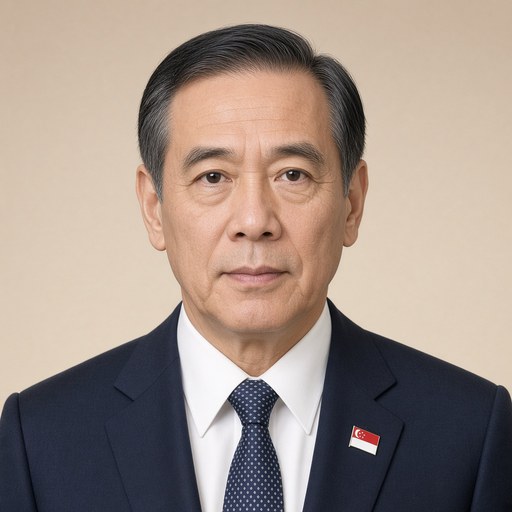
- Lee addressed Singaporean workers and union leaders at a Labour Day rally on 1 May 2014, outlining government support for older and low-wage workers.
- Main themes
- Labour rights and welfare, older workers employment, low-wage workers, retirement and re-employment legislation, founding generation package, healthcare costs, social safety nets, wage growth, tripartism, economic growth and job creation
- Duration
- ~16 min
- Words
- 1,891
- Sentences
- 112
- Readability
- 51
- Grade
- 10.3
- Syntax
- 2.79
- Vocabulary
- 2.00
Translated from Chinese
The broad sphere of national life a sentence belongs to. Every sentence has an Arena, so it is the denominator the other indices are read against.
Other112 sentences in 25 paragraphs
Good morning, brothers and sisters. Happy Labor Day to everyone!
Recently, I had lunch with several union leaders. I asked them how things were going. They told me: last year was a good year, with bonuses and salary increases being quite decent. Of course, there are also demands and complaints; otherwise, this meal would be meaningless. What are the demands? They have their concerns, particularly for some workers, especially older workers and low-wage workers.
Older workers are worried that they may not be able to cope with living expenses after retirement, especially medical costs. Among older workers, many hope to continue working after the age of 65. Although they are older, or at least can be said to be a little older, they still hope that the government can help them continue working, preferably retaining their current positions and receiving the same salary.
Another group of workers that the union leaders are concerned about is our low-wage workers. Low-wage workers hope for better salary increases, but things have not gone as they wished. They face challenges from globalization and technological competition. They hope the government can help them fight for higher wages and protect them from being eliminated in fierce competition.
I assured the union leaders: the government will definitely help all workers, especially older workers and low-wage workers. This is the consistent position of the People's Action Party government. Over the past decade, we have worked hard to achieve economic growth to create quality jobs and improve people's lives. At the same time, we have continuously strengthened our various social safety nets, allowing every Singaporean to live more securely in this rapidly changing world, especially older and low-wage workers.
Among older workers, some belong to the founding generation. The previous generation planted trees, and the next generation enjoys the shade. The selfless contributions of the founding fathers have brought prosperity and progress to Singapore, benefiting everyone. The founding generation package is our way of expressing heartfelt gratitude and respect to the founding generation, and it will also provide our founding fathers with medical assistance. Of course, the beneficiaries are not just the founding generation but also their children, as the package will alleviate the burden on their children. Many of you present today seem to be around my age or a bit younger, and I see that you, like me, have elderly parents. Your parents should belong to the founding generation, so you will all benefit from this.
In addition to the founding generation package, we also encourage older workers who want to continue working to do so. Two years ago, we implemented the Retirement and Re-employment Act, abbreviated as RRA, which is an important policy to help older workers continue working.
This law has been in effect for more than two years, and I am pleased to see that many older workers have benefited in this short time. This law allows workers to re-employ after reaching the age of 62, up to 65. The law also reflects the government's determination to help older employees continue to have opportunities to work and take care of their families.
Of course, I know many workers hope to continue working after the age of 65, and I understand this very well. In fact, the government has already started doing this for civil servants. In the past few years, nearly 800 civil servants have had the opportunity to continue working in government departments after reaching 65.
However, ensuring that everyone can continue working after the age of 65 is not a simple matter. On one hand, union leaders tell me that workers want to retain the same jobs and the same salaries, but they also tell me that time waits for no one. By the age of 65, our physical abilities may not be the same as before.
When young, workers in petrochemical plants had no problem climbing stairs up and down. At 65, joints become stiff, knees hurt, and climbing ladders is not so easy; they need to find work in an office managing control centers. Aircraft maintenance workers could easily crawl in and out of narrow spaces in airplanes when they were young, performing maintenance work, even crawling inside the wings to repair equipment and parts. But as they age, getting in may still be possible, but getting out becomes very difficult.
Therefore, to continue working after the age of 65, both labor and management need to make various adjustments. Workers need to adjust their mindset and be mentally prepared to engage in work suitable for their physical capabilities. Rather than demanding "the same job, the same salary," it is better to consider "suitable work, reasonable salary."
The government will do its best to help workers over 65 continue working. Our ultimate goal is to amend the Retirement and Re-employment Act, but this process requires time and discussions with employers, so please be patient. We will do it, but it will take some time.
Another group we care about is low-wage workers. Over the past two years, a tight labor market has driven up wages, and all workers' salaries have increased, including those of low-wage workers. However, to continue raising wages, we cannot rely solely on a tight labor market. The government has improved their lives through two channels. In fact, there are many channels, but today I want to focus on two points. The first is the introduction of the Progressive Wage Model to help workers improve productivity and learn new skills, allowing them to earn higher wages and have opportunities for career advancement.
The Progressive Wage Model is one of the key areas of cooperation among labor, management, and government. We have mandated this PWM in the cleaning and security industries. We have enforced these two industries to adopt this new system, systematically providing better treatment for workers in these two fields.
In this process, unions play an important role. Because unions represent low-wage workers and negotiate with employers to secure better conditions and improve their career prospects. Low-wage workers, especially in the security and cleaning sectors, may not necessarily join unions and find it difficult to organize. However, through this system, we allow unions to play an important role in helping them improve and fight for reasonable and higher wages. So this is a very important plan.
The second important plan is the Workfare program. Workfare provides comprehensive assistance to workers. It includes not only cash but also subsidies for CPF and healthcare savings. This program has been in place for nearly ten years. During this time, the program has been improved in line with social needs, with amounts increased and limits raised. Previously, the monthly income ceiling was $1,500, and now we have raised it to $1,900, allowing more workers to benefit. Through the Workfare program, the government allocates $650 million annually to assist 500,000 workers. $650 million for 500,000 workers. This is a substantial amount of funding and a large group of beneficiaries. This is the government's main plan to increase workers' income and strengthen their social security. So many people say that Singapore does not have a minimum wage system, but we have the best low-wage system because through our system, through PWM, and through Workfare, we can help workers more effectively than implementing a minimum wage system. In principle, as long as workers do their part, along with government assistance, they can live better in the future.
In fact, our workforce is among the best in the world. This is the achievement of generations of hard work and continuous self-improvement, proving our strength to the world. Therefore, this is not something that can be achieved in a day or two; it is the result of many years of effort, investment, cooperation, and striving that has earned us this title of having the best workforce in the world. However, today’s situation is different from twenty or thirty years ago. Our work attitude has gradually changed as the economy has developed and life has become more comfortable. The union leaders I meet share this sentiment. They say workers hope to balance life and work, wanting fixed working hours, meaning they are less willing to work shifts; they want more time to relax and nurture themselves. I completely understand this. I also wish my work could be easier, without having to rush to finish assignments every night, check emails, review documents, and prepare speeches!
However, the Secretary-General says that we must be dedicated to our work; we have responsibilities that we must fulfill. We must be dedicated to enjoy our work. We cannot lose our hardworking spirit; we cannot just wish to live an easy life. If we want to find a balance between work and life, to have more time to share with family or cultivate a hobby, we must possess higher skills and productivity to maintain our competitive edge. Because we still need to earn a living, we must be able to contribute effectively to the nation, society, economy, and our families.
Our competitors are just as eager for success as we are. They all want to catch up with us and surpass us. Who are these competitors? They are people from emerging countries like China, India, Vietnam, and many others. They work very hard, even harder than we do. They do not mind lower wages and living conditions that are worse than ours. However, their talents and potential are no less than ours.
We can aspire to have more fixed working hours and balance life and work. However, to achieve that goal, we must be capable of taking care of our own livelihoods, continuously striving to improve, and not easily allowing others to catch up. If we work hard and unite, I believe Singaporeans can still outperform workers from other countries.
The government will certainly lend a helping hand. We have established the "Employment and Skills Centre, Thivanna Academy," a new facility aimed at helping workers enhance their skills through continuous education and training programs. Mr. Thivanna was a pioneer among our union leaders. He established a non-communist labor movement. He also served as the Secretary-General of the Trade Union Congress for many years, contributing greatly.
Mr. Thivanna's contributions were invaluable in building a united and forward-looking labor movement. Naming this academy after Mr. Thivanna is the most appropriate way to commemorate his contributions and spirit. Today, I am pleased that Mr. Thivanna's family can witness the opening ceremony of the academy.
To summarize, the most important thing is that everyone must play their role well. We each have our own work to do. Whether it is a cleaner, a taxi driver, a worker maintaining our subway, or a bus driver, as long as we have our jobs, we have our responsibilities, and we do our best to cooperate, I believe we can achieve good results together.
Workers need to learn new skills, and businesses must strive to improve overall strength and commit to providing better jobs and better treatment for workers. I firmly believe that as long as we continue to work hard and pursue excellence, we can continue to achieve success. Our founding generation laid a solid foundation for our prosperity and stability. We must pay them the highest respect and uphold their spirit of hard work and resilience to create a better Singapore for our next generation. Happy Labor Day to everyone.
The original Chinese. The tags above are read on the English translation's sentences.
各位兄弟姐妹大家早上好。祝大家劳动节快乐!
最近,我和几位工会领袖共进午餐 。我问他们怎么样了?他们告诉我:去年是个好年头,花红加薪都还不错。当然也有要求也有投诉,不然这餐就没有意思。有什么要求呢?他们有他们的担忧,为一部分工友担忧,尤其是年长工友和低薪工友 。
年长工友 ,他们担心退休之后可能无法应付生活费,尤其是医疗费用 。在年长工友当中,有许多人希望到了65岁之后还能够继续工作下去。年纪虽然大了或则至少可以说是大了一点点,但是他们还是希望政府能够帮助他们继续工作,而且最好能够保留现有职位,拿现在一样的薪水。
工会领袖担心的另一组工友就是我们的低薪工友。 低薪工友则希望得到更好的加薪,但事与愿违 。因为他们面对全球化的挑战和科技的竞争。他们希望政府能够帮助他们争取更高的薪水,并且保护他们,不让他们在激烈的竞争中被淘汰。
我向工会领袖们保证:政府一定会帮助所有工友,尤其是年长工友和低薪工友 。这个是人民行动党政府一贯的立场。过去十年,我们努力争取经济增长以制造优质的工作,改善人民的生活 。同时我们也不断加强我们各种社会安全网,让每一名新加坡人在这瞬息万变的世界里活得更安心,尤其是年长和低薪工友 。
年长工友当中,有一部分属于建国一代。 前人种树,后人乘凉。建国前辈无私的奉献为新加坡带来了繁荣与进步,让大家受益 。建国一代配套是我们向建国一代表达由衷的感激和敬意的方式,也会给予我们的建国前辈医疗方面的帮助 。当然受惠的不只是建国一代,也包括他们的子女。因为配套将减轻他们子女的负担。今天在场的各位看样子有很多年纪跟我差不多或者比我年轻一些的,我看你们跟我一样,家里有年迈的父母亲。你们父母亲应该都属于建国一代,所以你们大家都会因此而受惠 。
除了建国一代配套,我们也鼓励想工作的年长工友,能够继续工作下去。两年前我们实行了退休与重新雇佣法令 Retirement and Re-employment Act, 简称RRA 就是帮助年长工友继续工作的重要的政策。
这项法令实行了两年多,让我感到欣慰的是,在这短暂的时间里已经有许多位年长工友受惠了。这项法令允许工友在达到62岁之后可以再就业,一直到65岁。法令也体现了政府帮助年长员工继续有机会工作继续照顾家庭的决心。
当然我知道许多工友希望在65岁之后能够继续工作,这点我很理解。 其实政府本身已经开始这么做了,为公务员这么做了。在过去几年里,有将近800多名公务员到了65岁有机会继续在政府部门工作下去。
但是,要使每一个人到了65岁都能够继续工作下去问题没有那么简单。一方面工会领袖:告诉我工友希望保留同样的工作,一样的薪水,可是工会领袖也:告诉我岁月不留人。到了65岁,我们的体能的确不一定如以前那样。
年轻的时候,石油化工厂的工友爬楼梯爬高爬低,没问题。65岁关节僵硬了,膝盖发疼了,爬梯子没那么容易了,要找在办公室里管理控制中心里的工作。飞机维修工员年轻的时候很容易到飞机里窄小的空间钻进钻出,进行维修工作,飞机翅膀里都可以钻进去,维修里面的配备,零件。可是年纪大了,钻进去可能还可以要爬出来就很困难。
所以要六十五岁之后继续工作下去劳资双方都需要作出多方面的调整,工友要调整心态也需要做好心理准备,从事一些适合他们体力的工作。与其要求“同样的工作,一样的薪金”,不如考虑“合适的工作,合理的薪金”。
政府会尽可能帮助65岁以上的工友工作下去。我们最终的目标是修改退休与重新雇佣法令,可是这个过程需要时间和雇主磋商、讨论,所以请大家耐心一点 。我们会做的,但是需要一些时间。
我们关心的另外一组人就是低薪工友 。过去两年,紧缩的劳动市场带动了工资上涨,所有的工友工资都起了,包括低薪工友薪水也跟着提升了 。不过要继续提高工资,我们不能单靠紧缩劳动市场 。政府已经通过两个管道,改善他们的生活。其实管道很多,可是今天我要关注讲的是两点。第一是推出渐进式薪金模式( Progressive Wage Model)帮助工友提高生产力和学习新技能,让他们赚取更高的薪水 ,让他们事业上有进展有提升的机会。
渐进式薪金模式是劳资政三方合作的重点之一 。在清洁业和保安业我们已经强制这个PWM了。强制这两种行业采纳这个新制度。为这两个领域的工友系统化地提供更好的待遇 。
在这个过程中,工会扮演了重要的角色。因为工会代表低薪工友和资方协商,为工友争取更好的条件,改善他们的职业前景。低薪工友,尤其是保安业和清洁工人, 不一定参加工会,不容易组织工会。但是通过这个制度,我们让工会有一个重要的角色帮助他们提升,帮助他们争取合理的比较高的薪水。所以这是一项很重要的计划。
第二项很重要的计划就是就业补助计划 (Workfare)。Workfare给予了工友全面的帮助 。它包括了不只是现款,也包括公积金和保健储蓄的补贴。这个计划已经实行将近十年了。 在这期间,这项计划配合社会需求做了改进,数额提高了,顶限也提高了。之前,每月收入顶限时1500元现在我们调高到1900元,让更多工友受惠。通过就业辅助计划,政府每年拨出6.5亿元的补贴帮助50万名工友。6.5亿元,50万名工友。这是一笔庞大的资金 ,是一组很大组受惠的工友。这就是政府增加工友的收入,并加强他们的社会安全保障的主要方案 。所以很多人说新加坡没有最低工资制度,可是我们有最好的低工资制度,因为我们通过我们的制度,通过PWM,通过Workfare,我们可以帮助工友,比实行最低工资制度更有效 。原则上,只要工友做好自己的本份,加上政府的帮助,日后的生活可以过得更好。
其实,我们的劳动队伍在世界上数一数二,非常优秀。 这是几代人不畏辛劳、不断提升自己,向全世界证明我们的实力之后,所换来的成就。 所以不是一两天内可以做成的,是许多年的努力、的投入、的合作、的争取才可以争取到这个荣衔,世界上最好的劳动队伍。不过今天跟二十年前,跟三十年前情况已经不相同了。我们的工作态度随着经济越来越发达、生活越来越舒适慢慢转变了。我会见的工会领袖也有同感。他们说工友希望能够平衡生活和工作,希望有固定的工作时间,也就是说,不大愿意轮班了,他们要更多时间松懈身心 ,修身养性。这我完全可以理解的。我也希望我的工作可以更轻松,不需要每晚赶功课,看电邮,批公文,准备演讲稿!
不过秘书长说,敬业乐业,我们有责任我们必须去做。要敬业才能够乐业。我们不能失去我们刻苦耐劳的精神,不能只想要轻松地过着好日子 。如果我们要在工作和生活之间找到平衡,要有更多时间和家人共享天伦,或是培养一个嗜好,我们就必须拥有更高的技能和生产力,来维持我们的竞争优势。因为我们还是必须找饭吃的,还是必须能够有效地对国家、对社会、对经济、对自己的家庭做出贡献。
我们的竞争对手跟我们一样渴望成功。他们都想赶上我们,超越我们 。谁是这些竞争对手呢?来自像中国、印度、越南等,许许多多个新兴国家的人民。他们非常努力,甚至比我们更加努力。他们也不介意薪水比较低,生活条件比我们差。可是,他们的天赋、潜能一点也不比我们差。
我们可以向往更固定的工作时间,平衡生活和工作。不过要达到那个目标,我们必须要有本事照顾好我们自己的饭碗,不断地力争上游,不轻易让其他人迎头赶上 。如果我们努力奋斗,团结一致,我相信新加坡人还是可以做得比其他国家,其他工人更出色 。
政府当然会助大家一臂之力 。我们设立了“就业与职能中心蒂凡那学院”这个新地点这个新设施目的就是通过持续教育与培训课程,帮助工友提升技能 。蒂凡那先生是我们工会领袖的先驱。他建立起非共产的劳工运动。他也担任职工总会的秘书长,服务多年 ,贡献很多。
为建立一个团结而富有前瞻性的工会运动,蒂凡那同志的贡献功不可没。将这所学院以蒂凡那先生命名,纪念他的贡献和精神再也恰当不过 。今天,我很高兴蒂凡那先生的家人可以见证学院的开幕仪式。
我总结一下。最重要的是,大家必须扮演好自己的角色 。我们各有各的工作要做。无论是清洁工人,无论是德士师傅,无论是维修我们地铁的工作人员,或则是巴士师傅,只要我们有我们的工作,我们有我们的责任,我们尽力而为,共同合作,我看我们可以共同达到好的结果。
工友们需要学习新技能 ,企业则要努力提高整体实力,并且致力为工友提供更好的工作和更优厚的待遇。我深信,只要我们不断努力,精益求精,就可以继续取得成功 。我们的建国一代就是这样为我们的繁荣和稳定打下厚实的基础 。我们必须向他们致以崇高的敬意,并秉持他们刻苦耐劳、不畏艰难的精神,为我们的下一代打造更美好的新加坡 。祝大家劳动节快乐。
Explore related topics