





- Context
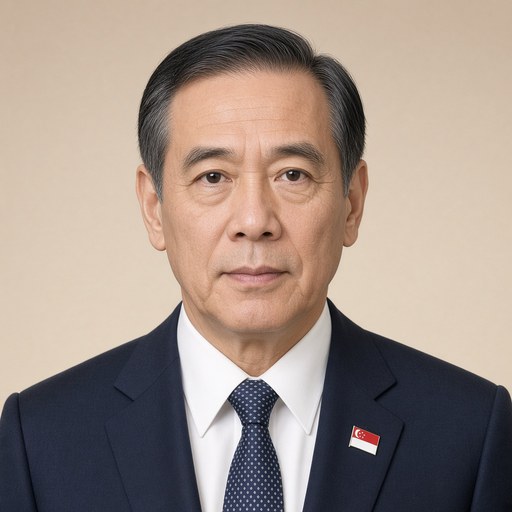
- Lee addressed Singaporeans at the 2009 National Day Rally, reviewing the economic crisis response and outlining strategies for recovery and long-term growth.
- Main themes
- Economic resilience, global financial crisis impact on Singapore, SME support and innovation, skills upgrading and employment, Singapore brand and international markets, furniture industry transformation, government economic measures, Resilience Package, community support schemes, optimism and national confidence
- Duration
- ~27 min
- Words
- 3,255
- Sentences
- 249
- Readability
- 55
- Grade
- 8.8
- Syntax
- 2.60
- Vocabulary
- 2.12
The broad sphere of national life a sentence belongs to. Every sentence has an Arena, so it is the denominator the other indices are read against.
Other249 sentences in 29 paragraphs
My fellow Singaporeans, good evening. We are experiencing an unprecedented economic storm. The economy plunged in the first quarter. Fortunately, it rebounded in the second quarter. The situation is now stabilising. Early this year, we introduced the Resilience Package in the Budget and are now seeing results. There have been no massive retrenchments. Unemployment has been kept at an acceptable level with only a small rise in job losses. The economic storm does have an impact on Singaporeans and more people are asking their MPs, town councils or CDCs (community development councils) for help.
However, until now, for most Singaporeans, life goes on normally. Their jobs are safe and are generally in good spirits. The people have just happily celebrated National Day. Travel fairs have been busy too. I have a picture here showing a travel fair held last week. The boss of the travel agency was very happy. He told reporters: “Many people have not gone for holidays this year. They cannot stand it anymore!” Stronger evidence of this upbeat mood is the fact that the property market is seeing queues again. Putting aside the question of whether it is a good or bad sign, it does suggest that Singaporeans are quite confident about the future.
Whatever the case, the Government will continue to watch economic trends in the next few months. The global economy is stabilising. Some Singapore firms are starting to hire staff. Massive retrenchments are unlikely this quarter which is the third quarter. But beyond that, the situation is still not clear and we need to be mentally prepared. For the long term, we should be optimistic. Sunny days may not be back just yet, but we can see some hope and some green shoots.
During the slump, small and medium enterprises (SMEs) have been harder hit as these companies may not have enough funds or staff. However, the Government has implemented many measures to help them and many of them have shown spunk in striving for survival in adversity. The SMEs dare to innovate, change business models and look for new opportunities. The Government will continue to fully support these SMEs, for instance helping them to open up new markets. There are many opportunities in Asia if we understand the market and are able to build connections.
Let me explain using the furniture industry as an example. The furniture industry has been around since the early days of our industrialisation. It was labour-intensive and not high-tech, so it made sense for Singapore to make furniture then. But 30 to 40 years later, our furniture industry has acquired new vitality. It has not been phased out but has instead totally transformed from a sunset industry to a sunrise industry. Not everyone could have predicted this. How did this happen? This is because we are now making top end furniture with trendy new designs.
The Singapore Furniture Association has also been very active in promoting sales of furniture bearing the Singapore brand both at home and overseas. It has doubled its efforts during the economic slump and successfully opened many new markets, including East Asia, Eastern Europe and Latin America. Our furniture companies are now in Brazil, a Latin American country, looking for business opportunities. Having scoured the world for business, they are bound to find it.
In April this year, the Singapore Furniture Industries Council participated in the Milan furniture fair, the largest and most famous furniture fair in the world. Spring Singapore supported the association and helped it secure an exhibition venue at the fair. Senior Minister Goh Chok Tong was visiting Italy at the time. He went to the fair specially to support the SMEs and took a photo as a memento.
In fact, most of the furniture companies set up factories not in Singapore but in neighbouring countries, where production costs are lower. But they use the Singapore brand as the selling point. In international markets, Singapore is not just the name of a country, but also an icon of quality. So the Singapore brand is very important. It is a special advantage for our businesses. We should treasure it and not mar it. We should enhance it to help us win in the market.
Our businesses are working hard to transform and seek new opportunities. Individual Singaporeans should also take the initiative and seize opportunities to upgrade themselves. Workers should make use of SPUR (Skills Programme for Upgrading and Resilience) and take up the many training courses offered. Those who are jobless can seek help from e2i (Employment and Employability Institute) and the CDCs. These organisations have helped many people to find jobs. They have been working hard, contributing quietly with good results. Most important is their determination to succeed. An interesting wall mural at the e2i reads: “The mountain does not move, the road winds around it. If the road cannot turn, man can still turn. If man cannot turn, his heart can turn.” It encourages people to have the resolve to strive and work hard. So if you face a mountain in life, go to e2i to find a way. Having a skill is the best way and the only way to get out of adversity.
Over the next two years, the global economy may grow more slowly. We must continue to forge ahead. The global economy will eventually recover. By then we will be ready to take flight again.
We have been busy invigorating our economy, but we must not neglect longer term issues. Tonight, I will discuss two long-term issues. One is healthcare and healthcare costs while the other is religious and racial harmony. Let me first discuss our healthcare system and healthcare costs.
The Government has taken many steps to moderate rising healthcare costs. So generally, most Singaporeans can afford their healthcare expenses. But I know that Singaporeans are still worried. Why? Many need to look after their elderly or ill parents and the burden is heavy. Those getting older may worry about their own health and healthcare costs.
The Government is also concerned about these issues and is already working to upgrade healthcare services to meet the enormous demand arising from an ageing population. Older folks have more health problems, more serious illnesses and longer recovery periods. This cannot be helped. Hence, we need to be proactive, effective and focused in our response. We are building more hospitals, including Khoo Teck Puat Hospital in the north and Jurong General Hospital in the west. We not only need to build large hospitals, we also need to build a few community hospitals. Let me explain the difference between the two types of hospitals. During their recovery period, elderly patients need appropriate step-down care. They need not stay in large hospitals. Community hospitals can provide suitable care at lower cost. They can link up with large government hospitals for mutual support. Government hospitals would help community hospitals raise the quality of medical care to ensure that patients get good care. Community hospitals in turn can share the patient load of government hospitals to free up beds for more serious cases.
Community hospitals also serve another function. They have closer links to society which helps in community outreach. One good example is the cooperation between Tan Tock Seng Hospital (TTSH) and Ren Ci Hospital. Ren Ci Hospital is a community hospital next to TTSH. I recently visited Ren Ci Hospital to get a feel of its operations. Ren Ci now has a new management team and a new approach. TTSH guides medical care for Ren Ci patients, and when TTSH patients are stable, they can transfer to Ren Ci for step-down care until they recover. Ren Ci patients too have little cause for worry for if their condition deteriorates or if there are problems, they can transfer back immediately to TTSH for acute treatment. So both sides work closely together. At the same time, Ren Ci is supported by many warm-hearted volunteers who help patients recover faster by providing many leisure activities. When I visited Ren Ci that day, I met a group of volunteers who were singing karaoke with the patients to cheer them up so that they would recover soon. I think this is a good model. Changi Hospital and St Andrew’s Community Hospital have a similar cooperative relationship. The Ministry of Health is studying how to expand this partnership model to other public hospitals.
Elderly patients cannot be hospitalised forever, be it in a government hospital or a community hospital. They have to go home one day, and the sooner the better. When they return home to convalesce, families need to take up the responsibility of looking after them. I know looking after the elderly or the chronically ill is a heavy burden. Some people even went so far as to say that people with chronic illnesses cannot expect filial piety from their children. I cannot agree with such a view. The burden is heavy, but whatever it is, we cannot and should not shirk our responsibility. As Asians, we deeply value filial piety. This is a virtue in our culture and we have to keep it. Moreover, while the Government has to and will do its part in looking after the elderly, for family members, it is not simply responsibility, but responsibility with love. Family love and warmth cannot be replaced by nursing homes or hospitals.
Recently, I met some managers from nursing homes and talked to them about this. They told me that this virtue was already lost in some Singaporeans. Some abandon their elderly parents in nursing homes or hospitals. Some send their parents to nursing homes and then disappear, even changing the address on their ICs. When finally contacted by the nursing home, these people just did not care. They said they would not care even if the homes turf out their parents. This is a chilling social phenomenon. We cannot ignore it and leave it alone. So the Government is studying how best to use the Maintenance of Parents Act to make these people shoulder their responsibility.
Of course, apart from building more community hospitals, the Government will also look for other ways to lighten the homecare burden for families. The Government will do its part. Our healthcare system will work as it should. But individuals too must do their part. I want to emphasise that to maintain good health and a healthy lifestyle is a personal responsibility. The best way to keep illness at bay and reduce healthcare costs is to exercise and take care of your body. Watch your diet, do not smoke. Exercises, be it taiji , qigong or brisk walking, are good for your health. If you can join social activities and exercise together, you will get more pleasure and make more friends. This is good for a healthy mind.
We must also closely monitor the rising obesity trend in Singapore. Rising obesity is a problem facing developed countries, but some developing countries are beginning to face this problem too. In America, nearly two out of three adults are clinically defined as obese or overweight. America is truly a “heavyweight” nation, and it is getting “heavier” every year. China is quickly catching up too. Now people are afraid of the “three highs”. What are the “three highs”? They are high blood pressure, high blood sugar and high cholesterol. Basically, these are problems caused by heavy body weight. Before China implemented reform and opening up, it seldom saw the problem of “three highs” as these were “problems of wealth”. But now many Chinese have the “three highs”, especially in the cities. I read an article recently, which said that due to rising obesity in China, the weight loss industry is booming in China. There are many promotion gimmicks, including charging fees according to the weight lost. So five katis of weight loss will cost 300 yuan, 10 katis for 500 yuan and 20 katis for 800 yuan.
In Singapore, we are not yet so “advanced”. Every year, we have the Healthy Lifestyle Workout, to help people lose weight for free. I participate every year and work out with a few hundred grassroots leaders and elderly folk. Our weight has gone down, but the nationwide obesity numbers are still gradually rising! We have not reached America’s level in terms of obesity numbers. In America, two-thirds of its population are obese. Here, it is one-third, but this figure is high enough already. We could do with some weight reduction. We must work harder to prevent obesity and the “three highs”. If not, we may have more illnesses and this will increase the burden for our society and ourselves.
Next, I will talk about racial and religious harmony, which has deep and long term effects on Singapore. We can be proud of our racial and religious harmony. Our races mingle well together. It is common in Singapore for people of different races and religions to be good friends and neighbours. Not only do our various religious organisations respect one another, they often cooperate to provide social services. These organisations do not ask about religious affiliations when giving help. Their attitude is: If you need help, I will help you. This is a very good sign. It is the fruit of our hard work over 40 years.
Of course, such a phenomenon also has to do with the structure of Singapore society. The Taoists and Buddhists make up the majority of the population here. Their attitude of tolerance and accommodation sets the basic tone for the Singapore society. Let me give an example. When some Taoist temples hold processions for the gods, they often call on nearby Hindu temples. Conversely, when Hindu temples hold processions, they too will often detour to call on Taoist temples. There was an example recently in Yishun. In this photograph, a Hindu procession is making a special call on a Taoist temple and the temple is welcoming the devotees with a lion dance. It is a heart-warming and lively scene.
This is uniquely Singaporean. Of course, I understand that other religions have different doctrines and may not all interact in the same way. What is more important is the spirit and sincerity of interaction among religions. I believe this is a point all religions can accept. In this half century, we have enjoyed peace and tolerance among our religious groups. But we must not become complacent. There is reason for us to continue to be on our toes on this issue. First, Singaporeans are becoming more religious. We also have a dense population with many contact points between communities, which means friction is inevitable.
Let me give an actual example to show that I am not talking about an abstract issue, but a noteworthy problem that could happen and has happened. One MP told me about an incident that happened last year in his constituency. An old Chinese lady passed away and her family wanted to hold the funeral at the void deck of the neighbouring HDB block. They set up their altar before getting approval from the town council. Unfortunately, that void deck was already booked for a Malay wedding. The Malay family had approval from the town council and invitations were already sent. But the wedding venue was taken by another family. Understandably, the Malay family was very upset.
The town council stepped in to mediate. They tried to persuade the Chinese family to relocate the wake, but the Chinese family refused to cooperate. The coffin was not there yet, but they felt that dismantling the altar would bring bad luck. This presented a problem. Clearly, the Chinese family had a weaker case. Fortunately, the MP and community leaders came in the help resolve the matter. The Malay family graciously relocated the wedding to a nearby void deck. The town council showed its appreciation by waiving the rental charges and putting up posters to redirect wedding guests.
This happened last year. Weddings and funerals are sensitive and important life events. The entanglement of happy and sad occasions can lead to uncontrollable emotions. This incident was resolved because the Malay family was willing to give and take. As the saying goes, “Take a step back and all will feel much better”. This reaffirms the maturity of Singaporeans who would consider the greater good. In another country and another situation, such incidents can cause violence or racial clashes. Hence, we must appreciate and treasure our racial and religious harmony. We should not take it for granted. The example I gave is not the only one, nor will it be the last. We must deal with such incidents firmly and tactfully. We must be accommodating and considerate towards others.
The Government’s attitude on racial and religious harmony is very important. It must maintain a sensitive and neutral but firm position. Let me give another example to illustrate this – land acquisition. The Government acquires private land to build roads, the MRT system, schools and public housing. If the Government is not able to acquire the land, it would definitely stall Singapore’s development. The Government sometimes also acquires religious sites. All religions have been affected. For example, Buddhist temples, Christian churches and Hindu temples have all been affected by land acquisition. The Government compensates for land acquisitions. But some affected groups may not want to move even after getting compensation. If religious groups are affected, it will not be only the people in charge or the landowner who are unhappy. Many followers may be unhappy and petition the Government. The Government will then have a difficult problem. Of course, the Government will consider their views seriously. If the Government still cannot accommodate the petition and has to acquire the land, it will explain to the affected groups. The Government’s consideration in making the decision is that it must be seen as unbiased and must not weaken public trust, or the Government will find it difficult to get things done in the future. Up till now, we have been lucky. Public land acquisition has the understanding and cooperation from owners. The Government should express sincere thanks to affected owners for their support and understanding.
These concrete examples show that when handling religious issues, besides being sensitive and careful, we must also observe some basic principles. Hence, not only do we have to be alert and prudent when handling cases, we must also get our principles right. Only then can we have the right framework to maintain racial harmony. What are these principles? I believe there are four basic principles: Mutual tolerance and accommodation, separation of politics and religion, a neutral and secular Government and expansion of our common space. I will delve into these basic principles, which I have briefly mentioned here, in greater detail in my English speech later.
I hope all groups will support and uphold these principles. These principles affect the stability of our society and the survival of our nation. All of us should pull together to make Singapore a model of a multi-religious society, so that religious harmony and religious freedom continue to be a key foundation for our society.
My fellow Singaporeans, this year is the 50th anniversary of our self-government. In the half century, we have weathered many storms and come through many tests. We were fortunate that Singaporeans were united as one and worked together to overcome these challenges and built the Singapore of today. I am confident we can again pass new tests and overcome challenges and build an even better and more prosperous Singapore for all.