





- Context
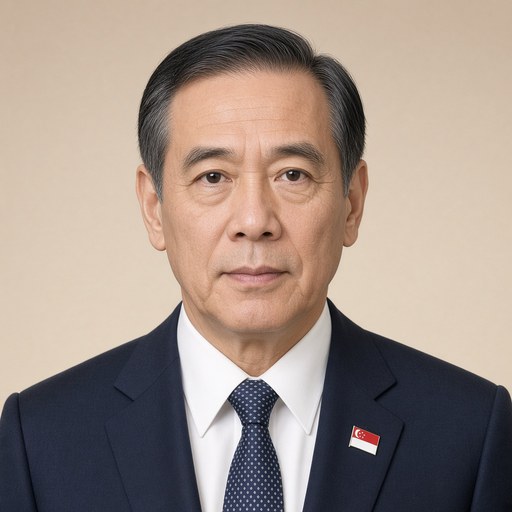
- Lee Hsien Loong delivered the 2010 National Day Rally in Mandarin on 29 August 2010, addressing Singaporeans on economic recovery, productivity, and national progress.
- Main themes
- Economic recovery and growth, productivity improvement, Youth Olympic Games success, integrated resorts and tourism, small and medium enterprises transformation, tripartism between workers employers and government, Jobs Credit scheme, national unity and resilience, workforce wages and employment, gambling and casino tourism strategy
- Duration
- ~31 min
- Words
- 3,686
- Sentences
- 277
- Readability
- 60
- Grade
- 8.2
- Syntax
- 2.63
- Vocabulary
- 2.04
The broad sphere of national life a sentence belongs to. Every sentence has an Arena, so it is the denominator the other indices are read against.
Other277 sentences in 36 paragraphs
My fellow Singaporeans, good evening.
We have just hosted the first Youth Olympic Games (YOG). It was a success. We have completed our mission and won international praise. Our athletes did well and won several medals. We can be proud of their performance. We had a successful YOG because we have worked together as one Singapore.
Together, we have achieved much for over 40 years. Last year, we faced the crisis and responded as one united people. Hence, Singapore was among the first to come out of the downturn and had a very strong rebound. This year, the economy should do well with a full-year growth forecast of 13 to 15 per cent. This is a very handsome figure indeed. Workers can expect higher wages and bonuses.
Lianhe Zaobao recently reported that even getai performers are commanding higher fees. They sang the same songs as before, but are charging more now. We should not think of this “getai index” as unimportant. It holds special significance in that it shows that the economy has really turned around. It shows that the people and small businesses are feeling and benefiting from the recovery. That is why the Hungry Ghost Festival is bustling with activities.
There are two key reasons for the swift rebound in Singapore. The first was our decisive response and effective measures. For example, Jobs Credit has helped many Singaporeans keep their jobs during the downturn. As recovery began, companies with workers could seize opportunities and meet new orders fast, and the economy in turn could rebound quickly. So Jobs Credit has served a dual purpose. Second was the seamless tripartism between workers, employers and the Government. This partnership has helped us repeatedly overcome many crises. We should strengthen it and make it our lasting advantage.
The two integrated resorts have opened to a good start. I have visited both of them. One is Resorts World Sentosa, the other is Marina Bay Sands. Both are very crowded. People go there to shop and enjoy good food. They also visit the SkyPark or enjoy the rides at Universal Studios. Of course, I believe many also visit the casinos. A hotel manager told me that many hotel guests are Singaporeans. They go there to enjoy the services and facilities.
I also took a look at the casinos, well, just looking, of course. While looking around, I met quite a few Singaporeans. Some even shook hands with me and said: "I’m your constituent. I hope you will bring me good luck!" I hope they were just satisfying their curiosity and having some fun, and did not forget their proper jobs. It is best to leave the gambling tables and slot machines to the tourists. This is the only sure-win strategy for us. When tourists play, they may win, or they may lose, but either way the casinos will still have to pay taxes. If tax revenue from the casinos should go up, we will have budget surplus, and everybody gets a share of the cake, so this is what we call "sure win"! Overall, the IRs have brought benefits to Singapore. They created over 20,000 jobs and gave our tourism industry a boost. They have also enhanced our image as a creative and vibrant city.
Our prospects are good, but we must not become complacent. To maintain our long-term advantage and economic growth, we must raise our productivity. What is productivity? It is an abstract term and a difficult concept to grasp. But we have to understand it and do our best to raise its level. Raising productivity does not mean longer working hours or reducing staff. It means finding more effective and more efficient methods of doing things, or fulfilling new needs of the market to create value.
This is not easy, especially for small- and medium-sized enterprises (SMEs). They would have to change their old ways, adopt new technologies and renew their business. They may even have to merge to obtain economies of scale. To raise productivity, a company can computerise or automate. It can consider buying a machine, which is not difficult. But a merger would mean that the bosses of two small companies will become the bosses of one small company. Who is going to be the boss? Who is going to be the worker? So mergers are difficult. We understand that SMEs are under pressure. There are many signs of this. For example, traditional provision shops have been gradually replaced by minimarts.
Ten years ago, we could still see provision shops in neighbourhood shopping centres. There would be a milk tin hanging in the shop. It is actually the “cash register”. When customers came to buy groceries, the shopkeeper would pull the tin down to put in the earnings and to give change. Today, the milk tins are gone. Minimarts are now all over the place. At wet markets, business is not as brisk as before. Nowadays, working women prefer to shop at supermarkets. They go about once or twice a week. Many traditional hairdressing shops have closed down too, especially barbers. They face competition from express services. These hair salons offer very convenient service, ten dollars for a hair cut delivered in ten minutes.
It is therefore clear that SMEs must find new ways to thrive. The Government has many schemes to help SMEs upgrade and transform, including grants to help them adopt IT and improve service level. We have just launched two new schemes to help SMEs strengthen their talent management capability, and to help them recruit graduates. I hope they will make the most of these schemes and upgrade themselves. The Government also organises study trips for SMEs to explore overseas markets.
Some SMEs have worked hard to innovate and have achieved their dreams of success. They have turned from “carps into dragons”. Let me give you an example. Selling soya milk may be a simple business, but it can be grown into a big business too. Well-known food and beverage chain Mr Bean was originally a hawker stall in People’s Park Complex, no different from the many hawker stalls in Singapore. But 15 years ago, two businessmen saw a great business opportunity. Many people drink fresh soya milk daily because it is healthy and delicious. So they bought over the stall and started a new brand, Mr Bean. They refurbished the store, moved to a shopping centre and launched more products including Japanese pancakes, biscuits and soya milk ice cream. Now, Mr Bean has more than 50 outlets and employed 450 workers. It has even ventured beyond our shores and set up an outlet in Shibuya, a well-known shopping area in Tokyo. Mr Bean also has a competitor, Jollibean.
It is a jungle out there and only those who adapt will survive. For businessmen, the pressure is tremendous, but for the consumer, it is healthy competition. When businesses try to outdo one another and start to innovate, they will raise productivity, improve service standards and increase their product figures. We are the ones who ultimately benefit. So competition is good.
Our businesses must strive to compete, and our entire economy must push ahead too. We are not the only country facing competition. Other countries face similar pressures too, including China, the factory of the world. China is growing very rapidly, and wages are rising everywhere, especially in coastal areas. Labour-intensive industries, such as garment and shoe factories, are gradually moving from the coastal areas to inland cities, or to other countries where labour is cheaper, such as Vietnam or Bangladesh. China is aware of this problem, and is pushing hard into high-tech sectors. Guangdong Party Secretary Wang Yang has said that Guangdong has to “empty its cage for new birds”, meaning the province must move out its old labour-intensive industries and attract new high-value activities.
Singapore must also move up, otherwise wages will stagnate and some industries may be lost. We have successfully transformed our economy many times in the past. Mr Wang knows we have a lot of experience in this, so two years ago he led a big delegation to Singapore to study Singapore’s experience. We all know that China’s leaders are determined to uplift their country and people. So we must also “empty our cage for new birds” and step up our pace to maintain our lead over others.
Transforming the economy calls for hard work on many fronts, and one key priority is education. To meet the needs of the new economy, we need to equip workers with new skills and provide the best education for our young. I believe all parents know this. We have an excellent and comprehensive education system. Each of our schools is a good school, with excellent facilities and dedicated teachers. There are interesting enrichment programmes and many co-curricular activities. Students also get to go overseas for tours, study trips and exchanges.
We want holistic education for our students. We want students to be more than exam-smart. We want them to develop morally, intellectually and physically. We also want to foster their interest in arts, music and design, as well their mother tongue and cultural heritage. We believe in the Chinese saying that each of us has something to contribute. All students should have opportunities to develop their talent and realise their potential. We do not wish their future to be determined by a single exam, whether it is the Primary School Leaving Examination, the O-levels or A-levels. While exams are important, they are not the only thing in life. They are also not a person’s last chance to a good future. We must offer students more choices, more pathways to higher education, and more peaks to climb. I will elaborate more on our education policies and some of our new ideas and plans in my English speech later.
We should nurture own talent, but we must also selectively bring in immigrants and attract talents. Gathering talent from all over the world has always been the best way to strengthen a nation. All the more so for us, as we are a small country with low birth rates. We must have enough talent to compete in the world and stand out. The Chinese immigrants from China, Hong Kong and Taiwan contribute in many ways to the Chinese community here, especially in terms of culture and education, because they can become Chinese language teachers and add to the pool of mother tongue teachers. In time, they may also become our cultural leaders.
But immigration may have negative impact if it is a case of too many too fast. There are concerns that the tone of our society may be affected, the competitive pressures on workers may increase and public congestion could occur, especially on the MRT trains. The Government understands the concerns of Singaporeans over these issues and will find ways to mitigate their impact. These are real but also manageable issues.
Some people worry we may take in too many foreign workers. The Government will continue to monitor this closely and control inflows. Recently, I met some ASEAN journalists. One of them asked: "Why does Singapore support free trade but not free movement of people?" I asked this journalist: "What is the population of your country?" He replied: "80 million." I then explained to him: "That is the issue. We are just a little red dot. ASEAN has a total of 500 million people. If 1 per cent comes to Singapore, we will be swamped." The Government is very clear on this. We did not get it wrong.
We should make a distinction between immigrants and foreign workers when discussing this issue. We bring in foreign workers to meet the needs of our economic development. Without their help, it will be hard to maintain our economic growth. Without foreign workers, it will be hard to build IRs, the MRT system and HDB flats. If these are what we want, we will have to bring in foreign workers because we definitely do not have enough Singapore workers, especially those in construction. So foreign workers will help us build the infrastructure we want. Local businesses, especially SMEs, often say they can’t find workers. Whenever I go down to the ground to talk to the grassroots, there are always small-time businessmen, and there are quite a few of them, who would tell me about their problems. They would say: "I can't get the work permits, can you help?" It is the same for coffeeshop owners. For them, finding a worker is not difficult, but finding one who is willing to work till midnight, now that is not easy. If it means working through the night, Singaporeans will not be willing to do it. When the economy is growing, we will need to bring in more foreign workers. If not, I think we will end up stifling the economy to our own detriment. Hence, we do need foreign workers, but they are transient workers. They won’t stay forever. And we would also limit their numbers to about one-third of our workforce. We will bring in more of them in good times, and fewer in bad times.
Immigrants, however, are different. They are not foreign workers. They are either permanent residents or new citizens. Their impact is far deeper and longer than that of foreign workers and is not just on our economic growth. Immigrants also affect social harmony and national identity. It is for this reason that approvals are based on stricter standards for immigrants than for foreign workers. We also have far fewer immigrants than foreign workers. This is because we want to maintain the character of the Singapore society. We welcome immigrants who can integrate into our society and contribute to it.
Some Singaporeans worry new immigrants cannot integrate into the society here. The Government also tracks the integration of new immigrants. These people come from many different societies, and their habits and values may also be different from ours. From their dressing, mannerisms, accents and habits, we could tell straightaway that they are not Singaporeans. But this can be managed. We will encourage new immigrants to learn to mix with the different communities here and urge them to participate in community activities. If they can do that, they will be able to adapt to our society over time. Of course, language is an issue. If the new immigrants do not speak English, they will definitely feel out of place in Singapore where English is the predominant working language. Therefore, I encourage new immigrants to learn some basic English so that at the very least, they will be able to communicate with others in their daily lives, for instance when taking a bus, boarding a train, shopping or simply saying "hi". This would take some effort but it is well worth it. Conversely, Singaporeans can also learn a lot from new immigrants. We can learn from their indomitable spirit and determination to excel. Being an immigrant is not easy as they have to leave their homeland and sink their roots in another country where they have to find ways to make a living and raise their families. Unless they have a dare-to-do spirit, they would not have come. This spirit is commendable and we should learn from them.
Singaporeans should help immigrants integrate into society. Clan associations, for example, can play a positive role to integrate and settle new immigrants. In the 1920s and 1930s, they had helped new immigrants, or “sinkeks” as they were called at the time. And now, almost a century later, the clan associations can take up this role again. New immigrants also bring new energy to the clan associations and have helped to revive their membership and expand their youth groups. In recent years, we have even seen new associations being formed, including Tianjin Association and Tian Fu Association, which was set up by new immigrants from Sichuan. Recently, I read in the papers that Shanxi Association has also been set up by new immigrants from Shanxi. This is something we have not seen for many decades and I think it is a good development.
Many new immigrants lived here for many years and have become part of the Singapore society. Some of the more active ones have even set up new groups and web communities like Sgwritings.com. This website was set up by new immigrants to help them interact and network with Singaporeans. The Lianhe Zaobao also publishes letters from new immigrants. These letters show their appreciation of Singapore’s system and society, and their intention to settle here. Why is this so? This is because they come from different societies and have lived under another system, so they feel that Singapore is unique and precious. Things that Singaporeans think are ordinary and expected are to them unusual and hard to come by. They treasure the opportunity to be part of Singapore, and I think they will contribute to our society.
Their next generation would be able to make greater contribution. One way to promote integration is to let the children of immigrants attend Singapore schools. Their children would be able to make friends with local students. They will sing the national anthem and recite the Singapore pledge together. They will imbibe our values and social norms. As time passes, they will grow up no different from local-born Singaporeans. If you were to talk to these young people, you may not be able to tell that they are from another country as their accents, whether English or Chinese, will be very close to ours.
Singaporean students also benefit from the presence of their foreign classmates. These students study together and become friends. Singaporean students learn about other countries from their foreign classmates and acquire international perspectives.
I know some parents worry about the competition their children face. First, they worry that their children may not get the school places that they want and second, they are concerned that their children may not be able to win school prizes. On school places, the Government can ensure there is enough supply to meet demand. During the Primary One registration exercise, if balloting is necessary, citizens will have two ballots, PRs one ballot and the rest will have to queue behind. In addition, the Government is also preparing more schools to offer popular programmes including the through-train programme.
On school prizes, we should not be too worried, but instead should have more confidence in our children. Our students are good. Many of them also do well overseas, winning prizes or topping their classes at top universities.
In some areas foreign students are better than Singaporeans. For example, students from China are better in Chinese than Singaporeans. This is a natural advantage for them when taking part in Chinese debate or cross-talk competitions. This is to be expected. I think something would be amiss if this is not the case.
But organisers have their ways of dealing with this. By requiring the debate teams to have at least two Singaporeans, Singaporean students would have a chance to take part. But you know, you can have rules but there is always a way to circumvent these rules. So what is the solution? Well, get new Singaporeans to fill up the quotas. Find two new citizens and another two new immigrants to form the team, and voila, a sure-win strategy!
Of course, I am sure the organisers will respond with something creative in the future. But I do have a reason for telling this story. In our own country, we can set the rules. But outside Singapore, we do not set the rules of the game. Competition is global and we have to face it whether we like it or not, so it is best that Singapore gets ready now. So I hope that Singaporeans will view competition from foreign students with a positive mindset. We can only improve with competition and it is this resilience that will help us prepare for tougher international competition.
In reality, we are all descendants of immigrants. Our forefathers came to South-east Asia to find a living and made their home here. I recently read a book "Chasing Rainbows" by Ms Choo Liang Liang. It was a moving book. Ms Choo worked in TV broadcasting for many years and used to take care of the Chinese part of the Prime Minister’s National Day Rally speech. Her book described how her great grandfather came to “Nanyang” from Chaozhou, China, in search of a better life. The story began in the late 19th century. She wrote of the struggles of four generations as they experienced the Great Depression, the Japanese occupation, and post-war anti-colonial and political struggles. Finally, her family settled in Singapore. Many in her family have outstanding talents and contributions. There are also many other Singaporeans with a similar family history, all with many stories to tell and many books to write. Singapore today has been built by immigrants and their descendants. Let us open our hearts to welcome new immigrants and welcome them to help us build an even better Singapore.
Tonight, I have covered three topics: Economy, education and immigration. Any change in policy or society can lead to unease and the Government will take action to mitigate some of negative impact. Please do not be unduly worried. And I hope everybody will understand and appreciate the Government’s intentions.
Asia is prospering and Singapore’s future is bright. We must seize this opportunity to uplift ourselves and excel. We must improve our policies and systems so that we are more nimble, productive and creative. Since independence, we have pursued excellence and achieved results. We have built a strong reputation for Singapore. The secret of our success lies not in our policies - though they are important - but our unique Singapore spirit. It is what makes us stay united and unafraid of difficulties. It is what drives us to make rational decisions and share success together. I hope we will continue to cherish and nurture our Singapore spirit. With the Singapore spirit, we can overcome challenges together, and make Singapore our brightest Little Red Dot.
Thank you.