





- Context
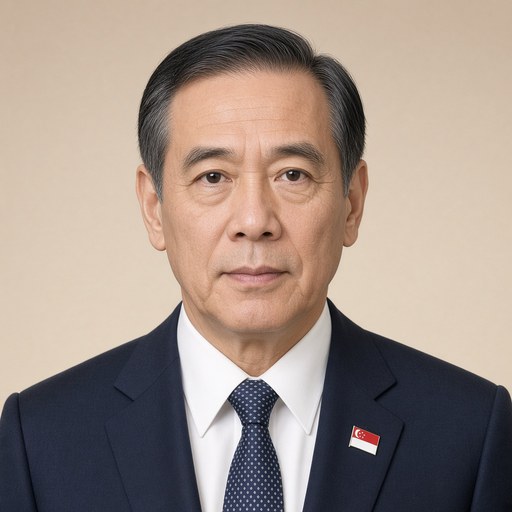
- Lee delivered the National Day Rally 2012 speech in Mandarin, reviewing Singapore's nearly 50 years of independence and outlining strategies for future social and economic development.
- Main themes
- Singapore's development strategy, quality of life improvements, housing affordability, education opportunities, employment and job security, aspirations of younger generation, East Asian economic anxiety, social development, economic growth, compassionate society, public housing (HDB), forward-looking mindset
- Duration
- ~18 min
- Words
- 2,191
- Sentences
- 172
- Readability
- 51
- Grade
- 9.4
- Syntax
- 2.60
- Vocabulary
- 2.22
The broad sphere of national life a sentence belongs to. Every sentence has an Arena, so it is the denominator the other indices are read against.
Other172 sentences in 44 paragraphs
It has been almost 50 years since Singapore became independent. In half a century, Singapore has changed dramatically. We are not yet a fully developed nation, even though we enjoy first world incomes. Our basic needs have been met; we are now pursuing better quality of life
In search of new development strategy
The question is: At our level, what else should we do to scale greater heights?
Like climbing a mountain, the higher we go, the tougher the climb. Our situation is similar to that in Taiwan, Hong Kong and South Korea. After 30 to 40 years of rapid development, all the “Four Asian Dragons” are at a critical juncture. The era of rapid growth is over. We are all searching for a stable new path forward. This requires new strategies and new formulas. No country can say, “We have found the formula”. Hence, many East Asian societies are anxious about the future, a phenomenon that has been highlighted in the news media. A Taiwanese writer recently wrote an article in Yazhou Zhoukan, analysing the anxiety felt by Taiwanese. She said Taiwan’s declining economy and shrinking job market have caused Taiwanese to worry that their children’s lives will be worse than theirs. The writer noted that interestingly, foreign visitors praise Taiwan’s economic and social accomplishments, but Taiwanese are like “one-eyed dragon”, seeing only the negative side of Taiwan. She added that actually, the people in China, Hong Kong and Singapore have the same worries too. Recently, Lianhe Zaobao’s Ng Kin Kang expressed similar sentiments in an article. He observed that Singaporeans seem to be grumbling a lot more these days, comparing Singapore selectively only with the good points of other countries. He said, “Singapore is not perfect. We are worse than some, but better than others.”
I agree with Mr Ng; Singapore is indeed not perfect. But I ask Singaporeans to look at Singapore with both eyes. In reality, we are better off than many other countries. The media, government and people in China, Hong Kong and Taiwan believe there are more to learn from Singapore; they still admire us. In recent years, they have sent study groups to look at our social and economic policies; they used to focus on our economic policies, but are now paying more attention to our social development. They often conclude: Singapore is moving ahead faster and more steadily
Fulfilling the aspirations of younger generation
I believe Singapore has a lot more potential for a brighter future. Let me give a few examples.
Firstly, Singaporeans need not worry about jobs. We remain an attractive investment destination, and there are good job opportunities for our people. Our unemployment rate is low and there is a shortage of workers in many sectors. In fact, many SMEs cannot find enough workers.
Secondly, Singaporeans need not worry about housing. Older Singaporeans have experienced living in slums or kampongs, where the living environment was bad and sanitary conditions were poor. When they moved into brand new HDB flats, they could feel a great improvement in their lives. Early HDB flats were spartan but clean, and had modern amenities, including modern toilets. This picture shows some early flats in Tanglin Halt; and this is a picture of a children’s playground. The younger generation grew up in a good environment, so they are not likely to see such dramatic transformation. But the Government gives this promise: We will provide good quality and affordable public housing. These are some new generation HDB flats in Teck Ghee Vista, but there are such flats in every constituency. Even the new playgrounds are more exciting.
Thirdly, young Singaporeans need not worry about education. Fifty years ago, when I was a primary school pupil, only two in every three students went to secondary school; about one-third of the students failed the primary six exams. Very few made it to university – only one in every 20. Now, every student has the opportunity to move up to secondary school and nearly all students complete secondary school education; and one in every three goes on to university. Besides the universities, we have also created many paths to success. Our polytechnics and ITEs have also nurtured talented Singaporeans in many fields.
Becoming a forward-looking and vibrant society
Singapore’s development is on track, but we must continue to drive forward. We must maintain a forward-looking mindset, constantly improve ourselves, and remain relevant in the new age.
We hope to help Singaporeans fulfil their potential and aspirations, and inspire our young to build a new Singapore. Therefore, we must strive to develop a vibrant and growing economy, to give young Singaporeans better opportunities and a brighter future. Growth is the foundation for a vibrant Singapore.
We have not focused blindly on economic growth; we have also placed emphasis on social development and quality of life. In the next phase, we must strive to build a more compassionate and more gracious society. To do this, we need a strong economy.
The next 20 years will see a rapidly changing world. To progress, we must seize opportunities and re-invent ourselves. Young Singaporeans can adapt easily; older ones may find it more difficult to do so.
Helping older Singaporeans adapt to change
Hence, we must help older Singaporeans adapt to the new environment. Older workers can attend training courses and upgrading programmes offered by the Government and NTUC to acquire new skills and improve their job prospects. The Government also provides help to needy elderly. We have introduced various schemes to help them cope with medical expenses. We support the elderly with subsidies and top-ups, such as GST vouchers and Medisave top-ups. We help less mobile elderly by providing barrier-free access and public transport.
Encourage Active Ageing
I hope everyone will stay positive, lead active lives, and be self-reliant. We should continue to learn and keep up with the times, regardless of our age. Older folks may take longer to learn new things, such as computers. It is much easier for the young, whereas older people have to learn it step by step, with the help of their children and grandchildren. And when products change, we have to relearn all over again. But it can be done. I know of many retirees with positive attitudes and active lifestyles. Let me share three examples.
This is Mr Chung Win Kee. He is 71 years old. He sells chicken rice, and loves photography. Mr Chung used to be computer illiterate. A few years ago, he started to learn to use the computer, Internet and email. Now he is a computer enthusiast. He e-chats with his children and grandchildren; searches for new chicken rice recipes on the Internet; and uses Facebook to make friends and share his photographs. I too, just started on Facebook recently. Mr Chung is my Facebook senior; I have much to learn from him.
Another active senior is Madam Chang Ka Fong. Madam Chang is even more senior – she is a lively 87-year-old. Madam Chang plays basketball at Teck Ghee Community Club every day. I met her at the Community Club on National Day and chatted with her. She told reporters that she shoots 50 hoops daily. Madam Chang is an active senior, a role model for all of us. Not all of us need to play basketball every day, but regular exercise is good for us.
Yet another active senior is 79-year-old Mr Chen Woo Teck, a PhD student at UniSim. Mr Chen is a retired Chinese language teacher. He is currently pursuing a PhD in Chinese Language and Literature at UniSim. His zest for learning is admirable!
Handing Down of Chinese Culture and Tradition
Mr Chen’s passion for the Chinese language inspires all of us not to neglect culture and tradition as we adapt to changes. Our Chinese community has always been concerned about the preservation and promotion of culture and tradition.
Chinese culture is an important pillar of Singapore culture. It is an emotional anchor and moral compass for many Singaporeans. We should preserve our cultural roots, lest we lost ourselves in this ever-changing world.
Last year, I appointed Senior Parliamentary Secretary Sim Ann to chair the Bicultural Taskforce to preserve our heritage. The Taskforce gathered views widely. It found that Singaporeans value their mother tongue. The Taskforce has preliminary ideas to nurture bilingual and bicultural talent. It will seek and promote more new ideas. Please share your ideas and suggestions with the Taskforce.
Our clan associations have always played an important role in promoting culture and education. The Government encourages clan associations to keep up their good work. The Singapore Federation of Chinese Clan Associations (SFCCA) put up a proposal early this year to establish the Chinese Cultural Centre. I supported the proposal. The Government helped SFCCA find a suitable site, next to the Singapore Conference Hall. I hope the Chinese community will support the project to ensure its success. The Singapore Hokkien Huay Kuan also enthusiastically promotes culture and education. Recently, it proposed the setting up of the Singapore Hokkien Huay Kuan Cultural Academy. The Government supports the proposal. The Cultural Academy will be located at the former Chai Chee Secondary School campus in East Coast. This is a preliminary concept view of the Academy. I hope these two projects will enrich the cultural landscape in Singapore.
Forging a Sense of Identity
Our traditions and culture help to strengthen our sense of identity. Singapore is an open global city; we must work doubly hard to forge a united identity.
Fortunately, our ethnic groups have co-existed in harmony, and we are integrated into one unique Singapore society. Hence, Singaporean Chinese are different from Chinese elsewhere, and our Chinese language has local characteristics.
Recently, a National Day documentary shown on our local TV channel had some translation errors. For example, National Servicemen was translated as “national soldiers”, and HDB flats became “national housing”. This drew many criticisms. The mistakes were clearly made by foreign translators. The translators were competent in Chinese, but they did not know our local context or terms.
It is heartening that Singaporeans have a unique culture, but this also brings some problems. Translation is one; the other more serious problem is the relationship between local Singaporeans and new immigrants. It means our new immigrants must work much harder to integrate with locals. Even immigrants of the same race will have different norms. Cultural differences are one main reason for the friction between Singaporeans and new arrivals
Singaporeans understand the local norms for acceptable and unacceptable behaviour. We are locally born and have adopted the values and conduct of our society. New immigrants need time to learn and understand the Singapore mindset. This is a process and it will take time and effort; there may be mistakes made along the way, and we have to learn from these mistakes. I urge new arrivals to make the effort to integrate, and learn some simple English to facilitate interaction. I urge Singaporeans to help new arrivals and be more tolerant to them.
It is noteworthy that groups of new arrivals have been active in charity and community work, or are becoming volunteers, to help needy Singaporeans. These include the Kowloon Club formed by immigrants from Hong Kong, and the Singapore Loving and Giving Society formed by immigrants from China. The new citizens want to give back to society. They want to understand Singapore better. This is commendable.
First generation immigrants may not integrate fully into our society, but their children will. Recently, I officiated at a Citizenship Ceremony in Teck Ghee. The new citizens at the ceremony came from many countries, including Malaysia, Indonesia, China, India, even Western countries. I chatted with a teenage new citizen. I asked him, “Where are you from?” He answered without hesitation, “Ang Mo Kio!” I hope one day he will become my voter.
Encouraging procreation
We need to bring in new immigrants as our birth rate is far below replacement. This being a Dragon Year, there have been bonus Dragon babies. Alas, this will not reverse the downward trend in our birth rate.
We need more babies to strengthen the Singapore core and to enrich our unique Singapore character.
The Government will continue to seek ideas and improve our social environment to make it more conducive to have children. Please share with us your ideas. But the Government can only encourage; it is up to Singaporeans whether you will have more babies.
Conclusion
Let me sum up my speech.
Singapore is in a new phase of development. The next 20 years will be full of opportunities, as well as challenges. We have to renew ourselves continually, and when necessary, reinvent ourselves boldly.
Heng Swee Keat will chair a committee to review our policies. In the next few months, the committee will consult widely. Please support my team and our efforts so we can find a new path to move forward together, to enable Singapore to remain a successful and well regarded country; to enable Singaporeans to create for ourselves better lives and a more gracious society.
By staying united, we can create a better Singapore for all of us and our children!