




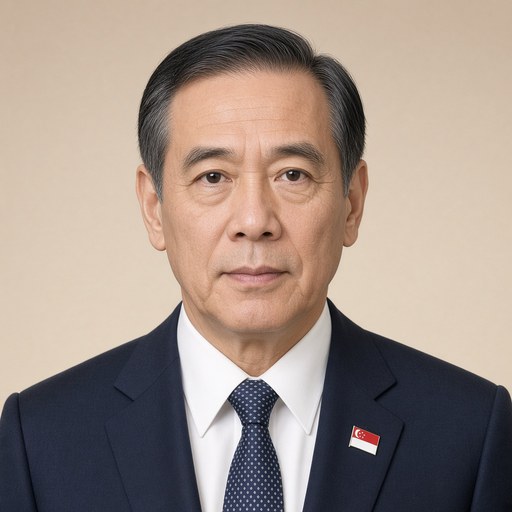

- Context
- Lee addressed Singaporeans at the National Day Rally 2016, outlining economic challenges, business transformation strategies, and social cohesion for Singapore's future.
- Main themes
- Economic transformation, SME support, workforce upskilling and reskilling, technology disruption, business innovation, overseas expansion, worker livelihood, social cohesion, multi-racial society, productivity improvement, Singapore's next 50 years
- Duration
- ~24 min
- Words
- 2,851
- Sentences
- 213
- Readability
- 54
- Grade
- 9.0
- Syntax
- 2.75
- Vocabulary
- 2.29
The broad sphere of national life a sentence belongs to. Every sentence has an Arena, so it is the denominator the other indices are read against.
Other213 sentences in 46 paragraphs
My fellow Singaporeans, good evening!
Last year, we celebrated our Jubilee. Now, we are into our next 50 years. We have achieved some success and now have a stable foundation. But to ensure that we continue to prosper and have a bright future, we need to look for new opportunities, and be prepared for new challenges.
Tonight, I want to address three issues. First, the transformation of our businesses. Second, the livelihoods of our workers and support for their families. Third, the stability and cohesion of our multi-racial society.
Economy – Helping our Businesses
First, our businesses. The economy is on everyone's mind.
This year, our growth has slowed and we have revised our growth estimate down to 1-2%. The labour market has cooled, unemployment has gone up a little bit. Companies, particularly SMEs, are noticing that business has stagnated.
As our economy matures, our growth will naturally slow. Last decade, we grew between 5-7% on average, and we got used to that. Given where we are now, this rapid pace of growth is no longer sustainable. Growth is slowing not only in Singapore, but in other economies too.
Furthermore, technology is disrupting the current economic model. For example, it is the festival of hungry ghosts now. We used to visit shops to buy incense and joss paper. Now we can do so online. The shops deliver to your doorstop, making it very convenient for all. The revenue online is 50% more than what you can earn from a physical shop.
Neighbourhood coffeeshops also face competition. A new "Vendcafe" just opened in Sengkang West. Be it seafood horfun or claypot chicken rice, customers just need to press a few buttons, and within minutes, piping hot local food is ready. Furthermore, this new style restaurant operates 24/7 and it does not need a single service staff, so they don't have to apply for work permits.
I hear that people would go to Orchard Road to try out new clothes, and then use smartphones to order online.
This is the new normal. It not only affects the retail, service and food industries. Companies big or small will need to adapt in order to thrive. I know that SMEs particularly find it challenging to transform and tough to survive. That is why SPRING and IE Singapore are working hard to help SMEs build new capabilities, use technology, and expand overseas. I'm happy also that the Singapore Chinese Chamber of Commerce & Industry and many trade associations are pitching in to help their members look for new business opportunities and are organising programmes to help businesses.
There are still bright spots in many sectors, from General Manufacturing to Furniture Design to Food. Some traditional businesses have transformed themselves and successfully expanded overseas. For example, Luzerne. Its name sounds like that of a European company. But actually it's a Singapore brand, started by Hiap Huat Holdings. Hiap Huat is nearly 70 years old. They established Luzerne in 2004, which specialises in designing bespoke tableware, attracting higher-end clients, thereby increasing profits. Their clients now include the world's leading restaurants, hotels and celebrity chefs.
Expanding overseas is one way to transform. Another is to use technology to innovate, e.g. Fragrance Foodstuff Group. It is a long established brand – started in 1969, in operation for 47 years. To increase its productivity, it automated part of its production process. Workers used to arrange the marinated meat on bamboo trays. Now machines do so. But the machines cannot do everything. The bakwa still needs to be barbecued over charcoal for the best taste! Fragrance is also selling their bakwa online, so you can order it anywhere in the world. This shows how businesses can use technology to innovate and grow their market. Those present at the rally tonight, you don't have to order online. You can try some at the reception later!
We often say, "In crisis, there is opportunity." I hope businesses will tap on our schemes to transform themselves, to increase productivity or expand overseas.
Supporting our Workers
Second, apart from helping our businesses, Government has rolled out many programmes to help workers adjust to the new environment. Many businesses are also helping their workers gain new skills and upgrade, thus improving their productivity.
Two examples – the first, Mr Kuah Leng Kee, 57 years old. He worked with Fragrance for 30 years. He used to be in charge of making sure the bakwa is spread evenly on the trays. With automation, he is now in charge of training, and finding ways to improve the production process. He works in the same company, but he has a new job – and he feels more motivated as he can add more value to his company. Another person who has benefitted from our programmes is Mr Goh Yew Cheong, 54 years old. He previously worked in the construction sector but was retrenched. To support his family, he worked as a driver for 5 years. But last year, he found himself out of a job again when his employer moved overseas. This time it took nearly a year for him to find a new job. But his perseverance paid off and he joined Edwards LifeSciences in June 2016, as an Associate Heart Valve Specialist. Given his previous experience with heavy work, he was initially concerned if he could cope with fine needlework. But with proper training, he is performing well and is due for certification soon
I know everyone is concerned about their livelihoods. The government is concerned too. Our strategy is to help businesses transform, and use SkillsFuture to help workers. There is a saying that we can achieve excellence in every profession. That is the goal of SkillsFuture – to help all excel. Whether you are an engineer or a retail associate, you can upgrade or learn new skills, via different pathways. But I hope you will do your part. Tap on SkillsFuture, and keep your skills relevant in the market. Learn to be like Mr Kuah and Mr Goh, who boldly tried out new jobs and kept themselves updated.
Apart from helping workers with SkillsFuture, we are also helping your families through the cycles of life, from young to old. In the last ten years, we have strengthened our social safety nets. The government has tripled its social spending and is now supporting more people. For example, more than 400,000 now receive the Workfare Income Supplement (WIS). On average, close to 90,000 benefit from Comcare yearly. All of us are covered by Medishield Life. All of you would have received some help from the government, and those who are in need, have received more help.
In particular, we have strengthened our support for the elderly. We implemented MediShield Life and the Pioneer Generation Package to help them with medical expenses. And we implemented CPF LIFE, provided extra CPF interest for older members, and introduced Silver Support.
One remaining piece to strengthen is ElderShield. Necessary because our society is aging rapidly. Many families have elderly parents as well as young children. If our parents or elderly family members fall ill, become immobile and are wheelchair-bound, expenses will increase. This is not uncommon. Statistics show that at some point, one in every two persons will become bed-ridden, and will not be able to look after themselves. When we organise community events or visit residents, we encounter many elderly in this situation. We experience it in our own families too. One day all of us will grow old and will need others to look after us.
That is why we introduced ElderShield in 2002. It is an insurance scheme. If you are old, unable to wash yourself, feed yourself, or become wheelchair-bound or bedridden. ElderShield will provide a payout of a few hundred dollars a month, to help you with your nursing and care needs or with the cost of employing a maid. Since it started more than 7,000 have benefitted from the scheme. But we need to improve ElderShield. It does not cover everyone and its payouts are limited to six years, which may not be enough. MOH will form a committee to study this. We hope Eldershield will be able to cover more people, provide more protection and remain affordable. With the enhanced ElderShield, we will have all the components of our social safety net in place.
Strengthening our Multi-racial Society
I just discussed our economy and our social protection, which are topics I usually speak about. But tonight, I want to speak also about multi-racialism and our political system. This is not something I usually discuss at this rally, but they are important issues.
There are two reasons. First, because we face a serious problem with terrorism, which can rend our multi-racial fabric. Second, we have made a lot of progress with racial harmony over the past 50 years, but we must still watch for emerging problems, and deal with them in good time. These issues have far-reaching implications, so I hope everyone will consider these matters carefully.
Multiracialism is our founding ideal, the reason why we became independent, and the basis on which we built Singapore. Actually, the social harmony that Singapore enjoys today is the result of the Pioneer Generation, especially the strong commitment from the Chinese community. They worked with the government to build the foundations of a multi-racial and harmonious society. We have always worked hard to strengthen multi-racialism, while ensuring that each group can preserve its own culture and identity.
Glad to see that the Chinese community and media have done a lot to promote Chinese language and culture. I watched young director Eva Tang's "The Songs We Sang" and was moved. The documentary resonated with many Chinese-educated Singaporeans and ignited interest among the young in Xinyao. Lianhe Zaobao organised a Xinyao Singing and Composition Contest. I encourage more of such activities, so that a new generation can be interested in Xinyao and Singapore Chinese culture.
Even as we promote Chinese culture and language, we also include other cultures. For example, every Chinese New Year, we hold the Chingay Parade. It started as a Chinese activity. Now, all races participate. As a result, it is today a vibrant multicultural parade, celebrating our unique multi-racial society. Chinese community groups not only help Chinese, but also other racial groups. For example, the Chinese Development Assistance Council (CDAC) offers some of their programmes to other races, including job placements and tuition. The Singapore Buddhist Lodge helps everyone, regardless of race or religion.
The Chinese community instinctively understands the importance of multi-racialism, the need to be inclusive, and to compromise so as to maintain our social harmony. Indeed, this has become the second nature of all races. For example, during the 7th Month Festival, Chinese HDB residents burn joss paper in special joss paper burners, instead of the old custom of burning them in the open. The burners prevent the ashes from flying around and reduces air pollution too. Our mosques take care not to disturb their neighbours by lowering the volume of the azan (call to prayer). During the Thaipusam procession, musicians perform at fixed points, rather than while walking alongside the devotees.
Food is important to Singaporeans. When the different races share meals with one another, it can bring them closer together. In Singapore, each race and religion has different food preferences. So when we organise activities, we accommodate each group's requirements, so each can eat what he likes and not impose on someone else. That is why even for tonight's reception, I made sure that there is something for everyone. For my Muslim friends, we have soto babat. For Indians, chapati. For Chinese, kong bak bao. For Eurasians, baked salmon with curry. We also have vegetarian and international cuisine. There are soft drinks and beer, but please don't drink and drive! For other less elaborate occasions, we also offer a variety of options but on a smaller scale. But when we can share fruits, e.g. durians, there is no problem. For example, last year, I attended Sengkang South’s Fruits Fiesta and had a durian party with Gan Thiam Poh and his residents. The durian party is one of his most popular community activities. Families attend with their neighbours. The parents in the photo are enjoying the durians, but I am not sure about their daughter. I remember the durians were very fragrant, and all of us, from all races, enjoyed ourselves, even our foreign friends. I hope all races will eat with each other frequently, and stay in touch.
There are other ways to realise the ideal of multi-racialism, including in our political system. We should strengthen it to enable all to identify themselves with the country, and for all races to feel that the system is fair. In the last 50 years, the government has promoted religious and racial harmony through education, housing, and many other policies but we are not yet completely race-blind.
After Mr Lee Kuan Yew passed away, I visited Tanjong Pagar. SMS Indranee Rajah, who helped Mr Lee look after his residents, accompanied me. She has served there for many years and speaks Cantonese fluently but one of the residents told me: "PM, please send us a bilingual minister".
These sentiments are present not just at Tanjong Pagar. There are voters of every race in every constituency who feel this way. Actually, similar sentiments are present in every multi-racial society. It's human nature. We feel more comfortable interacting and working with people who share the same culture, language and ethnicity as we do. We accept each other more readily.Therefore, during elections, voters often wonder – or they would have thought of it – if their candidates are able to communicate with them in their mother tongue? Can I speak directly to him and engage him comfortably? Does he understand me, where I am coming from, my culture and faith?
So, in Singapore, language and race do play a role in elections. All things being equal, a minority candidate contesting in a Chinese majority constituency is at a disadvantage. In Singapore, every constituency is majority Chinese. This is why we have GRCs, to ensure that there will always be minority MPs in Parliament.
Let's be honest with ourselves and deal with this squarely. For a non-Chinese to become an MP, it is not easy. For a non-Chinese to be elected President is even harder.
Hence, I proposed changes to the elected President scheme in January, to make sure that from time to time, we will have a non-Chinese President.
Since the announcement, I have heard some feedback. People have said, "Since Singapore is multi-racial, and we say 'regardless of race, language or religion', why is there a need to make provisions for minorities? Why not let the elections run their natural course?". Some may feel that since we are a majority Chinese country, when a Chinese President is elected, it is alright. I understand these feelings but we need to face up to the reality of our multi-racial context. Under the current system of contested national elections for President, we may not have a non-Chinese President for a long time. If so, this will weaken the sense of national identity among minorities, and affect our unity. This is serious for it concerns our social cohesion, our multiracial society, and our future.
It is important that we have a Malay, Indian, or other race as President from time to time. The President as Head of State is the unifying symbol for all Singaporeans, and must be able to unite all Singaporeans.
Our former President, Mr Nathan is a shining example of this. Mr Nathan is Indian, but as President, he looked after the interests of all Singaporeans. He proactively reached out to all races and got to know them well.
I hope the Chinese community will support the constitutional changes we may propose so that if we have a good minority Presidential candidate, he can become the President, and represent all Singaporeans.
Conclusion
At the heart of the three issues I discussed tonight is our unity. On the economy: we want every Singaporean to share the fruits of our economic progress. That is why we need our businesses to transform, prosper and provide good jobs for our workers. On our livelihoods: we have strengthened our social safety nets for workers and their families, so no one is left behind. On strengthening our multi-racial society: we must refine our political system so that it represents all races, and everyone can participate and be proud Singaporeans. Then we will be strong and more united, even as we face threats and challenges.
This is why we must continue to uphold the multi-racial ideal. To realise our pledge: "Regardless of race, language or religion, to build a democratic society, based on justice and equality".
Let us be the pioneers of our generation. Let us be bold to overcome our challenges. Let us build for the next generation. Seize the opportunities before us and create a better and brighter future for all.
Thank you.
NATIONAL DAY RALLY 2016 (MANDARIN SPEECH WITH ENGLISH DUB + SIGN LANGUAGE)