




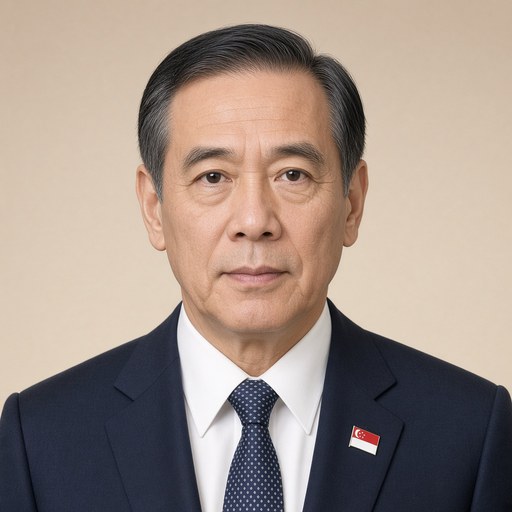
PM Lee Hsien Loong at the Official Opening of Thye Hua Kwan EIPIC Centre at Ang Mo Kio
 Lee Hsien Loong · Prime Minister of Singapore
- Context
- Lee addressed residents and guests at the opening of Thye Hua Kwan's fourth EIPIC Centre in Hougang, Singapore, on 17 January 2014.
- Main themes
- Early intervention for children with special needs, EIPIC centre opening, Thye Hua Kwan Moral Society, family support services, inclusive community, child development, social services expansion, volunteerism, social safety nets, nation-building, Temasek Cares bursary, Singapore's human capital development
- Duration
- ~13 min
- Words
- 1,574
- Sentences
- 75
- Readability
- 55
- Grade
- 10.8
- Syntax
- 3.04
- Vocabulary
- 2.12
Translated from Multiple languages
The broad sphere of national life a sentence belongs to. Every sentence has an Arena, so it is the denominator the other indices are read against.
Other75 sentences in 16 paragraphs
Distinguished guests, residents, boys and girls,
Good afternoon! Today marks the opening ceremony of the fourth Early Intervention Programme for Infants and Children (EIPIC) Centre by Thye Hua Kwan. I am very pleased that Thye Hua Kwan has chosen to establish this centre in our community at Hougang, to serve our residents. We welcome them wholeheartedly.
Singapore has no natural resources, only our people and the results of our collective efforts, which is why we place great importance on the development of our citizens, especially in helping our young children. The purpose of the EIPIC Programme is to assist infants and young children with special needs, while also supporting their families. At this centre, children can receive special education and therapeutic services, such as speech therapy, art and music therapy, and physical education. Of course, caring for children with special needs requires families to have even more patience and love, which is why this programme and the Thye Hua Kwan Centre aim to support these families, allowing them to confidently guide their children and nurture their learning. Therefore, I hope that parents, after receiving the necessary consultations, can help their children more comprehensively, fully realize their potential, and prepare them for a fulfilling life, integrating as much as possible into our society.
Thye Hua Kwan was established in 1978. They provide a variety of social services to our country. Initially, Thye Hua Kwan's mission was to promote filial piety, strengthen parent-child relationships, foster social harmony, and enhance family cohesion. The first project of Thye Hua Kwan was the Thye Hua Kwan Medical Clinic, which opened in 1979, providing free medical diagnosis and medication. That was 35 years ago in 1979. Over the past thirty years, Thye Hua Kwan has expanded its range of services, establishing over 50 centres to serve those in need, such as child development centres, family service centres, and active aging centres. Thye Hua Kwan has also established the Hougang Community Hospital, collaborating with government hospitals and polyclinics to provide basic medical services. Many residents in Hougang have benefited from Thye Hua Kwan's activities and services. On behalf of our residents, I would like to thank Thye Hua Kwan for their numerous contributions to us.
I would also like to thank our residents, especially those from Blocks 313 and 314. Because you have made space available for Thye Hua Kwan to establish this centre. Your spirit of seeking welfare for society and caring for those in need is commendable. Raising children is not an easy task; it is a long and challenging journey. Besides parents, many others need to help as well. There is a saying that it takes a village to raise a child, and this is indeed true. In this EIPIC Centre, the group of children with special needs learning here requires everyone's care and understanding even more. Therefore, I hope that residents will actively participate in the activities of the EIPIC Centre, consider volunteering to help them and the children succeed, give back to society, and embody the spirit of Singapore!
Thank you all. Let me say a few words in English.
Friends, residents, ladies and gentlemen, boys and girls,
I am very happy here this evening to open Thye Hua Kwan’s latest EIPIC Centre – the Early Intervention Programme for Infants and Children. The EIPIC Centre helps children with special needs and also helps their families because it provides special education and therapeutic support services like speech-language, art and music therapy and physical education. It works with the families to help them to cope with their special needs child. And so it can minimise the effects of the special need, maximise the child’s development, helps the child to develop as far as he can go, or she can go, and prepares the children and their families for a fulfilling life.
I would like to thank three groups of people for making this a reality. First, Thye Hua Kwan for building this Centre, and providing this valuable service. Secondly, Temasek Holdings for its Temasek Cares bursary, which provides transport subsidies to children from low-income families, represented here by Mr Richard Magnus. And also our residents for agreeing to host this Centre on our void deck, for welcoming the kids into our community, and embracing them as our own, and for working with the Centre to find out how you can volunteer and to help it to succeed. This is how Singapore should be – open, gracious, magnanimous. Thank you all very much!
Last year at the National Day Rally, I talked about how we are making a major change in our approach to nation-building. The Government will do more to support Singaporeans and your families, especially needy and vulnerable Singaporeans, and how we are strengthening our social safety nets and making our society more mobile. We are making steady progress towards these goals. The Budget is coming out next month and we will have some more details to announce on what the government will do. But it is not just what the government will do but also the community who will come forward, together, to do more to support the less fortunate. Not because the law or the Government tells you to do so, but because those are the values of our society, that is what we believe in, because we feel concerned, care and empathy for our fellow Singaporeans, for our fellow human beings.
How can we do this? One way is to support activities in centres like EIPIC. Another of course is to donate to charities, not just donate money but also time and expertise. And so we should strengthen our Voluntary Welfare Organisation (VWO) sector, so that VWOs can continue to participate strongly in community work. The VWOs put in a lot of effort and the Government tries our best to support them, including supporting them in their fund raising efforts, helping them to meet their operating expenses, and working with them to deliver assistance programmes for the Government. They are doing good work. Thye Hua Kwan is a very good example but also other VWOs like the Singapore Anglican Community Services, like Movement for the Intellectually Disabled of Singapore (MINDS) and Persatuan Pemudi Islam Singapura (PPIS). But while VWOs deal with the day-to-day work and the pressures of looking after cases and families and kids, they also need to invest in their longer-term capabilities, to adapt to new ways of doing things to meet our future needs as our society changes. And so, to strengthen the VWOs, we need to go beyond supporting the operations, and funding the operations but to go on to invest more in their capabilities, in their long-term capabilities. In other words, invest, train, build; to be able to do more next year, or three or five years from now.
I think that Singapore’s 50th birthday is a good time to do more in this respect. We are celebrating 50th anniversary of our independence next year, 2015, and it is a time for celebration. It is right that we celebrate what we have achieved over the last half century together but it is also a time for reflection, for thinking what we ought to do; for rededication, to commit ourselves to helping our fellow Singaporeans some more, and to make progress together as one society.
And so comes the idea of the Care & Share Movement. ComChest first proposed it last year and we thought it was a good idea, and the Government is giving it our full support and last October, Minister Chan Chun Sing launched the Care & Share Movement and its objectives are quite simple, to encourage Singaporeans to volunteer and to contribute to worthwhile causes through the Government providing matching grants. And that way, using the resources we gathered to strengthen VWOs’ long-term capabilities, and build up our social service sector, and build a caring and sharing community.
To do this we will set up a Care & Share fund. The Government will contribute money to the fund, 1-to-1 sharing, not a small sum of money, up to $250 million. It is a challenge to the ComChest and to the VWOs. Go forth, raise the money; we will match you 1-for-1, and if you can get $250 million gathered together, and 250 times two – that is $500 million. I think we can do something. Then we can use the resources. We can build new capabilities for the VWOs, launch new programmes to help the needy, build infrastructure, more centres like EIPIC to serve more beneficiaries, train and develop staff, and make sure that we will have an even stronger and more vibrant VWO sector in the years to come.
This way with the Care & Share fund, VWOs can have confidence that they have got the resources and the backing to deal not just with immediate needs, but also longer-term challenges and bigger capabilities. And you can continue to play a valuable role in the next phase of nation-building. So I encourage all Singaporeans and VWOs to contribute actively and generously, and participate fully in the VWO movement and in the Care & Share Movement.
There is much that we can achieve together if we work as one. Thye Hua Kwan is a shining example, but there should be many more and I look forward to continuing this strong partnership and building a better, more caring Singapore for all of us. Thank you very much!
The original Multiple languages. The tags above are read on the English translation's sentences.
各位来宾, 各位居民,各位来宾,各位小弟弟,小妹妹
大家下午好!今天是太和观第四所婴儿与幼儿早期介入计划中心开幕仪式。很高兴太和观选择在宏茂桥,我们的地方开办这所中心,为我们的居民服务。 我们非常欢迎他们。
新加坡没有天然资源,只有我们的人民,还有大家一起努力创造的成果,因此,我们非常重视国人的发展,尤其帮助我们年幼的孩子们。婴儿与幼儿早期介入计划的宗旨,就是帮助有特殊需要的婴儿和幼儿,也同时帮助他们的家人。 在这所中心里,幼儿们可以接受特殊教育还有治疗服务,如言语治疗、艺术和音乐疗法和体育等。当然照顾有特殊需要的孩子,家人可能更需要更多的耐心和爱心,因此这个计划和太和观中心就是要扶持这些家庭,让他们可以放心教导孩子,陪养他们学习。所以我希望家长们得到需要的咨询后,能够更全面地帮助孩子,充分发挥他们的潜能,并且为孩子们做好准备,将来可以过充实的生活,并且尽可能地融入我们的社会。
太和观是在1978年设立的。他们为我国提供多项以及多元化的社会服务。当初太和观服务的宗旨是为了提倡孝道,和为巩固亲子关系,与促进社会友好关系,以及家庭凝聚力的美德。太和观的第一个项目就是在1979年开办的太和观西医施诊所,提供了免费的医疗诊断服务还有药物。 1979 年已经35年前的时间了。过了三十多年,太和观已经扩大了服务范围,设立了超过50所为有需要的人民服务的中心,如儿童发展中心,家庭服务中心,乐龄活动中心等等 。太和观也创办了宏茂桥社区医院,与政府医院,综合诊疗所合作,提供基本的医疗服务。 所以我们宏茂桥许许多多的居民都通过了太和观的活动及服务受益。 我代表我们的居民谢谢太和观对我们所做的许许多多的贡献。
当然我要想感谢我们的居民,尤其是大牌313/314这两座组屋的居民们。因为你们把空间腾出来,让太和观可以开办这个中心。你们为社会谋福利的精神,关怀有需要的人民,值得表扬。要把孩子养大是一件非常不简单的事情,是一条很长的路,不容易走。除了家长也需要许许多多其他人的帮忙。有一句话形容一个孩子需要全村的人照顾,培养。 这个的确是事实。而在这个EIPIC 中心,这一群在这里学习,有特殊需要的孩子, 他们更需要大家的关怀及谅解。所以我希望以后居民会积极参加EIPIC中心的活动,考虑当义工帮他们还有孩子们成功,回馈社会,体现新加坡精神!
谢谢各位,让我用英语讲几句话。
Friends, residents, ladies and gentlemen, boys and girls
I am very happy here this evening to open Thye Hua Kwan’s latest EIPIC Centre – the Early Intervention Programme for Infants and Children. The EIPIC Centre helps children with special needs and also helps their families because it provides special education and therapeutic support services like speech-language, art and music therapy and physical education. It works with the families to help them to cope with their special needs child. And so it can minimise the effects of the special need, maximise the child’s development, helps the child to develop as far as he can go, or she can go, and prepares the children and their families for a fulfilling life.
I would like to thank three groups of people for making this a reality. First, Thye Hua Kwan for building this Centre, and providing this valuable service. Secondly, Temasek Holdings for its Temasek Cares bursary, which provides transport subsidies to children from low-income families, represented here by Mr Richard Magnus. And also our residents for agreeing to host this Centre on our void deck, for welcoming the kids into our community, and embracing them as our own, and for working with the Centre to find out how you can volunteer and to help it to succeed. This is how Singapore should be – open, gracious, magnanimous. Thank you all very much!
Last year at the National Day Rally, I talked about how we are making a major change in our approach to nation-building. The Government will do more to support Singaporeans and your families, especially needy and vulnerable Singaporeans, and how we are strengthening our social safety nets and making our society more mobile. We are making steady progress towards these goals. The Budget is coming out next month and we will have some more details to announce on what the government will do. But it is not just what the government will do but also the community who will come forward, together, to do more to support the less fortunate. Not because the law or the Government tells you to do so, but because those are the values of our society, that is what we believe in, because we feel concerned, care and empathy for our fellow Singaporeans, for our fellow human beings.
How can we do this? One way is to support activities in centres like EIPIC. Another of course is to donate to charities, not just donate money but also time and expertise. And so we should strengthen our Voluntary Welfare Organisation (VWO) sector, so that VWOs can continue to participate strongly in community work. The VWOs put in a lot of effort and the Government tries our best to support them, including supporting them in their fund raising efforts, helping them to meet their operating expenses, and working with them to deliver assistance programmes for the Government. They are doing good work. Thye Hua Kwan is a very good example but also other VWOs like the Singapore Anglican Community Services, like Movement for the Intellectually Disabled of Singapore (MINDS) and Persatuan Pemudi Islam Singapura (PPIS). But while VWOs deal with the day-to-day work and the pressures of looking after cases and families and kids, they also need to invest in their longer-term capabilities, to adapt to new ways of doing things to meet our future needs as our society changes. And so, to strengthen the VWOs, we need to go beyond supporting the operations, and funding the operations but to go on to invest more in their capabilities, in their long-term capabilities. In other words, invest, train, build; to be able to do more next year, or three or five years from now.
I think that Singapore’s 50th birthday is a good time to do more in this respect. We are celebrating 50th anniversary of our independence next year, 2015, and it is a time for celebration. It is right that we celebrate what we have achieved over the last half century together but it is also a time for reflection, for thinking what we ought to do; for rededication, to commit ourselves to helping our fellow Singaporeans some more, and to make progress together as one society.
And so comes the idea of the Care & Share Movement. ComChest first proposed it last year and we thought it was a good idea, and the Government is giving it our full support and last October, Minister Chan Chun Sing launched the Care & Share Movement and its objectives are quite simple,to encourage Singaporeans to volunteer and to contribute to worthwhile causes through the Government providing matching grants. And that way, using the resources we gathered to strengthen VWOs’ long-term capabilities, and build up our social service sector, and build a caring and sharing community.
To do this we will set up a Care & Share fund. The Government will contribute money to the fund, 1-to-1 sharing, not a small sum of money, up to $250 million. It is a challenge to the ComChest and to the VWOs.Go forth, raise the money; we will match you 1-for-1, and if you can get $250 million gathered together, and 250 times two – that is $500 million. I think we can do something. Then we can use the resources. We can build new capabilities for the VWOs, launch new programmes to help the needy, build infrastructure, more centres like EIPIC to serve more beneficiaries, train and develop staff, and make sure that we will have an even stronger and more vibrant VWO sector in the years to come.
This way with the Care & Share fund, VWOs can have confidence that they have got the resources and the backing to deal not just with immediate needs, but also longer-term challenges and bigger capabilities. And you can continue to play a valuable role in the next phase of nation-building. So I encourage all Singaporeans and VWOs to contribute actively and generously, and participate fully in the VWO movement and in the Care & Share Movement.
There is much that we can achieve together if we work as one. Thye Hua Kwan is a shining example, but there should be many more and I look forward to continuing this strong partnership and building a better, more caring Singapore for all of us. Thank you very much!
Explore related topics