





- Context
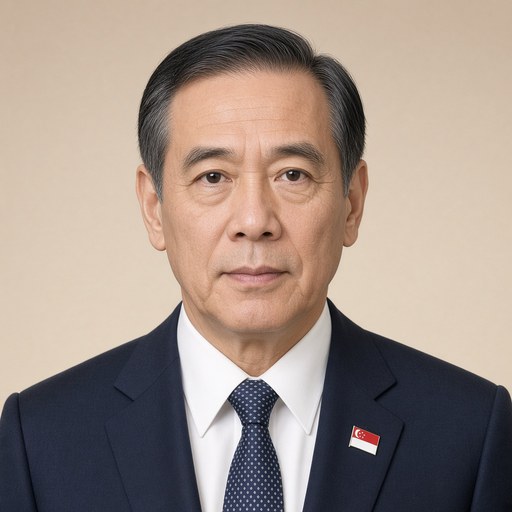
- Lee addressed the SFCCA and Connect China Spring Reception on 25 January 2012, the third day of the Lunar New Year.
- Main themes
- Role of Chinese clan associations, immigrant integration and social harmony, Chinese New Year celebrations, mother tongue education and cultural preservation, Singapore-China relations, values-based education, population and immigration policy, proposed Chinese Cultural Centre, bilingual and bicultural talent development
- Duration
- ~1 min
- Words
- 2,151
- Sentences
- 107
- Readability
- 35
- Grade
- 13.4
- Syntax
- 3.03
- Vocabulary
- 2.12
Translated from Chinese
The broad sphere of national life a sentence belongs to. Every sentence has an Arena, so it is the denominator the other indices are read against.
Other107 sentences in 31 paragraphs
Speech by Prime Minister Lee Hsien Loong at the Chinese New Year Reception of the Singapore Federation of Chinese Clan Associations and Business China, 25 January 2012
Mr Chua Thian Poh, President of the Federation of Chinese Clan Associations and Chairman of Business China, fellow compatriots, distinguished guests, good morning to you all
Today is the third day of the Lunar New Year. On this joyous day, I am very happy to attend this New Year reception and welcome the new year together with all of you.
Our society is changing rapidly, but Singaporeans still attach great importance to this traditional festival. During the Spring Festival, we place particular importance on reuniting with family, relatives and friends; the annual reunion dinner is something not to be missed. Grassroots and community organisations also eagerly organise all kinds of activities to welcome the spring, adding to the festive atmosphere, and at the same time carry out charitable activities, delivering red packets and gifts to needy families.
The Spring Festival is also a time when people pray for blessings and make wishes. This is the Year of the Dragon, and we all hope that the economy will leap and bound like dragons and tigers. We are also looking forward to another kind of bumper harvest; we hope our birth rate will make a breakthrough, and that the Year of the Dragon will bring us more dragon babies.
Throughout our nation's history, whether in promoting social welfare or in carrying forward cultural traditions, clan associations have played a pivotal role. In the early days, the main role of clan associations and organisations was to look after fellow clansmen who had just come south from China and help them integrate into society. In addition, they were also enthusiastic about social welfare, founding many schools and hospitals.
Over the past forty-odd years, our society has changed rapidly, and the clan associations have kept pace with the times, continually adjusting themselves and establishing new roles and directions for development. I believe that clan associations can still play a very useful social role. One important new mission is to help new immigrants integrate into society. This can reduce the unease and friction brought about by the influx of immigrants, and also help new immigrants adapt more quickly to local social conditions. This is very important for maintaining social harmony, especially in our multiracial and multicultural society. Immigration and population policies have a major impact, and must have the support of all sectors of society in order to minimise their downsides and enable Singapore to continue developing steadily over the long term.
I am heartened that the Federation of Chinese Clan Associations recognises the importance of population policy and has resolutely taken on the work of helping new immigrants integrate into society. Clan organisations have promoted a number of programmes to help new immigrants understand local customs. For example, an activity called the "Hungry Ghost Festival Customs Tour" lets new immigrants learn about local customs of the Zhongyuan Festival. Another activity is called "Touring the Clan Associations Through and Through". As far as I know, many new immigrants did not just go to the clan associations to "walk around and have a look"; many of them even became members. This is a good sign. The Government welcomes clan organisations launching these programmes and will continue to provide all necessary support and assistance.
The Federation of Chinese Clan Associations has always spared no effort in promoting mother tongue education and traditional culture. In the future, the role of clan organisations in promoting culture and education will become even more important. Mr Chua Thian Poh mentioned just now that the Federation is exploring the establishment of a Singapore Chinese cultural centre. I welcome the Federation's proposal of this idea. The Government has always encouraged and supported each ethnic community in preserving and promoting its own culture and traditions. The Government is happy to see this Chinese cultural centre come to fruition, and will cooperate and assist.
In education, the Government also hopes that schools run by clan associations can help the Government promote character education and implement a values-driven education policy. Education Minister Heng Swee Keat has frequently spoken about this educational approach recently. I believe that schools run by clan associations can play an important role. These schools have always been very popular with parents, and one reason is that they place great emphasis on instilling values and shaping students' character. Instilling the right values in life in the young generation is extremely important. We hope they will understand that as citizens, they have rights, but also responsibilities and obligations; and that in pursuing their personal goals, they will also take into account the interests of society and the nation. At the same time, we hope they will also have a spirit of serving society and serving the public; students from Chinese schools all know the principle that "wishing to establish oneself, one establishes others; wishing to succeed oneself, one helps others to succeed."
Our Chinese community has also made considerable contributions to fostering international links, especially links between Singapore and China. Singapore is a small, open country; we must build good links with Southeast Asia and other important countries. China's influence on the world stage is becoming ever more prominent; we should deepen our understanding of it and strengthen business, trade and people-to-people exchanges between the two places. Business China is a leading organisation in this regard. Since its founding, it has worked very hard to shoulder the mission entrusted to it by society. I wish Business China every success in carrying out its programmes, creating an environment for our country to nurture bilingual and bicultural talent, and playing a positive role in exchanges between Singapore and China.
Conclusion
Over the past several decades, under the leadership of Chinese community leaders, our Chinese community has maintained its vitality and youthful spirit. Many clan associations have continually renewed themselves and actively recruited new members. The Federation's member organisations have increased from 70 when it was founded in 1986 to 202 today. Clan organisations have organised a great many activities, enriching our spiritual life and contributing greatly to the passing down of culture. I hope the Federation of Chinese Clan Associations will build on its successes and bring the Chinese community's cultural, educational and welfare work to new heights.
Finally, I wish you all a happy New Year and success in all things!
Thank you!
Explore related topics
The original Chinese. The tags above are read on the English translation's sentences.
李显龙总理于新加坡宗乡会馆联合总会与通商中国新春团拜演讲, 2012年1月25日
宗乡总会会长兼通商中国主席蔡天宝先生 各位同胞、各位来宾 大家早上好
今天是大年初三,在这个喜气洋洋的日子,我很高兴能够出席这个新春团拜会,跟大家一起迎接新年。
我们的社会变化得很快,不过新加坡人还是非常重视这个传统节日。在春节期间,我们特别重视跟家人和亲友团聚;一年一度的团圆饭更是不能错过。基层和民间组织也很热心展开各种迎春活动,增添春节的气氛,同时展开慈善活动,为贫困家庭送上红包和礼品。
春节也是人们祈福、许愿的日子。今年是龙年,我们都希望经济能够龙腾虎跃。我们也很期待另一类的大丰收;希望我们的生育率有所突破,龙年为我们带来更多龙宝宝。
在我国历史上,无论是促进社会公益,还是发扬文化传统,宗乡会馆都扮演中坚的角色。在早期, 宗乡会馆和团体的主要角色是照顾刚从中国南来的乡亲,协助他们融入社会。此外,它们也热心社会公益,创办了不少学校和医院。
过去四十多年,我国社会急速地改变,宗乡会馆也跟随时代的步伐,不断自我调整,确立新的角色和发展方向。我认为宗乡会馆仍可以扮演非常有用的社会角色。其中一个重要的新使命是帮助新移民融入社会。这可以减少移民的涌入所带来的不安和摩擦,也使新移民更快适应本地社会的情况。这对维持社会和谐很重要,特别是在我们这个多元种族和多元文化的社会。移民和人口政策影响重大,必须获得社会各界的支持,才能尽量减少弊端,并且使到新加坡能够长期稳健的发展下去。
令我欣慰的是,宗乡总会认识到人口政策的的重要,毅然负起帮助新移民融入社会的工作。宗乡团体推动了多项计划,让新移民了解本地的民俗。譬如一项叫做”中元习俗之旅”的活动,让新移民认识本地中元节的习俗。另一项活动则叫做“会馆走透透”。据我所知,许多新移民不仅到会馆“走走看看”,许多还成了会员。这是好现象。政府欢迎宗乡团体展开这些计划,并且将继续给予一切必要的支持和帮助。
宗乡总会向来不遗余力推动母语教育和传统文化。在未来,宗乡团体宣扬文教的角色将显得更为重要。蔡天宝先生刚才提到,宗乡总会正在探讨设立一个新加坡华社文化中心。我欢迎宗乡总会提出这个构想。政府向来鼓励和支持各个族群保留和发扬各自的文化和传统。对于这个华社文化中心,政府乐见其成,并且将给予配合和帮助。
在教育方面,政府也希望宗乡会馆开办的学校,能够帮助政府推动品德教育,落实以价值为导向的教育政策。教育部长王瑞杰最近经常谈到这项教育方针。我认为宗乡会馆主办的学校可以扮演重要的角。这些学校向来深受家长欢迎,其中一个原因是这些学校很重视价值观的灌输和学生品格的塑造。向年轻一代灌输正确的人生价值观是十分重要的。我们希望他们认识到身为公民,他们有权利,但也有责任和义务;在追求个人的目标时,也会兼顾社会和国家的利益。同时,我们希望他们也有服务社会、服务大众的精神;华校生都知道“己欲立而立人,己欲达而达人”的道理。
我国华社在促进国际联系方面,特别是新加坡跟中国的联系,也做了不少贡献。新加坡是个开放的小国,我们必须跟东南亚和其他重要国家建立良好的联系。中国在世界舞台上的影响力越来越显著,我们应该加深对它的认识,并且加强两地商贸和人民之间的交流。“通商中国”在这方面是个领导性机构。它自成立以来很努力的肩负起社会所给予的使命。我祝愿“通商中国”顺利开展各项计划,为我国营造一个培养双语、双文化人才的环境,也为新中两国的交往发挥积极的作用。
结论
过去数十年,在华社领袖的领导下,我国华社还保持一股活力和朝气。许多会馆不断自我更新,积极招募新会员。宗乡总会的会员团体从1986年成立时的70 个增加到目前的202个。宗乡团体主办了许许多多活动,丰富了我们的精神生活,对文化的传承做了很大的贡献。我希望宗乡总会能够再接再厉,把华社的文教和公益事业带向另一个高峰。
最后,恭祝大家新年快乐,万事顺利!
谢谢!
Explore related topics