




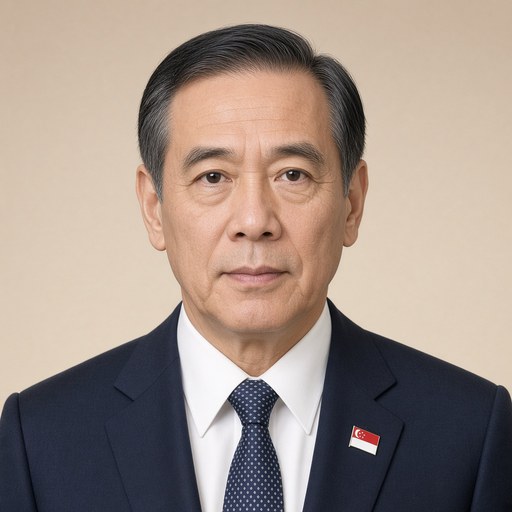
SM Lee Hsien Loong at the Founders’ Memorial Groundbreaking
 Lee Hsien Loong · Prime Minister of Singapore
- Context
- Lee addressed guests at the Founders' Memorial groundbreaking ceremony at Gardens by the Bay on 5 June 2024, marking 65 years since Singapore's first Cabinet was sworn in.
- Main themes
- Founders' Memorial groundbreaking, Singapore's founding leaders, nation-building journey, anti-colonial struggle, PAP history, communist vs. non-communist political contest, merger with Malaysia, separation and independence, racial harmony and communalism, national identity and values, self-governance, Lee Kuan Yew's leadership
- Duration
- ~37 min
- Words
- 4,468
- Sentences
- 223
- Readability
- 41
- Grade
- 12.1
- Syntax
- 3.04
- Vocabulary
- 2.36
Translated from Multiple languages
The broad sphere of national life a sentence belongs to. Every sentence has an Arena, so it is the denominator the other indices are read against.
Other223 sentences in 65 paragraphs
Mr. Lee Tzu Yang, Chairman, Founders’ Memorial Committee
Professor Tan Tai Yong, Co-chair
Family members and associates of founding leaders
Distinguished guests, ladies and gentlemen
Good morning!
I am very happy to be here at Gardens by the Bay this morning to break ground for the Founders’ Memorial.
Remembering our Roots
This Memorial honours our founding leaders and our nation building journey. It will tell the story of how they overcame the odds to build a strong, united, and independent Singapore; how they led the people of Singapore through successive battles first against colonialism, then communism, and finally communalism; and how they then built a nation based on the values and ideals embodied in The Pledge, launching us on the journey that has led to the Singapore we see today.
After the Second World War, the generation of Singaporeans who had survived the Japanese Occupation decided to take their future in their own hands. They were determined to be rid of the British colonial masters, and instead to be governed by themselves, for themselves. It was a time of great ferment and excitement, upheaval and anticipation. There was intense political contestation, as different groups propounded diverse ideologies and views of Singapore’s future. But representatives of all political parties came together in the anti-colonial struggle, and settled the terms for decolonisation with the British government.
In 1959, the Colony of Singapore became the State of Singapore. We were now a self-governing state, though not yet a fully independent country. A general election was held, and for the first time, the People’s Action Party (PAP), led by Mr. Lee Kuan Yew, was elected to power. On 5th June 1959, 65 years ago to the day, the first Cabinet of self-governing Singapore was sworn into office. That is why we have chosen today – 5th June – for the ground-breaking of the Founders’ Memorial.
That first Government in 1959 had urgent problems to deal with – unemployment, worker strikes, homelessness, lack of schools, corruption, and much more. But the central political issues were: What was Singapore’s path to full independence? What sort of society should we be? And how should we govern ourselves?
These issues precipitated a parting of ways within the PAP. Earlier, in 1954, two anti-colonial groups had come together to form the PAP: A non-Communist, democratic socialist group, which sought independence through merger with a democratic and non-Communist Malaya; and a radical, left-wing group, closely associated with the Communist Party of Malaya, which had a very different vision of Singapore’s future. The two groups had made common cause to fight colonialism. But both knew that once the British had been defeated, a clash between them was inevitable.
The parting of ways happened in 1961. Very narrowly, the non-Communist group retained control of the party and government, while the pro-Communist group went into the opposition. A fierce political fight followed for the hearts and minds of Singaporeans. There were idealistic and passionate people on both sides, striving to convince Singaporeans that theirs was the right way forward. At stake were the lives of Singaporeans, and the future of Singapore.
Fortunately, through courageous leadership and “superb political generalship”, as Dr. Goh Keng Swee described it, Mr. Lee and his team convinced Singaporeans that their way forward would deliver growth and investments, jobs and education, good homes and a brighter future for all. Singaporeans supported them and their vision, and gave the non-Communists a clear mandate in the next general election in 1963.
That year, Singapore merged with Malaya, along with Sabah and Sarawak, to form the new Federation of Malaysia. The Communist threat receded, but only to be replaced by a communalist one. Tensions soon arose between Singapore’s state government and the central government in Kuala Lumpur. The basic issue was what it meant to be a citizen of Malaysia, and the equal rights of citizens of different races and religions. The Singapore leaders fought for what had been negotiated and agreed to in the Malaysia Agreement, what they called a “Malaysian Malaysia”. The central government took a different view, which emphasised the primacy of bumiputera Malaysians.
It was much more than a legal or constitutional dispute. The differences with the Federal government were too stark to be reconciled through civil debate. The fight involved power and force, putting Singapore and its leaders in great danger. Tragically, it led to race riots and bloodshed. Mr. Lee and his colleagues displayed great personal courage to rally Singaporeans, to stand and fight for what they deeply believed in. Because they held firm at this critical moment, so did Singaporeans.
Thus on 9th August 1965, Singapore separated from Malaysia to become “forever a sovereign, democratic and independent nation,” as Mr. Lee proclaimed.
But unlike upon the independence of every other post-colonial nation, the mood in Singapore was sombre. Memories of the 1964 race riots were still raw. Indonesia’s Konfrontasi continued to pose a threat. Without a proper defence force, our sovereignty and security were precarious. With neither natural resources nor a hinterland, our economic prospects were uncertain. There was no assurance that Singapore had any future.
In this dire situation, the founding leaders rallied the population. Singaporeans, whatever their previous political allegiances, united behind Mr. Lee and his team, and together set about building a nation. They saw through the withdrawal of British forces, the oil price shock in the early 1970s, and many other crises. They grew the economy, built up the SAF, educated our people, reshaped our society, housed our population, and transformed everyone’s lives.
Even more importantly, the founding leaders established fundamental values and ideals that set the long-term direction of our nation: democracy, justice and equality, meritocracy and a drive for excellence, an unwavering commitment to honest, clean government; above all, a multi-racial society.
One of them, Mr. S. Rajaratnam, gave voice to these ideals in The Pledge, stressing that “We, the citizens of Singapore, pledge ourselves as one united people, regardless of race, language or religion.” For the founding leaders were determined that every race would have an equal place in Singapore. Why?
Firstly, having had such recent bitter experience of being a racial minority, the founding leaders resolved never to place independent Singapore’s majority race, language, and culture above others, and never to allow our minority communities to be disadvantaged and marginalised. Secondly, while Singapore was a Chinese majority and Malay minority society, all our neighbours were Malay majority and Chinese minority societies. Racial politics in Singapore would have made our position in Southeast Asia untenable. Finally and decisively, the founding leaders had a profound, unshakeable conviction in multiracialism. They passionately believed this was how Singapore should be, and had to be, for the sake of all its citizens. As Mr. Lee Kuan Yew said on Separation Day itself: “We are going to have a multi-racial nation. This is not a Malay nation. This is not a Chinese nation. This is not an Indian nation. Everybody will have a place here, equal: language, culture, religion.”
Guided by these values and ideals, and solidly supported by Singaporeans, the founding leaders took our nation from Third World to First. There were difficult choices to make, painful trade-offs to weigh, and different views to reconcile, especially in the first decade. The founding leaders did not get everything right. But on the most important issues, they made the right choices, Singaporeans responded, and Singapore succeeded beyond their wildest dreams.
Out of this shared experience of crises and successes, sacrifices and celebrations, there emerged a Singaporean identity and a recognisable national ethos. We became a society that is open to the world, resilient and united in the face of crises, and bold and courageous in our dreams.
Ours is a unique origin story, which stands out amongst newly independent countries of the post-war era. Many former colonies became independent countries like us. But not many successfully shifted from the independence struggle to nation building, from rousing revolutionary mobilisation to the patient slog of improving people’s lives. Singapore did.
Think about it: had our founding leaders not fought for independence, democracy, and multiculturalism; had they faltered at any stage in the trajectory; had they been defeated in 1959 or 1963 or 1965; indeed, had they been replaced by a different group of people altogether; or had the people of Singapore not supported them at any stage of the journey – an independent Singapore would not exist, this city would not have become a metropolis, and there would be no Singapore Story to tell.
Our nation building journey deserves to be commemorated and remembered. We have several memorials that mark significant events in our modern history, including the Civilian War Memorial, the Kranji War Memorial, and the Konfrontasi Memorial. At the Esplanade Park, there is a marker honouring those who participated in the “Struggle against the Communist Party of Malaya”, and supported the democratic, non-Communist path to independence. But we do not yet have a memorial to commemorate our nation building journey – to tell the story of how Singapore became what it is today, and to bring to life the ideals, impulses, and spirit that drove our founding leaders. Now, almost 60 years after Separation, and 80 years after World War II, the time has come for us to build one.
I first suggested the idea of a Founders’ Memorial in 2015, a few weeks after Mr. Lee Kuan Yew had passed away. It was an emotional period for the nation, and Parliament was debating the best way to honour Mr. Lee’s memory. I explained to MPs that Mr. Lee did not want any monument dedicated to himself. He was always conscious that he did not act alone, but as a member of a multi-racial core team. Therefore, instead of honouring Mr. Lee alone, I proposed that we consider a memorial dedicated to the team of people – our founding leaders – who fought together with him and brought us here, and to the ideals, values, hopes, and aspirations that they held dear. As I said then: “Whatever memorial we decide upon should not only be right for Singaporeans living today, but also for generations not yet born. The memorial should reflect and strengthen in all of us our sense of what it means to be a Singaporean, why Singapore is worth striving and fighting for, and how we can continue to build a harmonious and successful Singapore for future generations.”
Designing the Memorial
Since then, we have put much thought into the concept and design of the Founders’ Memorial. I thank the 200,000 Singaporeans who have contributed views and ideas. I am especially grateful to Mr. Lee Tzu Yang, Chairman of the Founders’ Memorial Committee, and his co-chair, Professor Tan Tai Yong, for their dedication and hard work, guiding and overseeing this national project, and also to the architects, Kengo Kuma & Associates (Japan) and K2LD Architects (Singapore), who have designed a dignified, understated memorial that expresses well the spirit of our nation.
The Memorial will focus on the key leaders in Singapore’s first two decades of nation building (1950s-1970s), including Mr. Lee Kuan Yew and his core team, as well as other important leaders in the public, private and people sectors. I am happy that the project team is curating an installation specially to commemorate the founding generation. Through their words and deeds, the Memorial will bring alive the values and ideals these pioneers exemplified, championed, and inculcated into Singaporeans. These crucial intangibles are foundational to the ethos of our society and our national identity. They continue to guide and inspire us today.
The Memorial will be sited in Bay East Gardens. It will occupy reclaimed land fronting Marina Bay, the result of a visionary project launched by the founding leaders soon after independence, to provide for the long-term development of our city. As Mr. Lee said just a few months after we became independent: “Over 100 years ago, this was a mudflat, swamp. Today, this is a modern city. Ten years from now, this will be a metropolis. Never fear.”
But at a deeper level, the living monument to the founders is the beautiful Marina Bay which it faces, and the vibrant metropolis stretching beyond the iconic skyline, home to 3.5 million Singaporeans, which continues to thrive and develop year after year.
Conclusion
The project team held an exhibition, “Semangat yang Baru: Forging a New Singapore Spirit,” at the National Museum last year. Like many visitors, I found the exhibition meaningful and moving. If you viewed it, you may remember that afterwards, you were invited to pen your reflections and hopes for Singapore. One visitor wrote: “May the younger generations understand, appreciate, and sustain the effort of the pioneers in building a prosperous, safe, and lovely home for all Singaporeans and those who call it home.”
I hope this Founders’ Memorial will become a space where Singaporeans reflect on our ongoing nation-building journey; appreciate our precious inheritance from the founding generation; and resolve to continue building a harmonious and successful Singapore, based on our foundational values and ideals, for generations to come.
The founding leaders established fundamental values and ideals that set the long-term direction of our nation: democracy, justice and equality, meritocracy and a drive for excellence, an unwavering commitment to honest, clean government; above all, a multi-racial society.
I am very pleased to be here this morning at Gardens by the Bay to officiate the groundbreaking ceremony for the Founding Fathers Memorial Park.
This memorial park commemorates our founding leaders and the journey of nation-building in Singapore. It narrates how the founding fathers overcame numerous challenges to ultimately establish a resilient, united, and independent Singapore, and it tells the story of how they led the people of Singapore through one struggle after another: from anti-colonialism, anti-communism, and later, anti-communalism. The memorial park will also elaborate on how they built a nation that embodies the values and ideals in our national pledge, embarking on a journey that has led us to the Singapore we see today.
The generation of Singaporeans who survived the Japanese occupation after World War II decided to take control of their own future. They were determined to break free from British colonial rule, advocating for self-governance in Singapore and seeking to improve their own welfare. It was a time of turmoil and passion, of upheaval and hope. There was intense political competition in society—different groups held different ideologies and views on the future of Singapore. Nevertheless, representatives from different political parties came together to participate in the anti-colonial movement, ultimately reaching an agreement with the British government to end colonial rule.
In 1959, Singapore became a self-governing state, but it had not yet become a fully independent nation. After the elections, the People's Action Party, led by Mr. Lee Kuan Yew, was elected to govern for the first time. On June 5, 1959, exactly 65 years ago today, the first cabinet of the self-governing state of Singapore was sworn in. This is why we chose today, June 5, to lay the foundation for the Founding Fathers Memorial Park.
The first government of 1959 faced urgent issues, including unemployment, labor strikes, homelessness, insufficient schools, and corruption, among others. But the main political question was: what path should Singapore take to achieve full independence? What kind of society should we become, and how should we govern this nation?
These questions led to internal divisions within the People's Action Party. As early as 1954, the People's Action Party was formed by two anti-colonial factions: one, non-communist and democratic socialist, hoped to achieve independence through a merger with democratic and non-communist Malaya; the other was a radical left faction closely associated with the Malayan Communist Party, which had a very different vision for Singapore's future. Both factions were anti-colonial, but they also knew that conflict between them was inevitable once the British left.
The two factions parted ways in 1961. The non-communist faction narrowly prevailed and continued to control the party and the government, while the pro-communist faction became the opposition. Subsequently, all parties vied for the hearts and minds of Singaporeans. Both the non-communist and pro-communist parties had ideals and passions, and both worked hard to persuade Singaporeans that their vision was the one worth pursuing. This was about the lives of Singaporeans and the future of Singapore.
Fortunately, through courageous leadership and what Dr. Goh Keng Swee referred to as "extraordinary political talent," Mr. Lee and his team convinced Singaporeans to believe that their direction would bring economic growth and investment, job and educational opportunities, good housing, and a better shared future. Singaporeans supported their vision, and in the 1963 elections, voters gave Mr. Lee Kuan Yew and the non-communist, democratic socialist faction a clear mandate.
That same year, Singapore merged with Malaya, Sabah, and Sarawak to form the Federation of Malaysia. The threat of communism receded, but it was replaced by the threat of communalism. The relationship between the Singapore state government and the central government of the Malaysian Federation in Kuala Lumpur quickly became tense. The fundamental issue was the meaning of "Malaysian citizenship" and the equal rights of citizens of different races and religions. Singapore's leaders fought for rights based on the Malaysia Agreement that both sides had agreed upon, which was "a Malaysia for Malaysians." The central government, unlike Singapore, emphasized the priority status of the indigenous Malays.
This was not merely a legal or constitutional dispute. The differences between Singapore and the federal government were too great to bridge. This struggle was about power and force, placing Singapore and its leaders in danger. Tragically, the struggle led to racial riots and bloodshed. Mr. Lee and his colleagues displayed unwavering courage to unite Singaporeans and fight for their deeply held beliefs. Because they stood firm at this critical moment, Singaporeans were equally resolute.
Thus, on August 9, 1965, Singapore separated from Malaysia and became what Mr. Lee called "a nation that is forever sovereign, democratic, and independent."
Unlike other former colonies that gained independence, Singapore was then a nation in despair. The memories of the racial riots in 1964 were still fresh, and the confrontation with Malaysia remained a threat. Lacking a trained defense force, the nation's sovereignty and security were precarious. We had no natural resources and no hinterland, so the economic outlook was uncertain. The future of Singapore was not guaranteed. Faced with a dire situation, the founding leaders called upon the people to work together. Singaporeans, regardless of political ideology, united to support Mr. Lee and his team. Together, they built the nation, weathering the withdrawal of British troops, the oil price shocks of the early 1970s, and many other crises. They drove economic development, established the Singapore Armed Forces, provided education, transformed society, resettled the people, and changed lives.
More importantly, the founding leaders laid down fundamental values and ideals, setting the direction for our long-term development: democracy, justice and equality, meritocracy, and the pursuit of excellence, along with an unwavering commitment to establish an honest and clean government, and most importantly, a multi-racial society.
One of the founding leaders, S. Rajaratnam, enshrined these ideals in our national pledge, emphasizing that "we are citizens of Singapore, pledging ourselves, regardless of race, language, or religion, to unite." The founding leaders firmly believed that every race in Singapore should have equal status. Why?
First, the founding leaders personally experienced the oppression of being a minority race at that time, and thus were determined not to allow the newly independent Singapore to have a majority race, language, and culture that would dominate other groups, nor to allow our minority communities to be disadvantaged and marginalized. Furthermore, while the Chinese are the majority in Singapore and the Malays are the minority, neighboring countries have a majority of Malays and a minority of Chinese. Therefore, promoting racial politics would make it impossible for Singapore to establish itself in Southeast Asia. Finally, the founding leaders held an unshakeable belief in multi-racialism. They believed that for the welfare of all citizens, Singapore should be this way, and must be this way. As Mr. Lee Kuan Yew said at the time of separation: "We will have a multi-racial country. This is not a Malay country. This is not a Chinese country. This is not an Indian country. Everyone has a place here: language, culture, and religion are equal."
With these guiding values and ideals, and the steadfast support of Singaporeans, the founding leaders brought our nation from the Third World to the First World. They had to make difficult choices, make necessary trade-offs, and reconcile differing views, especially in the first ten years. The founding leaders did not get everything right, but they made the right choices on the most important issues, and Singaporeans responded positively, leading to Singapore's unimaginable success.
Having gone through crises and enjoyed successes, sharing sacrifices and celebrations, these shared experiences nurtured Singapore's identity and distinct national spirit. Singapore society thus presented a new face. We opened ourselves to the world, stood resilient in the face of crises, and were bold and fearless in pursuing our dreams.
The story of Singapore is unique, standing out among post-war independent nations. Many former colonies gained independence like us, but few have successfully transitioned from struggles for independence to nation-building; from mobilizing revolutions to persistently improving the lives of their people. Singapore has achieved this.
Imagine if our founding leaders had not fought for independence, democracy, and multiculturalism. If they had wavered at any point in their journey, or had been defeated in 1959, 1963, or 1965, or if another group had taken their place, or if at any stage they had not received the support of the people of Singapore, an independent Singapore would not exist, this city would not have become a thriving metropolis, and we would not have been able to write the unique story of Singapore.
Our journey of nation-building is worth commemorating and remembering. We have several monuments commemorating significant events in our modern history, including the Civilian Victims Memorial from the Japanese occupation, the Kranji War Memorial, and the Malaysia-Singapore Confrontation Memorial. There is also a historical marker in Marina Park dedicated to those who participated in the "fight against the Malayan Communist Party" and supported the pursuit of independence through democratic and non-communist means. However, we still lack a memorial park that commemorates our journey of nation-building and tells the story of how Singapore became what it is today—vividly showcasing the ideals, drive, and spirit held by our founding leaders. Nearly 60 years have passed since the separation from Malaysia, and 80 years since the end of World War II, so it is time to build a memorial park.
Designing the Memorial Park
I first proposed the idea of building the Founding Fathers Memorial Park in 2015, just weeks after the passing of Mr. Lee Kuan Yew. It was a time of deep sorrow for the nation, and Parliament was discussing the best way to commemorate Mr. Lee. I explained to the Members of Parliament that Mr. Lee did not wish for any monument to be built solely in his honor. He always knew that he was never alone in this struggle, but rather a part of a core team of diverse races. Therefore, I suggested that instead of commemorating Mr. Lee alone, we should consider building a memorial park to honor those who fought alongside him to lead us to prosperity, as well as the ideals, values, hopes, and aspirations they cherished. As I said at the time: "Whatever kind of memorial park we decide to build, it should not only be suitable for Singaporeans today, but also for generations yet unborn. The memorial park should reflect and reinforce our national identity as Singaporeans, explain why Singapore is worth our efforts and struggles, and guide us on how to continue building a harmonious and successful Singapore for generations to come."
Since then, we have deeply conceptualized the idea and design of the Founding Fathers Memorial Park. I would like to thank the 200,000 Singaporeans who contributed their thoughts and ideas. I especially want to thank Mr. Lee Tzu Yang, Chairman of the Founding Fathers Memorial Park Committee, and Professor Chan Heng Chee, Co-Chair, for their dedication and hard work in guiding and overseeing this national project. I also want to thank the architects of the memorial park, Kengo Kuma and Associates (Japan) and local firm K2LD Architects, for designing a solemn and understated memorial park that fully expresses the spirit of our nation.
The memorial park will prominently feature the key leaders of Singapore's first 20 years of nation-building (from the 1950s to the 1970s), including Mr. Lee Kuan Yew and his core team, as well as other important leaders from the public and private sectors and civil society. I am pleased to learn that the project team is planning to create a dedicated memorial installation to honor the founding generation. Through the words and actions of the founding generation, the memorial park will vividly showcase the values and ideals embodied and advocated by the founding fathers, which continue to guide and inspire us today. These key intangible assets are the foundation of our social ethos and national identity, and they continue to guide and inspire us.
The memorial park will be built in the Gardens by the Bay, situated on reclaimed land facing Marina Bay. Shortly after independence, the founding leaders initiated a visionary reclamation project to promote the long-term development of this city. As Mr. Lee said a few months after independence: "More than a hundred years ago, this was a muddy swamp. Today, it is a modern city. In ten years, it will be a metropolis. Do not worry."
On a deeper level, what commemorates the founding fathers is the beautiful Marina Bay it faces, and beyond the famous skyline, the vibrant metropolis of 3.5 million Singaporeans, thriving and progressing year after year.
Last year, the memorial park project team held a pilot exhibition at the National Museum titled "Semangat yang Baru" (The New Spirit of Singapore). Like many visitors, I found the exhibition profoundly meaningful and moving. Those who attended the exhibition may remember that after viewing, they were invited to write down their reflections and hopes for Singapore. One visitor wrote: "May the younger generation understand and cherish the efforts of the founding fathers in building a prosperous, safe, and beautiful home for all Singaporeans and those who call it home, and may they build upon the foundation laid by the founding fathers."
I hope the Founding Fathers Memorial Park will become a space for Singaporeans to reflect on our journey of nation-building, to cherish the legacy left by the founding generation, and to pledge to continue building a harmonious and successful Singapore based on the fundamental values and ideals of our nation-building.
The original Multiple languages. The tags above are read on the English translation's sentences.
Mr Lee Tzu Yang, Chairman, Founders’ Memorial Committee Professor Tan Tai Yong, Co-chair Family members and associates of founding leaders Distinguished guests, ladies and gentlemen
Good morning!
I am very happy to be here at Gardens by the Bay this morning to break ground for the Founders’ Memorial.
Remembering our Roots
This Memorial honours our founding leaders and our nation building journey. It will tell the story of how they overcame the odds to build a strong, united, and independent Singapore; how they led the people of Singapore through successive battles first against colonialism, then communism, and finally communalism; and how they then built a nation based on the values and ideals embodied in The Pledge, launching us on the journey that has led to the Singapore we see today.
After the Second World War, the generation of Singaporeans who had survived the Japanese Occupation decided to take their future in their own hands. They were determined to be rid of the British colonial masters, and instead to be governed by themselves, for themselves. It was a time of great ferment and excitement, upheaval and anticipation. There was intense political contestation, as different groups propounded diverse ideologies and views of Singapore’s future. But representatives of all political parties came together in the anti-colonial struggle, and settled the terms for decolonisation with the British government.
In 1959, the Colony of Singapore became the State of Singapore. We were now a self-governing state, though not yet a fully independent country. A general election was held, and for the first time, the People’s Action Party (PAP), led by Mr Lee Kuan Yew, was elected to power. On 5th June 1959, 65 years ago to the day, the first Cabinet of self-governing Singapore was sworn into office. That is why we have chosen today – 5th June – for the ground-breaking of the Founders’ Memorial.
That first Government in 1959 had urgent problems to deal with – unemployment, worker strikes, homelessness, lack of schools, corruption, and much more. But the central political issues were: What was Singapore’s path to full independence? What sort of society should we be? And how should we govern ourselves?
These issues precipitated a parting of ways within the PAP. Earlier, in 1954, two anti-colonial groups had come together to form the PAP: A non-Communist, democratic socialist group, which sought independence through merger with a democratic and non-Communist Malaya; and a radical, left-wing group, closely associated with the Communist Party of Malaya, which had a very different vision of Singapore’s future. The two groups had made common cause to fight colonialism. But both knew that once the British had been defeated, a clash between them was inevitable.
The parting of ways happened in 1961. Very narrowly, the non-Communist group retained control of the party and government, while the pro-Communist group went into the opposition. A fierce political fight followed for the hearts and minds of Singaporeans. There were idealistic and passionate people on both sides, striving to convince Singaporeans that theirs was the right way forward. At stake were the lives of Singaporeans, and the future of Singapore.
Fortunately, through courageous leadership and “superb political generalship”, as Dr Goh Keng Swee described it, Mr Lee and his team convinced Singaporeans that their way forward would deliver growth and investments, jobs and education, good homes and a brighter future for all. Singaporeans supported them and their vision, and gave the non-Communists a clear mandate in the next general election in 1963.
That year, Singapore merged with Malaya, along with Sabah and Sarawak, to form the new Federation of Malaysia. The Communist threat receded, but only to be replaced by a communalist one. Tensions soon arose between Singapore’s state government and the central government in Kuala Lumpur. The basic issue was what it meant to be a citizen of Malaysia, and the equal rights of citizens of different races and religions. The Singapore leaders fought for what had been negotiated and agreed to in the Malaysia Agreement, what they called a “Malaysian Malaysia”. The central government took a different view, which emphasised the primacy of bumiputera Malaysians.
It was much more than a legal or constitutional dispute. The differences with the Federal government were too stark to be reconciled through civil debate. The fight involved power and force, putting Singapore and its leaders in great danger. Tragically, it led to race riots and bloodshed. Mr Lee and his colleagues displayed great personal courage to rally Singaporeans, to stand and fight for what they deeply believed in. Because they held firm at this critical moment, so did Singaporeans.
Thus on 9th August 1965, Singapore separated from Malaysia to become “forever a sovereign, democratic and independent nation,” as Mr Lee proclaimed.
But unlike upon the independence of every other post-colonial nation, the mood in Singapore was sombre. Memories of the 1964 race riots were still raw. Indonesia’s Konfrontasi continued to pose a threat. Without a proper defence force, our sovereignty and security were precarious. With neither natural resources nor a hinterland, our economic prospects were uncertain. There was no assurance that Singapore had any future.
In this dire situation, the founding leaders rallied the population. Singaporeans, whatever their previous political allegiances, united behind Mr Lee and his team, and together set about building a nation. They saw through the withdrawal of British forces, the oil price shock in the early 1970s, and many other crises. They grew the economy, built up the SAF, educated our people, reshaped our society, housed our population, and transformed everyone’s lives.
Even more importantly, the founding leaders established fundamental values and ideals that set the long-term direction of our nation: democracy, justice and equality, meritocracy and a drive for excellence, an unwavering commitment to honest, clean government; above all, a multi-racial society.
One of them, Mr S Rajaratnam, gave voice to these ideals in The Pledge, stressing that “We, the citizens of Singapore, pledge ourselves as one united people, regardless of race, language or religion.” For the founding leaders were determined that every race would have an equal place in Singapore. Why?
Firstly, having had such recent bitter experience of being a racial minority, the founding leaders resolved never to place independent Singapore’s majority race, language, and culture above others, and never to allow our minority communities to be disadvantaged and marginalised. Secondly, while Singapore was a Chinese majority and Malay minority society, all our neighbours were Malay majority and Chinese minority societies. Racial politics in Singapore would have made our position in Southeast Asia untenable. Finally and decisively, the founding leaders had a profound, unshakeable conviction in multiracialism. They passionately believed this was how Singapore should be, and had to be, for the sake of all its citizens. As Mr Lee Kuan Yew said on Separation Day itself: “We are going to have a multi-racial nation. This is not a Malay nation. This is not a Chinese nation. This is not an Indian nation. Everybody will have a place here, equal: language, culture, religion”.
Guided by these values and ideals, and solidly supported by Singaporeans, the founding leaders took our nation from Third World to First. There were difficult choices to make, painful trade-offs to weigh, and different views to reconcile, especially in the first decade. The founding leaders did not get everything right. But on the most important issues, they made the right choices, Singaporeans responded, and Singapore succeeded beyond their wildest dreams.
Out of this shared experience of crises and successes, sacrifices and celebrations, there emerged a Singaporean identity and a recognisable national ethos. We became a society that is open to the world, resilient and united in the face of crises, and bold and courageous in our dreams.
Ours is a unique origin story, which stands out amongst newly independent countries of the post-war era. Many former colonies became independent countries like us. But not many successfully shifted from the independence struggle to nation building, from rousing revolutionary mobilisation to the patient slog of improving people’s lives. Singapore did.
Think about it: had our founding leaders not fought for independence, democracy, and multiculturalism; had they faltered at any stage in the trajectory; had they been defeated in 1959 or 1963 or 1965; indeed, had they been replaced by a different group of people altogether; or had the people of Singapore not supported them at any stage of the journey – an independent Singapore would not exist, this city would not have become a metropolis, and there would be no Singapore Story to tell.
Our nation building journey deserves to be commemorated and remembered. We have several memorials that mark significant events in our modern history, including the Civilian War Memorial, the Kranji War Memorial, and the Konfrontasi Memorial. At the Esplanade Park, there is a marker honouring those who participated in the “Struggle against the Communist Party of Malaya”, and supported the democratic, non-Communist path to independence. But we do not yet have a memorial to commemorate our nation building journey – to tell the story of how Singapore became what it is today, and to bring to life the ideals, impulses, and spirit that drove our founding leaders. Now, almost 60 years after Separation, and 80 years after World War II, the time has come for us to build one.
I first suggested the idea of a Founders’ Memorial in 2015, a few weeks after Mr Lee Kuan Yew had passed away. It was an emotional period for the nation, and Parliament was debating the best way to honour Mr Lee’s memory. I explained to MPs that Mr Lee did not want any monument dedicated to himself. He was always conscious that he did not act alone, but as a member of a multi-racial core team. Therefore, instead of honouring Mr Lee alone, I proposed that we consider a memorial dedicated to the team of people – our founding leaders – who fought together with him and brought us here, and to the ideals, values, hopes, and aspirations that they held dear. As I said then: “Whatever memorial we decide upon should not only be right for Singaporeans living today, but also for generations not yet born. The memorial should reflect and strengthen in all of us our sense of what it means to be a Singaporean, why Singapore is worth striving and fighting for, and how we can continue to build a harmonious and successful Singapore for future generations.”
Designing the Memorial
Since then, we have put much thought into the concept and design of the Founders’ Memorial. I thank the 200,000 Singaporeans who have contributed views and ideas. I am especially grateful to Mr Lee Tzu Yang, Chairman of the Founders’ Memorial Committee, and his co-chair, Professor Tan Tai Yong, for their dedication and hard work, guiding and overseeing this national project, and also to the architects, Kengo Kuma & Associates (Japan) and K2LD Architects (Singapore), who have designed a dignified, understated memorial that expresses well the spirit of our nation.
The Memorial will focus on the key leaders in Singapore’s first two decades of nation building (1950s-1970s), including Mr Lee Kuan Yew and his core team, as well as other important leaders in the public, private and people sectors. I am happy that the project team is curating an installation specially to commemorate the founding generation. Through their words and deeds, the Memorial will bring alive the values and ideals these pioneers exemplified, championed, and inculcated into Singaporeans. These crucial intangibles are foundational to the ethos of our society and our national identity. They continue to guide and inspire us today.
The Memorial will be sited in Bay East Gardens. It will occupy reclaimed land fronting Marina Bay, the result of a visionary project launched by the founding leaders soon after independence, to provide for the long-term development of our city. As Mr Lee said just a few months after we became independent: “Over 100 years ago, this was a mudflat, swamp. Today, this is a modern city. Ten years from now, this will be a metropolis. Never fear.”
But at a deeper level, the living monument to the founders is the beautiful Marina Bay which it faces, and the vibrant metropolis stretching beyond the iconic skyline, home to 3.5 million Singaporeans, which continues to thrive and develop year after year.
Conclusion
The project team held an exhibition, “Semangat yang Baru: Forging a New Singapore Spirit,” at the National Museum last year. Like many visitors, I found the exhibition meaningful and moving. If you viewed it, you may remember that afterwards, you were invited to pen your reflections and hopes for Singapore. One visitor wrote: “May the younger generations understand, appreciate, and sustain the effort of the pioneers in building a prosperous, safe, and lovely home for all Singaporeans and those who call it home.”
I hope this Founders’ Memorial will become a space where Singaporeans reflect on our ongoing nation-building journey; appreciate our precious inheritance from the founding generation; and resolve to continue building a harmonious and successful Singapore, based on our foundational values and ideals, for generations to come.
(T)he founding leaders established fundamental values and ideals that set the long-term direction of our nation: democracy, justice and equality, meritocracy and a drive for excellence, an unwavering commitment to honest, clean government; above all, a multi-racial society.
Mandarin translation of the English speech
很高兴今天早上来到滨海湾花园,为建国先贤纪念园主持奠基仪式。
这座纪念园纪念我们的建国领袖和新加坡的建国历程。它叙述建国先贤们如何排除万难,最终建立了强韧、团结和独立的新加坡,也叙述他们如何带领新加坡人民克服一场又一场的斗争:从反殖民主义、反共产主义以及后期的反社群主义(communalism)。纪念园也将阐述他们如何打造一个体现我们信约中的价值观和理想的国家,开展征程,引领我们来到今天大家所看到的新加坡。
二战后,日本占领时期幸存下来的那代新加坡人,决定掌握自己的未来。他们决心摆脱英殖民统治,主张由他们自己治理新加坡,并为自己谋福祉。那是个动乱与激情、震荡与期盼交织的时期。社会上存在剧烈的政治竞争——不同群体对于新加坡的未来抱持不同的意识形态和看法。尽管如此,不同政党的代表还是走到一起参与反殖运动,最终与英国政府达成脱离殖民地统治的协议。
1959年,新加坡殖民地成为新加坡自治邦,但尚未成为一个完全独立的国家。大选后,李光耀先生领导的人民行动党首次当选执政。1959年6月5日,65年前的今天,新加坡自治邦第一届内阁宣誓就职。这就是为什么我们选择了今天6月5日,来为建国先贤纪念园奠基。
1959年的第一届政府亟需处理的问题,包括失业、工人罢工、流离失所、学校不够、贪污腐败等等。但主要的政治问题是:新加坡要完全独立,应该走一条什么样的道路?我们应该成为一个怎样的社会,该如何治理这个国家?
这些问题导致人民行动党发生内部分裂。早在1954年,由两个反殖民主义的派系组成了人民行动党:非共、民主社会主义的一派,希望通过与民主和非共的马来亚合并,取得独立;另一派则是激进的左翼,与马来亚共产党关系密切,对新加坡的未来有非常不同的愿景。两派同样都是反殖,但双方也知道英国人退出后,他们之间的冲突在所难免。
双方在1961年分道扬镳。非共的那一方险胜,并继续掌控党和政府,而亲共的那一方成了反对党。接下来,各党派竭力争取新加坡人心。非共和亲共党派都有理想和激情,双方都努力争取说服新加坡人相信他们的愿景才是应该追求的方向。这关乎新加坡人的生活和新加坡的未来。
所幸的是,通过有胆识的领导人和吴庆瑞博士所说的“超杰出的政治将才”,李先生和他的团队说服了新加坡人,相信他们的方向将会带来经济增长和投资、就业和教育机会、良好的住房环境以及一个更美好的共同未来。新加坡人支持了他们的愿景,在1963年的大选中,选民给了李光耀和非共、民主社会主义派明确的委托。
同年,新加坡与马来亚、沙巴和砂拉越合并,成立马来西亚联邦。共产主义的威胁消退,但取而代之的是社群主义的威胁。新加坡州政府与吉隆坡的马来西亚联邦中央政府,关系很快就变得紧张。基本问题是“马来西亚公民”的含义,以及不同种族和宗教的公民的平等权利。新加坡领导人针对双方议定的《马来西亚协定》争取权利,也即是“马来西亚人的马来西亚”。中央政府与新加坡不同,强调马来西亚原住民优先的地位。
这不仅是一场法律或宪政争议。新加坡与联邦政府的分歧太大,无法弥合。这场斗争关乎权力和武力,把新加坡及其领导置身危险之中。可悲的是,斗争引发了种族骚乱和流血事件。李先生和同僚展现一往无前的勇气来团结新加坡人,为他们坚信不疑的信念而战。因为他们在这个关键时刻立场坚定,新加坡人也同样不屈不挠。
因此在1965年8月9日,新加坡脱离了马来西亚,成为李先生口中“永远自主、民主与独立的国家”。
与其他前殖民地获得独立时不同的是,新加坡当时举国情绪沮丧。1964年的种族骚乱记忆犹新,而马印对抗依旧是威胁。缺乏训练有素的国防军,国家主权和安全将岌岌可危。我们既无自然资源,也没腹地,因此经济前景不明朗。新加坡的未来毫无保障。眼见形势严峻,建国领袖于是号召民众群策群力。新加坡人,不论政治理念,都和衷共济,支持李先生和他的团队。他们携手建国,安然度过了英军撤离、20世纪70年代初的原油价格暴涨,以及许多其他危机。他们推动经济发展,建立了新加坡武装部队,提供教育,改变了社会,安置了人民,也改变了大家的生活。
更重要的是,建国领袖们奠定了基本的价值观和理念,为我国的长远发展设定了方向:民主、公正和平等、唯才是用以及追求卓越,还有坚定不移地许诺建立诚实、廉洁政府,以及最重要的,一个多元种族的社会。
其中一位建国领袖拉惹勒南把这些理念写进了国家信约,强调“我们是新加坡公民,誓愿不分种族、言语、宗教,团结一致”。因为建国领袖坚信,每个种族在新加坡都有平等的地位。为什么呢?
首先,建国领袖也在那时亲身体会身为少数种族被欺压的经历,因此决意不允许独立后的新加坡,出现占多数的种族、语言和文化,凌驾于其他族群之上的情况,也不允许我们的少数种族群体处于不利和边缘化的境地。此外,虽然新加坡华人占多数、马来人占少数,但邻国都是马来人占多数、华人占少数。因此,推行种族政治,会使新加坡无法在东南亚立足。最后,建国领袖对多元种族信念坚不可摧。他们坚信,为了全体公民的福祉,新加坡应该如此,也必须如此。正如李光耀先生在分家当下所说:“我们将有一个多元种族的国家。这不是马来人的国家。这不是华人的国家。这也不是印度人的国家。人人在这里都有一席之地:语言、文化、宗教平等。”
有了这些价值观和理想的指引,以及新加坡人的坚定支持,建国领袖将我们的国家从第三世界带到了第一世界。他们必须要做艰难的抉择,做不得已的权衡取舍,还要调和不同观点,特别是在头10年。建国领袖并非样样都做对,但在最重要的问题上他们做出了正确的选择,新加坡人也积极响应,于是新加坡取得了超乎想象的成功。
经历过危机、享受了成功,大家同牺牲、共庆贺,这些共同的经历,孕育了新加坡的身份认同和鲜明的国家精神。新加坡社会于是呈现了新面貌。我们向世界开放,面对危机坚毅团结,在追求梦想时果敢无畏。
新加坡谱写的故事独一无二,在战后独立的国家中出类拔萃。许多前殖民地和我们一样独立建国,但少有国家能成功地从独立斗争中,转向国家建设;从动员革命,到坚持不懈改善民生。新加坡做到了。
试想,如果我们的建国领袖没有争取独立、民主和多元文化。如果他们在征程中的任何环节动摇了,或是在1959年、1963年或1965年被打败,又或者换成另一组人,或是在某个阶段没有得到新加坡人民的支持,独立的新加坡将不存在,这座城市也不会成为一个繁华都市,我们也不可能撰写独特的新加坡故事。
我们的建国征程值得纪念和缅怀。我们有几座纪念我国现代史上重大事件的纪念碑,包括日本占领时期死难人民纪念碑,克兰芝阵亡战士纪念碑,以及马印对抗纪念碑。滨海公园也有个历史标记,献给那些参与“对抗马来亚共产党”,并且支持通过民主和非共道路争取独立的人。然而,我们还缺乏一座纪念我们建国历程、讲述新加坡如何成为今日面貌的纪念园——以便鲜活地展现建国领袖怀揣的理想、拥有的动力,及秉持的精神。新马分家已经将近60年,二战也结束了80年,所以是时候建造一座纪念园了。
设计纪念园
我第一次提出建造建国先贤纪念园的想法,是在2015年,也就是李光耀先生去世后几周。那是国人感伤的一段时期,国会也讨论纪念李先生的最佳方式。我向议员解释,李先生不希望有任何单独为他打造的纪念碑。他始终知道,他从来都不是单枪匹马孤军奋战,而是多元种族核心团队中的一员。因此,我建议不要单独纪念李先生,而是考虑修建一座纪念园,纪念那些曾经与他并肩作战,把我们带向繁荣富强的建国领袖,以及那些他们所珍视的理想、价值、希望和抱负。正如我当时所说:“无论我们决定建什么样的纪念园,都不应该只适合今天的新加坡人,还要适合尚未出生的几代人。纪念园应该反映并加强我们对新加坡的国家身份认同,阐释为何新加坡值得我们为之努力和奋斗,并且指引我们如何为世世代代继续建设和谐、成功的新加坡。
从那时起,我们深入构思了建国先贤纪念园的概念和设计。我要感谢20万新加坡人提出自己的想法和理念。尤其感谢建国先贤纪念园委员会主席李子扬先生和联合主席陈大荣教授,感谢他们的奉献和辛勤工作,承担了这个国家项目的指导和监督任务。还要感谢纪念园的建筑师,隈研吾建筑都市设计事务所(日本)和本地公司K2LD Architects设计了一座庄严、低调,同时又充分表达我国精神面貌的纪念园。
纪念园将重点展示新加坡建国首20年(1950至1970年代)的主要领袖,包括李光耀先生和他的核心团队,以及其他公共和私人领域以及民间的重要领袖。很高兴知悉,项目团队正在策划打造一件专门纪念建国一代的纪念装置。通过建国一代的言行,纪念园将生动地展示建国先贤所体现和倡导,并且至今依旧继续指导和激励我们的价值观和理想。这些关键的无形资产,是我们社会风气以及国家身份认同的基础,如今也依旧在指引和激励着我们。
纪念园将建在滨海东花园,坐落在面朝滨海湾的填海土地上。独立后不久,建国领袖便开启一项高瞻远瞩的填海工程,促进这座城市的长期发展。正如李先生在独立几个月后所说:“100多年前,这里还是一片泥泞沼泽。今天,这里是一座现代化的城市。十年后,这里将是一座大都市。不要担忧。”
从更深的层面来说,纪念建国先贤的,是它面向的美丽滨海湾,以及著名天际线之外那座生机勃勃、350万新加坡人的家、年复一年繁荣进步的大都市。
去年,纪念园项目团队在国家博物馆举办了试点展览“共创狮城新精神”(Semangat yang Baru)。我和许多访客一样,觉得展览意义非凡,感人心脾。看过展览的人或许还记得,观展后会受邀写下自己的反思和对新加坡的期许。有位访客是这么写的:“愿年轻一代了解和珍惜建国先贤为所有新加坡人和以此为家的人建设繁荣、安全和美丽家园所作的努力,并在先贤的基础上踵事增华。”
我希望建国先贤纪念园能成为供新加坡人反思建国征程的空间,使我们珍惜建国一代留下的遗产,并誓愿继续打造一个以建国基本价值观和理想为基础,和谐、成功的新加坡。
Explore related topics