




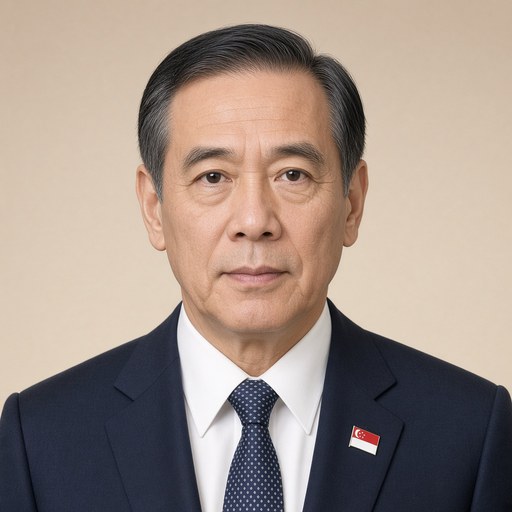
Prime Minister Lee Hsien Loong at the Special Session of the Nikkei International Conference on the Future of Asia.
 Lee Hsien Loong · Prime Minister of Singapore
- Context
- Lee addressed a special session of the Nikkei International Conference on the Future of Asia on 29 September 2016, marking 50 years of Singapore-Japan diplomatic relations.
- Main themes
- Singapore-Japan diplomatic relations, rise of China, global economic uncertainty, Asia's regional dynamics, protectionism and anti-globalisation, South China Sea disputes, international order and major power adjustments, ASEAN, One Belt One Road, Asian infrastructure, terrorism, Brexit and Western political instability
- Duration
- ~38 min
- Words
- 4,589
- Sentences
- 278
- Readability
- 36
- Grade
- 12.3
- Syntax
- 2.90
- Vocabulary
- 2.24
Translated from Multiple languages
The broad sphere of national life a sentence belongs to. Every sentence has an Arena, so it is the denominator the other indices are read against.
Other278 sentences in 43 paragraphs
Mr. Tsuneo Kita, Chairman and Group CEO
Mr. Naotoshi Okada, President and CEO
Distinguished Guests, Ladies and Gentlemen
I am very happy to address this special session of the Nikkei Conference. I last spoke at the Conference two years ago, on its 20th anniversary. This occasion is special, because we are celebrating 50 years of diplomatic relations between Singapore and Japan. My visit reflects Japan’s deep and enduring relationship with Singapore and with the region.
Setting the Context
We are meeting at a time of great change and uncertainty. Seven years after the Global Financial Crisis, many economies are still under-performing. Wages are stagnant. Workers are anxious about jobs. Protectionist, anti-immigrant, anti-globalisation sentiments are prevalent. Extremist protest parties on both the left and right are putting governments under pressure. The EU faces fundamental problems ranging from refugees to Euroscepticism and Brexit, while the US is in the midst of a troubled and untypical Presidential election. Terrorism is a problem for many countries. Compared to the rest of the world, Asia is not doing badly. The region is dynamic, and offers many opportunities, from serving the growing middle class populations to building badly needed infrastructure. But of course Asia too has its own issues. Rapid change brings its own problems, plus each country has its own preoccupations, whether these are political, economic, or security. The biggest change in Asia, and the world, is the rise of China. China’s GDP grew at an average of more than 10 per cent per year for over 30 years, growing more than 25 times. Its external trade has become huge. China is now the biggest trading partner of almost every ASEAN country, and also of Japan. China’s outbound direct investment is growing rapidly, and by last year (2015) its outbound Foreign Direct Investment exceeded its Foreign Direct Investment (inbound). China’s rise has had an impact on everyone, and I would like to make three points on China. One, China’s rise has been, overall, a huge plus for the world. China is stable, prospering and increasingly integrated into the global economy. Hundreds of millions of Chinese have been lifted out of poverty. Consumers worldwide have benefited from affordable and high quality exports from China: clothes, smartphones, home appliances, and much more. Companies everywhere eye the huge China market, hoping to sell everything from aeroplanes to life insurance and healthcare. China’s success, and its growing inter-dependence with other countries, has contributed greatly to the prosperity of Asia, and the world. Secondly, China’s rise requires every country to make major adjustments. China itself, smaller countries around the world and the other powers. This calls for restraint and wisdom from all sides. China itself has to adjust to its new role in the world, and take on new responsibilities as an emerging major power. China has started to do some of this, as shown by China’s growing contributions to UN peacekeeping operations, and their early ratification of the Paris Agreement on climate change. At the same time, China should be mindful of the natural unease and apprehension that its rapid rise elicits in its neighbours and other powers. It should act in such a way as to demonstrate that it is committed to building win-win relationships with other countries, and that while it seeks to revise existing frameworks and rules, it is not about to overturn the established international order which it has itself benefited from. As for smaller countries, they will have to take the policies and interests of an emerging major player more into our calculations. However, we can also benefit from new opportunities for trade and economic cooperation with China, for example through projects of the Asian Infrastructure Investment Bank and the “One Belt, One Road” initiatives, which address Asia’s need for better infrastructure and connectivity. On the part of the other major powers, they should accommodate the legitimate interests of a growing China. China wants more influence over global developments, like other major powers. It will increase its contributions to international cooperation, in accordance with its capabilities, resources and interests, and in the hope of having more say at institutions such as the UN, IMF and World Bank. These aspirations need to be recognised, and given due weight and consideration by the other powers. Such a major shift in the strategic balance will not happen effortlessly. We have to expect frictions and disputes from time to time, especially between neighbours, because each country has its own national interests. It is thus not surprising that China is involved in territorial and maritime disputes in the South China Sea and the East China Sea. But all sides have a vested interest in reaching a new and workable balance, and in minimising conflict. For if countries fail to work together, we are not just losing opportunities to prosper together, but are also putting at serious risk all that we have achieved so far. Ultimately, a stable external environment is eminently in China’s interest. China’s prosperity depends on other countries too. Despite its size, China is not self-sufficient, and cannot be. On its own, minus access to world markets, foreign technology and MNC investments, China will be much poorer off. Furthermore, external peace and stability will allow China to focus on its domestic challenges, which are considerable. Thirdly, on China, we should recognise that China’s emergence has not been, and will not be, completely smooth. There are serious internal challenges, and successive challenges will only become even more complex and difficult to overcome. China’s economic base has greatly expanded, but now that the economy is at a higher level, the pace of growth has inevitably slowed. Its present challenges are pressing: the low wage, export-driven model of growth is reaching its limits; the environmental impact has become enormous; there are growing demands to improve public services; and the population is rapidly ageing. Tackling these requires China to address fundamental issues of economic restructuring, social reform, political evolution. And all these involve difficult trade-offs and risks. Therefore we cannot extrapolate from the last 30 years of China’s transformation, and assume another 30 years of equally spectacular change. Instead we should see China as a country with a very successful economy, but one which also has its share of challenges and constraints, like everyone else. Its outlook is promising, but its path to continued success is not linear. Chinese leaders have realistically acknowledged that China has entered a “new norm”. They are clearly mindful of the challenges ahead, but appear determined and confident to tackle the structural, social and economic changes that China needs to achieve its growth objectives. We certainly hope that China will succeed. This is because a stable and prosperous China conscious of its weight and responsibilities, moving forward on a path of “Peaceful Development”, will greatly benefit the Asia-Pacific, and bode well for the world.
Japan
But a military alliance does not exist independent of the overall relationship. For the US-Japan Security Alliance to endure, there must also be shared and growing economic interest and partnership between the US and Japan. That is why the TPP is strategically important. It will deepen US engagement with Japan and the region. In turn, America’s continued interest in Asia will enhance Asia’s security and stability, and provide the basis for all countries in the region to grow in peace. If Japan can maintain good relations with your neighbours and the powers, it will make it easier to advance Mr Abe’s Proactive Contribution to Peace policy and also Japan’s Legislation for Peace and Security, within the US-Japan Security Alliance. Singapore supports these initiatives, which call for an inclusive and rules-based regional architecture, and will enable Japan to play a larger role in regional affairs.
Thirdly, we hope Japan will continue to play an active and constructive role in Asia, especially Southeast Asia, as it started doing in the 1960s and 1970s. In 1977, Prime Minister Fukuda stated the Fukuda Doctrine, committing Japan to peace, and to cooperating as an equal partner of the ASEAN group and its member countries. This was at a crucial moment in ASEAN’s development. The Vietnam War had just ended, and for many ASEAN countries, the future looked very uncertain. Japan’s economy was then growing vigorously. Your companies were becoming world leaders in many different fields – finance, electronics, cars, ship-building, heavy engineering. The Fukuda Doctrine and Japanese foreign direct investments made a tremendous impact on Asia. Japan led the flying geese of the Newly Industrialised Economies (i.e. Singapore, ROK, Hong Kong and Taiwan) to grow rapidly. Certainly in Singapore, Japanese in Singapore and the Japanese linkage made a tremendous difference to us. But after 1990, as Japan experienced protracted economic troubles, your attention understandably turned to domestic matters. Nevertheless, you have maintained your relationship with ASEAN and Asia-Pacific. You participated in security and regional forums, provided aid to less-developed countries, and expanded your trade links. Today, Japan remains an important player with great influence. You have a full agenda of cooperation with ASEAN. You have an ASEAN-Japan Comprehensive Economic Partnership, the goods chapter is implemented, Trade and Services and the Movement of Natural Persons are chapters which have already been negotiated, although not yet signed. Japan is also participating in the Master Plan on ASEAN Connectivity, and contributing substantial financing for infrastructure – US$200 billion – under the “Partnership for Quality Infrastructure”. I hope you will further develop your ties with ASEAN and the region. The TPP and the RCEP will promote economic integration. A liberal ASEAN Japan Air Services Agreement will benefit business and tourism. The East Asia Summit and APEC forums will foster an open and inclusive regional architecture. I hope Japan will engage actively in all of these areas.
Conclusion
The Asia-Pacific is entering a period where we must navigate both major geopolitical shifts and difficult internal conditions. Countries can only succeed in this challenging environment by strengthening our cooperation, and not by turning inwards.
This is even more important for key players like Japan, who influence the tone for the region. Japan has played an important and positive role for decades, promoting regional peace, stability and development. I hope you will continue to play this constructive role and keep on promoting regional peace, stability and development for many years to come.
Thank you.
But military alliances are part of the overall relationship. For the U.S.-Japan security alliance to continue, there must also be common and increasingly expanding economic interests and partnerships between the two countries. This is precisely the strategic importance of the Trans-Pacific Partnership Agreement. It will deepen the relationship between the United States and Japan and the region. Furthermore, the United States' continued focus on Asia will strengthen security and stability in Asia, providing a foundation for all countries in the region to develop in a peaceful environment.
If Japan can maintain good relations with its neighbors and major powers, it can more easily implement Prime Minister Abe's "proactive pacifism" policy and Japan's Peace and Security Legislation within the framework of the U.S.-Japan security alliance. Singapore supports these calls for the establishment of an inclusive and rule-based regional framework that allows Japan to play a larger role in regional and global affairs.
Thirdly, since the 1960s and 1970s, Japan has begun to play an active and constructive role in Asia, especially in Southeast Asia. We hope Japan will continue to do so. In 1977, Japanese Prime Minister Takeo Fukuda proposed the "Fukuda Doctrine," committing Japan to becoming a peace-loving nation and cooperating with ASEAN and its member states as an equal partner. It was a critical moment for ASEAN's development. The Vietnam War had just ended, and the outlook seemed very unstable for many ASEAN countries. Japan's economy was booming at that time. Japanese companies were leading globally in finance, electronics, automotive, shipbuilding, heavy engineering, and other fields. The "Fukuda Doctrine" and Japan's overseas direct investment had a significant impact on Asia. Under Japan's leadership, emerging industrial economies (Singapore, South Korea, Hong Kong, and Taiwan) grew rapidly. For Singapore, Japanese enterprises and investments from Japan have played a significant role in our economic development.
After 1990, Japan experienced a prolonged economic downturn, and understandably shifted its focus to domestic affairs. However, Japan has maintained its relationships with ASEAN and the Asia-Pacific region. Japan has participated in security and regional forums, provided aid to less developed countries, and expanded trade ties.
Today, Japan remains a country with significant influence and plays an important role. Japan and ASEAN have a comprehensive cooperation agenda. The goods portion of the "ASEAN-Japan Comprehensive Economic Partnership" has been implemented, while the trade services and movement of natural persons portions have been negotiated but not yet signed. Japan is also involved in the Master Plan on ASEAN Connectivity and will invest $200 billion in the Partnership for Quality Infrastructure.
I hope Japan will further deepen its relationship with ASEAN and the region. The Trans-Pacific Partnership Agreement and the Regional Comprehensive Economic Partnership (RCEP) will promote economic integration. The air services agreement between ASEAN and Japan will benefit businesses and the tourism industry. The East Asia Summit and the Asia-Pacific Economic Cooperation will promote an open and inclusive regional framework. I hope Japan will actively participate in all these areas.
Conclusion
The Asia-Pacific region is entering a period where we must address significant geopolitical shifts and difficult internal situations. Countries must strengthen cooperation rather than become introspective to succeed in this challenging environment.
This is especially important for major players like Japan, which can influence the regional atmosphere. For decades, Japan has played an important and positive role in promoting peace, stability, and development in the region. I hope Japan will continue to play this constructive role in the future.
PM Lee also held a dialogue session with the audience after his speech. You may read the transcript of the dialogue here.
A Chinese translation of the transcript is available below.
Mr. Tsuneo Kita, Chairman and Group CEO Mr. Naotoshi Okada, President and CEO Distinguished Guests, Ladies and Gentlemen
I am very happy to address this special session of the Nikkei Conference. I last spoke at the Conference two years ago, on its 20th anniversary. This occasion is special because we are celebrating 50 years of diplomatic relations between Singapore and Japan. My visit reflects Japan’s deep and enduring relationship with Singapore and with the region.
Setting the Context
We are meeting at a time of great change and uncertainty. Seven years after the Global Financial Crisis, many economies are still underperforming. Wages are stagnant. Workers are anxious about jobs. Protectionist, anti-immigrant, anti-globalization sentiments are prevalent. Extremist protest parties on both the left and right are putting governments under pressure. The EU faces fundamental problems ranging from refugees to Euroscepticism and Brexit, while the U.S. is in the midst of a troubled and untypical Presidential election. Terrorism is a problem for many countries. Compared to the rest of the world, Asia is not doing badly. The region is dynamic and offers many opportunities, from serving the growing middle-class populations to building badly needed infrastructure. But of course, Asia too has its own issues. Rapid change brings its own problems, plus each country has its own preoccupations, whether these are political, economic, or security. The biggest change in Asia, and the world, is the rise of China. China’s GDP grew at an average of more than 10 percent per year for over 30 years, growing more than 25 times. Its external trade has become huge. China is now the biggest trading partner of almost every ASEAN country, and also of Japan. China’s outbound direct investment is growing rapidly, and by last year (2015) its outbound Foreign Direct Investment exceeded its Foreign Direct Investment (inbound). China’s rise has had an impact on everyone, and I would like to make three points on China. One, China’s rise has been, overall, a huge plus for the world. China is stable, prospering, and increasingly integrated into the global economy. Hundreds of millions of Chinese have been lifted out of poverty. Consumers worldwide have benefited from affordable and high-quality exports from China: clothes, smartphones, home appliances, and much more. Companies everywhere eye the huge China market, hoping to sell everything from airplanes to life insurance and healthcare. China’s success, and its growing interdependence with other countries, has contributed greatly to the prosperity of Asia and the world. Secondly, China’s rise requires every country to make major adjustments. China itself, smaller countries around the world, and the other powers. This calls for restraint and wisdom from all sides. China itself has to adjust to its new role in the world and take on new responsibilities as an emerging major power. China has started to do some of this, as shown by China’s growing contributions to UN peacekeeping operations and their early ratification of the Paris Agreement on climate change. At the same time, China should be mindful of the natural unease and apprehension that its rapid rise elicits in its neighbors and other powers. It should act in such a way as to demonstrate that it is committed to building win-win relationships with other countries, and that while it seeks to revise existing frameworks and rules, it is not about to overturn the established international order from which it has itself benefited. As for smaller countries, they will have to take the policies and interests of an emerging major player more into our calculations. However, we can also benefit from new opportunities for trade and economic cooperation with China, for example through projects of the Asian Infrastructure Investment Bank and the “One Belt, One Road” initiatives, which address Asia’s need for better infrastructure and connectivity. On the part of the other major powers, they should accommodate the legitimate interests of a growing China. China wants more influence over global developments, like other major powers. It will increase its contributions to international cooperation, in accordance with its capabilities, resources, and interests, and in the hope of having more say at institutions such as the UN, IMF, and World Bank. These aspirations need to be recognized and given due weight and consideration by the other powers. Such a major shift in the strategic balance will not happen effortlessly. We have to expect frictions and disputes from time to time, especially between neighbors, because each country has its own national interests. It is thus not surprising that China is involved in territorial and maritime disputes in the South China Sea and the East China Sea. But all sides have a vested interest in reaching a new and workable balance and in minimizing conflict. For if countries fail to work together, we are not just losing opportunities to prosper together, but are also putting at serious risk all that we have achieved so far. Ultimately, a stable external environment is eminently in China’s interest. China’s prosperity depends on other countries too. Despite its size, China is not self-sufficient and cannot be. On its own, minus access to world markets, foreign technology, and MNC investments, China will be much poorer off. Furthermore, external peace and stability will allow China to focus on its domestic challenges, which are considerable. Thirdly, on China, we should recognize that China’s emergence has not been, and will not be, completely smooth. There are serious internal challenges, and successive challenges will only become even more complex and difficult to overcome. China’s economic base has greatly expanded, but now that the economy is at a higher level, the pace of growth has inevitably slowed. Its present challenges are pressing: the low wage, export-driven model of growth is reaching its limits; the environmental impact has become enormous; there are growing demands to improve public services; and the population is rapidly aging. Tackling these requires China to address fundamental issues of economic restructuring, social reform, and political evolution. And all these involve difficult trade-offs and risks. Therefore we cannot extrapolate from the last 30 years of China’s transformation and assume another 30 years of equally spectacular change. Instead, we should see China as a country with a very successful economy, but one which also has its share of challenges and constraints, like everyone else. Its outlook is promising, but its path to continued success is not linear. Chinese leaders have realistically acknowledged that China has entered a “new norm.” They are clearly mindful of the challenges ahead, but appear determined and confident to tackle the structural, social, and economic changes that China needs to achieve its growth objectives. We certainly hope that China will succeed. This is because a stable and prosperous China conscious of its weight and responsibilities, moving forward on a path of “Peaceful Development,” will greatly benefit the Asia-Pacific and bode well for the world.
But a military alliance does not exist independent of the overall relationship. For the US-Japan Security Alliance to endure, there must also be shared and growing economic interest and partnership between the US and Japan. That is why the TPP is strategically important. It will deepen US engagement with Japan and the region. In turn, America’s continued interest in Asia will enhance Asia’s security and stability, and provide the basis for all countries in the region to grow in peace. If Japan can maintain good relations with your neighbours and the powers, it will make it easier to advance Mr Abe’s Proactive Contribution to Peace policy and also Japan’s Legislation for Peace and Security, within the US-Japan Security Alliance. Singapore supports these initiatives, which call for an inclusive and rules-based regional architecture, and will enable Japan to play a larger role in regional affairs.
Thirdly, we hope Japan will continue to play an active and constructive role in Asia, especially Southeast Asia, as it started doing in the 1960s and 1970s. In 1977, Prime Minister Fukuda stated the Fukuda Doctrine, committing Japan to peace, and to cooperating as an equal partner of the ASEAN group and its member countries. This was at a crucial moment in ASEAN’s development. The Vietnam War had just ended, and for many ASEAN countries, the future looked very uncertain. Japan’s economy was then growing vigorously. Your companies were becoming world leaders in many different fields – finance, electronics, cars, ship-building, heavy engineering. The Fukuda Doctrine and Japanese foreign direct investments made a tremendous impact on Asia. Japan led the flying geese of the Newly Industrialised Economies (i.e. Singapore, ROK, Hong Kong and Taiwan) to grow rapidly. Certainly in Singapore, Japanese in Singapore and the Japanese linkage made a tremendous difference to us. But after 1990, as Japan experienced protracted economic troubles, your attention understandably turned to domestic matters. Nevertheless, you have maintained your relationship with ASEAN and Asia-Pacific. You participated in security and regional forums, provided aid to less-developed countries, and expanded your trade links. Today, Japan remains an important player with great influence. You have a full agenda of cooperation with ASEAN. You have an ASEAN-Japan Comprehensive Economic Partnership, the goods chapter is implemented, Trade and Services and the Movement of Natural Persons are chapters which have already been negotiated, although not yet signed. Japan is also participating in the Master Plan on ASEAN Connectivity, and contributing substantial financing for infrastructure – US$200b – under the “Partnership for Quality Infrastructure”. I hope you will further develop your ties with ASEAN and the region. The TPP and the RCEP will promote economic integration. A liberal ASEAN Japan Air Services Agreement will benefit business and tourism. The East Asia Summit and APEC forums will foster an open and inclusive regional architecture. I hope Japan will engage actively in all of these areas.
Conclusion
The Asia-Pacific is entering a period where we must navigate both major geopolitical shifts and difficult internal conditions. Countries can only succeed in this challenging environment by strengthening our cooperation, and not by turning inwards.
This is even more important for key players like Japan, who influence the tone for the region. Japan has played an important and positive role for decades, promoting regional peace, stability and development. I hope you will continue to play this constructive role and keep on promoting regional peace, stability and development for many years to come.
Thank you.
However, military alliances are part of the overall relationship. For the U.S.-Japan security alliance to continue, there must also be common and increasingly expanding economic interests and partnerships between the two countries. This is precisely the strategic importance of the Trans-Pacific Partnership Agreement. It will deepen the relationship between the United States and Japan and the region. Moreover, the United States' continued focus on Asia will strengthen security and stability in Asia, providing a foundation for all countries in the region to develop in a peaceful environment.
If Japan can maintain good relations with its neighbors and major powers, it can more easily implement Prime Minister Abe's "proactive pacifism" policy and Japan's Peace and Security Legislation under the framework of the U.S.-Japan security alliance. Singapore supports these calls for the establishment of an inclusive and rule-based regional framework that would allow Japan to play a larger role in regional and global affairs.
Thirdly, since the 1960s and 1970s, Japan has begun to play an active and constructive role in Asia, especially in Southeast Asia. We hope Japan will continue to do so. In 1977, Japanese Prime Minister Takeo Fukuda proposed the "Fukuda Doctrine," committing to making Japan a peace-loving nation and cooperating with ASEAN and its member states as an equal partner. It was a critical moment for ASEAN's development. The Vietnam War had just ended, and the prospects looked very unstable for many ASEAN countries. Japan's economy was booming at that time. Japanese companies were leading globally in finance, electronics, automotive shipbuilding, and heavy engineering. The "Fukuda Doctrine" and Japan's overseas direct investment had a significant impact on Asia. Under Japan's leadership, emerging industrial economies (Singapore, South Korea, Hong Kong, and Taiwan) grew rapidly. For Singapore, Japanese enterprises and investments from Japan have played a significant role in our economic development.
After 1990, Japan experienced a prolonged economic downturn, and understandably, its focus shifted to domestic affairs. However, Japan still maintained its relationships with ASEAN and the Asia-Pacific region. Japan participated in security and regional forums, provided aid to less developed countries, and expanded trade links.
Today, Japan remains a country with significant influence and plays an important role. Japan and ASEAN have a comprehensive cooperation agenda. The goods portion of the "ASEAN-Japan Comprehensive Economic Partnership" has been implemented, while the trade services and movement of natural persons portions have been negotiated but not yet signed. Japan is also involved in the Master Plan on ASEAN Connectivity and will invest $200 billion in the Partnership for Quality Infrastructure.
I hope Japan will further deepen its relationships with ASEAN and the region. The Trans-Pacific Partnership Agreement and the Regional Comprehensive Economic Partnership (RCEP) will promote economic integration. The air services agreement between ASEAN and Japan will benefit businesses and the tourism industry. The East Asia Summit and the Asia-Pacific Economic Cooperation will promote an open and inclusive regional framework. I hope Japan will actively participate in all these areas.
Conclusion
The Asia-Pacific region is entering a period where we must address significant geopolitical shifts and challenging internal situations. Countries must strengthen cooperation rather than become inward-looking to succeed in this challenging environment.
This is particularly important for Japan, a major player that can influence the regional atmosphere. For decades, Japan has played an important and positive role in promoting peace, stability, and development in the region. I hope Japan will continue to play this constructive role in the future.
The original Multiple languages. The tags above are read on the English translation's sentences.
Mr Tsuneo Kita, Chairman and Group CEO Mr Naotoshi Okada, President and CEO Distinguished Guests, Ladies and Gentlemen
I am very happy to address this special session of the Nikkei Conference. I last spoke at the Conference two years ago, on its 20thanniversary. This occasion is special, because we are celebrating 50 years of diplomatic relations between Singapore and Japan. My visit reflects Japan’s deep and enduring relationship with Singapore and with the region.
Setting the Context
We are meeting at a time of great change and uncertainty. Seven years after the Global Financial Crisis, many economies are still under-performing. Wages are stagnant. Workers are anxious about jobs. Protectionist, anti-immigrant, anti-globalisation sentiments are prevalent. Extremist protest parties on both the left and right are putting governments under pressure. The EU faces fundamental problems ranging from refugees to Euroscepticism and Brexit, while the US is in the midst of a troubled and untypical Presidential election. Terrorism is a problem for many countries. Compared to the rest of the world, Asia is not doing badly. The region is dynamic, and offers many opportunities, from serving the growing middle class populations to building badly needed infrastructure. But of course Asia too has its own issues. Rapid change brings its own problems, plus each country has its own preoccupations, whether these are political, economic, or security. The biggest change in Asia, and the world, is the rise of China. China’s GDP grew at an average of more than 10 per cent per year for over 30 years, growing more than 25 times. Its external trade has become huge. China is now the biggest trading partner of almost every ASEAN country, and also of Japan. China’s outbound direct investment is growing rapidly, and by last year (2015) its outbound Foreign Direct Investment exceeded its Foreign Direct Investment (inbound). China’s rise has had an impact on everyone, and I would like to make three points on China. One, China’s rise has been, overall, a huge plus for the world. China is stable, prospering and increasingly integrated into the global economy. Hundreds of millions of Chinese have been lifted out of poverty. Consumers worldwide have benefited from affordable and high quality exports from China: clothes, smartphones, home appliances, and much more. Companies everywhere eye the huge China market, hoping to sell everything from aeroplanes to life insurance and healthcare. China’s success, and its growing inter-dependence with other countries, has contributed greatly to the prosperity of Asia, and the world. Secondly, China’s rise requires every country to make major adjustments. China itself, smaller countries around the world and the other powers. This calls for restraint and wisdom from all sides. China itself has to adjust to its new role in the world, and take on new responsibilities as an emerging major power. China has started to do some of this, as shown by China’s growing contributions to UN peacekeeping operations, and their early ratification of the Paris Agreement on climate change. At the same time, China should be mindful of the natural unease and apprehension that its rapid rise elicits in its neighbours and other powers. It should act in such a way as to demonstrate that it is committed to building win-win relationships with other countries, and that while it seeks to revise existing frameworks and rules, it is not about to overturn the established international order which it has itself benefited from. As for smaller countries, they will have to take the policies and interests of an emerging major player more into our calculations. However, we can also benefit from new opportunities for trade and economic cooperation with China, for example through projects of the Asian Infrastructure Investment Bank and the “One Belt, One Road” initiatives, which address Asia’s need for better infrastructure and connectivity. On the part of the other major powers, they should accommodate the legitimate interests of a growing China. China wants more influence over global developments, like other major powers. It will increase its contributions to international cooperation, in accordance with its capabilities, resources and interests, and in the hope of having more say at institutions such as the UN, IMF and World Bank. These aspirations need to be recognised, and given due weight and consideration by the other powers. Such a major shift in the strategic balance will not happen effortlessly. We have to expect frictions and disputes from time to time, especially between neighbours, because each country has its own national interests. It is thus not surprising that China is involved in territorial and maritime disputes in the South China Sea and the East China Sea. But all sides have a vested interest in reaching a new and workable balance, and in minimising conflict. For if countries fail to work together, we are not just losing opportunities to prosper together, but are also putting at serious risk all that we have achieved so far. Ultimately, a stable external environment is eminently in China’s interest. China’s prosperity depends on other countries too. Despite its size, China is not self-sufficient, and cannot be. On its own, minus access to world markets, foreign technology and MNC investments, China will be much poorer off. Furthermore, external peace and stability will allow China to focus on its domestic challenges, which are considerable. Thirdly, on China, we should recognise that China’s emergence has not been, and will not be, completely smooth. There are serious internal challenges, and successive challenges will only become even more complex and difficult to overcome. China’s economic base has greatly expanded, but now that the economy is at a higher level, the pace of growth has inevitably slowed. Its present challenges are pressing: the low wage, export-driven model of growth is reaching its limits; the environmental impact has become enormous; there are growing demands to improve public services; and the population is rapidly ageing. Tackling these requires China to address fundamental issues of economic restructuring, social reform, political evolution. And all these involve difficult trade-offs and risks. Therefore we cannot extrapolate from the last 30 years of China’s transformation, and assume another 30 years of equally spectacular change. Instead we should see China as a country with a very successful economy, but one which also has its share of challenges and constraints, like everyone else. Its outlook is promising, but its path to continued success is not linear. Chinese leaders have realistically acknowledged that China has entered a “new norm”. They are clearly mindful of the challenges ahead, but appear determined and confident to tackle the structural, social and economic changes that China needs to achieve its growth objectives. We certainly hope that China will succeed. This is because a stable and prosperous China conscious of its weight and responsibilities, moving forward on a path of “Peaceful Development”, will greatly benefit the Asia-Pacific, and bode well for the world.
Japan
Against this strategic backdrop and these changes in Asia, I believe Japan also has an important role to play. For many decades, Japan has promoted peace, stability and development in the region and made valuable contributions. But changes in Japan and the region mean that Japan must evolve in order to keep on doing this. Let me make three comments, speaking as an outsider who wishes Japan well and admires Japan. First, I hope that Japan succeeds in reinvigorating its economy. Domestically, Japan has deep-seated economic challenges. PM Abe is tackling them with his three arrows, of which the third – structural reforms – is the most important. The structural reforms are underway, including reforms in your foreign labour policy, reforms to encourage women to enter the workforce, and to liberalise and modernise your agricultural sector. I urge Japan to take bolder moves, because more needs to be done. An economically vigorous Japan is a precondition for sustaining an active role in the Asia-Pacific. Japan needs not only domestic reforms, but also to maintain an outward orientation, engaging with the world. In a globalised world, countries succeed not just through their own capabilities, but by understanding other countries and cultures, interacting with them, and absorbing talent and ideas from others. This is the great strength of the US. Japan is, however, a much more homogeneous society than the US. It also does not have the advantage that the US enjoys, of the rest of the world speaking the same language as itself. Therefore, Japan needs to make a greater effort to expose its people to the world, especially the young. One avenue is for Japan to send your young people abroad, to study in top universities overseas. Ivy League colleges in the US used to take in more Japanese students. But in recent decades, the number of Japanese students has gone down, whereas the number of Korean and Chinese students has gone up. Now, there are more Korean than Japanese students studying in Ivy League colleges, although Korea has less than half the population of Japan. There probably are reasons for this. There must be. But if more young Japanese can be exposed to study abroad with the best and brightest from around the world, and then come back and be integrated back into Japanese society and economy, bringing with them different perspectives and approaches, this can only enrich and invigorate Japan. Indeed, this is what Japan did in the Meiji Restoration. Another avenue to strengthen Japan’s outward orientation is through free trade. This is one reason the Trans-Pacific Partnership (TPP) is such an important initiative for Japan. PM Abe made a bold and decisive move to join the TPP. He sent a clear signal that Japan intends to maintain an outward orientation. The TPP will also help Japan to bring about needed domestic change, and make the economy more competitive, including in sensitive areas. The TPP still needs to be ratified by its members, including by the US and Japan. Singapore was one of the four original founders of the TPP’s predecessor, the P4 together with Chile, Brunei, New Zealand. We have consistently encouraged and supported Japan joining the TPP negotiations. Japan’s Diet will soon be debating TPP ratification, in fact these few days. We naturally hope that the TPP clears the Diet, whatever happens in the US. Japan’s decision carries weight, being the second largest economy in the TPP-12 and the third largest in the world. We should also welcome China to join the TPP eventually, because the TPP is not just aimed at the 12 current members but a pathway to free trade in the Asia Pacific. Secondly, I hope Japan will have stable and peaceful relations with its neighbours and big powers, in particular with China and the US. Stable and peaceful relations with neighbours are not something that Japan can achieve alone. It takes two hands to clap. All parties have to work together towards such a win-win outcome. Therefore, I am glad that Japan has made progress with ROK on the issue of comfort women. With China, Japan’s relationship is more complicated, because the wounds of war have not completely healed. Three years ago in Shenyang, China, I visited the 9.18 Historical Museum. The 9.18 is the Shenyang Incident or the Mukden Incident marked the beginning of the Sino-Japanese War. I wanted to see how the museum portrayed this tragic historical episode. At the end of the tour, my hosts invited me to pen my thoughts in the guestbook. I wrote “和平无价” – “peace is priceless”. We are fortunate that Northeast Asia has been at peace (or at least has not been at war) since the Korean War ended more than 60 years ago. But if the peace is shaken, either because territorial disputes escalate out of control, or because tensions on the Korean peninsula destabilise the region, it will be big trouble. All the issues at stake in the various disputes will not be worth the price of war. Till today, China and Japan still have differences, including over the Senkakus/Diaoyu islands. But I hope both countries will work together to manage the disputes and also to pursue opportunities, and not see the relationship as a zero-sum game. The Japan-China relationship is simultaneously competitive and cooperative. It will require effort and accommodation on both sides. Therefore, I welcome the recent meeting between President Xi Jinping and Prime Minister Abe at G20 Summit in Hangzhou. Direct communication is the first step towards mutual understanding and resolution of differences. If both China and Japan work hard at it and avoid mishaps, both will save themselves a lot of problems, and the region will heave an enormous collective sigh of relief. With the US, I hope that Japan will maintain your strong links. The US-Japan Security Alliance has played an important role since the war. The Alliance continues to be a cornerstone of regional stability, because it anchors the US in the region, and restrains countries in Northeast Asia from escalating their disputes. The US nuclear umbrella helps Japan to maintain its long-standing policy against nuclear weapons. It also mitigates the risk that Japan may be forced to respond to the DPRK’s militarisation and nuclear programme, with unforeseeable and dangerous consequences. But a military alliance does not exist independent of the overall relationship. For the US Japan Security Alliance to endure, there must also be shared and growing economic interest and partnership between the US and Japan. That is why the TPP is strategically important. It will deepen US engagement with Japan and the region. In turn, America’s continued interest in Asia will enhance Asia’s security and stability, and provide the basis for all countries in the region to grow in peace. If Japan can maintain good relations with your neighbours and the powers, it will make it easier to advance Mr Abe’s Proactive Contribution to Peace policy and also Japan’s Legislation for Peace and Security, within the US-Japan Security Alliance. Singapore supports these initiatives, which call for an inclusive and rules-based regional architecture, and will enable Japan to play a larger role in regional affairs. Thirdly, we hope Japan will continue to play an active and constructive role in Asia, especially Southeast Asia, as it started doing in the 1960s and 1970s. In 1977, Prime Minister Fukuda stated the Fukuda Doctrine, committing Japan to peace, and to cooperating as an equal partner of the ASEAN group and its member countries. This was at a crucial moment in ASEAN’s development. The Vietnam War had just ended, and for many ASEAN countries, the future looked very uncertain. Japan’s economy was then growing vigorously. Your companies were becoming world leaders in many different fields – finance, electronics, cars, ship-building, heavy engineering. The Fukuda Doctrine and Japanese foreign direct investments made a tremendous impact on Asia. Japan led the flying geese of the Newly Industrialised Economies (i.e. Singapore, ROK, Hong Kong and Taiwan) to grow rapidly. Certainly in Singapore, Japanese in Singapore and the Japanese linkage made a tremendous difference to us. But after 1990, as Japan experienced protracted economic troubles, your attention understandably turned to domestic matters. Nevertheless, you have maintained your relationship with ASEAN and Asia-Pacific. You participated in security and regional forums, provided aid to less-developed countries, and expanded your trade links. Today, Japan remains an important player with great influence. You have a full agenda of cooperation with ASEAN. You have an ASEAN-Japan Comprehensive Economic Partnership, the goods chapter is implemented, Trade and Services and the Movement of Natural Persons are chapters which have already been negotiated, although not yet signed. Japan is also participating in the Master Plan on ASEAN Connectivity, and contributing substantial financing for infrastructure – US$200b – under the “Partnership for Quality Infrastructure”. I hope you will further develop your ties with ASEAN and the region. The TPP and the RCEP will promote economic integration. A liberal ASEAN Japan Air Services Agreement will benefit business and tourism. The East Asia Summit and APEC forums will foster an open and inclusive regional architecture. I hope Japan will engage actively in all of these areas.
Conclusion
The Asia-Pacific is entering a period where we must navigate both major geopolitical shifts and difficult internal conditions. Countries can only succeed in this challenging environment by strengthening our cooperation, and not by turning inwards
This is even more important for key players like Japan, who influence the tone for the region. Japan has played an important and positive role for decades, promoting regional peace, stability and development. I hope you will continue to play this constructive role and keep on promoting regional peace, stability and development for many years to come.
Thank you.
Chinese translation (courtesy of Zaobao)
很高兴受邀在这次日本经济新闻社特别国际大会上致辞。我上一次在这个场合演讲是两年前日本经济新闻社庆祝20周年纪念的时候。今年新加坡与日本庆祝建交50周年,是特殊的一年。我访问日本,反映了日本与新加坡及区域深厚和持久的关系。
当前局势
这是一个面对重大改变和不稳定的时期。全球金融危机发生七年后,许多经济体的表现仍然欠佳。工资停滞,工人对工作感到焦虑。保护主义、反移民和反全球化情绪普遍。左翼和右翼极端、抗议性政党让多国政府备感压力。欧盟面对移民、疑欧主义和英国脱欧等根本问题;美国则面对一次让人困扰、非比寻常的总统选举。恐怖主义对许多国家来说是个威胁。
和世界其他地方相比,亚洲的表现不算差。这是个有活力和充满机遇的区域,包括为日益扩大的中产阶级提供服务和兴建迫切需要的基础设施。当然,亚洲也有其自身问题。急速发展带来了问题,各国也有必须优先处理的政治、经济或安全课题。
亚洲和世界面对的最大改变是中国的崛起。三十多年来,中国的国内生产总值(GDP)平均年增长逾10%,增幅超过25倍。其对外贸易规模庞大,是亚细安几乎所有成员国和日本的最大贸易伙伴。中国的对外直接投资快速增长。去年,中国的海外直接投资超过它所吸引的外来直接投资。中国的崛起对所有国家都产生影响。对中国,我想提出三点看法。
第一,整体来说,中国的崛起给世界带来巨大好处。中国稳定、繁荣,也日渐融入全球经济。数以亿计的中国人得以脱贫。世界各地的消费者也从廉宜和高素质的中国出口获益,比如服饰、智能手机和家用电器。世界各地的企业,无论是售卖飞机、人寿保险、医疗服务还是其他产品服务,都希望从中国庞大的市场分一杯羹。中国的成功和同其他国家日益相互依存的关系,对亚洲和全世界的繁荣贡献巨大。
第二,每一个国家都因为中国的崛起而必须做出重大的调整,包括中国本身、世界各地的小国家和其他大国。这需要各方自我克制、发挥智慧。
中国自身也必须为它在世界的新角色做出调整,并承担一个崛起强国的新责任。中国已经开始在这方面展开一些行动,比如,中国更积极参与联合国维和行动,也在最近提前正式核准《巴黎气候变化协议》。
与此同时,中国应该理解它快速崛起让其邻国和其他大国自然产生的不安和疑虑。中国应该以行动来展示,它决心和其他国家建立双赢关系,在尝试重塑国际框架和规则的当儿,无意颠覆让它受惠的现有国际秩序。
较小的国家,如新加坡,则必须把崛起中强国的政策和利益多纳入我们的考量。然而,我们也可以从同中国的贸易与经济合作的新机会中受惠,比如通过亚洲基础设施投资银行的项目和“一带一路”计划满足亚洲对更好的基础设施和互通互联的需求。
其他大国应该容纳崛起中中国的合法权益。中国希望像其他大国一样,对世界的发展发挥更大影响力。中国将根据其能力、资源和利益,对国际合作做出更多贡献,希望在联合国、国际货币基金组织和世界银行等机构有更大话语权。其他大国必须认识到中国的这些期望并给以应有的重视与考量。
国际战略平衡上出现这种重大转变,过程肯定是不容易的。偶尔的摩擦或争执在所难免,尤其是邻近国家之间更有可能发生,因为每个国家都必须维护自己的国家利益。因此,中国在南中国海、东海所涉及的领土与海域争议并不让人感到意外。但是,致力达到一个可行的新平衡点,把冲突的可能减至最低,对各方都有实实在在的好处。如果各国不能相互合作,我们不但会失去一同繁荣发展的机会,也面对失去所取得的一切成果的重大风险。
说到底,一个稳定的外部环境明显对中国有利。中国的繁荣也有赖于其他国家。中国虽然幅员辽阔,但它不是也不可能成为一个自给自足的独立经济体。中国若是与世界脱轨,没有世界市场、外来技术和跨国公司的投资,只会对自己不利。此外,外部的和平与稳定也允许中国集中精神,应付相当严峻的国内挑战。
第三,我们应该认识到,中国的崛起并不是,也不会是一帆风顺的。中国面对重大的内部挑战,接下来的问题也只会变得更复杂、更棘手。中国的经济基础扩大了,但随着经济越来越发达,增长步伐也会无可避免地放缓。它目前的挑战是紧迫的:低工资、出口驱动的增长模式达到了极限;经济发展对环境带来庞大的影响;要求改善公共服务的呼声越来越大;人口也快速老化。要处理这些问题,中国必须正视经济重组、社会改革、政治体系演变等根本问题,而这些都牵涉到艰难的取舍和风险。
因此,我们不能根据中国过去30年的变革,假设接下来30年也会有同样让人惊叹的改变。相反的,我们应该把中国看成一个非常成功,但也有其挑战和制约的经济体,就像其他国家一样。中国的展望良好,但持续成功发展的道路却也可能是曲折的。
中国领导人坦诚表示中国已经进入“新常态”。他们很清楚眼前的挑战,不过对于实现中国的增长目标,并在结构、社会、经济等方面完成必要的转变,他们显得有决心和信心。
我们当然希望中国会成功。这是因为一个稳定和繁荣,了解自己力量和责任,并在“和平发展”道路上前进的中国,会为亚太地区乃至全世界带来很大的益处。
日本
在这样的战略背景和亚洲这些改变的情况下,我相信日本也可以扮演重要的角色。
过去几十年以来,日本在本区域提倡和平、稳定与发展,并在这些方面作出了重要贡献。不过日本自身与与区域所面临的变化,意味着日本若要坚持初衷,就必须改变策略。作为一个赞赏日本、祝福日本的外人,请允许我在这里提出三点。
首先,我希望日本成功重振其经济。在国内,日本面对根深蒂固的经济难题。首相安倍晋三的解决方案是他的三支箭,其中最重要的是第三支——结构性改革。结构性改革正在进行,包括改革外来劳工政策、鼓励妇女进入职场和开放农业市场及农业现代化。我希望日本采取更大刀阔斧的行动,因为要做的还很多。经济蓬勃发展,是日本在亚太区域维持积极角色的先决条件。
日本不但需要国内改革,也必须与世界紧密联系,维持关注外界事务。在一个全球化的世界,一个国家的成功不只是靠自身的能力,也靠了解其他国家和文化,同它们交流并吸收它们的人才和思想。这正是美国的一大强项。然而,日本基本上是个单一种族社会。它也没有美国的另一优势,即世界其他国家也使用与其相同的语言。因此,日本必须做出更大努力来让其人民认识世界,尤其是年轻人。
一个途径是把年轻人送出国,到海外顶尖大学就读。以往,美国“常青藤盟校”大学接收的日本学生较多。最近数十年来,日本学生的人数减少了,韩国与中国学生的数目却增加了。韩国人口不到日本一半,但目前在“常青藤盟校”大学就读的韩国学生却超过日本。这其中必定有其原因。但如果更多日本年轻人可以到海外,与来自世界各地最聪慧的学生一起学习,然后回国重新融入日本社会与经济,把不同的视角和想法带回日本,这将为日本注入活力。事实上,这正是日本明治维新时期的做法。
加强日本关注国外事务的另一方式是自由贸易。这是跨太平洋伙伴关系协定(TPP)对日本来说是如此重要计划的一个原因。安倍做出了加入协定的果断决定,发出了日本将继续关注外界的明确信号。协定也可以帮助日本推动迫切需要的国内改革,让日本经济变得更具竞争力,包括在敏感领域。
协定还需要签约国核准,包括美国和日本。新加坡是协定的前身P4的四个创始成员国之一,连同智利、文莱和新西兰其他三个创始成员国,我们也一直鼓励和支持日本加入谈判协定。日本国会将在这几天辩论核准协定一事。不管美国的情况如何,我们自然希望日本国会批准协定。日本是协定12个成员国中第二大经济体,也是全球第三大经济体,其决定有一定的分量。最终,我们也应该欢迎中国加入,因为协定不只是为了现有12个成员国,而是亚太区域走向自由贸易的途径。
其次,我希望日本同邻国和大国维持稳定与和平的关系,尤其是同中国和美国。
但同邻国保持稳定与和平的关系不是单靠日本就可以做到的。所谓孤掌难鸣。各方都必须为双赢结果付出努力。因此,我很高兴知道日本与韩国在慰安妇课题的谈判上取得了进展。
日本同中国的关系较为复杂,因为战争的伤痕远未痊愈。三年前,我参观了中国沈阳的“九一八”历史博物馆。盛京事变或沈阳事变是中日战争前奏。我想看看博物馆如何记述这历史悲剧。后来,我受邀在留言簿上留言时,写下了“和平无价”这四个字。
我们很幸运,朝鲜半岛战争结束逾60年以来,东北亚一直处于和平状态(或至少没有发生战争)。但如果领土争议升级到不可收拾的地步或朝鲜半岛的紧张氛围让区域陷入不稳定,而动摇了和平,那就麻烦了。各项争议中的所有课题,都不值得付出战争的代价。
到今天,中国和日本之间还存在分歧,包括尖阁诸岛/钓鱼岛的主权问题。但我希望两国能够合力处理争端并寻求合作机会,不要把双边关系视为零和游戏。
中日关系既有竞争,也有合作。双方都必须努力和包容。因此,我很高兴看到中国国家主席习近平和日本首相安倍晋三在最近的G20峰会会面。直接沟通是迈向相互了解和解决纠纷的第一步。如果中日加倍努力并避免意外事故,彼此将为自己省却许多问题,区域也可以大大松一口气。
我希望日本同美国维持紧密关系。二战结束以来,美日安全同盟一直扮演重要角色。它让美国留守区域并制止东北亚国家让争端升级,是区域稳定的基石。美国的核保护伞协助日本维持不发展核武器的一贯政策,也缓解了日本被迫对朝鲜的军事化和核计划做出反应,导致不可预见和危险后果的风险。
但军事同盟是整体关系的一部分。要美日安全同盟持续下去,两国之间也必须有共同和日益扩大的经济利益和伙伴关系。这正是跨太平洋伙伴关系协定的战略重要性。它将深化美国与日本和区域的关系。另外,美国继续关注亚洲,也将强化亚洲的安全和稳定,为区域所有国家在一个和平的环境中发展提供基础。
如果日本可以同邻国和大国维持良好关系,就可以在美日安全同盟框架下,较容易地推行安倍的“积极和平主义”政策和日本的《和平安全法制》。新加坡支持这些呼吁建立包容性和有章可循区域框架,可以让日本在区域和环球事务扮演更大角色的计划。
第三,日本自1960年代和1970年代以来,开始在亚洲,尤其是东南亚,扮演积极和建设性角色。我们希望日本继续这么做。1977年,日本首相福田赳夫提出“福田主义”(Fukuda Doctrine),承诺使日本成为和平国家和以平等伙伴身份同亚细安及其成员国合作。当时是亚细安发展的关键时刻。越南战争刚结束,对许多亚细安国家来说,前景看来很不稳定。日本的经济当时蓬勃发展。日本公司在金融、电子、汽车造船业、重型工程等领域领先全球。“福田主义”和日本的海外直接投资对亚洲影响重大。在日本带头下,新兴工业经济体(新加坡、韩国、香港和台湾)快速增长。对新加坡来说,日本企业与来自日本的投资对我们的经济发展起了很大的作用。
1990年后,日本经历了长期的经济困境,注意力也可以理解地转向国内事务。但日本还是维持同亚细安和亚太区域的关系。日本出席安全与区域论坛,为较不发达国家提供援助和扩大了贸易联系。
今天,日本还是有重大影响力和扮演重要角色的国家。日本和亚细安有全面的合作日程。“亚细安-日本全面经济伙伴关系”中商品的部分已经落实了,贸易服务和自然人流动部分已经谈判了但还没有签署协议。日本也参与《亚细安互联互通总体规划》(Master Planon ASEAN Connectivity),并将为“高质量基础设施合作伙伴计划(Partnership for Quality Infrastructure)投入2000亿美元。
我希望日本进一步深化同亚细安和区域的关系。跨太平洋伙伴关系协定和区域全面经济伙伴关系协定(RCEP)将促进经济整合。亚细安与日本之间的航空服务协议将让企业和旅游业受惠。东亚峰会和亚太经济合作会议将促进一个开放和包容性区域框架。我希望日本积极参与所有这些领域。
结论
亚太区域正进入一个我们必须应对重大地缘政治转变和艰难内部情况的时期。各国必须加强合作而不是变得内视,才能在这个充满挑战的环境取得成功。
对主要参与者和可以影响区域氛围的日本来说,这尤为重要。数十年来,日本一直扮演重要和正面的角色,促进区域的和平、稳定与发展。我希望日本未来将继续扮演这建设性角色。
PM Lee also held a dialogue session with the audience after his speech. You may read the transcript of the dialogue here.
A Chinese translation of the transcript is available below.
Mr Tsuneo Kita, Chairman and Group CEO Mr Naotoshi Okada, President and CEO Distinguished Guests, Ladies and Gentlemen
I am very happy to address this special session of the Nikkei Conference. I last spoke at the Conference two years ago, on its 20thanniversary. This occasion is special, because we are celebrating 50 years of diplomatic relations between Singapore and Japan. My visit reflects Japan’s deep and enduring relationship with Singapore and with the region.
Setting the Context
We are meeting at a time of great change and uncertainty. Seven years after the Global Financial Crisis, many economies are still under-performing. Wages are stagnant. Workers are anxious about jobs. Protectionist, anti-immigrant, anti-globalisation sentiments are prevalent. Extremist protest parties on both the left and right are putting governments under pressure. The EU faces fundamental problems ranging from refugees to Euroscepticism and Brexit, while the US is in the midst of a troubled and untypical Presidential election. Terrorism is a problem for many countries. Compared to the rest of the world, Asia is not doing badly. The region is dynamic, and offers many opportunities, from serving the growing middle class populations to building badly needed infrastructure. But of course Asia too has its own issues. Rapid change brings its own problems, plus each country has its own preoccupations, whether these are political, economic, or security. The biggest change in Asia, and the world, is the rise of China. China’s GDP grew at an average of more than 10 per cent per year for over 30 years, growing more than 25 times. Its external trade has become huge. China is now the biggest trading partner of almost every ASEAN country, and also of Japan. China’s outbound direct investment is growing rapidly, and by last year (2015) its outbound Foreign Direct Investment exceeded its Foreign Direct Investment (inbound). China’s rise has had an impact on everyone, and I would like to make three points on China. One, China’s rise has been, overall, a huge plus for the world. China is stable, prospering and increasingly integrated into the global economy. Hundreds of millions of Chinese have been lifted out of poverty. Consumers worldwide have benefited from affordable and high quality exports from China: clothes, smartphones, home appliances, and much more. Companies everywhere eye the huge China market, hoping to sell everything from aeroplanes to life insurance and healthcare. China’s success, and its growing inter-dependence with other countries, has contributed greatly to the prosperity of Asia, and the world. Secondly, China’s rise requires every country to make major adjustments. China itself, smaller countries around the world and the other powers. This calls for restraint and wisdom from all sides. China itself has to adjust to its new role in the world, and take on new responsibilities as an emerging major power. China has started to do some of this, as shown by China’s growing contributions to UN peacekeeping operations, and their early ratification of the Paris Agreement on climate change. At the same time, China should be mindful of the natural unease and apprehension that its rapid rise elicits in its neighbours and other powers. It should act in such a way as to demonstrate that it is committed to building win-win relationships with other countries, and that while it seeks to revise existing frameworks and rules, it is not about to overturn the established international order which it has itself benefited from. As for smaller countries, they will have to take the policies and interests of an emerging major player more into our calculations. However, we can also benefit from new opportunities for trade and economic cooperation with China, for example through projects of the Asian Infrastructure Investment Bank and the “One Belt, One Road” initiatives, which address Asia’s need for better infrastructure and connectivity. On the part of the other major powers, they should accommodate the legitimate interests of a growing China. China wants more influence over global developments, like other major powers. It will increase its contributions to international cooperation, in accordance with its capabilities, resources and interests, and in the hope of having more say at institutions such as the UN, IMF and World Bank. These aspirations need to be recognised, and given due weight and consideration by the other powers. Such a major shift in the strategic balance will not happen effortlessly. We have to expect frictions and disputes from time to time, especially between neighbours, because each country has its own national interests. It is thus not surprising that China is involved in territorial and maritime disputes in the South China Sea and the East China Sea. But all sides have a vested interest in reaching a new and workable balance, and in minimising conflict. For if countries fail to work together, we are not just losing opportunities to prosper together, but are also putting at serious risk all that we have achieved so far. Ultimately, a stable external environment is eminently in China’s interest. China’s prosperity depends on other countries too. Despite its size, China is not self-sufficient, and cannot be. On its own, minus access to world markets, foreign technology and MNC investments, China will be much poorer off. Furthermore, external peace and stability will allow China to focus on its domestic challenges, which are considerable. Thirdly, on China, we should recognise that China’s emergence has not been, and will not be, completely smooth. There are serious internal challenges, and successive challenges will only become even more complex and difficult to overcome. China’s economic base has greatly expanded, but now that the economy is at a higher level, the pace of growth has inevitably slowed. Its present challenges are pressing: the low wage, export-driven model of growth is reaching its limits; the environmental impact has become enormous; there are growing demands to improve public services; and the population is rapidly ageing. Tackling these requires China to address fundamental issues of economic restructuring, social reform, political evolution. And all these involve difficult trade-offs and risks. Therefore we cannot extrapolate from the last 30 years of China’s transformation, and assume another 30 years of equally spectacular change. Instead we should see China as a country with a very successful economy, but one which also has its share of challenges and constraints, like everyone else. Its outlook is promising, but its path to continued success is not linear. Chinese leaders have realistically acknowledged that China has entered a “new norm”. They are clearly mindful of the challenges ahead, but appear determined and confident to tackle the structural, social and economic changes that China needs to achieve its growth objectives. We certainly hope that China will succeed. This is because a stable and prosperous China conscious of its weight and responsibilities, moving forward on a path of “Peaceful Development”, will greatly benefit the Asia-Pacific, and bode well for the world.
Japan
Against this strategic backdrop and these changes in Asia, I believe Japan also has an important role to play. For many decades, Japan has promoted peace, stability and development in the region and made valuable contributions. But changes in Japan and the region mean that Japan must evolve in order to keep on doing this. Let me make three comments, speaking as an outsider who wishes Japan well and admires Japan. First, I hope that Japan succeeds in reinvigorating its economy. Domestically, Japan has deep-seated economic challenges. PM Abe is tackling them with his three arrows, of which the third – structural reforms – is the most important. The structural reforms are underway, including reforms in your foreign labour policy, reforms to encourage women to enter the workforce, and to liberalise and modernise your agricultural sector. I urge Japan to take bolder moves, because more needs to be done. An economically vigorous Japan is a precondition for sustaining an active role in the Asia-Pacific. Japan needs not only domestic reforms, but also to maintain an outward orientation, engaging with the world. In a globalised world, countries succeed not just through their own capabilities, but by understanding other countries and cultures, interacting with them, and absorbing talent and ideas from others. This is the great strength of the US. Japan is, however, a much more homogeneous society than the US. It also does not have the advantage that the US enjoys, of the rest of the world speaking the same language as itself. Therefore, Japan needs to make a greater effort to expose its people to the world, especially the young. One avenue is for Japan to send your young people abroad, to study in top universities overseas. Ivy League colleges in the US used to take in more Japanese students. But in recent decades, the number of Japanese students has gone down, whereas the number of Korean and Chinese students has gone up. Now, there are more Korean than Japanese students studying in Ivy League colleges, although Korea has less than half the population of Japan. There probably are reasons for this. There must be. But if more young Japanese can be exposed to study abroad with the best and brightest from around the world, and then come back and be integrated back into Japanese society and economy, bringing with them different perspectives and approaches, this can only enrich and invigorate Japan. Indeed, this is what Japan did in the Meiji Restoration. Another avenue to strengthen Japan’s outward orientation is through free trade. This is one reason the Trans-Pacific Partnership (TPP) is such an important initiative for Japan. PM Abe made a bold and decisive move to join the TPP. He sent a clear signal that Japan intends to maintain an outward orientation. The TPP will also help Japan to bring about needed domestic change, and make the economy more competitive, including in sensitive areas. The TPP still needs to be ratified by its members, including by the US and Japan. Singapore was one of the four original founders of the TPP’s predecessor, the P4 together with Chile, Brunei, New Zealand. We have consistently encouraged and supported Japan joining the TPP negotiations. Japan’s Diet will soon be debating TPP ratification, in fact these few days. We naturally hope that the TPP clears the Diet, whatever happens in the US. Japan’s decision carries weight, being the second largest economy in the TPP-12 and the third largest in the world. We should also welcome China to join the TPP eventually, because the TPP is not just aimed at the 12 current members but a pathway to free trade in the Asia Pacific. Secondly, I hope Japan will have stable and peaceful relations with its neighbours and big powers, in particular with China and the US. Stable and peaceful relations with neighbours are not something that Japan can achieve alone. It takes two hands to clap. All parties have to work together towards such a win-win outcome. Therefore, I am glad that Japan has made progress with ROK on the issue of comfort women. With China, Japan’s relationship is more complicated, because the wounds of war have not completely healed. Three years ago in Shenyang, China, I visited the 9.18 Historical Museum. The 9.18 is the Shenyang Incident or the Mukden Incident marked the beginning of the Sino-Japanese War. I wanted to see how the museum portrayed this tragic historical episode. At the end of the tour, my hosts invited me to pen my thoughts in the guestbook. I wrote “和平无价” – “peace is priceless”. We are fortunate that Northeast Asia has been at peace (or at least has not been at war) since the Korean War ended more than 60 years ago. But if the peace is shaken, either because territorial disputes escalate out of control, or because tensions on the Korean peninsula destabilise the region, it will be big trouble. All the issues at stake in the various disputes will not be worth the price of war. Till today, China and Japan still have differences, including over the Senkakus/Diaoyu islands. But I hope both countries will work together to manage the disputes and also to pursue opportunities, and not see the relationship as a zero-sum game. The Japan-China relationship is simultaneously competitive and cooperative. It will require effort and accommodation on both sides. Therefore, I welcome the recent meeting between President Xi Jinping and Prime Minister Abe at G20 Summit in Hangzhou. Direct communication is the first step towards mutual understanding and resolution of differences. If both China and Japan work hard at it and avoid mishaps, both will save themselves a lot of problems, and the region will heave an enormous collective sigh of relief. With the US, I hope that Japan will maintain your strong links. The US-Japan Security Alliance has played an important role since the war. The Alliance continues to be a cornerstone of regional stability, because it anchors the US in the region, and restrains countries in Northeast Asia from escalating their disputes. The US nuclear umbrella helps Japan to maintain its long-standing policy against nuclear weapons. It also mitigates the risk that Japan may be forced to respond to the DPRK’s militarisation and nuclear programme, with unforeseeable and dangerous consequences. But a military alliance does not exist independent of the overall relationship. For the US Japan Security Alliance to endure, there must also be shared and growing economic interest and partnership between the US and Japan. That is why the TPP is strategically important. It will deepen US engagement with Japan and the region. In turn, America’s continued interest in Asia will enhance Asia’s security and stability, and provide the basis for all countries in the region to grow in peace. If Japan can maintain good relations with your neighbours and the powers, it will make it easier to advance Mr Abe’s Proactive Contribution to Peace policy and also Japan’s Legislation for Peace and Security, within the US-Japan Security Alliance. Singapore supports these initiatives, which call for an inclusive and rules-based regional architecture, and will enable Japan to play a larger role in regional affairs. Thirdly, we hope Japan will continue to play an active and constructive role in Asia, especially Southeast Asia, as it started doing in the 1960s and 1970s. In 1977, Prime Minister Fukuda stated the Fukuda Doctrine, committing Japan to peace, and to cooperating as an equal partner of the ASEAN group and its member countries. This was at a crucial moment in ASEAN’s development. The Vietnam War had just ended, and for many ASEAN countries, the future looked very uncertain. Japan’s economy was then growing vigorously. Your companies were becoming world leaders in many different fields – finance, electronics, cars, ship-building, heavy engineering. The Fukuda Doctrine and Japanese foreign direct investments made a tremendous impact on Asia. Japan led the flying geese of the Newly Industrialised Economies (i.e. Singapore, ROK, Hong Kong and Taiwan) to grow rapidly. Certainly in Singapore, Japanese in Singapore and the Japanese linkage made a tremendous difference to us. But after 1990, as Japan experienced protracted economic troubles, your attention understandably turned to domestic matters. Nevertheless, you have maintained your relationship with ASEAN and Asia-Pacific. You participated in security and regional forums, provided aid to less-developed countries, and expanded your trade links. Today, Japan remains an important player with great influence. You have a full agenda of cooperation with ASEAN. You have an ASEAN-Japan Comprehensive Economic Partnership, the goods chapter is implemented, Trade and Services and the Movement of Natural Persons are chapters which have already been negotiated, although not yet signed. Japan is also participating in the Master Plan on ASEAN Connectivity, and contributing substantial financing for infrastructure – US$200b – under the “Partnership for Quality Infrastructure”. I hope you will further develop your ties with ASEAN and the region. The TPP and the RCEP will promote economic integration. A liberal ASEAN Japan Air Services Agreement will benefit business and tourism. The East Asia Summit and APEC forums will foster an open and inclusive regional architecture. I hope Japan will engage actively in all of these areas.
Conclusion
The Asia-Pacific is entering a period where we must navigate both major geopolitical shifts and difficult internal conditions. Countries can only succeed in this challenging environment by strengthening our cooperation, and not by turning inwards
This is even more important for key players like Japan, who influence the tone for the region. Japan has played an important and positive role for decades, promoting regional peace, stability and development. I hope you will continue to play this constructive role and keep on promoting regional peace, stability and development for many years to come.
Thank you.
Chinese translation (courtesy of Zaobao)
很高兴受邀在这次日本经济新闻社特别国际大会上致辞。我上一次在这个场合演讲是两年前日本经济新闻社庆祝20周年纪念的时候。今年新加坡与日本庆祝建交50周年,是特殊的一年。我访问日本,反映了日本与新加坡及区域深厚和持久的关系。
当前局势
这是一个面对重大改变和不稳定的时期。全球金融危机发生七年后,许多经济体的表现仍然欠佳。工资停滞,工人对工作感到焦虑。保护主义、反移民和反全球化情绪普遍。左翼和右翼极端、抗议性政党让多国政府备感压力。欧盟面对移民、疑欧主义和英国脱欧等根本问题;美国则面对一次让人困扰、非比寻常的总统选举。恐怖主义对许多国家来说是个威胁。
和世界其他地方相比,亚洲的表现不算差。这是个有活力和充满机遇的区域,包括为日益扩大的中产阶级提供服务和兴建迫切需要的基础设施。当然,亚洲也有其自身问题。急速发展带来了问题,各国也有必须优先处理的政治、经济或安全课题。
亚洲和世界面对的最大改变是中国的崛起。三十多年来,中国的国内生产总值(GDP)平均年增长逾10%,增幅超过25倍。其对外贸易规模庞大,是亚细安几乎所有成员国和日本的最大贸易伙伴。中国的对外直接投资快速增长。去年,中国的海外直接投资超过它所吸引的外来直接投资。中国的崛起对所有国家都产生影响。对中国,我想提出三点看法。
第一,整体来说,中国的崛起给世界带来巨大好处。中国稳定、繁荣,也日渐融入全球经济。数以亿计的中国人得以脱贫。世界各地的消费者也从廉宜和高素质的中国出口获益,比如服饰、智能手机和家用电器。世界各地的企业,无论是售卖飞机、人寿保险、医疗服务还是其他产品服务,都希望从中国庞大的市场分一杯羹。中国的成功和同其他国家日益相互依存的关系,对亚洲和全世界的繁荣贡献巨大。
第二,每一个国家都因为中国的崛起而必须做出重大的调整,包括中国本身、世界各地的小国家和其他大国。这需要各方自我克制、发挥智慧。
中国自身也必须为它在世界的新角色做出调整,并承担一个崛起强国的新责任。中国已经开始在这方面展开一些行动,比如,中国更积极参与联合国维和行动,也在最近提前正式核准《巴黎气候变化协议》。
与此同时,中国应该理解它快速崛起让其邻国和其他大国自然产生的不安和疑虑。中国应该以行动来展示,它决心和其他国家建立双赢关系,在尝试重塑国际框架和规则的当儿,无意颠覆让它受惠的现有国际秩序。
较小的国家,如新加坡,则必须把崛起中强国的政策和利益多纳入我们的考量。然而,我们也可以从同中国的贸易与经济合作的新机会中受惠,比如通过亚洲基础设施投资银行的项目和“一带一路”计划满足亚洲对更好的基础设施和互通互联的需求。
其他大国应该容纳崛起中中国的合法权益。中国希望像其他大国一样,对世界的发展发挥更大影响力。中国将根据其能力、资源和利益,对国际合作做出更多贡献,希望在联合国、国际货币基金组织和世界银行等机构有更大话语权。其他大国必须认识到中国的这些期望并给以应有的重视与考量。
国际战略平衡上出现这种重大转变,过程肯定是不容易的。偶尔的摩擦或争执在所难免,尤其是邻近国家之间更有可能发生,因为每个国家都必须维护自己的国家利益。因此,中国在南中国海、东海所涉及的领土与海域争议并不让人感到意外。但是,致力达到一个可行的新平衡点,把冲突的可能减至最低,对各方都有实实在在的好处。如果各国不能相互合作,我们不但会失去一同繁荣发展的机会,也面对失去所取得的一切成果的重大风险。
说到底,一个稳定的外部环境明显对中国有利。中国的繁荣也有赖于其他国家。中国虽然幅员辽阔,但它不是也不可能成为一个自给自足的独立经济体。中国若是与世界脱轨,没有世界市场、外来技术和跨国公司的投资,只会对自己不利。此外,外部的和平与稳定也允许中国集中精神,应付相当严峻的国内挑战。
第三,我们应该认识到,中国的崛起并不是,也不会是一帆风顺的。中国面对重大的内部挑战,接下来的问题也只会变得更复杂、更棘手。中国的经济基础扩大了,但随着经济越来越发达,增长步伐也会无可避免地放缓。它目前的挑战是紧迫的:低工资、出口驱动的增长模式达到了极限;经济发展对环境带来庞大的影响;要求改善公共服务的呼声越来越大;人口也快速老化。要处理这些问题,中国必须正视经济重组、社会改革、政治体系演变等根本问题,而这些都牵涉到艰难的取舍和风险。
因此,我们不能根据中国过去30年的变革,假设接下来30年也会有同样让人惊叹的改变。相反的,我们应该把中国看成一个非常成功,但也有其挑战和制约的经济体,就像其他国家一样。中国的展望良好,但持续成功发展的道路却也可能是曲折的。
中国领导人坦诚表示中国已经进入“新常态”。他们很清楚眼前的挑战,不过对于实现中国的增长目标,并在结构、社会、经济等方面完成必要的转变,他们显得有决心和信心。
我们当然希望中国会成功。这是因为一个稳定和繁荣,了解自己力量和责任,并在“和平发展”道路上前进的中国,会为亚太地区乃至全世界带来很大的益处。
日本
在这样的战略背景和亚洲这些改变的情况下,我相信日本也可以扮演重要的角色。
过去几十年以来,日本在本区域提倡和平、稳定与发展,并在这些方面作出了重要贡献。不过日本自身与与区域所面临的变化,意味着日本若要坚持初衷,就必须改变策略。作为一个赞赏日本、祝福日本的外人,请允许我在这里提出三点。
首先,我希望日本成功重振其经济。在国内,日本面对根深蒂固的经济难题。首相安倍晋三的解决方案是他的三支箭,其中最重要的是第三支——结构性改革。结构性改革正在进行,包括改革外来劳工政策、鼓励妇女进入职场和开放农业市场及农业现代化。我希望日本采取更大刀阔斧的行动,因为要做的还很多。经济蓬勃发展,是日本在亚太区域维持积极角色的先决条件。
日本不但需要国内改革,也必须与世界紧密联系,维持关注外界事务。在一个全球化的世界,一个国家的成功不只是靠自身的能力,也靠了解其他国家和文化,同它们交流并吸收它们的人才和思想。这正是美国的一大强项。然而,日本基本上是个单一种族社会。它也没有美国的另一优势,即世界其他国家也使用与其相同的语言。因此,日本必须做出更大努力来让其人民认识世界,尤其是年轻人。
一个途径是把年轻人送出国,到海外顶尖大学就读。以往,美国“常青藤盟校”大学接收的日本学生较多。最近数十年来,日本学生的人数减少了,韩国与中国学生的数目却增加了。韩国人口不到日本一半,但目前在“常青藤盟校”大学就读的韩国学生却超过日本。这其中必定有其原因。但如果更多日本年轻人可以到海外,与来自世界各地最聪慧的学生一起学习,然后回国重新融入日本社会与经济,把不同的视角和想法带回日本,这将为日本注入活力。事实上,这正是日本明治维新时期的做法。
加强日本关注国外事务的另一方式是自由贸易。这是跨太平洋伙伴关系协定(TPP)对日本来说是如此重要计划的一个原因。安倍做出了加入协定的果断决定,发出了日本将继续关注外界的明确信号。协定也可以帮助日本推动迫切需要的国内改革,让日本经济变得更具竞争力,包括在敏感领域。
协定还需要签约国核准,包括美国和日本。新加坡是协定的前身P4的四个创始成员国之一,连同智利、文莱和新西兰其他三个创始成员国,我们也一直鼓励和支持日本加入谈判协定。日本国会将在这几天辩论核准协定一事。不管美国的情况如何,我们自然希望日本国会批准协定。日本是协定12个成员国中第二大经济体,也是全球第三大经济体,其决定有一定的分量。最终,我们也应该欢迎中国加入,因为协定不只是为了现有12个成员国,而是亚太区域走向自由贸易的途径。
其次,我希望日本同邻国和大国维持稳定与和平的关系,尤其是同中国和美国。
但同邻国保持稳定与和平的关系不是单靠日本就可以做到的。所谓孤掌难鸣。各方都必须为双赢结果付出努力。因此,我很高兴知道日本与韩国在慰安妇课题的谈判上取得了进展。
日本同中国的关系较为复杂,因为战争的伤痕远未痊愈。三年前,我参观了中国沈阳的“九一八”历史博物馆。盛京事变或沈阳事变是中日战争前奏。我想看看博物馆如何记述这历史悲剧。后来,我受邀在留言簿上留言时,写下了“和平无价”这四个字。
我们很幸运,朝鲜半岛战争结束逾60年以来,东北亚一直处于和平状态(或至少没有发生战争)。但如果领土争议升级到不可收拾的地步或朝鲜半岛的紧张氛围让区域陷入不稳定,而动摇了和平,那就麻烦了。各项争议中的所有课题,都不值得付出战争的代价。
到今天,中国和日本之间还存在分歧,包括尖阁诸岛/钓鱼岛的主权问题。但我希望两国能够合力处理争端并寻求合作机会,不要把双边关系视为零和游戏。
中日关系既有竞争,也有合作。双方都必须努力和包容。因此,我很高兴看到中国国家主席习近平和日本首相安倍晋三在最近的G20峰会会面。直接沟通是迈向相互了解和解决纠纷的第一步。如果中日加倍努力并避免意外事故,彼此将为自己省却许多问题,区域也可以大大松一口气。
我希望日本同美国维持紧密关系。二战结束以来,美日安全同盟一直扮演重要角色。它让美国留守区域并制止东北亚国家让争端升级,是区域稳定的基石。美国的核保护伞协助日本维持不发展核武器的一贯政策,也缓解了日本被迫对朝鲜的军事化和核计划做出反应,导致不可预见和危险后果的风险。
但军事同盟是整体关系的一部分。要美日安全同盟持续下去,两国之间也必须有共同和日益扩大的经济利益和伙伴关系。这正是跨太平洋伙伴关系协定的战略重要性。它将深化美国与日本和区域的关系。另外,美国继续关注亚洲,也将强化亚洲的安全和稳定,为区域所有国家在一个和平的环境中发展提供基础。
如果日本可以同邻国和大国维持良好关系,就可以在美日安全同盟框架下,较容易地推行安倍的“积极和平主义”政策和日本的《和平安全法制》。新加坡支持这些呼吁建立包容性和有章可循区域框架,可以让日本在区域和环球事务扮演更大角色的计划。
第三,日本自1960年代和1970年代以来,开始在亚洲,尤其是东南亚,扮演积极和建设性角色。我们希望日本继续这么做。1977年,日本首相福田赳夫提出“福田主义”(Fukuda Doctrine),承诺使日本成为和平国家和以平等伙伴身份同亚细安及其成员国合作。当时是亚细安发展的关键时刻。越南战争刚结束,对许多亚细安国家来说,前景看来很不稳定。日本的经济当时蓬勃发展。日本公司在金融、电子、汽车造船业、重型工程等领域领先全球。“福田主义”和日本的海外直接投资对亚洲影响重大。在日本带头下,新兴工业经济体(新加坡、韩国、香港和台湾)快速增长。对新加坡来说,日本企业与来自日本的投资对我们的经济发展起了很大的作用。
1990年后,日本经历了长期的经济困境,注意力也可以理解地转向国内事务。但日本还是维持同亚细安和亚太区域的关系。日本出席安全与区域论坛,为较不发达国家提供援助和扩大了贸易联系。
今天,日本还是有重大影响力和扮演重要角色的国家。日本和亚细安有全面的合作日程。“亚细安-日本全面经济伙伴关系”中商品的部分已经落实了,贸易服务和自然人流动部分已经谈判了但还没有签署协议。日本也参与《亚细安互联互通总体规划》(Master Planon ASEAN Connectivity),并将为“高质量基础设施合作伙伴计划(Partnership for Quality Infrastructure)投入2000亿美元。
我希望日本进一步深化同亚细安和区域的关系。跨太平洋伙伴关系协定和区域全面经济伙伴关系协定(RCEP)将促进经济整合。亚细安与日本之间的航空服务协议将让企业和旅游业受惠。东亚峰会和亚太经济合作会议将促进一个开放和包容性区域框架。我希望日本积极参与所有这些领域。
结论
亚太区域正进入一个我们必须应对重大地缘政治转变和艰难内部情况的时期。各国必须加强合作而不是变得内视,才能在这个充满挑战的环境取得成功。
对主要参与者和可以影响区域氛围的日本来说,这尤为重要。数十年来,日本一直扮演重要和正面的角色,促进区域的和平、稳定与发展。我希望日本未来将继续扮演这建设性角色。
Explore related topics