




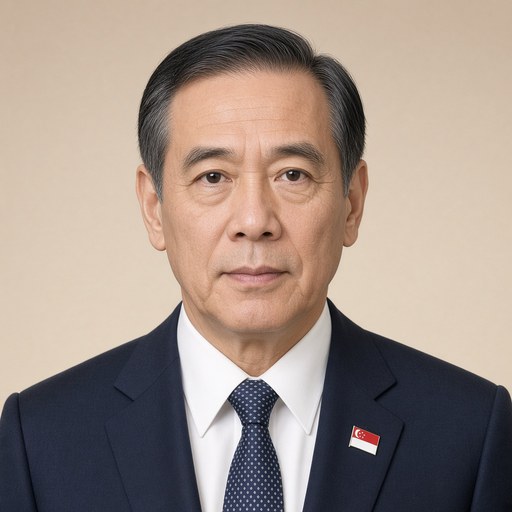
Prime Minister Lee Hsien Loong at Teck Ghee Emergency Preparedness Day
 Lee Hsien Loong · Prime Minister of Singapore
- Context
- PM Lee Hsien Loong addressed residents at the Teck Ghee Emergency Preparedness Day on 19 March 2017, emphasizing terrorism threats and community readiness.
- Main themes
- Emergency preparedness, terrorism threat, ISIS and Southeast Asian militants, SGSecure initiative, community vigilance, psychological first aid, AED training, regional security, volunteer community response, Singapore's security measures
- Duration
- ~15 min
- Words
- 1,830
- Sentences
- 112
- Readability
- 63
- Grade
- 8.5
- Syntax
- 2.77
- Vocabulary
- 2.04
Translated from Multiple languages
The broad sphere of national life a sentence belongs to. Every sentence has an Arena, so it is the denominator the other indices are read against.
Other112 sentences in 18 paragraphs
Good morning everybody, I am very happy to be here for this Emergency Preparedness (EP) Day to share with you this experience and to work on this problem together.
The grassroots leaders and our volunteers have been working very hard with PA and the Home Team, not just today but for the whole week to participate in this exercise in Ang Mo Kio GRC and SengKang West SMC. We do this EP Day every year and we take it very seriously because the terrorism threat is a serious one. We see it around us.
Last year in Puchong, Kuala Lumpur, somebody threw a hand grenade into a nightclub. In Indonesia, every now and again, you find terrorist attacks even on the streets of Jakarta and just yesterday in Paris, at Orly airport, somebody tried to grab a rifle from a soldier on patrol and he had to be shot dead. They do not know for sure but they suspect that there was a terrorist motive. Luckily, we have not had an attack in Singapore, but we know that the terrorists have thought about Singapore and are targeting Singapore. For example, there was this group in Batam. It was called Khatibah Gonggong Rebus. Khatibah means unit, Gonggong is a little shell that you can eat. They called their battalion, The Cooked Seashell battalion. But it is not just the Gonggong. This is a serious group who were planning to attack Singapore, Marina Bay Sands. They wanted to use rockets and they are being tried in Batam right now. Gigih was the leader and they have accomplices. Some of them have been arrested, we are not sure, maybe there are others who are running around.
ISIS is fighting in the Middle East. It is losing ground, their forces are closing in, hitting them and we see that there is progress. For example, there is one Indonesian terrorist, Bahrumsyah who had just been killed recently in Syria. It was in the newspapers. He was an Indonesian terrorist who commanded the battalion of Southeast Asian terrorists under ISIS in Syria. Bahrumsyah, he was a commander, he not only fought in Syria but he was also directing operations in Indonesia and Southeast Asia and instructing people to conduct attacks, to carry out attacks, giving them resources, money, on Whatsapp, on Telegram, on Facebook. You can communicate even from Syria back home to these countries. He was killed but the problem is not over because if ISIS is squeezed in the Middle East, some terrorists will be killed and others will run. Where do they run to? They run back to their home countries and their home countries from Southeast Asia, there may be approximately 1,000 who went to Middle East to fight. Even if 20 per cent of them come back, I think we have a problem. They are thinking of coming back because they are setting up a base in Southern Philippines. ISIS is making it a province of ISIS, they called it a “wilayat” and they have appointed an Amir whose name is Hapilon, who is a leader of the Abu Sayyaf Group. That means that the terrorists will go back there from Syria, from Iraq and there will be people from this region who will want to go to Southern Philippines. They cannot go to Syria, they go to Southern Philippines. It is just as bad a problem for us in Singapore and will become a focus of the terrorist threat. That is why we are worried and we have SGSecure to protect ourselves.
Not just today is an EP Day but in Singapore, every day has to be an EP Day. We have to understand the threat, prepare for it and learn practical things that we can do. I suggest you three things. One, keep up-to-date with the news. Know what is happening around us so that if something does takes place in Singapore, you know straight away. You can follow the news, you can follow CNA, The Straits Times, LianHe ZaoBao or Berita Harian but you can also use the SGSecure App. Download it and if anything happens, it will keep you informed.
Secondly, learn to use skills which would be useful if there is an incident. Learn to use an AED. We have installed AEDs all over Teck Ghee, every two blocks has one at the lift lobby. Go and see where they are, learn how to use it. If you take part in our EP Day activities, we will show you how to do it. In case somebody collapses, you know how to respond, where to get it, what to do with it. It is not very hard, but you need to make the effort to learn. And it can save your neighbour’s life, your friend’s life, your family’s life, or it may be your own life, in case something happens to you, someone will know how to do this and rescue you.
Secondly, you can also learn to volunteer to give psychological first aid. Because after an attack, after something happens like what you saw at the ‘Live’ Exercise’ just now at the hawker centre on the other side, people will be nervous, they will be anxious, they will be stressed and you need to be able to help them, reassure them, calm them down, help to bring them back to become normal again. Give them emotional and psychological support. So we have set up HEART teams. Your own HEART. What does it mean? Human Emergency Assistance and Response Teams (HEART). We train them, they include psychologists and counsellors (from MHA, IMH and MSF), professionals, but they also include grassroots leaders and volunteers. We have been training them, in fact this week we trained 16 people from Teck Ghee in being a volunteer to recognise signs of stress and see how to reach out to the person to give him some reassurance, some support, to be able to bring him to help if he needs more professional psychological help. These are things you can actually do individually as a person.
Good morning, residents of Ang Mo Kio and Teiy.
I am very happy to be here with everyone for the Emergency Preparedness Day event in Teiy. The exercise you just saw was very realistic, simulating a terrorist attack. Of course, we hope that such things will not happen in Singapore, but we cannot say that such things will absolutely not happen in Singapore, because we live in a turbulent world where terrorist incidents occur frequently. They happen around the world and in our region as well. Just yesterday, there was an incident at Orly Airport in Paris. Our neighboring countries, Malaysia and Indonesia, have also experienced such incidents, and there are some terrorists who wish to use our neighbors as a base to attack Singapore. Therefore, we must take this seriously and absolutely cannot let our guard down.
Our event, this Emergency Preparedness Day, is a relatively large-scale event. It is not just today, but there are activities throughout the entire week. In the video, you saw some details of the activities. So we need to understand this matter and be mentally prepared. At the same time, we also need to know how we can respond if something happens, what we need to do. Specifically, what individuals can do. Because this is a national issue, but it is also a situation that every Singaporean must understand and be able to respond to.
So, if you ask me what a Singapore citizen can do, simply put, we ask everyone to pay attention to three points.
The first point is to use different channels to stay updated on the latest information and understand what is happening around us. So in the event that something happens, everyone will know immediately and will not be surprised. This is not difficult. Through mobile notifications, information can be received very quickly. Everything can be known right away. At the same time, our Home Team has a "National Homefront Security Program" application (SGSecure App). After downloading, you can get the latest news through this app, and you can also report any incidents you see to the relevant authorities, who can then handle the situation. So this is the first point: stay informed and know what is happening around you.
Second, participate in regularly scheduled emergency preparedness activities and learn useful skills. For example, as you saw in the video, you can learn how to operate an Automated External Defibrillator (AED). If someone suddenly collapses and their heart stops, how do you save them? Performing CPR immediately is one method, but CPR has its limitations. Using an AED, I see that the chances of saving that person are much higher.
Our government has invested a significant amount of money in this area. Our Civil Defence Force plans to install a set of AEDs at the lift lobbies between every two government housing blocks. In the event that someone at home collapses, or if something happens in the neighborhood, or if there is indeed a terrorist incident where someone suddenly panics or is seriously injured and their heart stops, you can use the AED to save them. It is not difficult to learn; it is very simple. In fact, if you participate in our activities, we can teach you in just 45 minutes. But I hope everyone pays attention to which lift lobbies have AEDs in the neighborhood, so that when something happens, you will know right away where to find them without having to search everywhere.
In the Teiy area, we have already installed 55 AEDs. We will gradually expand this plan to every electoral division. Island-wide, by 2019, that is, within two years, we hope to complete this plan. So this is the second point: learn useful skills.
The third point is more abstract but very important. That is to uphold the spirit of caring for our country and society. Each of us is a Singapore citizen. But together, we form one Singapore nation, one Singapore society. We must communicate, interact, look out for one another, and get to know friends from different races and religions. Because the terrorists' goal is not just to harm a few people. Their goal is to dismantle our social cohesion and to harm the spirit of social unity. Therefore, we cannot let them do this. We must stand united to face this crisis. This is not just a national-level issue. It is an ideal that everyone must realize and embody in their personal lives.
Distant relatives are not as good as close neighbors; everyone must communicate with their neighbors, understand who they are, what their needs are, and what situations they are in. At the same time, get to know your colleagues at work, get to know your classmates at school, and by helping and supporting each other, we can face this crisis.
Let us work together to ensure everyone's safety and protect our families and our homes.
The original Multiple languages. The tags above are read on the English translation's sentences.
Explore by topics
Good morning everybody, I am very happy to be here for this Emergency Preparedness (EP) Day to share with you this experience and to work on this problem together.
The grassroots leaders and our volunteers have been working very hard with PA and the Home Team, not just today but for the whole week to participate in this exercise in Ang Mo Kio GRC and SengKang West SMC. We do this EP Day every year and we take it very seriously because the terrorism threat is a serious one. We see it around us.
Last year in Puchong, Kuala Lumpur, somebody threw a hand grenade into a nightclub. In Indonesia, every now and again, you find terrorist attacks even on the streets of Jakarta and just yesterday in Paris, at Orly airport, somebody tried to grab a rifle from a soldier on patrol and he had to be shot dead. They do not know for sure but they suspect that there was a terrorist motive. Luckily, we have not had an attack in Singapore, but we know that the terrorists have thought about Singapore and are targeting Singapore. For example, there was this group in Batam. It was called Khatibah Gonggong Rebus. Khatibah means unit, Gonggong is a little shell that you can eat. They called their battalion, The Cooked Seashell battalion. But it is not just the Gonggong. This is a serious group who were planning to attack Singapore, Marina Bay Sands. They wanted to use rockets and they are being tried in Batam right now. Gigih was the leader and they have accomplices. Some of them have been arrested, we are not sure, maybe there are others who are running around.
ISIS is fighting in the Middle East. It is losing ground, their forces are closing in, hitting them and we see that there is progress. For example, there is one Indonesian terrorist, Bahrumsyah who had just been killed recently in Syria. It was in the newspapers. He was an Indonesian terrorist who commanded the battalion of Southeast Asian terrorists under ISIS in Syria. Bahrumsyah, he was a commander, he not only fought in Syria but he was also directing operations in Indonesia and Southeast Asia and instructing people to conduct attacks, to carry out attacks, giving them resources, money, on Whatsapp, on Telegram, on Facebook. You can communicate even from Syria back home to these countries. He was killed but the problem is not over because if ISIS is squeezed in the Middle East, some terrorists will be killed and others will run. Where do they run to? They run back to their home countries and their home countries from Southeast Asia, there may be approximately 1,000 who went to Middle East to fight. Even if 20 per cent of them come back, I think we have a problem. They are thinking of coming back because they are setting up a base in Southern Philippines. ISIS is making it a province of ISIS, they called it a “wilayat” and they have appointed an Amir whose name is Hapilon, who is a leader of the Abu Sayyaf Group. That means that the terrorists will go back there from Syria, from Iraq and there will be people from this region who will want to go to Southern Philippines. They cannot go to Syria, they go to Southern Philippines. It is just as bad a problem for us in Singapore and will become a focus of the terrorist threat. That is why we are worried and we have SGSecure to protect ourselves.
Not just today is an EP Day but in Singapore, every day has to be an EP Day. We have to understand the threat, prepare for it and learn practical things that we can do. I suggest you three things. One, keep up-to-date with the news. Know what is happening around us so that if something does takes place in Singapore, you know straight away. You can follow the news, you can follow CNA, The Straits Times, LianHe ZaoBao or Berita Harian but you can also use the SGSecure App. Download it and if anything happens, it will keep you informed.
Secondly, learn to use skills which would be useful if there is an incident. Learn to use an AED. We have installed AEDs all over Teck Ghee, every two blocks has one at the lift lobby. Go and see where they are, learn how to use it. If you take part in our EP Day activities, we will show you how to do it. In case somebody collapses, you know how to respond, where to get it, what to do with it. It is not very hard, but you need to make the effort to learn. And it can save your neighbour’s life, your friend’s life, your family’s life, or it may be your own life, in case something happens to you, someone will know how to do this and rescue you.
Secondly, you can also learn to volunteer to give psychological first aid. Because after an attack, after something happens like what you saw at the ‘Live’ Exercise’ just now at the hawker centre on the other side, people will be nervous, they will be anxious, they will be stressed and you need to be able to help them, reassure them, calm them down, help to bring them back to become normal again. Give them emotional and psychological support. So we have set up HEART teams. Your own HEART. What does it mean? Human Emergency Assistance and Response Teams (HEART). We train them, they include psychologists and counsellors (from MHA, IMH and MSF), professionals, but they also include grassroots leaders and volunteers. We have been training them, in fact this week we trained 16 people from Teck Ghee in being a volunteer to recognise signs of stress and see how to reach out to the person to give him some reassurance, some support, to be able to bring him to help if he needs more professional psychological help. These are things you can actually do individually as a person.
Thirdly, we need to stay united and close to one another. Because a terrorist’s objective is to divide us, to break our society, to split us up. If we have friends from different races and religions, if we stay close together and we work with one another, then we can prevent them from doing that. Every little thing counts. It may be holding the lift door waiting for your friend, looking out for your neighbour’s home when he is away, offering snacks or food, celebrating festivals together. The stronger our kampung spirit, the less able the terrorists will be to break us. So these are practical things we have to do, do it together, tell your friends about it, and let us work together to keep us safe and secure in Singapore. That is what we mean when we say SGSecure.
Thank you!
The stronger our kampung spirit, the less able the terrorists will be to break us.
PM Lee Hsien Loong
各位宏茂桥和德义的居民,大家早上好!
很高兴和大家在一起出席德义紧急应变日这个活动。大家刚才看到的演习,非常逼真,模拟了恐怖袭击。当然,我们希望这样的事情不会在新加坡发生,但是我们没有办法说这样的事情绝对不会在新加坡发生, 因为我们生活在一个动荡的世界里,恐怖事件频频发生。世界上有,区域也有。昨天在巴黎的奥利机场,就发生了一个事件。我们邻国,马来西亚,印尼,也有这样的事件,并且也有一些恐怖分子希望利用我们的邻国作为基地来攻击新加坡。所以,我们必须认真地处理,绝对不可以掉以轻心。
我们的活动,这个紧急应变日(Emergency Preparedness Day), 是比较大型的活动。不只是今天,而是整个星期都有活动。短片里,大家都看到了活动的一些细节。所以我们要了解这件事情,心里要有所准备。同时,我们也要知道万一事情发生,我们自己可以怎么应对,自己要怎么做。具体来说,个人可以做什么。因为这是国家的事情,但这也是每一个新加坡人所必须了解,必须会应对的处境。
所以,如果你问我,一名新加坡公民可以做些什么?简单的说,我们只要求大家注意三点。
第一点,用不同的渠道来掌握最新的讯息,了解我们周围有什么事情发生。所以万一有事情发生,大家会马上知道,也不会吃惊。这不会很难。通过手机消息灵通,非常快。样样事情马上就可以知道了。同时,我们的Home Team 还有一个“全国保家安民计划”的应用程序(SGSecure App)。下载之后可以通过这个应用程序,得到最新的消息,同时也可以通过它将大家所看到的事件,向有关当局报告,它们可以去处理事情。所以这是第一点,保持消息灵通,知道周围发生什么事情。 第二,参与定期安排的紧急应变活动,学习有用的技能。譬如,刚才大家从影片里看到了,大家可以学如何操作自动心脏除颤器 (AED)。如果一个人突然间倒下,心脏停了,你必须怎样救活他?马上做CPR是一个方法,但是CPR有限。使用AED,我看这个人把他救活的机会会比较高。
我们政府在这方面出了一大笔资金。我们的民防部队计划在每两座政府组屋之间在电梯口安装一套AED。万一家里有人倒下,或是邻里有人发生事情,或是真的有恐怖事件,某个人因为突然间吓坏或是受重伤导致心脏停止,你可以用AED抢救。不难学,很简单。其实,你参加我们的活动,只要45 分钟我们就教会你了。可是希望大家注意一下邻里到底哪一个电梯口有AED,到时有事情不需到处去找,马上知道在什么地方。
在德义区,我们已经有55套AED装好了。我们逐渐会把这个计划推开到每一个选区。全岛,在2019年,也就是两年之内,我们希望完成这个计划。所以这是第二点,学会有用的技能。
第三点比较抽象但是很重要。那就是秉持着爱护国家,爱护社会的精神。我们每个人都是新加坡公民。但是我们大家加起来才是一个新加坡国家,一个新加坡社会。我们必须和不同种族的同胞,不同宗教的朋友交流,互动,互相照应,互相认识。因为恐怖分子的目标不只是伤害几个人。他们的目标是要拆除我们的社会凝聚力,要伤害社会团结的精神。所以,我们不能让他们这么做。我们必须团结一致,应对这个危机。这不只是国家级的事情。这是每个人必须在个人生活中实现,体现的一个理想。
远亲不如近邻,大家必须跟邻居交流,了解邻居是谁,有什么需求,有什么情况。同时,了解工作上的同事,了解学校里的同学,大家互相帮助,互相扶持, 我们可以应对这个危机。
让我们齐心协力维护大家的安全,保护我们的家人和家园。
Explore related topics