




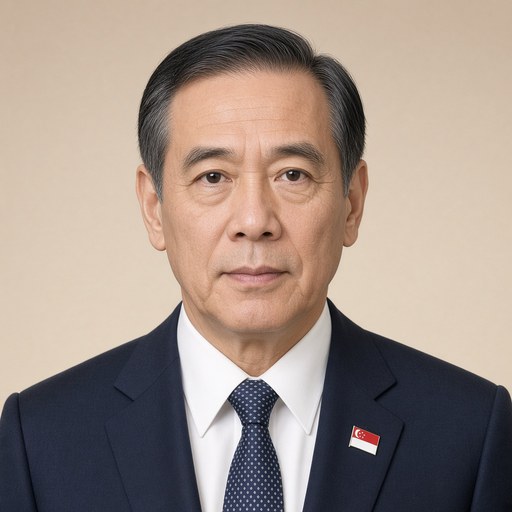
PM Lee Hsien Loong at the Teck Ghee Lunar New Year Celebration Dinner
 Lee Hsien Loong · Prime Minister of Singapore
- Context
- PM Lee addressed Teck Ghee residents at the annual Lunar New Year Celebration Dinner on 4 March 2018, discussing national priorities and local developments.
- Main themes
- Lunar New Year celebrations, aging population challenges, healthcare investment, early childhood education, infrastructure development, housing upgrades, public transportation, SG Bonus distribution, community bonding, fiscal responsibility, eldercare services
- Duration
- ~26 min
- Words
- 3,152
- Sentences
- 165
- Readability
- 57
- Grade
- 10.0
- Syntax
- 3.00
- Vocabulary
- 1.97
Translated from Multiple languages
The broad sphere of national life a sentence belongs to. Every sentence has an Arena, so it is the denominator the other indices are read against.
Other165 sentences in 38 paragraphs
Friends and residents, good evening to everybody! I wish you prosperity in the Year of the Dog, good health, and may all your wishes come true! I am very happy to reunite with the residents of Teck Ghee this year to celebrate the Lunar New Year. Last year, the Year of the Rooster brought good news, and our country's overall economic performance was quite good, with growth exceeding expectations. Therefore, the government has a budget surplus this year and can distribute a one-time special bonus (SG Bonus) to all citizens. This is a "little red packet" distributed by the government to everyone. The amount will vary, being three hundred, two hundred, or one hundred dollars, depending on the income of citizens.
This year, the Year of the Dog brings good fortune. We hope that Singapore's economy will continue to grow, the national treasury will be abundant, and the citizens can share in the blessings.
However, we must also be a responsible government, preparing for the future so that we can continue to safeguard the lives of our people, the interests of our nation, and the future of our descendants over the next ten or twenty years.
The Challenge of an Aging Population
As everyone knows, Singapore is facing the challenge of an aging population. This is also very evident in Teck Ghee. I believe many of you here have silver-haired friends like myself. What comforts me is that many residents of Teck Ghee understand that health is wealth. Therefore, they often gather to exercise, communicate, and bond with each other, discussing "The Art of War" and enjoying time with their grandchildren. Our "Active Aging" activities, led by Madam Noelene, are very popular and offer a variety of activities. However, there are also many elderly residents who are bedridden or unable to move independently and rely on wheelchairs, and some do not have family members to care for them, so they need help from everyone and the government.
To take good care of our older generation, we must invest more resources in healthcare, make greater investments, and establish community hospitals, polyclinics, nursing homes, and eldercare facilities. For example, in Teck Ghee, we have a new Ren Ci Nursing Home that has already started operations to better meet the needs of residents. In addition, the Ang Mo Kio Polyclinic has also been renovated to provide better medical services for residents.
While taking care of the older generation, we must also pave the way for the younger generation, ensuring that children from different family backgrounds can start from the same starting line. I understand that many families in Singapore are dual-income households, with both parents working, and they need more support in raising their children. Therefore, the government announced last year that it would increase investment in early childhood education services while improving the quality of teaching staff. This way, young parents can work with peace of mind, knowing their young children are in daycare, cared for by the staff there. In recent years, we have been working to enhance childcare services in Teck Ghee and are beginning to see results; for example, the PCF Sparkletots at Block 301 will be the first PCF childcare center in our area to offer infant and childcare services. I hope this can alleviate the burden on parents in Ang Mo Kio and encourage everyone to have more babies!
Infrastructure Development
In addition, we are continuously upgrading our infrastructure to further improve the living environment for citizens. In terms of housing, Teck Ghee Park View on Teck Ghee Avenue is the latest Build-To-Order (BTO) project in Teck Ghee. In the past few months, new residents have been moving in one after another, and it is now nearly fully occupied. I visited this new BTO a few months ago. Looking out from the south-facing window, you can see the beautiful skyline of downtown Singapore, and on National Day, you can see the fireworks; looking north, you can see Johor Bahru. So this is a prime location and a great place. I believe some residents from Teck Ghee Park View are also dining with us tonight. I hope you have adapted to your new environment and made many new friends in Teck Ghee, and will join our various grassroots activities. In terms of transportation, the "Bus Service Enhancement Programme," which has been implemented over five years, was successfully completed last year. The last new service is the 71 bus route, which provides residents of Ang Mo Kio, including our residents, with an additional option when traveling to Yishun or Bishan, making it more convenient. In addition, our sixth MRT line – the Thomson-East Coast Line – will also be completed in 2020. At that time, the three MRT stations on this line – Lentor, Mayflower, and Bright Hill – will be relatively close to us (in Ang Mo Kio) and will bring more convenience to our residents.
Preparing for a Better Future
I have talked about how the government is expanding infrastructure, enhancing healthcare services, and increasing early childhood centers, investing in our next generation. The government can implement these macro policies and plans to improve the lives of the people mainly because the people have given us a strong mandate. We will certainly do our best. These measures are not limited to Ang Mo Kio. In every corner of Singapore, in every town, in every neighborhood, residents feel the benefits of these policies and directly see how these policies and plans can enhance their lives and shape a better future for them. However, while these plans are good, they still require funding. New community hospitals, better early childhood education, new infrastructure – all of these require money. So where will the money come from?
Last week, Finance Minister Heng Swee Keat announced the 2018 Budget, clearly outlining the government's strategies for addressing future expenditures. We have carefully considered various options and sought new sources of revenue from all possible streams to meet our necessary expenditures. However, ultimately, there is one choice we cannot avoid: during the next government's term, from 2021 to 2025, we must raise the Goods and Services Tax (GST) to cover part of the expenditures. The GST must be increased by two percentage points, from 7% to 9%, between 2021 and 2025. After making this decision, the government also announced it in advance to prepare everyone mentally and allow for proper arrangements.
Some people ask, why do we need to raise taxes? This is an unpleasant matter; is there no other choice? Can't we use more of our reserves to solve the "insufficient funds" problem? In fact, the issue is not how much reserves we can use, but how we should manage this precious asset, which is also a legacy. This reserve is the hard-earned capital accumulated by previous and current generations. We have received it, and it benefits us. However, we also have the responsibility to take care of it and pass it on to the next generation. Moreover, what we pass on to the next generation should certainly be more than what our predecessors passed on to us. Only then can we honor our ancestors and be worthy of our descendants.
Our next generation faces a very uncertain world. Various challenges are unpredictable and ever-changing. We must provide them with sufficient preparation, education, investment, national defense, and security. Of course, with reserves as a backup. One day, when significant events occur and they need to use it, they can rely on these reserves to get through safely. This is something Singapore has that other countries do not. Other countries have different things. They have natural resources, minerals, oil, natural gas, forests, coal, gold mines, and possibly palm oil plantations. Even if they encounter problems, they still have alternatives. When Singapore encounters problems, there is no other way to go; we must push forward and rely on the money we have worked hard to earn to protect them.
So, our mindset is not: Can we spend a little more? Or do we really need to save and conserve a little less? Our mindset is: What is our responsibility for what we have saved and left behind? How do we account for it to our descendants? How should we handle this reserve fund? My answer is that we should account for it to our descendants. Every family, every household, many of us have children, many have grandchildren, and some even have great-grandchildren. So think about your own family, how do you handle it? Do you want to spend all your wealth in your lifetime? Or do you want to leave some for your children, to give them a better life, to provide better security for their future? We start from this mindset, so we decided that as our population ages, we will need to spend more on healthcare. Therefore, where does this spending come from? I see that each of us can contribute a little more in Goods and Services Tax (GST) to meet this expenditure and avoid placing the burden on our children.
So when we talk about the budget, there is no need for everyone to delve into the details of the numbers. The key is not the numbers; the key is our mindset, our thoughts about the future, our expectations and hopes for our children. So I hope everyone will support the government's plans.
In the Year of the Dog, we have small red packets this year, and in the future, we hope to continue to prosper year after year, that everyone's lives can continue to improve, and that all our children can have a brighter future.
Finally, I wish everyone a Happy New Year, good health, and may all your wishes come true. Thank you.
Friends and residents, good evening to everybody and Happy Chinese New Year to all! I am very happy to celebrate this Chinese New Year with you. It is the Year of the Dog, it will be a busy one, as we deal with our immediate priorities, what is happening around us, and also prepare Singapore for the future.
Investing for the past, present and future
We are upgrading our economy to create good jobs. The economy is growing, the jobs are coming, and more Singaporeans are finding work and finding better work.
We are investing in our people, investing in the present generation, the people who are working, workers and adults, through SkillsFuture, investing in future generations, through a first-class education system.
We are improving our infrastructure. In Teck Ghee, we are rebuilding Teck Ghee Community Club, it is under construction now and it will be completed by June this year. We have a BTO project. The latest BTO project, Teck Ghee Park View, has been completed, and families have nearly all moved in. In Ang Mo Kio, the Thomson-East Coast Line is passing through Ang Mo Kio and you can see the MRT stations being built at Lentor, Mayflower and Bright Hill. These stops will provide more convenience to our residents once the line is open, which will be in two years’ time, in 2020.
At the same time as we invest in the future, we are also preparing for the needs of our ageing population. You can see this in Teck Ghee, where the population is growing greyer, because it is an old constituency. Many residents have lived here for many years. They came, when I was here, 30 years ago, they were young people. Now, 2018, many are still living here, happily settled here, but their hair is a little bit greyer, children have grown up, and they are now looking after grandchildren. Our Senior Citizens’ Groups and Active Ageing groups are very popular. Our programmes such as Qi Gong sessions, morning walks and the “Wellness Carnival Day @ Teck Ghee” encourage the elderly to stay active, healthy and well.
But as people grow older, even if you stay active and healthy, you are likely to need more healthcare. We will need more hospital beds, more nursing homes, and more subsidies when people go for treatment or when they are hospitalised. We have a new nursing home in Teck Ghee, Ren Ci Nursing Home at Avenue 8. It started operating last year. I went to visit it not long ago. It is a very nice facility, which will be very convenient for our residents when they need nursing home places. Our Ang Mo Kio polyclinic has also recently been renovated so that they can cater for more patients and provide better services. What you see in Teck Ghee, the upgrading, construction and investments, you can also see all over the island, all over Singapore, as our national policies work out in every town, every precinct and neighbourhood, and as our plans, schemes and programmes make a difference to our lives.
A Financially Sustainable Future
All these are good programmes. Investments in our economy, investments in our people spending on healthcare, social spending, they are all good programmes. But they all cost money. That means Government spending is going up, and if we look ahead into the years to come, it will rise further. One big reason for this is healthcare spending.
The Government has to find the money to pay for all of this.
That is why after looking at all the possibilities and doing all the other things we can do, to save money, not to spend when we do not need to, and to collect money where we can do it without it being very painful to people, finally, we concluded that we need to raise the GST, sometime after 2020, in the next five years after that, between 2021 and 2025. We have announced this in this year’s Budget. We do not need the money yet, but we can see the way things are going very clearly, and we know that by the next decade, in three or four or five years’ time, we will need the money. And we have to plan ahead, work out how we are going to get what we need to spend, and announce to people our intentions as early as possible. So that people can be prepared, will know early and will not be suddenly surprised when it happens.
This way, people can also plan ahead, and understand why the tax increase is necessary and is justified, and the money collected will go towards good things, which will benefit you. This is the responsible way for the Government to behave. We do not just list out all the good things we will do; I will spend on this, I will spend on that, I will build this, I will subsidise that. When there are good things to do, we will do them, but at the same time, we will also tell people what it costs, how we will raise the money to fund them, what taxes need to go up to pay for them, and that is what we are doing.
It is easy to spend money. It is much harder for people to earn it, and for the Government to raise it. But we have to be honest when we have to do it, to explain to people why we are doing it, when we are going to do it and how we are going to spend it for your good.
We thought over the options very carefully before deciding to raise the GST. We decided we should not just draw more money from the reserves because we need to spend more. The reserves are our precious nest egg, built up over many years. It is our duty to manage the reserves, to invest them wisely, to keep them safe and intact, for a rainy day. So that one day when we encounter a rainy day, the reserves will be there for us. But an ageing society and healthcare is not a rainy day, it is an “everyday need money” day. It is a long-term trend and we are ageing, we will need to spend more on healthcare every year, year after year, for many years to come. If we use the reserves for something when you must use money every day, soon you will find that the reserves are going down, they are depleted and when in fact the rain comes, thunder and lighting, and our children or grandchildren really need the money, they will find that it is gone.
So I hope you will understand why the Government is very reluctant to touch the reserves every time we need money, and will support the Government’s plans. The plans to increase healthcare spending, to take care of our ageing population, and also our plans to raise the GST, a few years from now, to pay for this additional spending.
It is a prudent, responsible, long-term approach. It is an honest one. I am explaining to you what I have to do, we are all adults, and I think we can understand and face the facts of life squarely and make a judgment on whether or not we are doing the right thing. We are the Government of this generation of Singaporeans. We are the stewards of Singapore. We are responsible for this country, not just for making it work for ourselves, but we are responsible for making it work for the next generation, for the future, for all Singaporeans, to take care of it for many years to come, beyond our working lives, beyond our lifetime.
Looking to the Future Together
In fact, it is not just the Government’s duty to think like this. It is the duty of every Singaporean to think like this, to think of the future, and to look towards the next generations. Our children may not be voting yet; our grandchildren may not be born yet. But their lives and their future depend on us, the present generation, acting on their behalf, thinking for them, planning for them, making wise and far-sighted decisions that protect their interests, providing for them, so when they grow up, they find that their parents and grandparents have looked after them well, brought them up well, and provided for them well. That is how every family does it, and that is how the Government in charge of Singapore and the big Singapore family, have to do it.
For generations, Singaporeans have supported the Government when it has taken this approach, when it has pursued long-term policies, thought about tomorrow and the day after tomorrow, and year by year built a better Singapore. That is how our forefathers and ourselves have built today’s Singapore. If we continue to do this, we can keep on building a better home for ourselves, our children, and our grandchildren, for many more years to come.
Thank you once again, I wish you many good years ahead and I wish you all a very Happy New Year and good health.
The original Multiple languages. The tags above are read on the English translation's sentences.
各位居民,各位朋友,大家晚上好!祝大家狗年兴旺、身体健康、心想事成、万事如意!我很高兴今年能够再次跟德义区的居民团聚,庆祝农历新年。去年,金鸡报喜,我国整体的经济表现不错,(经济)增长也比预期高。所以,政府有了财政盈余,今年可以向国人派发一次性的特别花红 (SG Bonus),人人都有。 这是政府分发给大家的一个“小红包”。金额是三百元、两百元或一百元不等,视国人的收入而定。
今年,瑞犬旺福。我们希望新加坡的经济会持续增长,国库丰裕、国民可以有福同享。
不过,我们也要做一个负责任的政府,未雨绸缪,才能够在未来的十年,二十年,继续保障人民的生活和国家的利益和我们子孙的前途。
人口老化的挑战
大家都知道,新加坡面对人口老化的挑战。在德义区也很明显。在座的各位,相信在你身边,就有像我一样的银发族。而让我欣慰的是,许多德义的居民都明白:健康就是财富。所以,他们会常常聚在一起运动、互相交流、联络感情,也大谈“孙子兵法”,含饴弄孙。我们的 “活跃乐龄” (Active Aging) 活动,由Madam Noelene主导的,就非常受欢迎,有各种各样的活动。不过,也有不少老居民卧病在床、或是不能自己走动,需要依靠轮椅,也有的身边没有亲人照顾,所以需要大家和政府的帮忙。
要好好照顾我们的上一代,我们必须在医疗保健方面投入更多资源,做更大的投资,建立社区医院、综合诊疗所、疗养院和养老院等等。以宏茂桥为例,我们在德义区就有新的仁慈疗养院,已经投入运作,能够更好地应付居民的需求。 此外,宏茂桥综合诊疗所(Ang Mo Kio Polyclinic)也已经翻新完毕,也为居民提供更完善的医疗服务。
照顾好上一代,我们也要为下一代铺路,让来自不同家庭背景的孩子,都能够从同一个起跑点出发。我明白,新加坡目前有许多双薪家庭,父母都在工作,在养儿育女方面,更需要支持。因此,政府去年宣布,加大投资,提升学前教育服务,同时提高教职人员的素质。这样,年轻的爸爸妈妈就能安心地在工作岗位上工作,把年幼的孩子放在托儿所,由托儿所的人员照顾。这几年,我们就在德义致力于提升德义里的托儿服务,也开始看到成果;例如大牌301的PCF Sparkletots ,将是我们区内第一所设有托婴和托儿服务的PCF托儿所。我希望这能够减轻宏茂桥的爸爸妈妈们的负担,并鼓励大家多生几个宝宝!
基础建设
此外,我们也不断地提升基础设施,希望进一步改善国人的生活环境。住屋方面:宏茂桥三道的Teck Ghee Park View 是德义区最新的组屋(BTO)。过去几个月,新的住户陆陆续续地搬进来。现在已经差不多都住满了。我去年,前几个月,参观了这款新组屋。从向南的窗外一看,可以看到新加坡市中心的美景,国庆日可以看到烟花,向北一望,则可以看到柔佛新山。所以这个是宝地,也是好地方。我相信今晚也有一些来自Teck Ghee Park View的居民,和我们共进晚餐。希望你们已经适应新环境,也认识了不少德义的新朋友,将加入我们的各种基层组织活动。 交通方面:历时5年推行的“改善巴士服务计划” (Bus Service Enhancement Programme)终于在去年顺利落成。最后一个新服务就是71号线巴士服务,就让宏茂桥的居民,包括我们的居民,在前往杨厝港或碧山时,有多一个选择,更方便。此外,我国第六条铁路线 – 汤申-东海岸地铁线 (Thomson-East Coast Line) – 也会在2020年完成。到时,这条线上的三个地铁站 – 伦多(Lentor)站、美华站 (Mayflower), 以及光明山站 (Bright Hill),距离我们(宏茂桥)比较近,都能够为我们的居民带来更多便利。
未雨绸缪,打造更美好未来
我谈到了政府如何扩建基础设施,提升医疗服务和增加学前中心,投资我们的下一代。政府能够落实这些宏观的政策和计划,让人民过更好的生活,主要是因为人民赋予我们强而有力的委托。我们当然会尽力而为。这些措施不仅限于宏茂桥。在新加坡全岛每一个角落,每一个市镇,每一个邻里,居民都感受到这些政策的效益,都直接在自己的生活里发觉这些政策、这些计划、能够如何提升他们的生活,能够如何为他们塑造一个更好的未来。但是这些计划固然好,它们还是需要钱。新的社区医院、更好的学前教育、新的基础设施,这些都需要钱去办。那钱要从哪里来?
上个星期,财政部长王瑞杰先生公布了2018年财政预算案,就清楚地表明政府应付未来开支的对策。我们已经慎重的考虑各种各样不同的方案,尽可能从各个源流寻找新的财源,让我们能够应付我们所需要的开支。但是,最终有一个选择我们无法避免的,那就是,在下一届政府的任期内,2021年到2025年,我们必须提高消费税,应付部分的开支。消费税在2021年到2025年之间, 必须提高两个百分点,从百分之7调高到百分之9。我们做出了这个决定之后,政府也提前宣布,让大家有心理准备,能够做好安排。
有些人问,为什么需要加税呢?这个是不愉快的事情,难道没有别的选择吗?难道我们不能够运用更多的储备金来解决‘钱不够用’这个问题吗?其实,问题不是能够用多少储备金,而是我们应该如何保管储备金这个宝贵的资产,也是遗产。这个储备金是前一代和这一代辛苦累积的老本。我们收到了它,它对我们有好处。但是,我们也有责任照顾它,把它交给下一辈。并且,我们交给下一辈的,当然,应该比我们前辈交给我们的来得多。这样,才能够对得起祖宗,才能够对得起子孙。
我们的下一辈面对一个很不确定的世界。各种各样的挑战变幻莫测,耕耘莫测。我们给他们足够的准备、教育、投资、国防,安全。当然,有储备金做后盾。有一天,大事情发生了,需要用的时候,他们可以靠这个储备金,安然过关。这是新加坡有的,别的国家没有的。别的国家有的是另外一件东西。它们有自然资源、有矿产、有石油、有天然气、有森林、有煤矿、有金矿,可能有棕榈园。它们即使出了问题,还有出路可寻。新加坡出了问题,没有别的路可走,必须向前拼,必须靠我们苦苦赚来的钱去保佑他们。
所以,我们的心态并不是:多一点可以花吗?或者少一点真的需要去节省,储蓄吗?我们的心态是:我们存下来的,遗留下来的,我们的责任是什么?我们对子孙要怎么样交代?我们应该怎么样处理这个储备金?我的答案是,我们应该对我们的子孙交代。各人家庭,每一个家庭,大家有孩子,不少都有孙子了,有一些还有曾孙,甚至玄孙。那你自己想想,你自己的家庭,你是怎么办?你是想在你的人生里,把所有的财产花光吗?或者留一部分给孩子,让孩子过更好的生活,让孩子的前途有更好的保障?我们就是以这个心态出发,所以决定,我们的人口年纪大了,人口老化了,我们在医疗方面开支需要更多了。因此,这个开支,钱从哪里来?我看我们每一个人多付一点消费税(GST),可以应付这个开支,可以避免把重担推到孩子们的身上。
所以我们谈财政预算案,大家不用去详细了解数字的细节。关键不是数字,关键是我们的心态,我们对未来的想法,我们对孩子的期望和寄托。所以我希望大家支持政府的计划。
狗年兴旺,今年我们有小红包,以后,我们希望年年能够继续繁荣昌盛下去,大家的生活能够继续改善,大家的孩子也能够有一个更灿烂的未来。
最后,祝大家新年快乐,身体健康,万事如意。谢谢。
Friends and residents, good evening to everybody and Happy Chinese New Year to all! I am very happy to celebrate this Chinese New Year with you. It is the Year of the Dog, it will be a busy one, as we deal with our immediate priorities, what is happening around us, and also prepare Singapore for the future.
Investing for the past, present and future
We are upgrading our economy to create good jobs. The economy is growing, the jobs are coming, and more Singaporeans are finding work and finding better work.
We are investing in our people, investing in the present generation, the people who are working, workers and adults, through SkillsFuture, investing in future generations, through a first class education system.
We are improving our infrastructure. In Teck Ghee, we are rebuilding Teck Ghee Community Club, it is under construction now and it will be completed by June this year. We have a BTO project. The latest BTO project, Teck Ghee Park View, has been completed, and families have nearly all moved in. In Ang Mo Kio, the Thomson-East Coast Line is passing through Ang Mo Kio and you can see the MRT stations being built at Lentor, Mayflower and Bright Hill. These stops will provide more convenience to our residents once the line is open, which will be in two years’ time, in 2020.
At the same time as we invest in the future, we are also preparing for the needs of our ageing population. You can see this in Teck Ghee, where the population is growing greyer, because it is an old constituency. Many residents have lived here for many years. They came, when I was here, 30 years ago, they were young people. Now, 2018, many are still living here, happily settled here, but their hair is a little bit greyer, children have grown up, and they are now looking after grandchildren. Our Senior Citizens’ Groups and Active Ageing groups are very popular. Our programmes such as Qi Gong sessions, morning walks and the “Wellness Carnival Day @ Teck Ghee” encourage the elderly to stay active, healthy and well.
But as people grow older, even if you stay active and healthy, you are likely to need more healthcare. We will need more hospital beds, more nursing homes, and more subsidies when people go for treatment or when they are hospitalised. We have a new nursing home in Teck Ghee, Ren Ci Nursing Home at Avenue 8. It started operating last year. I went to visit it not long ago. It is a very nice facility, which will be very convenient for our residents when they need nursing home places. Our Ang Mo Kio polyclinic has also recently been renovated so that they can cater for more patients and provide better services. What you see in Teck Ghee, the upgrading, construction and investments, you can also see all over the island, all over Singapore, as our national policies work out in every town, every precinct and neighbourhood, and as our plans, schemes and programmes make a difference to our lives.
A Financially Sustainable Future
All these are good programmes. Investments in our economy, investments in our people spending on healthcare, social spending, they are all good programmes. But they all cost money. That means Government spending is going up, and if we look ahead into the years to come, it will rise further. One big reason for this is healthcare spending.
The Government has to find the money to pay for all of this.
That is why after looking at all the possibilities and doing all the other things we can do, to save money, not to spend when we do not need to, and to collect money where we can do it without it being very painful to people, finally, we concluded that we need to raise the GST, sometime after 2020, in the next five years after that, between 2021 and 2025. We have announced this in this year’s Budget. We do not need the money yet, but we can see the way things are going very clearly, and we know that by the next decade, in three or four or five years’ time, we will need the money. And we have to plan ahead, work out how we are going to get what we need to spend, and announce to people our intentions as early as possible. So that people can be prepared, will know early and will not be suddenly surprised when it happens.
This way, people can also plan ahead, and understand why the tax increase is necessary and is justified, and the money collected will go towards good things, which will benefit you. This is the responsible way for the Government to behave. We do not just list out all the good things we will do; I will spend on this, I will spend on that, I will build this, I will subsidise that. When there are good things to do, we will do them, but at the same time, we will also tell people what it costs, how we will raise the money to fund them, what taxes need to go up to pay for them, and that is what we are doing.
It is easy to spend money. It is much harder for people to earn it, and for the Government to raise it. But we have to be honest when we have to do it, to explain to people why we are doing it, when we are going to do it and how we are going to spend it for your good.
We thought over the options very carefully before deciding to raise the GST. We decided we should not just draw more money from the reserves because we need to spend more. The reserves are our precious nest egg, built up over many years. It is our duty to manage the reserves, to invest them wisely, to keep them safe and intact, for a rainy day. So that one day when we encounter a rainy day, the reserves will be there for us. But an ageing society and healthcare is not a rainy day, it is an “everyday need money” day. It is a long term trend and we are ageing, we will need to spend more on healthcare every year, year after year, for many years to come. If we use the reserves for something when you must use money every day, soon you will find that the reserves are going down, they are depleted and when in fact the rain comes, thunder and lighting, and our children or grandchildren really need the money, they will find that it is gone.
So I hope you will understand why the Government is very reluctant to touch the reserves every time we need money, and will support the Government’s plans. The plans to increase healthcare spending, to take care of our ageing population, and also our plans to raise the GST, a few years from now, to pay for this additional spending.
It is a prudent, responsible, long term approach. It is an honest one. I am explaining to you what I have to do, we are all adults, and I think we can understand and face the facts of life squarely and make a judgment on whether or not we are doing the right thing. We are the Government of this generation of Singaporeans. We are the stewards of Singapore. We are responsible for this country, not just for making it work for ourselves, but we are responsible for making it work for the next generation, for the future, for all Singaporeans, to take care of it for many years to come, beyond our working lives, beyond our lifetime.
Looking to the Future Together
In fact, it is not just the Government’s duty to think like this. It is the duty of every Singaporean to think like this, to think of the future, and to look towards the next generations. Our children may not be voting yet; our grandchildren may not be born yet. But their lives and their future depend on us, the present generation, acting on their behalf, thinking for them, planning for them, making wise and far-sighted decisions that protect their interests, providing for them, so when they grow up, they find that their parents and grandparents have looked after them well, brought them up well, and provided for them well. That is how every family does it, and that is how the Government in charge of Singapore and the big Singapore family, have to do it.
For generations, Singaporeans have supported the Government when it has taken this approach, when it has pursued long term policies, thought about tomorrow and the day after tomorrow, and year by year built a better Singapore. That is how our forefathers and ourselves have built today’s Singapore. If we continue to do this, we can keep on building a better home for ourselves, our children, and our grandchildren, for many more years to come.
Thank you once again, I wish you many good years ahead and I wish you all a very Happy New Year and good health.
The portion of PM Lee Hsien Loong's speech delivered in English is provided below .
below
各位居民,各位朋友,大家晚上好!祝大家狗年兴旺、身体健康、心想事成、万事如意!我很高兴今年能够再次跟德义区的居民团聚,庆祝农历新年。去年,金鸡报喜,我国整体的经济表现不错,(经济)增长也比预期高。所以,政府有了财政盈余,今年可以向国人派发一次性的特别花红 (SG Bonus),人人都有。 这是政府分发给大家的一个“小红包”。金额是三百元、两百元或一百元不等,视国人的收入而定。
今年,瑞犬旺福。我们希望新加坡的经济会持续增长,国库丰裕、国民可以有福同享。
不过,我们也要做一个负责任的政府,未雨绸缪,才能够在未来的十年,二十年,继续保障人民的生活和国家的利益和我们子孙的前途。
人口老化的挑战
大家都知道,新加坡面对人口老化的挑战。在德义区也很明显。在座的各位,相信在你身边,就有像我一样的银发族。而让我欣慰的是,许多德义的居民都明白:健康就是财富。所以,他们会常常聚在一起运动、互相交流、联络感情,也大谈“孙子兵法”,含饴弄孙。我们的 “活跃乐龄” (Active Aging) 活动,由Madam Noelene主导的,就非常受欢迎,有各种各样的活动。不过,也有不少老居民卧病在床、或是不能自己走动,需要依靠轮椅,也有的身边没有亲人照顾,所以需要大家和政府的帮忙。
要好好照顾我们的上一代,我们必须在医疗保健方面投入更多资源,做更大的投资,建立社区医院、综合诊疗所、疗养院和养老院等等。以宏茂桥为例,我们在德义区就有新的仁慈疗养院,已经投入运作,能够更好地应付居民的需求。 此外,宏茂桥综合诊疗所(Ang Mo Kio Polyclinic)也已经翻新完毕,也为居民提供更完善的医疗服务。
照顾好上一代,我们也要为下一代铺路,让来自不同家庭背景的孩子,都能够从同一个起跑点出发。我明白,新加坡目前有许多双薪家庭,父母都在工作,在养儿育女方面,更需要支持。因此,政府去年宣布,加大投资,提升学前教育服务,同时提高教职人员的素质。这样,年轻的爸爸妈妈就能安心地在工作岗位上工作,把年幼的孩子放在托儿所,由托儿所的人员照顾。这几年,我们就在德义致力于提升德义里的托儿服务,也开始看到成果;例如大牌301的PCF Sparkletots ,将是我们区内第一所设有托婴和托儿服务的PCF托儿所。我希望这能够减轻宏茂桥的爸爸妈妈们的负担,并鼓励大家多生几个宝宝!
基础建设
此外,我们也不断地提升基础设施,希望进一步改善国人的生活环境。住屋方面:宏茂桥三道的Teck Ghee Park View 是德义区最新的组屋(BTO)。过去几个月,新的住户陆陆续续地搬进来。现在已经差不多都住满了。我去年,前几个月,参观了这款新组屋。从向南的窗外一看,可以看到新加坡市中心的美景,国庆日可以看到烟花,向北一望,则可以看到柔佛新山。所以这个是宝地,也是好地方。我相信今晚也有一些来自Teck Ghee Park View的居民,和我们共进晚餐。希望你们已经适应新环境,也认识了不少德义的新朋友,将加入我们的各种基层组织活动。 交通方面:历时5年推行的“改善巴士服务计划” (Bus Service Enhancement Programme)终于在去年顺利落成。最后一个新服务就是71号线巴士服务,就让宏茂桥的居民,包括我们的居民,在前往杨厝港或碧山时,有多一个选择,更方便。此外,我国第六条铁路线 – 汤申-东海岸地铁线 (Thomson-East Coast Line) – 也会在2020年完成。到时,这条线上的三个地铁站 – 伦多(Lentor)站、美华站 (Mayflower), 以及光明山站 (Bright Hill),距离我们(宏茂桥)比较近,都能够为我们的居民带来更多便利。
未雨绸缪,打造更美好未来
我谈到了政府如何扩建基础设施,提升医疗服务和增加学前中心,投资我们的下一代。政府能够落实这些宏观的政策和计划,让人民过更好的生活,主要是因为人民赋予我们强而有力的委托。我们当然会尽力而为。这些措施不仅限于宏茂桥。在新加坡全岛每一个角落,每一个市镇,每一个邻里,居民都感受到这些政策的效益,都直接在自己的生活里发觉这些政策、这些计划、能够如何提升他们的生活,能够如何为他们塑造一个更好的未来。但是这些计划固然好,它们还是需要钱。新的社区医院、更好的学前教育、新的基础设施,这些都需要钱去办。那钱要从哪里来?
上个星期,财政部长王瑞杰先生公布了2018年财政预算案,就清楚地表明政府应付未来开支的对策。我们已经慎重的考虑各种各样不同的方案,尽可能从各个源流寻找新的财源,让我们能够应付我们所需要的开支。但是,最终有一个选择我们无法避免的,那就是,在下一届政府的任期内,2021年到2025年,我们必须提高消费税,应付部分的开支。消费税在2021年到2025年之间, 必须提高两个百分点,从百分之7调高到百分之9。我们做出了这个决定之后,政府也提前宣布,让大家有心理准备,能够做好安排。
有些人问,为什么需要加税呢?这个是不愉快的事情,难道没有别的选择吗?难道我们不能够运用更多的储备金来解决‘钱不够用’这个问题吗?其实,问题不是能够用多少储备金,而是我们应该如何保管储备金这个宝贵的资产,也是遗产。这个储备金是前一代和这一代辛苦累积的老本。我们收到了它,它对我们有好处。但是,我们也有责任照顾它,把它交给下一辈。并且,我们交给下一辈的,当然,应该比我们前辈交给我们的来得多。这样,才能够对得起祖宗,才能够对得起子孙。
我们的下一辈面对一个很不确定的世界。各种各样的挑战变幻莫测,耕耘莫测。我们给他们足够的准备、教育、投资、国防,安全。当然,有储备金做后盾。有一天,大事情发生了,需要用的时候,他们可以靠这个储备金,安然过关。这是新加坡有的,别的国家没有的。别的国家有的是另外一件东西。它们有自然资源、有矿产、有石油、有天然气、有森林、有煤矿、有金矿,可能有棕榈园。它们即使出了问题,还有出路可寻。新加坡出了问题,没有别的路可走,必须向前拼,必须靠我们苦苦赚来的钱去保佑他们。
所以,我们的心态并不是:多一点可以花吗?或者少一点真的需要去节省,储蓄吗?我们的心态是:我们存下来的,遗留下来的,我们的责任是什么?我们对子孙要怎么样交代?我们应该怎么样处理这个储备金?我的答案是,我们应该对我们的子孙交代。各人家庭,每一个家庭,大家有孩子,不少都有孙子了,有一些还有曾孙,甚至玄孙。那你自己想想,你自己的家庭,你是怎么办?你是想在你的人生里,把所有的财产花光吗?或者留一部分给孩子,让孩子过更好的生活,让孩子的前途有更好的保障?我们就是以这个心态出发,所以决定,我们的人口年纪大了,人口老化了,我们在医疗方面开支需要更多了。因此,这个开支,钱从哪里来?我看我们每一个人多付一点消费税(GST),可以应付这个开支,可以避免把重担推到孩子们的身上。
所以我们谈财政预算案,大家不用去详细了解数字的细节。关键不是数字,关键是我们的心态,我们对未来的想法,我们对孩子的期望和寄托。所以我希望大家支持政府的计划。
狗年兴旺,今年我们有小红包,以后,我们希望年年能够继续繁荣昌盛下去,大家的生活能够继续改善,大家的孩子也能够有一个更灿烂的未来。
最后,祝大家新年快乐,身体健康,万事如意。谢谢。
Friends and residents, good evening to everybody and Happy Chinese New Year to all! I am very happy to celebrate this Chinese New Year with you. It is the Year of the Dog, it will be a busy one, as we deal with our immediate priorities, what is happening around us, and also prepare Singapore for the future.
Investing for the past, present and future
We are upgrading our economy to create good jobs. The economy is growing, the jobs are coming, and more Singaporeans are finding work and finding better work.
We are investing in our people, investing in the present generation, the people who are working, workers and adults, through SkillsFuture, investing in future generations, through a first class education system.
We are improving our infrastructure. In Teck Ghee, we are rebuilding Teck Ghee Community Club, it is under construction now and it will be completed by June this year. We have a BTO project. The latest BTO project, Teck Ghee Park View, has been completed, and families have nearly all moved in. In Ang Mo Kio, the Thomson-East Coast Line is passing through Ang Mo Kio and you can see the MRT stations being built at Lentor, Mayflower and Bright Hill. These stops will provide more convenience to our residents once the line is open, which will be in two years’ time, in 2020.
At the same time as we invest in the future, we are also preparing for the needs of our ageing population. You can see this in Teck Ghee, where the population is growing greyer, because it is an old constituency. Many residents have lived here for many years. They came, when I was here, 30 years ago, they were young people. Now, 2018, many are still living here, happily settled here, but their hair is a little bit greyer, children have grown up, and they are now looking after grandchildren. Our Senior Citizens’ Groups and Active Ageing groups are very popular. Our programmes such as Qi Gong sessions, morning walks and the “Wellness Carnival Day @ Teck Ghee” encourage the elderly to stay active, healthy and well.
But as people grow older, even if you stay active and healthy, you are likely to need more healthcare. We will need more hospital beds, more nursing homes, and more subsidies when people go for treatment or when they are hospitalised. We have a new nursing home in Teck Ghee, Ren Ci Nursing Home at Avenue 8. It started operating last year. I went to visit it not long ago. It is a very nice facility, which will be very convenient for our residents when they need nursing home places. Our Ang Mo Kio polyclinic has also recently been renovated so that they can cater for more patients and provide better services. What you see in Teck Ghee, the upgrading, construction and investments, you can also see all over the island, all over Singapore, as our national policies work out in every town, every precinct and neighbourhood, and as our plans, schemes and programmes make a difference to our lives.
A Financially Sustainable Future
All these are good programmes. Investments in our economy, investments in our people spending on healthcare, social spending, they are all good programmes. But they all cost money. That means Government spending is going up, and if we look ahead into the years to come, it will rise further. One big reason for this is healthcare spending.
The Government has to find the money to pay for all of this.
That is why after looking at all the possibilities and doing all the other things we can do, to save money, not to spend when we do not need to, and to collect money where we can do it without it being very painful to people, finally, we concluded that we need to raise the GST, sometime after 2020, in the next five years after that, between 2021 and 2025. We have announced this in this year’s Budget. We do not need the money yet, but we can see the way things are going very clearly, and we know that by the next decade, in three or four or five years’ time, we will need the money. And we have to plan ahead, work out how we are going to get what we need to spend, and announce to people our intentions as early as possible. So that people can be prepared, will know early and will not be suddenly surprised when it happens.
This way, people can also plan ahead, and understand why the tax increase is necessary and is justified, and the money collected will go towards good things, which will benefit you. This is the responsible way for the Government to behave. We do not just list out all the good things we will do; I will spend on this, I will spend on that, I will build this, I will subsidise that. When there are good things to do, we will do them, but at the same time, we will also tell people what it costs, how we will raise the money to fund them, what taxes need to go up to pay for them, and that is what we are doing.
It is easy to spend money. It is much harder for people to earn it, and for the Government to raise it. But we have to be honest when we have to do it, to explain to people why we are doing it, when we are going to do it and how we are going to spend it for your good.
We thought over the options very carefully before deciding to raise the GST. We decided we should not just draw more money from the reserves because we need to spend more. The reserves are our precious nest egg, built up over many years. It is our duty to manage the reserves, to invest them wisely, to keep them safe and intact, for a rainy day. So that one day when we encounter a rainy day, the reserves will be there for us. But an ageing society and healthcare is not a rainy day, it is an “everyday need money” day. It is a long term trend and we are ageing, we will need to spend more on healthcare every year, year after year, for many years to come. If we use the reserves for something when you must use money every day, soon you will find that the reserves are going down, they are depleted and when in fact the rain comes, thunder and lighting, and our children or grandchildren really need the money, they will find that it is gone.
So I hope you will understand why the Government is very reluctant to touch the reserves every time we need money, and will support the Government’s plans. The plans to increase healthcare spending, to take care of our ageing population, and also our plans to raise the GST, a few years from now, to pay for this additional spending.
It is a prudent, responsible, long term approach. It is an honest one. I am explaining to you what I have to do, we are all adults, and I think we can understand and face the facts of life squarely and make a judgment on whether or not we are doing the right thing. We are the Government of this generation of Singaporeans. We are the stewards of Singapore. We are responsible for this country, not just for making it work for ourselves, but we are responsible for making it work for the next generation, for the future, for all Singaporeans, to take care of it for many years to come, beyond our working lives, beyond our lifetime.
Looking to the Future Together
In fact, it is not just the Government’s duty to think like this. It is the duty of every Singaporean to think like this, to think of the future, and to look towards the next generations. Our children may not be voting yet; our grandchildren may not be born yet. But their lives and their future depend on us, the present generation, acting on their behalf, thinking for them, planning for them, making wise and far-sighted decisions that protect their interests, providing for them, so when they grow up, they find that their parents and grandparents have looked after them well, brought them up well, and provided for them well. That is how every family does it, and that is how the Government in charge of Singapore and the big Singapore family, have to do it.
For generations, Singaporeans have supported the Government when it has taken this approach, when it has pursued long term policies, thought about tomorrow and the day after tomorrow, and year by year built a better Singapore. That is how our forefathers and ourselves have built today’s Singapore. If we continue to do this, we can keep on building a better home for ourselves, our children, and our grandchildren, for many more years to come.
Thank you once again, I wish you many good years ahead and I wish you all a very Happy New Year and good health.
Explore related topics