




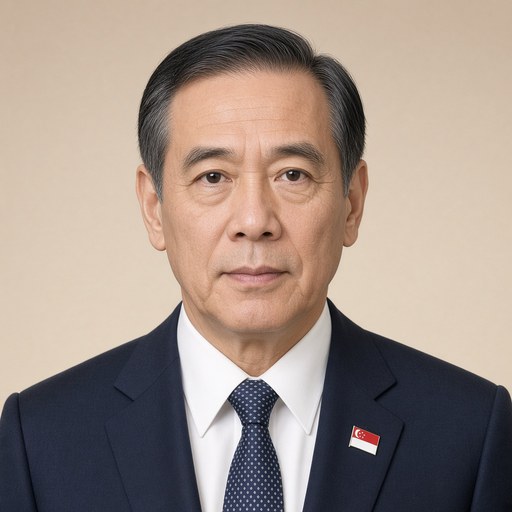
Transcript of Prime Minister of Singapore Mr Lee Hsien Loong's speech at the 12th World Nan'an Fellow Townsmen Friendship Convention and the Joint Celebration Banquet for the 88th Anniversary of the Founding of the Singapore Nan'an Association
 Lee Hsien Loong · Prime Minister of Singapore
- Context
- Lee addressed the 12th World Nan'an Friendship Convention and Singapore Nan'an Association's 88th anniversary banquet in Singapore on 20 November 2014.
- Main themes
- Nan'an community contributions to Singapore, history of Nan'an people, clan associations and their evolving role, Chinese diaspora in Southeast Asia, cultural heritage preservation, philanthropy and community service, Singapore national identity, notable Nan'an figures, Singapore-China ties, Chinese culture promotion
- Duration
- ~27 min
- Words
- 3,269
- Sentences
- 155
- Readability
- 48
- Grade
- 11.6
- Syntax
- 2.96
- Vocabulary
- 2.23
Translated from Chinese
The broad sphere of national life a sentence belongs to. Every sentence has an Arena, so it is the denominator the other indices are read against.
Other155 sentences in 33 paragraphs
Mr Tan Aik Hock, Executive Chairman of the Singapore Nan An Association, Mr Chua Thian Poh, President of the Singapore Federation of Chinese Clan Associations, ladies and gentlemen, good evening, everyone.
The "12th World Nan An Fellowship Convention" is being held in our country, and at the same time we are celebrating the 88th anniversary of the founding of the Singapore Nan An Association. This is cause for celebration. Tonight's banquet has brought together nearly 3,500 guests from Singapore and abroad, more than a thousand of whom are Nan An people from overseas. This is truly rare. I would like to welcome our overseas guests who have travelled from afar, and to extend my warmest and most sincere congratulations to the Nan An Association!
Nan An has a long history, stretching back more than 1,700 years from the Three Kingdoms period to the present day. Located on the southeastern coast of Fujian Province, Nan An County was historically the political, economic and cultural centre of southern Fujian, with well-developed transport by land and water. During the Tang and Song dynasties, the Jinji Port in Fengzhou, within Nan An, was an important port for Quanzhou's foreign trade and the starting point of the "Maritime Silk Road". Today Nan An falls under the jurisdiction of Quanzhou City. I would like to welcome Ms Lü Jing, Deputy Director of the Quanzhou Municipal People's Congress, and Mr Huang Nankang, Secretary of the Nan An Municipal Party Committee, to tonight's grand occasion. Welcome to Singapore.
Nan An's location and terrain made it a natural gateway for China's exchanges with the outside world. The early Nan An people left their homes and went to the Nanyang. Most went first to the Philippines, then to Indonesia, Malaysia, Singapore and Thailand. Only later did they gradually go further afield, leaving traces of their struggles in every place they went. Even before Singapore was founded as a port, Nan An people had already set foot here. The Fujian Nan An community in Singapore currently numbers 400,000 people. That is quite a lot.
Many of the Nan An people who came to the Nanyang arrived empty-handed and built their lives from nothing. At the time they worked mainly in land clearing and planting, or in construction, trading their physical labour for a meal. Some with a head for business, once they had some savings, would find a stall to sell imported sundries, start out in trade, and then expand their business into other industries. The Nan An people of Singapore have made great contributions to our society. Here I will introduce a few representative figures, so that our Nan An kinsfolk from overseas can get to know them. Our national hero of the resistance against Japan, Lim Bo Seng, was from Houpu Village in Nan An. He studied in Xiamen as a child and came to Singapore at the age of 16. During the Second World War, Lim Bo Seng rallied people to boycott Japanese goods and raised funds to support the War of Resistance against Japan, while also leading Force 136 in operations against the Japanese. Very unfortunately, he eventually fell into the hands of the Japanese army and died a heroic death. To commemorate this hero, we erected a memorial after the Second World War, to remind every generation of Singaporeans that our freedom and peace did not come easily, and that we must therefore cherish them and carry on Lim Bo Seng's patriotic spirit.
Our renowned philanthropist Lee Kong Chian was also a Nan An man, from Meishan. After achieving success in business, he set up the Lee Foundation and donated large sums of money to all communities in Singapore and to nation-building. He helped the poor and those in need, and gave strong support to the development of education, the arts, medicine, scholarship and many other fields. The many charitable works of the Lee Foundation can be seen in Singapore, in China and in other regions.
Tan Swie Hian, the internationally renowned Singaporean artist, is also a Nan An man, from Linbing. He was born in Indonesia and came to Singapore in 1946. This master of many art forms is highly acclaimed both at home and abroad.
Nan An people skilled in construction also built many magnificent historic buildings for Singapore. For example, one of our cultural landmarks, the Victoria Concert Hall and Theatre: the concert hall section, which was originally the Victoria Memorial Hall, was built under contract in the early twentieth century by Lim Loh, a man from Houpu Village in Nan An. Lim Loh was the father of the martyr Lim Bo Seng. At that time, Lim Loh won the construction contract with the lowest bid, which made other builders jealous, and they boycotted him, refusing to supply construction tools and materials. But Lim Loh did not bow to the difficulties; he persevered, and with the help of his fellow clansmen he finally completed the work successfully. A hundred years later, the Concert Hall and Theatre has been thoroughly restored and has just recently reopened, recapturing its former glory. So a hundred years on, the works of Nan An people still stand in the city of Singapore.
The famous Fullerton Hotel, which was originally the Fullerton Building, was once our General Post Office, the General Post Office of the British colonial government in Singapore. This beautiful building near Merlion Park was built under contract by Zhao Fang, a man from Shuitou in Nan An. The century-old Hong San See temple at Sui Long Tau is also a masterpiece of Nan An people. This old temple has a history of 178 years. Its construction was first initiated by Liang Renkui; later, after it moved to its present site, it was built under the leadership of Lim Loh. He engaged skilled craftsmen from his hometown and shipped in materials, fully bringing out the characteristics of traditional southern Fujian–style architecture. After completing its restoration in 2010, Hong San See was honoured with the Award of Excellence, the highest honour in the United Nations (Educational, Scientific and Cultural Organization) UNESCO heritage conservation awards. Most importantly, it is said that childless couples who go to pray at Hong San See will receive good news. So couples who want to have a Jubilee baby in time for next year might like to consider it.
The descendants of Nan An people in Singapore have inherited their forebears' spirit of remembering their roots and giving back to society. Among our Cabinet members and Members of Parliament, several have ancestral roots in Nan An, such as Minister Grace Fu, Mayor Low Yen Ling, and several Members of Parliament, including former MP Ong Ah Heng and second-generation MP Ong Teng Koon, the son of Ong Ah Heng, who are all Nan An people. They put their own expertise to use in serving the people, carrying on the Nan An spirit of their forebears: never forgetting their roots and dedicating themselves to society. So although I am not a Nan An person, I hope that in future more Nan An people will contribute to society.
Lee Kong Chian's descendants have also carried on his spirit of "what is taken from society is used for society". His three sons are all outstanding: Lee Seng Gee, Lee Seng Tee and Lee Seng Wee.
They are all quite advanced in age now. Each of them has achieved a great deal in business, and they actively promote philanthropy. The Nan An people present here from Singapore and around the world are also keen on public welfare. Through the various Nan An associations, they pool manpower and resources to help the communities around them, letting the light of the Nan An people shine.
As a clan association, the Nan An Association's original main mission was to help Nan An people newly arrived in Singapore to settle down. In step with the development of the nation and society, the role played by clan associations in the twenty-first century has also moved with the times, expanding into other areas. This includes playing a more important role in the nation's social development, economy and cultural development. The Nan An Association has also kept pace with the times, continually strengthening its social functions: from originally helping fellow clansmen solve the problems of daily life, and building temples and running schools, to helping promote harmony among our country's various races and vigorously promoting the preservation of cultural traditions; from helping Nan An people living here keep in touch with relatives far away in China, to providing an international platform where Nan An people around the world can communicate with one another, strengthen their bonds and carry out business and trade.
Next year marks the fiftieth anniversary of Singapore's independence. From an immigrant society at the outset to the prosperous, independent nation it is today, Singapore has built up its own national consciousness and cultural identity. Clan associations have played an important role in Singapore's nation-building, and this World Nan An Convention once again demonstrates the contribution the Nan An Association has made to the nation's social and economic development. Tonight, I am very gratified that the leadership of the Nan An Association will donate $880,000 to the Singapore Chinese Cultural Centre. On behalf of the Chinese Cultural Centre, and especially its Chairman Mr Chua Thian Poh, I sincerely thank the Nan An Association. This is a very meaningful and magnificent gesture. Because in celebrating the 88th anniversary of the Nan An Association's founding, they have also given the Chinese Cultural Centre a shot in the arm, contributing their part to promoting Chinese culture.
Finally, let me wish the Nan An Association ever greater heights of success! I also wish everyone present good health and every success in all things. Thank you, everyone.
. . . . .
Explore related topics
The original Chinese. The tags above are read on the English translation's sentences.
新加坡南安会馆常务主席陈奕福乡长 新加坡宗乡会馆联合总会会长蔡天宝先生 先生们、女士们 大家晚上好
“第12届世界南安同乡联谊恳亲大会”在我国召开, 同时庆祝新加坡南安会馆成立88周年, 可喜可贺。今晚的宴会云集了近3500名海内外嘉宾,当中有千多人是来自海外的南安人,非常难得。在此,要欢迎远道而来的海外嘉宾,也向南安会馆致以最热烈和最诚挚的祝贺!
南安历史悠久,从三国时代至今,已经有一千七百多年。位于福建省东南沿海的南安县,历史上曾是闽南政治、经济、文化中心;水陆交通发达。唐宋时代,南安境内的丰州金鸡港是泉州对外通商的重要港口,是“海上丝绸之路”的起点。现在南安属泉州市管辖, 在此欢迎泉州市人大副主任吕竞女士,和南安市市委书记黄南康先生出席今晚的盛会。欢迎你们到新加坡来。
南安的位置和地形特点,使南安成为中国对外交流的一个自然门户。早期的南安人离乡背井下南洋,多数先到菲律宾,再到印尼、马来西亚、新加坡和泰国。后来才慢慢的去到更远的地方,在各地留下了他们打拼的身影。早在新加坡开埠以前,这里就已经有南安人的足迹了。目前在新加坡的福建南安社群共有400,000人。人数不少。
下南洋的南安人,很多都是赤手空拳,白手起家的。他们当时主要是从事开垦种植业或建筑业,以体力换一口饭吃。一些有生意头脑的,在有了一些积蓄后,就会找个档口买卖洋杂货,开始从商,并将生意扩大到其他行业。新加坡的南安人,对我国社会做出很大的贡献。这里我介绍几位代表人物,让我们来自海外的南安乡亲,认识一下。我国的抗日英雄林谋盛是南安后埔乡人。年幼时在厦门读书,16岁时来到新加坡。二战期间,林谋盛召集人们抵制日货,筹款支持抗日战争,同时领导136部队展开抗日行动。但很不幸的,他最后落入日军手中,壮烈牺牲了。为了纪念这位英雄,我们在二战后立了纪念碑,提醒每一代国人,我国的自由与和平得来不易,因此要珍惜,也要延续林谋盛的爱国精神。
我国著名的慈善家李光前也是南安人,来自梅山。他事业有成后创办了李氏基金,为新加坡各个群体,为国家建设,捐出了大笔的钱。扶贫救困,大力支持教育、艺术、医学、还有学术等等很多领域的发展。在新加坡,在中国和其他地区都可以看到李氏基金所做的种种善举。
陈瑞献,国际知名的新加坡艺术家,也是南安林柄人。他在印尼出生,1946 年到新加坡。这位多元艺术大师,在国内外都颇负盛名。
擅长建筑的南安人也为新加坡建设了许多宏伟的历史建筑物。例如我们的文化地标之一,维多利亚音乐厅与剧院,音乐厅的部分,也就是原来的维多利亚纪念堂,便是由南安后埔乡人林路,在二十世纪初承包建造的。林路,就是林谋盛烈士的父亲。当年,林路以最低的标价取得建筑工程,结果引起其他建筑商的嫉妒而抵制他,拒绝供应建筑工具和材料。不过,林路没有向困难低头,而是坚持下去,在乡亲的协助下,最后顺利完工。百年后,音乐厅与剧院经过彻底修复,最近刚重新开幕,重现了当年的辉煌。所以百年后南安人的事业还是在新加坡的城市里依然住驻立。
著名的富丽敦酒店,也就是原来的浮尔顿大厦,当年是我们的邮政总局,曾是英国殖民政府在新加坡的邮政总局。这栋坐落在鱼尾狮公园附近的漂亮建筑,是南安水头人赵芳承包建造的。百年古庙水廊头凤山寺也是南安人的杰作。这间古庙已有178年的历史了。首先由梁壬葵发动建庙,后来迁往现有地址后,由林路领导兴建。他从家乡聘请了优秀工匠,运来材料,充分发挥闽南风格古建筑的特色。凤山寺在2010年完成修复工程后,荣颁联合国 (教科文组织)UNESCO古迹修复最高荣誉的卓越奖。最重要的一点是,据说不孕夫妇到凤山寺膜拜,就会有好消息。所以想要赶在明年生个金禧宝宝的夫妇,可以考虑一下。
在新加坡的南安人后裔,继承了先辈们饮水思源,回馈社会的精神。在我们的内阁成员和国会议员当中,就有几位祖籍是南安,如傅海燕部长,潘丽萍市长以及好几位国会议员包括前议员王雅兴和第二代的议员-王雅兴的儿子王鼎昆都是南安人。他们发挥本身的专长,为民服务,延续先辈不忘本,奉献社会的南安精神。所以虽然我不是南安人,可是我希望以后有更多南安人能够为社会做出贡献。
李光前的后人也秉承了他“取诸社会,用诸社会”的精神。他的三个儿子都很杰出- 李成义、李成智和李成伟。
现在他们的年纪都相当大了。他们各自在商界都很有作为,也积极推动慈善事业。在座来自新加坡和世界各地的南安人也热衷于公益事业,通过各个南安会馆,聚集人力和资源,帮助周边群体,发出南安人的光芒。
作为宗乡会馆,南安会馆当初的主要使命,就是帮助刚到新加坡的南安人安顿下来。配合国家社会的发展,二十一世纪的宗乡会馆所扮演的角色也与时并进,扩大到其他领域。这包括:在国家的社会发展、经济、文化建设等方面扮演更重要的角色。南安会馆也顺应时代的发展, 不断加强会馆的社会功能。从原先协助同乡解决生活上的问题,建庙办校到协助促进我国各民族和谐共处,以及大力推动保留文化传统的工作。从帮助旅居本地的南安人联系远在中国的亲戚到提供一个国际性的平台,让世界各地南安人可以互相沟通、联络感情,并进行经贸交易。
明年是新加坡建国五十周年。从当初的移民社会到如今繁荣昌盛的独立国家,新加坡已经建立起自身的国家意识和文化认同。会馆在新加坡的建国过程中扮演了重要角色,这次的世界南安恳亲大会, 再次体现了南安会馆为国家社会及经济发展所做的贡献。今晚, 我很欣慰南安会馆领导层,将捐出88万元给新加坡华族文化中心。我代表华族文化中心,尤其是主席蔡天宝先生衷心感谢南安会馆。这是非常有意义的壮举。因为在庆祝南安会馆成立88周年之际,他们也为华族文化中心打了一针强心剂,为发扬华族文化,贡献一份力。
最后, 让我祝愿南安会馆百尺竿头、更进一步!也祝愿在座各位身体健康、万事如意。谢谢各位。
. . . . .
Explore related topics