




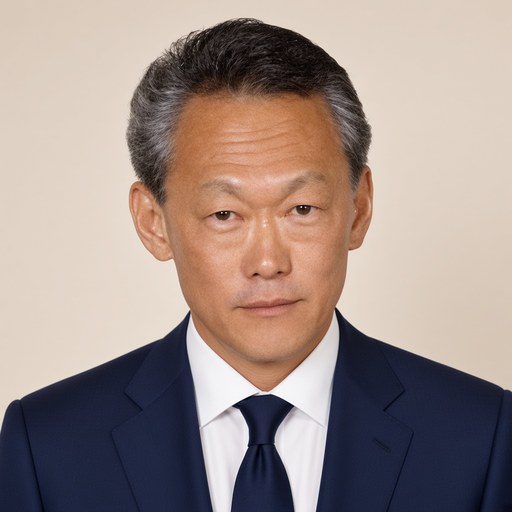
Address By Mr. Lee Kuan Yew, Prime Minister Of Singapore, At The Opening Ceremony Of The 10Th Singapore-Malaysia Congress Of Medicine, At The Shangri-La Hotel On 21 August, 1975
 Lee Kuan Yew · Prime Minister of Singapore
- Context
- Lee addressed the opening ceremony of the 10th Singapore-Malaysia Congress of Medicine at the Shangri-La Hotel in Singapore on August 21, 1975, discussing medical standards, doctor supply, specialist care and population growth.
- Main themes
- Standards of the medical profession, medical brain drain, end of Commonwealth reciprocity rules, avoiding over-supply of doctors, doctor-population ratio, Singapore as regional centre for specialist treatment, visiting overseas specialists, population explosion in the developing world, family planning, social change from contraception, care of the elderly, Singapore's falling population growth rate
- Duration
- ~10 min
- Words
- 1,172
- Sentences
- 58
- Readability
- 42
- Grade
- 12.4
- Syntax
- 3.04
- Vocabulary
- 2.21
Source: National Archives of Singapore ↗
The broad sphere of national life a sentence belongs to. Every sentence has an Arena, so it is the denominator the other indices are read against.
Other58 sentences in 19 paragraphs
Mr. President, Master of Academy of Singapore,
Ladies and Gentlemen,
The standard of the medical profession in Singapore has always been high.
In a period of rapid university expansion throughout the developed and developing world, standards have fallen in many universities. We cannot let this happen in Singapore.
It was because standards in some of the new Commonwealth countries had been allowed to slide down that we were forced to revoke the old reciprocity rules. Even the British have had to do likewise.
The Academy of Medicine stands for “Standards of Excellence”. This is not an easy aspiration to achieve. We use the English language, and most of your members hold memberships of fellowships of the old Royal College in Britain or Australasia. In no profession is the brains drain bigger and easier than in the practice of medicine. For years, especially after the last war, the British has supplied the Americans with thousands of doctors every year, professional men who see no reason why they should be trapped in a national health service plus high personal income tax. This, in turn, had led to a flow of Indian and Pakistani doctors to Britain. It will be interesting to see how the British can maintain their national health service now that they have abolished reciprocity. Perhaps it will lead to a more selective brains drain of the more able Indian and Pakistani doctors, those who can make British medical standards and understand English as spoken by examiners in the major towns of London and the Midlands.
Our policy has been to avoid an over-supply, either of GP’s or of specialists in any field. Over-supply will result in less rewards and a higher temptation to migrate. It is unrealistic to try and establish a higher doctor-population ratio than that in Australia and New Zealand or Canada and Britain, where standards of living are higher and the rewards to medical practitioners correspondingly bigger. Our ratio of 1 to 1350 is fair. We have succeeded in doing this because in the last 15 years, many of our best students, who used to go into medicine, have been going into engineering and other applied sciences.
However, it has been argued that because of the many discoveries in the medical sciences, the practice of the GP has become much easier. When the GP is in doubt over diagnosis, or treatment, he can send the patients to hospital for specialist attention. But for over 98% of cases, a wide spectrum of antibiotics and patented medicines cater for their needs. And because medicine has become relatively much easier to practise, more doctors have been freed to specialise.
As our medical facilities improve with the new Singapore General Hospital and the Kent Ridge University Hospital, we shall increase and improve the range of medical specialities which our hospitals can provide. The inhibiting factor is the costs, whether we can afford, not the new equipment, but the staff to support the specialists in using the latest equipment, without enough fee-paying patients to lessen the government subsidy on recurrent costs.
Easy air travel has made it possible for patients to seek specialist treatment in world renowned centres in America, Britain and Australasia. It should not be long before our doctors should be able to collect enough patients requiring such specialist treatment and, instead, bring out the leading world exponents of these operative techniques to Singapore. This can be done only if we have the equipment and personnel to back up the specialist, and where treatment is not urgent.
We should seize opportunities which the jet travel age has opened up, and become a regional centre for specialist treatment, with our own resident specialists, backed by regular visits of outstanding practitioners. These men can be persuaded to travel here during their holiday or off-peak season, to demonstrate and pass on their skills and techniques. Paid air passages, and fees carrying only a 40% income tax, have brought out eminent QC’s to Singapore, mostly during the legal vacations. There is no reason why similar arrangements cannot be made for physicians and surgeons.
In time, research into cancer, heart diseases and other killers will produce partial or complete answers to these at present incurable diseases. But the discoveries that have already made a tremendous impact on society and politics, have been the basic ones, those which have eliminated plagues and pestilence.
This has led to enormous expansion of population in all the developing countries.
Formerly, incurable tropical diseases have kept populations down. Now, the problem has to be resolved by family planning. But the question is whether the need for family planning is understood and the practice widespread enough to be sufficiently effective, or grave social and political unrest, leading to revolution, overtakes more countries in the Third World. Nigeria, with oil, Bangladesh, without, are both afflicted by the same problem of populations increasing faster than wealth can be generated and distributed.
The world since 1945 has been experiencing change at a bewildering speed. Every medical discovery is a blessing for those who suffer from the diseases the discovery cures. But it also creates new problems. In the developed world, the problems are related to the care and ailments of the old, since people live longer and families prefer to leave the old to be cared for in state institutions.
Next, widespread knowledge of contraception and dissemination of pills and contraceptive aids has wrought a revolution in social and sexual mores of the young. They have altered traditional attitudes to marriage, divorce, parenthood and responsibilities for children. Human civilisations of the last 4,000 to 6,000 years have rested on the fabric of the family relationship, with paternity conferring a responsibility to bring up one’s offspring. If the present trend continues, some new social cement must be found to supplement the basic family mechanism for civilised living and for the provision of the next generation.
In the developing world, it is the population explosion. Because the Social infrastructure of homes, schools, playing fields, hospitals cannot be doubled with population doubling every 20 years, social and political unrest is inevitable.
Many countries face the threat of revolutions. Revolutions, in turn, make it even less likely that the problems of population control, education, economic development will take place. Somehow, a solution must be found.
Singapore is at an intermediate stage. We are damping down the rate of population growth. Better homes and educated women holding jobs have helped slow growth rates down to 1.4% for last year compared to nearly 4% in 1959. I hope we can avoid most of the problems that have troubled Western societies, of too many unmarried mothers and high rates of divorce, as the use of the pill became widespread. And we must, by income tax and Housing Board concessions for those with retired parents living with them, try to sustain the Asian tradition of caring for the old within the family, instead of sending them into state or welfare institutions, where the occasional family visit is the last vestige of filial obligation.