




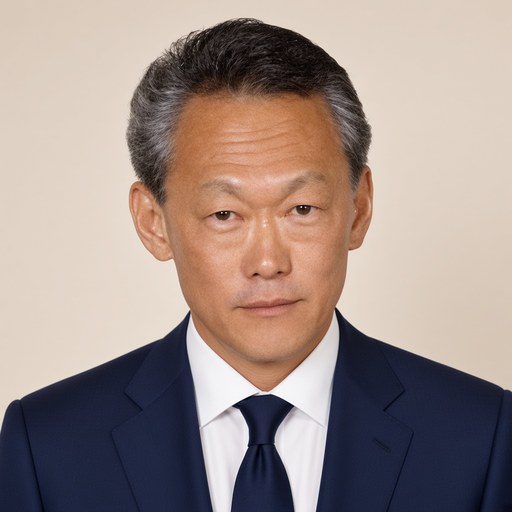

- Context
- Lee addressed the House in a debate on the Finance Minister's budget and tax proposals in December 1964 (dated December 30, 1964), criticising the new turnover and payroll taxes as regressive and favouring the wealthy.
- Main themes
- Criticism of the 1964 Malaysian federal budget, classification of direct and indirect taxes, turnover tax on public utilities, payroll tax and employment, regressive effect on lower middle class, income tax equalisation and working wives' assessment, estate duty and capital gains tax concessions, effect on young export industries, cost of power and fuel oil tax, confrontation and business confidence
- Duration
- ~26 min
- Words
- 3,080
- Sentences
- 138
- Readability
- 50
- Grade
- 11.6
- Syntax
- 2.88
- Vocabulary
- 2.38
Source: National Archives of Singapore ↗
The broad sphere of national life a sentence belongs to. Every sentence has an Arena, so it is the denominator the other indices are read against.
Other138 sentences in 67 paragraphs
Mr. Speaker, Sir, may I preface my observations on the financial and fiscal policy of the Government by a plea that Standing Orders should allow Members more than just two days' time to study the implications of the tax changes upon which the Finance Minister and his Ministry must have spent long months of cogitation and planning? In Singapore we allow an interval of one week before debate. I hope next year we can be allowed more time to give the Finance Minister's proposals the courtesy of a careful and thorough examination they deserve. My colleague, Dr. Goh, is even up to this moment, still working on the implications of these new taxes, and he hopes it may be possible to express his views in this House tomorrow morning before the three-day debate ends.
Presentation of Direct and Indirect Taxes less than frank
My first comment is that the classification of direct and indirect taxes has been less than frank. A direct tax is one where the tax cannot be passed on, such as income tax, estate duty, and now, capital gains tax. And in his speech the Minister gave us the impression that of the additional taxes to be raised estimated at $147 million, only $54 million were from indirect taxes like sugar, diesel and fuel oils, in Singapore, and crown corks and dried mushrooms in the Peninsula.
He has classified turnover tax estimated at $45 million, and payroll tax estimated at $21 million, under direct taxation.
Narrow Gap Between Rich and Poor
A careful scrutiny of the incidence of these two taxes has led my colleagues and me to the conclusion that both turnover and payroll taxes in the majority of cases will be passed on to the consumer and its incidence has no relation to the capacity to pay of the person who is being taxed.
If we are to help to narrow the gap between the haves and the have-nots, then to equalise opportunity, the cost of running the Government, the provision of social, medical and educational services must more and more be paid by the "haves" than by the "have-nots". The way this is usually achieved is by having taxes based on the capacity to pay such as direct taxation on income, capital gains and profits, rather than by choosing taxes because of facility of their collection such as indirect taxes which are spread over the whole community equally, making the have-nots pay more in proportion to their incomes.
Thrift and Hard Work
I agree that we must build a prosperous society, and that for this we must encourage thrift and hard work, qualities which will make for a high rate of capital investment and growth in industry and in agriculture. In this process, we should help as many as possible of have-nots to become haves. I congratulate the Minister for having proclaimed as his minimum ideal the man with $25,000 on which no estate duty will be payable at death. But I fear that having acknowledged the validity of these goals, he has got lost in a maze of differing decisions, brought about by the conflicts between the conscience to do what is right and the desire to help one's own kind. In the end temptation was stronger than conscience and he ended by doing what was the easiest thing to do.
So while he introduces the capital gains tax, he could not at the same time resist the temptation to squeeze $8.2 million from the have-nots through a new tax on crown corks. Every bottle of soft drink consumed in the peninsula now carries a 5 cent duty.
Even in the capital gains tax, he has been careful to ensure that all those whose properties which go as gifts, if from father to son, the son need not pay capital gains tax of 20%. He has an irresistible sympathy for those of the old rich. The new rich he is willing to move against though somewhat gently; the old rich deserve his special treatment.
Tax changes discourage hard work and thrift.
Moreover, he pointed out that in Australia and New Zealand the rates of estate duty are not as high, conveniently forgetting to tell us that in Australia and New Zealand, every gift inter vivos has to pay duty comparable to the estate duty. And they have no limitation by which gifts more than 5 years before death can escape tax. When in Singapore taxes on gifts inter vivos were limited in its operation to gifts made 5 years or less before death as otherwise people with large estates may find it worth their while to change their holdings and their domicile to the peninsula. But there is no such danger now when the tax rates are uniform throughout Malaysia. So I hope Minister will slowly be persuaded to close this loophole through which a wealthy man can give his property away to his children and escape estate duty provided he does so five years before death.
Let us test the tax changes to see whether in fact they do encourage these two qualities of thrift and hard work. The Minister wants to encourage people to own a house or an estate worth $25,000. He has now decided to exempt such property from estate duty. This is supposed to encourage the emergence of a broad lower middle class, his property owning democracy. I think this is a commendable though limited objective. In fact, in our own way, over the last five years we have tried to make it possible for people in Singapore who work hard and are thrifty to come closer to the ranks of the "haves": the family that owns a terrace house, usually on an instalment basis, and a refrigerator, a radio and television set and perhaps a car. Such a family must have a combined income of about five to eight hundred dollars per month or between six thousand to nine thousand dollars a year.
Lower middle classes hit most
Yet it is this group that has been the hardest hit. The income tax in Singapore for them has gone up by 44.6% by equalisation at old Malayan instead of Singapore rates. Furthermore, whereas before, to encourage thrift and hard work, we allowed a separate assessment of the wife's earned income, now for a couple whose combined incomes are $7,000 a year (about $585 a month), the income tax they pay is increased by 375%, and for a couple with $9,000 a year, the increase is 298% in taxation.
Far from allowing the small man to emerge as the owner of some $25,000 worth of property, the changes in the income tax have been regressive. And worse, by reducing the maximum from 55% to 50% in Singapore, instead or raising the tax for the wealthy in Malaya to 55%, the Minister has given back to these people with incomes of $100,000 to $200,000 per annum, 3.49% and those with incomes of over $200,000 per annum 18.35%. Some of these people are residents in Malaya who were paying income tax at Singapore rates on income derived from Singapore investments. In simple language, the very rich are made richer and the small man in the housing estate has had things made more difficult for him. (Table 'A' attached).
To encourage thrift and hard work, surely what he could have done was to followed the more progressive rates obtainable in Singapore and so to harmonise and equalise and help the emergence of more communities like the Serangoon Gardens Estate. Instead, he has made the burden for Serangoon Gardens Community as heavy as Petaling Jaya's, instead of making things easier for Petaling Jaya and help more Petaling Jaya to emerge.
There are over 10,000 families in the lower middle income range who have been adversely affected by these income tax changes. If he had equalised at Singapore's rates and harmonise on Singapore's allowances, there would be over 25,000 women teachers, nurses, stenographers and clerks in the peninsular who could have been helped to emerge into the ranks of the smaller "halves".
Two steps backward, one step forward
Before Malaysia we had envisaged the need of going one step backward before making two steps forward. We had hoped that perhaps instead of Singapore having to equalise by introducing taxes on a whole host of commodities which in 1962 produced about $122 million in Malaya or 11% of the total revenue collected, Malaysia could have taken a more progressive step, gradually abandoning some of these taxes in the peninsula. But when confrontation intensified, we knew that such expectations could not be realistic.
Although we could have held up these duties in Singapore, according to the Constitutional Agreement, for another four years up to 1968 in we have agreed to taxes on sugar and diesel, fuel oils to be imposed so that the burden will be more fairly shared throughout Malaysia. It will also simplify the implementation of the common market for those goods where sugar or power was an appreciable part of the cost of production. Moreover, in the case of sugar, one refinery will commence production soon in Prai and another in Jurong.
I now turn to the two new taxes -- turnover tax expected to yield $45 million and payroll tax expected to yield $21 million. In the majority of cases, these taxes can and will be passed on to the ultimate consumer, although there will be some unfortunate employers, whose products are nearly all for export, and who therefore cannot pass on the % ½ turnover tax or the 2% payroll tax to the Malaysian consumer. But, if his products or services are consumed in this country, every employer or businessman will eventually pass on these increased burdens to the consumer.
Turnover Tax
This tax has created quite a disturbances, particularly to the sensitive entrepot economy of Singapore. One doubts whether sufficient advertence has been afforded to the psychological upset it would cause, sapping business confidence in a merchant community, who have already had to bear the brunt of confrontation, and who up to now have done so with considerable resilience.
One would have thought the people who have borne confrontation so cheerfully deserve better treatment than the shock now administered to businesses with big volumes and small profit margins. This turnover tax will have depressing effect on our economy unless time is spent on explanation and care is taken in the administration of the tax to avoid hardships.
Reading the Budget Speech and the explanation given in the Command Paper, it appears that the tax follows the pattern of the German Multi-Stage Cumulative Tax on sales at all levels. But in Germany basic necessities, in which they include water, gas and electricity, are exempt from this tax. The Minister on the other hand proposes to include public utilities, water, gas and electricity, in his widely spread net on the argument that it is a small ½ cent.
In this connection, may I mention that according to the Estimates, Malaysian Railways, inspite of optimistic estimates of income, is expected to lose some $5 million next year. One wonders whether the Minister proposes to exempt Malaysian Railways from the tax and so put road transport firms at a disadvantage. In any case where is the justice in a turnover tax on public unitities -- electricity, water and gas -- all of which will be paid by the consumer?
In the intention to collect taxes from a public corporation like the Central Electricity Board or the Singapore Public Unitities Board, or is it the intention to pass on the turnover tax ultimately to the consumer?
In the result, the turnover tax is a commodity tax. It is regressive because it takes a larger percentage of the smaller income, and increases the gap in income inequalities.
Next because a turnover tax is imposed on each stage, the vertically integrated firm e.g. a firm which is importer, wholesaler, and retailer, is at an advantage over others. The bigger the firm the easier it is for vertical integration.
So sales from a principal to branch agencies throughout Malaysia can all be done by indenting instead of a sale which will attract the half percent tax at each stage.
An importing firm in Singapore or Kuala Lumpur which converts itself into a mere agent of itself in other parts of Malaysia can avoid the tax. The larger the firm the more easily can the tax be avoided by vertical integration. In Malaysia it means that the advantage is with the bigger firms, mostly foreign-owned. The small local firms will be at a disadvantage, for vertical integration would be impracticable.
Payroll tax
Here again the obvious advantage was the simplicity of collection through the machinery of the Provident Funds payments. This tax will have a detrimental effect on such industries.
The Minister's point that it is only 2% is not going to allay employers' fears. In planning ahead they must take into consideration the case of collection of this tax, tempting the Government to further exploitation of this source of revenue. Industries about to be established or expanded will inevitably tend to keep an eye on cutting down the labour cost of their products. To say the least, the payroll tax is not going to help create more jobs.
Impact on young industries
The policy of the Government must be to encourage the growth of industries. Instead, the Government is taking steps, admittedly small ones to start with, to make them less competitive on the export market, by increasing the price of power by a tax on fuel oils and turnover tax on public utilities of electricity, gas and water, and by increasing the cost of labour through the payroll tax. All this is unnecessarily blunting the competitive edge of our industries as against industries in Hong Kong or Japan.
The tax on fuel oils, although it means only an increase of 6 cents per unit of electricity, would have long term implications of making power more expensive, penalising power-intensive industries in their effort to break into the export market.
One of the key factors to rapid industrialisation is the supply of cheap power. Except perhaps for Sabah, Malaysia has not been fortunately endowed with the potentials of cheap hydro-electric power. Any tax that tends to increase the cost of power is basically detrimental to our long-term interests.
Perhaps on a later occasion, the Minister may consider giving rebates to those industries which are power intensive in order that they can become competitive on the export market.
He may find it worth remembering that in Australia the Government gives generous subsides to make the products of Australian industries competitive on the export market.
Despite several sycophantic expression of support in some sections of the press, there is in fact a great deal of uncertainty and uneasiness about these new taxes. There is the dampening psychological impact of these taxes. He may ease off their anxieties with care in their implementation and adjustments to avoid hardships.
Summary of Conclusions
The less than frank classification of these increases in taxation has led one newspaper editor in a moment of exuberance to compare the Minister to Robin Hood. In a caption the editor apologised to Vicky the cartoonist. I would have thought the apology was owed to Robin Hood and his followers both in Sherwood Foret and over TV Malaysia.
A proper classification of the increases in taxes from the Minister's own breakdown estimates shows the following:
(a) Direct taxes, excluding estimates for Capital Gains
Tax and Estate Duty for which estimates were given ... ... $ 21.5 million 14.6%
(b) Indirect taxes including
Turnover and Payroll Taxes... ... $118.5 million 80.6%
(c) Road transport charges:
License fees $5.7 m.
Registration fees $1.3 m. ... 7.0 million 4.8%
$147.0 million
===========
Indirect taxes, turnover and payroll taxes account for nearly 80% of the increases, all of which are to be on to the consumers, the overwhelming majority of whom are have-nots.
The incidence of the turnover tax may work completely inequitable results on businesses with large turnover but small profit margins, such as brokers and commission agents.
The payroll tax may make it more difficult for the unions to press their claims since every claim will carry a government tax of 2%. Secondly, it will discourage labour intensive industries in favour of capital-intensive industries.
And third, it will reduce the competitive edge of our industries for the export market.
Thrift and hard work discouraged
Instead of encouraging thrift and hard work, the changes in the income tax laws have penalised those who work hard and are thrifty by increasing the incidence of taxation in the lower income brackets and reducing it in the top income brackets, and combining the income of working wives with their husbands. What we want to encourage is a society where people find it worth their while to work hard to help create prosperity for all. If we want to emulate the Japanese or the Germans, then like them we must tap the labour recourse of our women.
Give-away to the old rich
But most unconscionable of all is the give-away in estate duty from 60% to 50% a sum of about $172,000 on $2 million estate, and the give-away in income tax from 55% to 50% in Singapore, the exempting of capital gains tax where property is transferred by way of gifts as from father to son.
Increase in taxation were unavoidable. We accept that with confrontation and the greater burdens in Malaysia revenue must be increased. We also acknowledge that in an unindustrialised economy, we cannot except to get all this revenue from the haves.
The have-nots and those in between the have and have-nots must also make a contribution. Perhaps it was inevitable that tax increases were postponed by the Minister till after the elections. But the burden could have been more fairly spread. Meanwhile, I hope that care, discretion and flexibility will be exercised by the Inland Revenue Department if unjust results are to be avoided in the incidence of the new taxes, and unfavorable reactions on the development of our industries prevented. These two new taxes will by and large be passed on to the consumer in increased commodity prices.
Sir, we had expected to have to take one step backward before going two steps forward. This budget takes us one step forward in order to take us two steps backward.
DECEMBER, 1964.